Thank you! Your submission has been received!
Oops! Something went wrong while submitting the form.
Panjab: AAP wins Civic Polls; BJP announces Panjab Party President; Oppn. asks Panjab govt. to reduce diesel cost; Revenue surplus; Outsourced workers to be regularized; RTI activist killed. Sikh: Digwa jailed for life; Case draws focus on 'Kirpan'—and more stories.

The ruling Aam Aadmi Party (AAP) won 958 of 1,977 (48%) municipal wards across the state in Panjab’s civic body polls. Indian National Congress (INC) won 397, Independents 251, Shiromani Akali Dal (SAD) 192, Bharatiya Janata Party (BJP) 172, and Bahujan Samaj Party (BSP) 7. AAP won five municipal corporations, INC won Kapurthala and the BJP won Abohar, while emerging as the single-largest party in Pathankot. In 75 municipal councils, AAP won 40, INC 18, SAD 10, BJP 4 and others 3. In 20 municipal committees, AAP won 10, SAD 5, Independents 4, and INC 1. In 80 wards there was no contest. Their results are included in the final tally. The Panjab State Election Commission said voter turnout in municipal corporations was 59.91%, in municipal councils 65.06%, and in municipal committees 76.18%. Though civic body elections in Panjab have traditionally gone in favor of the ruling party, the Opposition said the scale of the AAP’s victory could not be viewed separately from the circumstances in which the polls were held. From the nomination stage itself, Opposition parties alleged their candidates were prevented from filing papers in several places or faced pressure to withdraw. Voting day on 26 May too witnessed clashes and sporadic violence. The results show that about seven months before Assembly elections in 2027, there is no anti-incumbency wave against the ruling AAP government. Though Independents are the third largest winners, they often belong to political parties and contest because they do not get the party ticket. In a first, transgender candidates Komal Mahant and Mahi Mahant from SAD and AAP respectively won their maiden elections from Ward No. 18 Patiala municipal corporation and Ward No. 20 Sunam municipal council, Sangrur district. However, in Sahibzada Ajit Singh Nagar, advocate Ranjivan Singh questioned the secrecy of the voting process. As a voter from Ward No. 15, he claimed that the serial number printed on his ballot paper matched the number recorded against his name on the counterfoil. Ranjivan alleged, 'If the ballot paper serial number is connected to a voter’s details through official records, it becomes possible to trace an individual’s vote. This defeats the very purpose of secret balloting and raises serious concerns about voter privacy' (earlier coverage).

In a surprise even to party insiders, Bharatiya Janata Party (BJP) announced 76-year-old Kewal Singh Dhillon as the new president of the Panjab state unit. Dhillon was earlier with Indian National Congress (INC) and is a former Member of Legislative Assembly from Barnala. By appointing Dhillon, BJP has sought to project a Jatt Sikh face while keeping its Hindu connect and Dalit (marginalized class) outreach. It has chosen a leader from Sangrur district which is Aam Aadmi Party Chief Minister Bhagwant Mann’s home turf. It intends to leverage Dhillon's proximity with former INC Chief Minister Captain Amarinder Singh to make inroads into south Panjab—a section where the party struggles electorally. However, Captain Amarinder stated he was not consulted over the choice and is not impressed with the appointment. Outgoing BJP state president Sunil Jakhar wished Dhillon well. Dhillon’s elevation after replacing former INC leader Jakhar has reinforced a growing perception within sections of the BJP cadre that the party is increasingly relying on political imports rather than nurturing its traditional leadership. Yet, there has been little visible rebellion. Meanwhile, Haryana Chief Minister Nayab Singh Saini paid a courtesy visit to Baba Gurinder Singh Dhillon, the chief of the Radha Soami Satsang Beas, at the Dera (sect) headquarters in Beas, Amritsar district. Dera Beas boasts of millions of followers cutting across religious lines, drawing heavily from both rural as well as urban Sikhs and Hindus. CM Saini has also been meeting farmer unions and businessmen from Panjab to assure them that when BJP comes to power, all their issues will be solved. Alongside, Panjabi Singer Hirdesh Singh alias Yo Yo Honey Singh met BJP national general secretary Tarun Chugh to discuss Panjab’s growing drug crisis. Both urged the state’s youth to stay away from narcotics and rebuild their lives. In a video message shared by the Chugh's office after the meeting, Honey Singh invoked the damage drugs are doing to families and called for a response to 'save Panjab' from the drug crisis. Chugh added, 'If Honey Singh can come out of that swamp, and every child of Punjab can come out, if Honey Singh can come back, and children, you can also become Honey Singh' (earlier coverage).
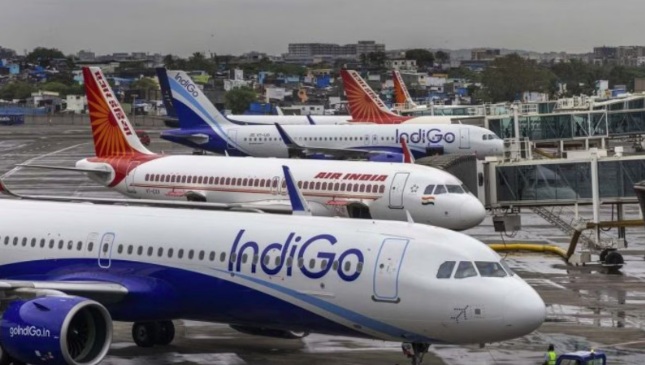
Given the shortage of fuel due to the ongoing closure of Strait of Hormuz, India's two major airlines, Air India and IndiGo, have announced a reduction of 250 (22%) domestic flights every day during the June–August period. Mumbai, Delhi, and Bengaluru are the worst-affected cities in terms of fewer flight options and higher fares. Additionally, about a fifth of India’s trucks have gone off the roads, putting the squeeze on goods transport as the industry battles diesel shortages in several states and a sharp rise in fuel prices. The shortage of trucks is pushing up freight rates, threatening to exert additional inflationary pressures. The worst affected are small truck operators, who account for more than 70% of India’s 9.5M-strong, highly fragmented, trucking fleet which is now battling mounting operational costs and reduced earnings. In Panjab, the Opposition has demanded a reduction in diesel prices by USD 0.05 (INR 5) per liter to provide relief to farmers during monsoon paddy sowing season. If the Aam Aadmi Party government, which is already struggling to pay salaries and manage mounting liabilities, agrees to absorb the burden, the move could cost the state exchequer nearly USD 173M annually. Panjab Bharatiya Janata Party (BJP) spokesperson Pritpal Singh Baliawal said the Panjab government was currently levying 16.58% Value Added Tax along with an additional 10% tax on petrol, resulting in approximately USD 0.2 (INR 19) per liter being collected in taxes. This is ironic because though the BJP-led government has not released exact figures, the estimate is that it earned more than USD 300B through highly taxed retail oil prices between 2014–25 when international crude price was low but never passed on the benefits of cheaper international crude to consumers. Meanwhile, with 17 ships carrying India-bound fertilizer stranded in the Persian Gulf since conflict broke out in West Asia, the Indian government is considering moving the dry bulk commodity by road from their current locations—after the ships dock—to Yanbu Port in Saudi Arabia and from there by ships to Indian ports. The Fertilizer Department officials informed an informal Group of Ministers that they are exploring this option, though this route via road and the Red Sea is longer by 1,200 kms (earlier coverage).

The Southampton Crown Court found twenty-three years old Vickrum Singh Digwa guilty of killing eighteen years old Henry Nowak on 3 Dec 2025 using a 21 cm-long kirpan (traditional sword). Digwa has been jailed for life with a minimum of 21 years. Digwa—an initiated Sikh who wears a kirpan as an article of faith—had denied the murder claiming he acted in self-defense after an altercation escalated on Belmont Road. Digwa told jurors the teenager appeared intoxicated, had used a racial slur, and later became aggressive. The judge’s statement clarified that Nowak’s blood alcohol level at the time of his death was below the legal limit for driving. Jurors rejected the defense and found Digwa guilty of murder and of carrying a knife in public. Digwa’s mother, 53-year-old Kiran Kaur was also found guilty of assisting an offender after prosecutors said she removed the weapon from the scene. The ruling also sparked accusations of two-tier policing over officers' harsh treatment of the dying victim. Sikh organizations across the UK have distanced themselves from the murder and issued a public statement urging people not to associate the Sikh faith with the murder trial. The British Sikh Federation expressed condolences to Nowak’s family and described the incident as inconsistent with Sikh teachings and values. Their statement said: ‘This incident as reported does not align with the Sikh faith, the Sikh community, or the principles it stands for. Sikh teachings are founded on compassion, justice, humility, responsibility, and service to humanity.' UK Member of Parliament Rupert Lowe has called for the kirpan to be banned in public spaces. The Sikh Federation UK has issued a statement clarifying the legal position of the kirpan: 'The law only provides fully practicing Sikhs with a defense under the law to wear a kirpan for religious reasons. If a kirpan or a bladed item is used aggressively in an act of violence the defense under the law for a kirpan does not apply and it is deemed an offensive weapon.' A leading figure in the Sikh Federation UK, Dabinderjit Singh said that the Sikhs are being 'demonized' after the murder and claimed the Sikh community had seen a 'huge increase in hate crime' since the trial (earlier coverage).

In a first in five years, Panjab turned revenue surplus in April 2026 at USD 295M, as collections jumped to USD 111.9B. Though heavy reliance on debt remains a concern. Furthermore, Panjab Finance Minister Harpal Singh Cheema asked the union government to share the Reserve Bank of India’s (RBI) record surplus transfer with states, saying such receipts should be viewed through the principles of cooperative federalism and fiscal fairness. On 23 May, Cheema raised concerns over the transfer of nearly USD 30.2B from the RBI to the union government for the accounting year 2025–26. He said, ‘If the union government is facing economic pressures due to global uncertainties and supply shocks, the states are facing the same challenges. Extraordinary gains of this nature should be shared with the states in the spirit of cooperative federalism and fiscal fairness.’ Cheema said that states were dealing with the fiscal impact of inflation, higher input costs and welfare commitments, and therefore deserved a share in large non-tax receipts. Meanwhile, the union government has withdrawn the draft Sugarcane (Control) Order, 2026, following feedback and suggestions received from state governments and industry stakeholders. The draft Sugarcane (Control) Order, 2026 is a legal framework issued by the government under the Essential Commodities Act, 1955. It would have granted the union government the power to determine the Minimum Selling Price (MSP) of sugar to maintain domestic market stability. Additionally, the Directorate of Enforcement (ED), Jalandhar, arrested Secretary of the Indian Cooperative House Building Society, Ajay Sehgal, in a case of money laundering related to submission of fake consent letters for fraudulently obtaining Change of Land Use (CLU). The ED has initiated investigation on the basis of a First Information Report filed by Panjab police after receiving a complaint from farmers alleging that their consent was forged to obtain the CLU. The investigation has revealed that Sehgal had prepared fake consent letters on 30 acres of land belonging to 15 landowners. ED is now closely examining the role of several senior bureaucrats, including officials in the Housing and Urban Development Department, the Director, Town and Country Planning, the Chief Town Planner and other functionaries linked to the approval process (earlier coverage).
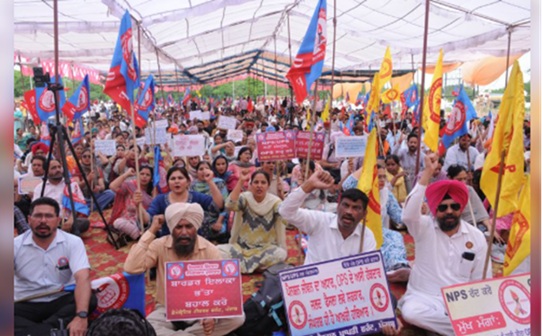
The Panjab cabinet approved a roadmap to dismantle the contractual employment system, paving the way for the regularization of over 65K outsourced and temporary workers across 51 government departments. The cabinet approved the repeal of the Punjab Ad-hoc, Contractual, Daily Wage, Temporary, Work Charged and Outsourced Employees’ Welfare Act, 2016. In lieu, the executive cleared two new legislative frameworks: The Punjab State Outsourced Personnel (Transition to Contractual Engagement) Bill, 2026, and the Punjab Contractual Personnel (Absorption Against Sanctioned Vacancies) Bill, 2026. Chief Minister Bhagwant Mann said the reform returns full dignity to the workers and ensures no contractor stands between the employees and the state. A total of 65,048 outsourced workers fall within the ambit of this decision, with more than 26K workers set to become first immediate beneficiaries. Ironically, the move comes on the same day as several Panjab government employees were protesting and marching towards Chief Minister Bhagwant Mann's residence on 31 May. The Chandigarh Police used water cannons to disperse the government employees who tried to force their way through barricades. The protesting employees have been demanding clearance of dearness allowance arrears (cost of living adjustment), implementation of the Old Pension Scheme, and regularization of contractual computer teachers, among other things. The protesters, including teachers and employees of the electricity department, held a rally in Sahibzada Ajit Singh Nagar before starting the march towards Mann's residence. The protesters alleged that the Aam Aadmi Party had promised to address employees’ grievances before coming to power in 2022 but has failed to fulfill any major demand in the past four-and-a-half years. Additionally, the Punjab and Haryana High Court has held Guru Nanak Dev University’s Vice-Chancellor Karamjeet Singh and Registrar Karamjit Singh Chahal guilty of willfully disobeying judicial directions in a long-running service dispute and sentenced them to a month’s imprisonment. Meanwhile, on the occasion of Menstrual Hygiene Day on 28 May, the Panjab government launched a special menstrual health curriculum for adolescent girls studying in government schools, calling it one of India’s largest school-based menstrual health education initiatives. The program aligns with the Supreme Court of India’s observation that menstrual health and hygiene are directly linked to dignity, education, and equality for adolescent girls (earlier coverage).

Jalandhar-based Rights to Information (RTI) activist Simranjeet Singh was shot dead outside the gate of Lovely Professional University, Chaheru village, Kapurthala district on 31 May. Deputy Inspector General (DIG) of Jalandhar Range, Naveen Singla, said the police had arrested the killer Sharanjit Singh. Sharanjit is the son of the victim’s maternal uncle. Preliminary investigations reveal that the victim and the accused were jointly involved in the real estate business. On the day of the incident, both individuals had traveled separately to inspect a plot of land. Sharanjit was accompanied by five associates in a car. An argument reportedly broke out between them over monetary and other business related issues and Sharanjit allegedly fired a shot using a licensed .32-bore revolver belonging to his associate Sandeep. Meanwhile, 66-year-old Australian citizen Sunil Sharma has gone missing in Panjab, prompting fears of abduction. Sharma was last heard from on 22 May while visiting Amritsar to prepare an investment property for sale ahead of his retirement. Police are probing the possible involvement of his brother Sunny Sharma who is also untraceable. Concurrently, in Halifax, Canada, a Sikh couple—Ramandeep Kaur and Sukhpreet Singh—are facing multiple charges after the remains of a baby were found in a wooded area. The probe began when emergency services responded to a 911 call regarding 23-year-old Ramandeep Kaur being in a life-threatening condition at an apartment building in Halifax. Medical staff determined that the woman had recently given birth but no infant was found with her prompting an urgent search operation involving Halifax Regional Police, firefighters, paramedics and Halifax Search and Rescue teams. Investigators were led nearly 10 km away to a wooded area off Old Coach Road near Prospect Road in Goodwood. On 31 May, the remains of a newborn were discovered there. Simultaneously, on 27 May, Patiala police discovered the body of a young woman stuffed inside a blue plastic drum in the Urban Estate area. The deceased is believed to be between 15–20 years. Her identity has not yet been established but investigators said the woman had a tattoo with the name 'Neha' on one hand and a heart symbol on the other hand. Police believe these markings could play a crucial role in identifying her (earlier coverage).

In Inna Khera village, Sri Muktsar Sahib district, Rupinder Kaur and her family took advantage of the salinity of the soil to produce the region’s most profitable harvests—shrimp. Rupinder has built a thriving aquaculture enterprise that spans more than 35 acres and generates huge annual profits. Rupinder, who is a graduate in fashion designing and cosmetology, never imagined turning into an aquaculture entrepreneur. After attending a camp by the Fisheries Department in 2021, Rupinder and her family decided to take the risk. As a woman farmer, Rupinder received a 60% subsidy that eased off the initial investment burden. Meanwhile, after nearly two decades, owing to the union government’s Pradhan Mantri Dhan-Dhanya Krishi Yojana (agriculture scheme), farmers in Fazilka district are opting for sunflower cultivation. Fazilka district was chosen for the scheme due to its diversified cropping pattern. Chief Agriculture Officer, Fazilka, Harbans Singh Sidhu says that the administration has set a target of bringing 104K hectares under crop diversification out of the district’s total cultivable area of 248K lakh hectares. Farmer Harmeet Singh received sunflower seeds free of cost during a camp, but he had to travel to neighboring Haryana to sell his produce at an Minimum Support Price (MSP) of USD 81 per quintal. Harmeet says, ‘The crop yields nearly 10 quintals per acre, fetching an income of over USD 810 per acre.’ He said that the Panjab government should declare MSP for sunflowers to encourage more farmers to cultivate the crop. Another farmer, Mangat Ram of Lalowali village, from the same district pointed out that farmers could grow three crops—paddy, potato and sunflower—in a year, earning remunerative returns as compared to traditional crops. Concurrently, far off in India’s east, Jasmit Singh Arora from Kolkata has been engaged in the mango seed collection mission since 2017. He requests people to send him discarded mango seeds which he plants as saplings. Once they germinate and saplings are ready, he gives them to farmers in West Bengal and Jharkhand to plant them in the fields. Since 2022, Jasmit has collected over 2.1M mango seeds and distributed more than 800K grafted fruit trees to farmers, benefiting over 5K families (earlier coverage).

Global media closely tracked US Secretary of State Marco Rubio’s four-day diplomatic visit to India as he departed New Delhi on 26 May after attending the Quad Foreign Ministers’ Meeting. Indian media covered the events but did not comment on what transpired between Rubio and the Indian government. The issues include: 50% punitive tariffs on India, US President Trump's recent visit to China, US praise for Pakistan, and Rubio's comments that India has 'committed' to purchasing 'USD 500B' worth of American goods mainly in energy, technology and agriculture over the next five years. US relations with China and Pakistan affect India’s foreign policy and US tariffs and India’s commitment affect India's economic sovereignty. India’s energy commitment would imply India buying Venezuela's dense, crude oil; technology implies AI data centers which consume huge amounts of water and power; and agriculture implies import of genetically modified maize, cattle feed, poultry products which affect India's rural economy, especially Panjab's as an agrarian state. The figure of USD 500B had earlier come up during the interim trade deal statement released by the White House. Since then, the US Supreme Court has scrapped Trump’s tariffs for all countries, standardizing 10% tariffs globally. Financial Times says, 'Under these circumstances, it is rather bizarre that India is not only continuing with the plan to buy USD 500B worth of American goods over the next five years, but is also not challenging Rubio’s assertion that this now constitutes a commitment.' Meanwhile, Indian Union Minister of Commerce and Industry Piyush Goyal highlighted the role of the Indo-Canadian community in strengthening bilateral economic relations and deepening people-to-people ties during his three-day visit to Canada, which concluded on 28 May. The visit focused on trade, investment and ongoing negotiations for the India-Canada Comprehensive Economic Partnership Agreement. Goyal met Canada's Minister of International Trade, Maninder Singh Sidhu and Premier of Ontario, Doug Ford, to discuss collaboration in manufacturing, technology, infrastructure, clean energy, food processing, and critical minerals. Bilateral trade between India and Canada currently stands at around USD 8.5B, with both countries committed to expanding it to USD 50B by 2030. Goyal said Canadian Prime Minister Mark Carney's visit to India in March had 'reset' the ties between the two countries. The Sikh issues, India's transnational repression, and killing of separatist Hardeep Singh Nijjar in 2023 seem to have gone on the backburner for now (earlier coverage).

Kolkata-based heritage conservationist Mudar Patherya has turned his attention to the historic Khalsa College in Amritsar. An ambitious lighting project aims to transform the architecturally rich institution into a striking nocturnal spectacle. Patherya, widely known for his work as a civic activist and heritage conservation expert, has led several citizen-driven efforts to restore and illuminate historic buildings across Kolkata. The Khalsa College project is his largest undertaking so far. Using more than 2,500 specially installed lights—spotlights, silhouette lights, and grazing lights—the project seeks to accentuate the college’s distinctive red sandstone architecture. Rather than flooding the entire structure with light, the lighting has been designed to guide the eye towards key architectural elements and ornamental details. The project is estimated to cost around USD 31,547. The Principal of Khalsa College, Atam Randhawa says, ‘The project is being entirely funded by Khalsa College alumnus and entrepreneur Padam Prakash Gupta, who has been generous enough to invest in turning Khalsa College into an important landmark on the city’s cultural tourism map.’ Patherya describes his work as an attempt to rebuild civic pride and reconnect citizens with their architectural history. Many of his projects have been supported through crowdfunding, local sponsorships and volunteer participation. At Khalsa College, his team of engineers and artisans has been working for over a month to install the façade lighting system, with the project expected to be completed by the end of June. Patherya has worked on several historic monuments, including the Victoria Memorial and other colonial-era structures across Kolkata. Khalsa College’s unique Indo-Saracenic architecture has long been documented and admired by heritage conservationists. Meanwhile, in Sahibzada Ajit Singh Nagar, a couple’s unique home imagines the bricks as a banyan tree. The 7,500 sq ft residence with sections of exposed brick jutting out from the wall is called ‘The Brick Banyan.’ Unlike most of its surrounding homes, the home has two floors. The raw concrete slabs in the ceiling are left completely exposed. The home is designed by Studio Mohenjadaro in Chandigarh with Tarunpreet Singh Bhatia as the lead designer.
The Conversation: The forgotten history linking fertilizer and empire in wartime.

Panjab: Protests against CEC intensify; Delhi fortified; Rain disrupts paddy procurement; CBI files FIR against Ghuman; Sinha apologizes to PHHC over pending DA; Anti-Drug activist & another ASI shot dead. Sikh: Gurdwara in the eye of protest storm; J&K Sikhs protest for inclusion of Panjabi language—and more stories.

Panjab: SCI notice to ECI; INC appoints Pargat Singh as state chief; ECI flags WPD; Maiserkhana Targets AAP; PHHC orders CBI to probe CM aides; Panjab goes to SCI; LGBTIQ+ influencer shot dead. Sikh: Jaggi Johal released; VanDyke release raises questions about ‘Bandi Singh’—and more stories.
