Thank you! Your submission has been received!
Oops! Something went wrong while submitting the form.
Panjab: 'Akal Takht' on Anti-Sacrilege Bill; thermal power units shut down; paddy DSR improves, short of target; SIR begins, passport not a proof of citizenship; VB-G RAM G scheme notified. Sikh: New 'Hazur Sahib' Bill in Abeyance; Nihangs Released on Bail—and more stories.

All 78 Sikh Members of Legislative Assembly (MLAs) and nine Cabinet Ministers of Panjab appeared before the Sri Akal Takht Sahib (Eternal throne, AT) in Amritsar on 29 Jun. AT had summoned them over the anti-sacrilege law Jaagat Jyot Sri Guru Granth Sahib Satkar (Amendment) Act, 2026, passed in April 2026. Non-Sikh Cabinet Ministers were asked to submit their views in writing, whereas Chief Minister Bhagwant Mann was not summoned. AT Jathedar (leader) Giani Kuldeep Singh Gargajj started the meeting by asking the MLAs if they had read the Bill before passing it. The MLAs, across parties—the ruling Aam Aadmi Party (AAP), opposition Indian National Congress (INC), Shiromani Akali Dal (SAD)—admitted they had not read the Bill. INC’s Pagat Singh said the draft Bill had become available to them after 9 pm on 12 Apr, and the Bill was passed on 13 Apr. AAP MLA Inderbir Singh Nijjar requested that proceedings be not telecast live. AT, however, insisted on live telecast. SAD MLA, Ganieve Kaur Majithia, shared that in the Panjab Assembly, if anyone objects to what the ruling AAP wants, they are ridiculed, and as a woman she is slandered. When INC’s Sukhpal Khaira started speaking, AAP legislators created a ruckus and had to be admonished by Giani Gargaj. Giani Gargajj clarified that AT had no objection to stringent punishment for acts of sacrilege but the interpretation of Sikh doctrine, in accordance with the Guru Granth Sahib (Sikh scripture and charter, GGS) and the Guru Panth (Leadership of Sikh Collective), falls within the authority of AT and the Panth—not within the legislature. He objected to the law defining Sikh religious terminology and traditions. He raised issues like replacing the word Bir with Saroop (both meaning tomes), introducing the term 'custodian' without clarifying it, assigning unique identification numbers to GGS saroops, placing records online, and prescribing the duties of custodians. The Jathedar said the objections must be addressed within one month and the legislation should remain on hold until the necessary amendments are made. He also suggested that any law dealing with sacrilege, should include provisions to initiate legal action against heads of those outfits which wilfully commit sacrilege and shelter offenders. The larger issue of state legislating Sikh affairs remains unaddressed (earlier coverage).

The Maharashtra (MH) cabinet meeting, chaired by Chief Minister Devendra Fadnavis on 24 Jun, approved the proposal to repeal the 70-year-old Nanded Sikh Gurdwara Sachkhand Sri Hazur Abchalnagar Sahib Act, 1956. The MH government said the older law will be replaced with a new law as soon as it gets legal clearance and approval of the MH cabinet. Takht Sri Hazur Sahib (Throne, HS) is one of the top five Takhts (Thrones) of the Sikhs. As per the MH government's previous amendment in 2024—which was later repealed—the changes to the composition of the HS management board include: allowing MH government to directly nominate 12 of 17 members, electing three Sikhs from MH, reducing members sent by the Shiromani Gurdwara Parbandhak Committee (SGPC) from four to two, abolishing nominations by the Chief Khalsa Diwan, Hazuri Sachkhand Diwan (traditional organizations), and membership of two Sikh Members of Parliament. These changes would have meant that the MH government would be in total control of HS. However, after protests from the HS Panj Piare (five loved ones), Sri Akal Takht Sahib (Eternal Throne), the Sikh apex management body SGPC, and various Sikh bodies, the MH government announced that it is placing the new Bill in abeyance and will constitute a committee to consult with stakeholders, and Sikh scholars before piloting the new Bill. Panjab Bharatiya Janata Party president Kewal Singh Dhillon thanked MH leaders and said, HS is not merely an institution but a 'living symbol of Sikh faith, sovereignty, and heritage, revered by Sikhs across the globe'. Meanwhile, on 27 Jun, the four Nihangs (traditional warriors)—Satvinder Singh, Ajay Singh, Jasanpreet Singh, and Manpreet Singh—who were lodged in judicial custody in connection with an assault case in Karnaprayag, Chamoli district in Uttarakhand were granted bail by the District and Sessions Court. The bail has eased the standoff between the Nihangs and the Uttarakhand police outside Dehradun, Uttarakhand, and at Paonta Sahib, Himachal Pradesh. While the episode largely took on a religious color, one of the reasons for animosity among locals on the pilgrim route to Gurdwara Hemkund Sahib is also economic—the Sikh langars (community kitchens) affecting the restaurant and hotel businesses, which is why locals damaged the langar facilities (earlier coverage).

Six of Panjab’s 10 state-owned thermal power units remain non-operational due to technical faults, resulting in a daily electricity generation loss of around 1,190 MW. The situation has forced the Punjab State Power Corporation Limited (PSPCL) to heavily depend on power purchases from external sources. The affected units include three at Lehra Mohabbat, Bathinda district, two at Rupnagar, and one in Goindwal Sahib, Tarn Taran district. On 21 Jun, PSPCL purchased 61M units of electricity at USD 0.087 (INR 8.25) per unit, incurring an expenditure of about USD 5.33M. Electricity generated from state-owned thermal plants costs nearly USD 0.037 (INR 3.50) per unit. So every unit purchased from the market costs PSPCL around USD 0.069 (INR 6.50) more. On 23 Jun, Panjab recorded a peak power demand of 15,600 MW. The PSPCL had to manage the demand through the national power grid, power supplied by independent producers, and hydel projects. Additionally, nearly 3K contractual employees of the state-owned thermal plants have been on strike since 16 Jun, demanding absorption into PSPCL. At the Guru Hargobind Thermal Plant in Lehra Mohabbat, Bathinda district, PSPCL staff were working extended shifts to restore operations but since outsourced workers had joined the strike, the staff lacked the manpower, and specialized trade skills. Departments such as ash evacuation, which employ nearly 250 outsourced workers, were being managed by 10–12 regular employees working 16–18 hour shifts daily. On 26 Jun, Panjab recorded its highest peak power demand of the season at 16,456 MW as the state remained in the grip of an intense heatwave. Moreover, the thermal power units shut down impacts the paddy sowing as farmers require a regular power supply to operate tubewells for irrigation. PSPCL received nearly 100K complaints related to power supply on 27 Jun alone. The situation has sparked protests by farmers across the state. Farmers staged sit-ins outside the PSPCL offices in Majithia in Amritsar district and Sangrur, Mansa, Patiala, and Bathinda districts. The farmer union leaders have warned of intensified demonstrations across the state on 30 Jun. The power crisis has emerged as a significant political challenge for the Aam Aadmi Party government ahead of the next Assembly elections (earlier coverage).

Panjab Agriculture and Farmers Welfare minister Gurmeet Singh Khudian said the state has recorded a 16% increase in the adoption of Direct Seeding of Rice (DSR) this monsoon season. 26,896 farmers have brought 341K acres under DSR, which is a water-saving cultivation method. The expansion is higher than in 2025 when 25,853 farmers adopted DSR across 293K acres. However, the state is still falling short of its target of 500K acres. But the paddy sowing season continues up to mid-July and the numbers may improve. Meanwhile, foodgrain storage godowns in Panjab are currently choked to the brim with 15 MMT tonnes of rice remaining from the previous three seasons. Also, 5.4 MMT of paddy temporarily kept in mills is waiting to be shelled, which will add an additional 3.6 MMT of rice, and will worsen the storage crisis. The state food department asked the Food Corporation of India (FCI) to move 1.2 MMT of rice every month, but the FCI is only moving 500K MMT. Principal Secretary, Food and Civil Supplies Rahul Tiwari said, 'After the covered godowns with 18.3 MMT capacity, we have Covered Area Plinths storage of nearly 6 MMT capacity, which has also been occupied.' Alongside, the Punjab Agricultural University (PAU) has developed a new seed packaging system where for small-seeded vegetable crops, such as brinjal, tomato, and cauliflower, seeds can be directly planted without removing the cover. The new system has been developed to benefit small-scale gardening, especially in urban households. Furthermore, the Panjab government has issued charge sheets against seven key officers and transferred one in connection with alleged irregularities in the supply of subsidized agricultural-grade urea being supplied in place of technical grade urea. Concurrently, the largest farmer union in Panjab, Bharatiya Kisan Union (Ekta-Ugrahan) took out a flag march in Amritsar on 26 Jun to protest against the proposed India-US Free Trade Agreement, rising prices of petrol, diesel, cooking gas, shortage of urea, fertilizer, and the increasing cost of living. Agrarian rights activist, Dr. Parminder Singh Pandori Waraich, alleged that India was passing through a serious economic crisis, and accused the union government of imposing an additional financial burden on ordinary citizens in the name of national security, and war, while extending concessions to large corporate houses (earlier coverage).

Panjab Chief Electoral Officer Anindita Mitra announced that the first phase of the house-to-house enumeration under the Special Intensive Revision (SIR) of electoral rolls began across Panjab on 26 Jun and will continue until 24 Jul. During this phase, Booth Level Officers will visit every household in the state. India has multiple official documents proving citizenship of a person which include ration card, Voter Identification Card, Aadhaar (Identity) Card, and the passport—considered the highest proof of identity because it is issued after intense verification and police clearance. However, in state after state where SIR has been conducted, some documents have been accepted and others declared invalid. For example, the Supreme Court of India ordered that the Aadhaar Card was valid during Bihar SIR but it was not valid as citizenship proof in West Bengal. Now, the Indian Ministry of External Affairs has announced that a passport is ‘just a travel document and not proof of identity’ but it was valid in the West Bengal SIR. Panjab has the highest passport density in India. Out of roughly 20M voters in Panjab, about 8M have a passport. The invalidation of the Aadhaar Card and passport in Panjab SIR begets the question on how India decides citizenship. There are other reasons why suddenly the union government has created this confusion and distraction. Firstly, the Karnataka Indian National Congress Home Minister Priyank Kharge has asked India’s ruling Bharatiya Janata Party’s parent organization the Rashtriya Swayamsevak Sangh (RSS) to prove its legitimacy. RSS claims to be a voluntary organization which is neither registered, nor does it pay taxes on its vast collection of funds. Though RSS’ presence is huge, it does not exist legally. Secondly, an embezzlement up to USD 150M has come to light in the Ram Temple Trust in Ayodhya, Uttar Pradesh. The Ram Temple has been the cornerstone of Hindutva right-wing politics for decades until 2024 when it was finally constructed. Police have initiated financial audits to determine the exact magnitude of the fraud and made arrests. A Special Investigation Team found blatant violations of Standard Operating Procedures, including missing or tampered CCTV footage, and unmonitored handling of donation boxes. The Trust has rejected the allegations but the General Secretary of the Trust Champat Rai has stepped down (earlier coverage).

Bharatiya Janata Party's (BJP) Union Minister for State for Railways and Food Processing Ravneet Singh Bittu's Rajya Sabha (Upper House of Parliament) term ended on 21 Jun. As he was not nominated for a second term by the BJP, he was ready to shift back to Panjab from Delhi. However, the union government did not drop Bittu from the council of ministers. Technically, Bittu can stay a minister for six months without being re-elected. Meanwhile, Bittu appeared before the Punjab State Scheduled Castes Commission (PSSCC) at the Panjab Civil Secretariat, Chandigarh on 24 Jun to tender a written apology for objectionable language he used during a confrontation with police personnel in Dhuri, Sangrur district on 26 May. He appeared before the PSSCC chairman, Jasvir Singh Garhi, on the third summons after missing two previous hearings, and expressed regret over the remarks that triggered the controversy. Accepting the apology, Garhi directed Bittu to pay obeisance at four religious shrines: Dera Brahmdas, Phillaur and Sachkhand Sri Dera Ballan, both in Jalandhar district, also Darbar Sahib (Golden Temple) and Sri Ram Tirath Temple in Amritsar city. Alongside, in a conversation at the Council of Foreign Relations at New York City, US, World Bank President, Ajay Banga highlighted the challenges facing urban and agricultural economies, noting that many traditional growth centers are undergoing significant changes. Referring to his home state Panjab, once regarded as India’s agricultural heartland, Banga said that young people today sell their family farmland, and receive substantial sums but often spend them quickly on consumer goods, and lifestyle expenses. Banga added, 'That is nothing compared to what there could have been if they had a chance for productivity; you need cooperatives, you need technology that gives farmers access to better seeds, better fertilizers.' Panjab BJP chief Kewal Singh Dhillon has now written to Banga, calling for a partnership with the government of India in agricultural diversification and financing rural entrepreneurship ecosystems in the state. Concurrently, Aam Aadmi Party chief Arvind Kejriwal was recently in Panjab and announced a series of religious and cultural initiatives to woo primarily Hindu voters. The announcements include a USD 8.5M redevelopment of the Kali Mata Temple, Patiala; a grand temple dedicated to Mata Janaki (Sita), Luv and Kush (sons of Lord Ram and Sita) temple in Amritsar; expansion of the Mukh Mantri Teerath Yatra Yojana (Chief Minister’s Religious Pilgrimage Scheme); and free viewing of Ramayana-based theatrical production ‘Humare Ram’, starring actor Ashutosh Rana (earlier coverage).

In a significant U-turn, the Aam Aadmi Party government in Panjab, which had been opposing the Viksit Bharat Guarantee Rozgar and Ajeevika Mission Gramin (VB-G RAM G) Act, has notified that the rural employment scheme will come into force from 1 Jul in the state. On 30 Dec 2025, the Panjab government had passed a unanimous resolution against the VB-G RAM G Act in the Assembly and accused the Bharatiya Janata Party (BJP) led union government of ‘taking away’ the livelihood of the poor and Dalit laborers by scrapping the Mahatma Gandhi National Rural Employment Guarantee Act (MGNREGA) under a ‘deliberate conspiracy’. The current notification has sparked sharp reactions, with the Panjab Indian National Congress chief Amrinder Singh Raja Warring asking, ‘Does the sudden implementation of the scheme have something to do with the ongoing controversy related to the chief minister,’ referring to the controversy surrounding Panjab Chief Minister Bhagwant Mann over an allegedly fabricated video. Meanwhile, contrary to the announcement made by CM Mann and his Haryana counterpart Nayab Singh Saini on 27 Jan to hold periodic meetings to resolve the long-standing Sutlej Yamuna Canal (SYL) issue, not a single meeting has taken place in the past five months. In May 2025, the Supreme Court of India had directed the two states to solve the decades-old SYL dispute. Concurrently, the Jalandhar district administration has ordered the withholding of salaries of at least 84 schoolteachers for skipping assigned tasks under the Drug and Socio-Economic Survey undertaken by the state government. The teachers claim that the district administration was penalizing them for refusing duties that were ‘forcibly imposed’ on them without their consent. Concurrently, a Tarn Taran-based charitable society rescued a mentally challenged individual who was trapped as a bonded labor by a family in Tibba village, Sahnewal, Ludhiana district for several months. The victim, 25-year-old Imtehaaz from Bihar, went missing five years ago. Jagjit Singh, president, Dhan Dhan Baba Ratan Dev Ji Charitable Society said, ‘The family had caught him (Imtehaaz) forcibly and were making him perform all daily chores. If he tried to flee their custody, they would catch and punish him. They had been exploiting him and using him as a bonded laborer for the past several months.’ Imtehaaz is undergoing medical treatment now (earlier coverage).

A report by the Narcotics Control Bureau (NCB) states that Panjab accounted for 58% (2,086 of 3,567 kg) of total heroin seizure in 2025. The report further notes that Panjab, Rajasthan, and Jammu and Kashmir remain highly vulnerable to trans-border drug trafficking from Pakistan. The report said that drone-based drug trafficking along the India-Pakistan border reached a ‘historic’ high, showing a 70% increase in cases, and the seizure of 468 kg of drugs post 2024. The report also expressed concern over the ‘diversion’ of pharma drugs for abuse, especially in Panjab, where 895,508 codeine-based cough syrup bottles were seized in 2025—the highest among all states in India. Additionally, the Patiala Excise Department has arrested multiple accused, and seized substantial quantities of illicit, spurious and smuggled liquor in a raid. The raid led to the seizure of refilled bottles with counterfeit premium brand seals that were meant to be sold as high-end Scotch, posing consumer fraud and serious health risks. 34 bottles of Indian Made Foreign Liquor Wazir Deluxe, 49 empty Black Label bottles, 10 empty Black Dog Gold Reserve bottles, eight empty 100 Pipers bottles, along with fake cap seals and packaging materials of multiple premium brands were recovered in the raid. The Patiala Excise Department has registered three First Information Reports in the matter. Meanwhile, drug syndicates and organized gangs in Panjab are exploiting vulnerable, drug-addicted youth, by turning them into hitmen and using them to carry out violent attacks, lob grenades, or do contract killings for as little as USD 60–80. Furthermore, a man’s Aadhaar (Identity) card was misused by a government-run de-addiction center in Khanna to illegally issue medicines in his name. Tarsem Lal Bhardwaj, from Beeja village, Ludhiana district, filed a complaint alleging that his Aadhaar card was misused by the Khanna De-addiction center to issue 98 tablets of Buprenorphine and Naloxone between 9–19 Oct 2023. He further alleged that the entries were uploaded on the relevant official portal without his knowledge or consent. Concurrently, over 90K victims of substance abuse received treatment between March 2025–May 2026 through Panjab government’s anti-drug campaign—Yudh Nashean Virudh (War on drugs) (earlier coverage).

The Panjab police have frozen 63,749 bank accounts linked to fraudulent transactions involving more than USD 57M over 2025–26. According to the State Cyber Crime Division, 62,253 cyber crime cases have been registered across Panjab since 2024, and approximately USD 8M has been recovered and refunded to victims, including approximately USD 4M since 1 Jan 2025. During the same period, 62,253 cybercrime cases have been registered across the state. During 2024–25, the percentage of fraud proceeds successfully frozen increased from 16.13% to 23.43%, reflecting a significant improvement in financial recovery. Among the districts, Jalandhar Commissionerate recorded the highest number of frozen accounts at 16,032, leading to the recovery of USD 720K. The police have also undertaken an extensive outreach campaign across the state to strengthen public awareness. The State Cyber Crime Division organized 129 awareness programs in the state—including 50 in Mansa, 44 in Sri Muktsar Sahib, 31 in Ludhiana, 27 in Hoshiarpur, 25 in Jalandhar, 23 in Khanna, and 19 in Bathinda. According to a report by TransUnion—a global consumer credit reporting agency—Indian consumers' median losses to digital fraud were 36% higher than the global average in 2025. Phishing emerged as the most common fraud scheme targeting Indians. Consumers also reported elevated exposure to vishing, smishing, and third-party seller scams on legitimate e-commerce platforms. Additionally, in a major crackdown on the cybercrime infrastructure facilitating digital arrest scams, the Central Bureau of Investigation (CBI) conducted coordinated searches at more than 80 locations across 16 states in India, including Panjab. The searches were part of an ongoing investigation aimed at dismantling a targeted network involved in over 200 cases of digital arrest scams. CBI arrested two people from Chennai and Kolkata for their alleged involvement in the incorporation of shell companies, and the opening and operation of mule bank accounts. These accounts were reportedly used for laundering approximately USD 210K of suspected crime proceeds. The CBI had recently unearthed a fraudulent website bearing a URL deceptively similar to the official website of the Supreme Court of India, which was used to deceive victims under the guise of digital arrest (earlier coverage).

The Chandigarh Administration quietly notified draft amendments to the Chandigarh Master Plan (CMP) 2031—the statutory document that governs every building, road, open space, and land use in the city on 22 May, and added a supplementary addendum on 29 May. Together they propose—doubling and tripling the Floor Area Ratio (that determines how much built-up space can exist on a plot) across residential, institutional, industrial, and peripheral zones, increasing building heights in several areas to 30 metres (approximately 10 storeys), imposing the stilt-plus-four, and stilt-plus-five building formats on neighborhoods that were never structurally designed for them, opening industrial plots to mixed residential and commercial use, and reclassifying over 400 acres of the city’s finite reserve land for commercial development. Former chief architect Sumit Kaur, who led the technical formulation of the CMP 2031, sought the withdrawal of the draft amendments to the plan, arguing that they would fundamentally alter the city’s planning philosophy, compromise its heritage character, and overburden its infrastructure. Kaur submitted a detailed 20-page representation to the Chief Architect and made oral submissions before the screening committee on 26 Jun. Kaur argued that the proposed changes go far beyond routine planning revisions and amount to a wholesale recasting of Chandigarh’s urban form. Chandigarh came into being when it was commissioned by the Government of India in 1948 as a new capital for Panjab. Le Corbusier, Pierre Jeanneret, Jane Drew, and Maxwell Fry designed and built the city but the new plan alters their vision. On 29 May, the Punjab and Haryana High Court (PHHC) pronounced its judgment scrapping the proposed flyover at Tribune Chowk, Chandigarh. PHHC held that CMP 2031, ‘is inviolable and every provision of the same is mandatory in nature.’ It can be changed only by following the same rigorous procedure by which it was made—public notification, objections, and a Board of Inquiry and Hearing. The Urban Planning Department was not even consulted before the Engineering Department decided to build the flyover—a procedural failure the court found deeply troubling. The final public hearing on the controversial draft amendments to the CMP 2031, however, concluded on 28 Jun. A nine-member screening committee will now review over 100 submitted recommendations, and hand over its definitive report to the administration within four weeks.
Nirja Bhatnagar in Down to Earth: International Year of the Woman Farmer 2026 puts spotlight on the invisible backbone of agriculture.
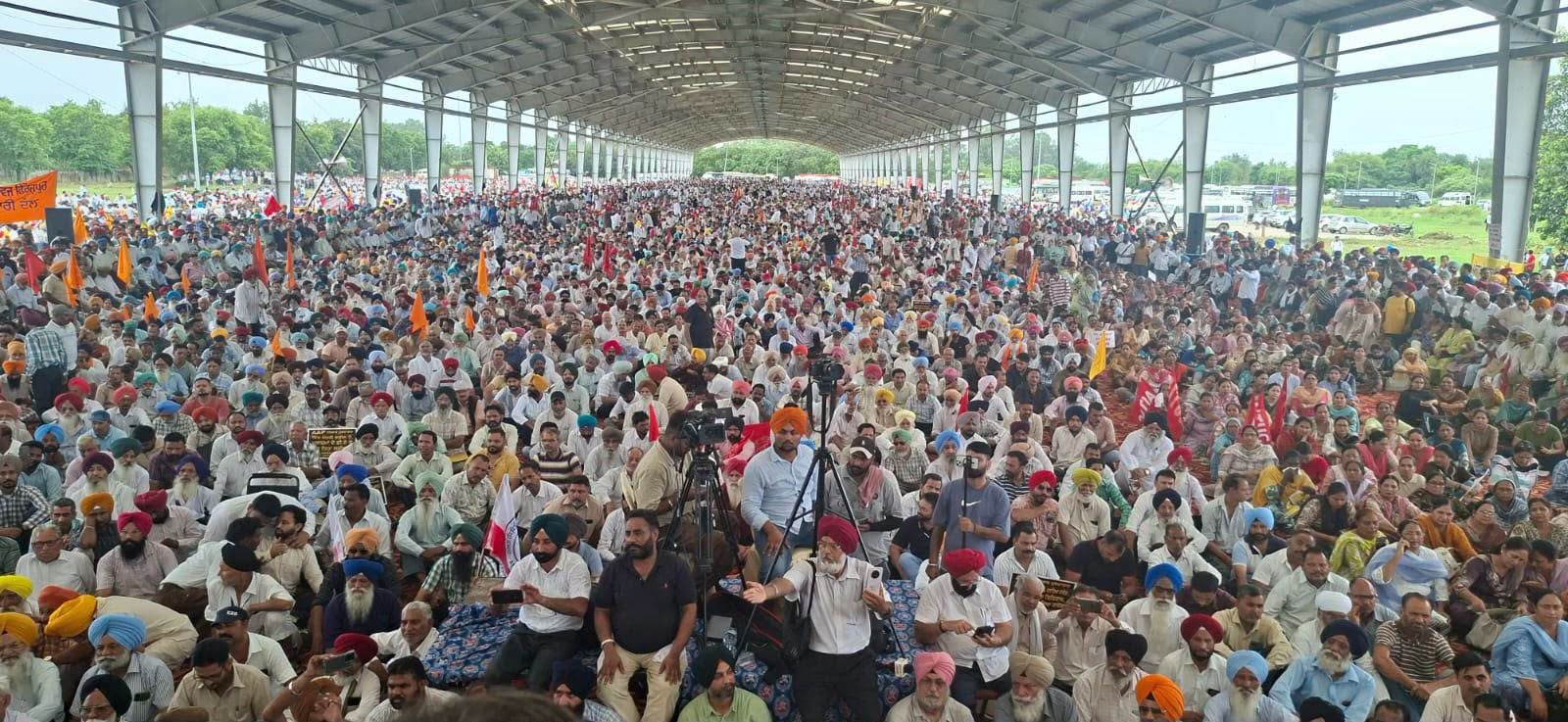
Panjab: Govt. employees corner AAP; Assembly clears nine Bills in three hours; AAP U-turn on Hawara. Sikh: UN warns Canada over threats to activist; NDP seeks to block Bhagwat’s Canada visit; Youth thrash Sikh-baiter Mand; New channel enters Gurbani transmission space—and more stories.
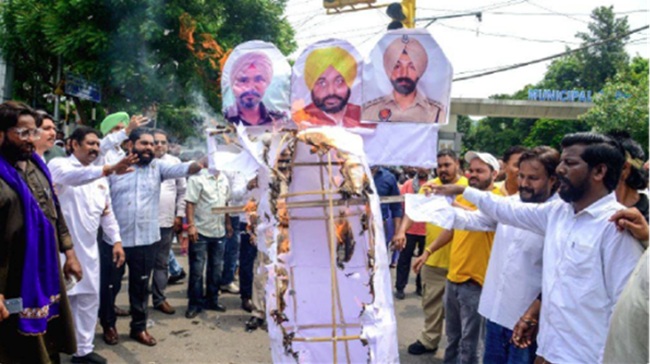
Panjab: Sanitation workers end strike; Paper leaks; ‘Waris Punjab De’ show of strength; Honor killing in Kotkapura. Sikh: Kartarpur Corridor remains closed; Relief in Assam; Iranian Sikhs return to India; 'Akal Takht’ rejects govt. response to JJGGSS Act—and more stories.
