Thank you! Your submission has been received!
Oops! Something went wrong while submitting the form.
Panjab: US-India Trade Deal; SKM Condemns Deal; Panjab Ignored in Indian Budget; Doval Visits Canada. Sikh: BJP's Sikhs as 'Traitor' Spin Fails; SGPC Sub-committee on AI Abuse; World Bank President Visits Pakistan; Extortion on Rise in BC—and more stories

US President Donald Trump announced a trade deal with India that slashes US tariffs on Indian goods from 50% to 18% in exchange for India halting Russian oil purchases and lowering trade barriers. Trump announced the deal on social media on 2 Feb, following a call with the Indian Prime Minister Narendra Modi, noting that India would now buy oil from the US and potentially Venezuela. The US Secretary for Agriculture Brooke Rollins followed up the announcement with a post on X that said 'good news for American farmers'. The two announcements have raised several questions. If India is halting Russian oil purchase, then either India's Minister for External Affairs Subrahmanyam Jaishankar or Minister of Commerce and Industry Piyush Goyal should know. For now both ministers are passing the buck to each other, which conveys that not only India’s US policy, but also India’s Russian policy is in disarray. The announcements have also led to speculation about India's agriculture, fisheries, poultry and dairy sectors. US produce flooding Indian markets will destroy the livelihoods of over a 100M small and marginal farmers, fishermen, poultry and dairy owners. On 7 Feb, the US and India reached a framework for an Interim Agreement which says India will buy goods worth $500B in 5 years. Considering India’s budget for 2026–27 is USD 583B, the import goal from the US seems impossible unless India allows unrestricted imports, which will have a devastating impact on India’s economy. The Interim Agreement will be signed mid-March, leading to a ‘mutually beneficial Bilateral Trade Agreement’. While some agricultural products are listed—red sorghum for animal feed, tree nuts, fresh and processed fruit, soybean oil, and wine and spirits—the term ‘additional products’ is also mentioned. It is not clear if the catch all phrase will be used to import wheat, corn, cotton, dairy, and poultry products. Panjab being primarily an agricultural state will be hugely affected by this deal. Panjab’s Leader of Opposition Partap Singh Bajwa said, 'This is not free trade, this is a structured disadvantage for Indian agriculture.’ While Panjab’s Bharatiya Janata Party chief Sunil Jhakkar said the India-US trade agreement is in India’s interest and would boost the state’s industrial development and create new employment opportunities for the youth (earlier coverage).
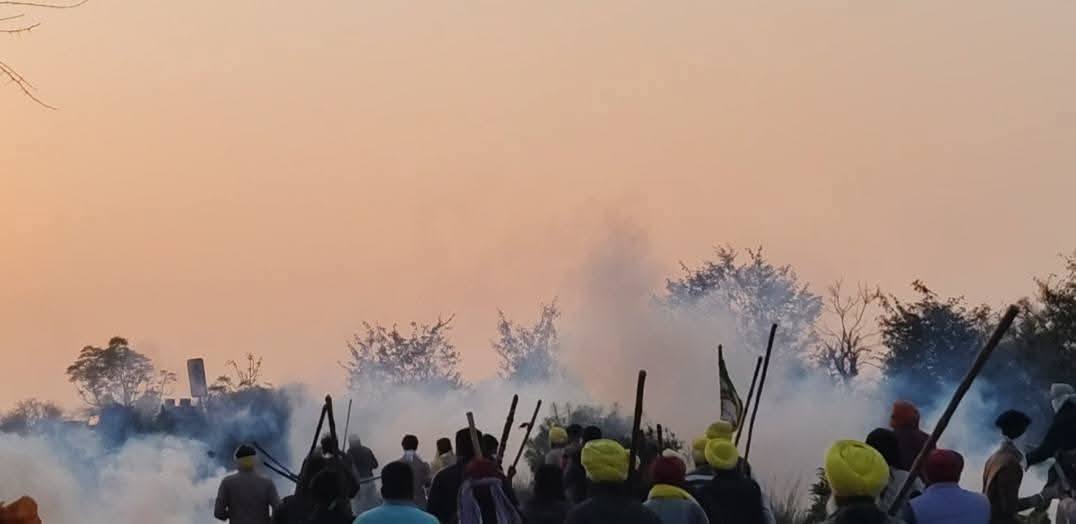
The Samyukt Kisan Morcha (SKM), a pan-India alliance of farmers’ unions, has launched a scathing attack on the Bharatiya Janata Party (BJP)-led government over the proposed India-US trade deal, warning that the agreement represents a ‘total surrender before US imperialism’ and poses an existential threat to Indian agriculture, rural livelihoods, and food sovereignty. In a statement, SKM said, 'Even as the government hides behind silence and ambiguity, Trump’s (US President Donald Trump) declaration and Modi’s (Indian Prime Minister Narendra Modi) welcome make the character of the deal unmistakably clear.' Calling the deal 'nothing but capitulation in the face of Trump’s threats,' the All India Kisan Sabha (farmers group), a constituent of SKM, accused the PM of 'shamelessly surrendering India’s national interests. SKM warned that the deal, coming on the heels of the India-European Union Free Trade Agreement and ongoing negotiations with the UK, would constitute a 'double whammy' for workers, peasants, and small producers, accelerating deindustrialization, unemployment, and agrarian distress. While the Indian government has defended the negotiations on the agreement, various farmer unions and alliances have announced a general strike on 12 Feb. Meanwhile, on 6 Feb, the Panjab police detained several leaders from farmers’ union Bharatiya Kisan Union (Ekta Ugrahan) in the state. The detention was in view of their proposed gathering at Bhucho Khurd village in Bathinda district. The gathering was to protest the arrest of two union members Baldev Singh Chauke and Sagandeep Singh Jeond, who were arrested for assaulting the Deputy Superintendent of Police (DSP) Rahul Bhardwaj and have been lodged in Bathinda jail since 5 Apr 2025. The union members were supporting teachers protesting against corruption at a school in Chauke village and were backing the protesting residents of Jeond village against takeover of their land. The land issue in Jeond village goes back to the Muzhara (tenant farmer) movement, which started in the 1930s. Both villages are in Bathinda district. Condemning the detention, senior BKU leader Jhanda Singh Jethuke said the government had ‘backstabbed’ the farmers. The police blocked the farmers’ march to the District Administrative Complex in Bathinda and Barnala and resorted to barricading roads, shelling tear gas and caning the farmers. The farmers detained DSP Gurpreet Singh and other policemen who were later released. BKU Ekta Ugrahan has postponed their agitation until 14 Feb (earlier coverage).

Panjab Finance Minister Harpal Singh Cheema accused the Bharatiya Janata Party (BJP)-led union government of ‘completely ignoring’ the state’s needs in the Union Budget 2026–27. Cheema said, ‘There is no mention of Panjab anywhere in the budget and no reference to the long-pending Rural Development Fund of USD 94M that is legitimately due to the state.’ Simultaneously, following the recommendations of the Finance Commission, the Revenue Deficit Grant to all states, including Panjab, will come down to zero in 2025–26. The move marks a significant shift in union-state fiscal relations and signals the end of a major support mechanism that several states, including Panjab, have relied upon in recent years. However, Cheema noted that Panjab has recorded growth in its Goods and Service Tax (GST) collections in January 2026: while the gross collection in January stood at USD 27M, the net GST collection registered a year-on-year growth of USD 38M, marking a 15.7% increase over January 2025. He added that the achievement is noteworthy as the state faced an estimated monthly revenue loss of around USD 30M due to GST 2.0 rate reductions impacting key sectors—yarn, textiles, hosiery, pharmaceuticals, insurance, tyres, and cement. He also said that a key highlight of January 2026 was the exceptional performance in State GST cash collections, which grew by 14.4%, the highest growth rate among all Indian states for the month. Meanwhile, union minister of Women and Child Development Annpurna Devi said the union government has released funds to the tune of USD 31.86M for Mission Saksham Anganwadi (child care) and Poshan 2.0 (food); USD 1.62M for Mission Vatsalya (mothers); and USD 4.20M for Mission Shakti (women’s empowerment) in Panjab in 2024–25. The union government also claims to have released more than USD 130M as Fifteenth Finance Commission grants to strengthen Panchayati Raj (grassroots) institutions and other rural bodies in Madhya Pradesh, Panjab, and Telangana in 2025–26 (earlier coverage).
.jpg)
Members of Parliament (MPs) from the Indian National Congress (INC) were protesting on the steps of Parliament on 4 Feb against the suspension of eight of their MPs. The MPs were suspended for rallying with Leader of Opposition Rahul Gandhi over him not being allowed to quote from an article on former Indian Army General Manoj Mukund Naravane’s unpublished memoir critical of Prime Minister Narendra Modi. Bharatiya Janata Party's (BJP) MP Ravneet Singh Bittu was passing by the protest side when Gandhi called him 'traitor friend' and extended his hand for a handshake. Bittu refused to shake hands and later claimed Gandhi had insulted the entire Sikh community. Another Minister in the union cabinet Hardeep Singh Puri joined Bittu's claim. Though the government and the media projected the incident as an 'insult' to the Sikhs, the community did not fall for the bait as Gandhi had called Bittu a traitor over him leaving the INC for BJP on the eve of nominations for the general elections in 2024. Meanwhile, the Shiromani Gurdwara Parbandhak Committee (SGPC) has constituted a sub-committee to review and suggest ways to check the growing misuse of Artificial Intelligence to distort the history, text and teachings of the Sikh religion. The SGPC has also introduced a new dress code for its workers. Concurrently, a row has erupted over the alleged sale of 12K sq. ft. land in Premgarh village which comes under the Greater Mohali Area Development Authority. Gurdwara Amb Sahib owned the land and sold it to various buyers for USD 145K for which the registration was done at the Sub-Registrar Office, Sahibzada Ajit Singh Nagar on 2 Dec 2025. The police have registered a case of cheating, forgery, and criminal conspiracy against seven persons, including the manager of the Gurdwara. Alongside, the descendant of former Nabha ruler Maharaja Ripudaman Singh, 14-year-old Kunwar Abhyuday Pratap Singh, had his dastaarbandi (turban tying ceremony) at erstwhile royal family’s residence Heera Mahal on 3 Feb. The ceremony was attended by leaders of political parties, former princely families, and heads of various religious sects. The event is being seen as the coronation of the prince but the family clarified it was a ceremony which every male Sikh adolescent ought to follow (earlier coverage).
The Punjab and Haryana High Court (PHHC) directed the Panjab government to not proceed with the issuance of election notifications for nine municipal corporations (MCs) and more than 100 municipal councils and municipal committees in the state. PHHC said until the state government filed its response to petitions challenging ward delimitation, the election process for all these local bodies cannot proceed. Meanwhile, relaxing its earlier notification on tree felling in Panjab, the PHHC allowed a limited felling of heritage trees for three traffic rotaries in Sahibzada Ajit Singh (SAS) Nagar. At the same time, it restrained a developer from cutting 41 fully grown trees standing along the boundary of a proposed mall site in SAS Nagar. The court also called for stringent compensatory plantation obligations. However, despite the PHHC order, the khair (cutch) tree felling count rose to 2,000 in the past week and 20 heritage trees were axed in Jalandhar. A Jalandhar-based environmental activist has filed complaints against the managing committee of a Gurdwara and the owner of an under-construction commercial building for illegal cutting and selling of trees. In a suo motu case, the PHHC directed the Director General of Police (DGP), Panjab, to place on record a detailed affidavit on shooting incidents reported since 2023, including those captured on CCTV cameras and mobile phones, the arrests made so far, and the steps taken to nab the accused still at large. PHHC has asked for the money trail of extortion proceeds and the steps taken to curb the glorification of crime on social media. Meanwhile, Lucky Oberoi, a leader of Panjab’s ruling Aam Aadmi Party was shot dead outside a Gurdwara in Jalandhar by unidentified assailants on 6 Feb. He was rushed to a hospital in an unconscious state and succumbed to his bullet injuries. The brazen murder has triggered panic amongst the residents of the city. Additionally, the Panjab government launched a 72-hour statewide special operation titled Operation Prahar (strike) 2, aimed at arresting wanted criminals and gangsters. DGP Panjab Gaurav Yadav announced the operation after a high-level review meeting with senior officials. The special operation is from 9–11 Feb (earlier coverage).

Three Sikh men have been charged after an alleged extortion-related shooting in Surrey, British Columbia, Canada. 21-year-old Harjot Singh, 19-year-old Taranveer Singh, and 21-year-old Dayajeet Singh Billing have each been charged with one count of discharging a firearm. Surrey, a city of about 600K residents, has seen a surge in extortion-linked violence, particularly targeting businesses. 46 extortion cases have been reported in the city since the start of 2026, including 11 incidents involving gunfire and one arson attack. More than half of the victims are repeat targets. Community concern has grown, with residents holding rallies to call for stronger action against organized crime and intimidation. Meanwhile, through a seven-month investigation, dubbed Project South, York police have arrested seven serving Toronto police officers and one retired officer and charged them in an organized crime investigation involving bribery, conspiracy to commit murder, and drug trafficking. Police said the officers had collected personal and private information unlawfully and distributed it to organized crime figures, in some cases for bribes and extortions. Officers who are now suspects have been suspended and the police is seeking suspension without pay for at least four of them. BC Premier David Eby said, 'There’s no excuse for shooting at someone’s house. There’s no excuse for threatening families in their homes.' Eby has announced the chair of a new community advisory group that’s been set up to liaise with the BC Extortion Task Force. Concurrently, India's National Security Adviser Ajit Doval was on a two-day trip to Canada, where he held talks with Nathalie Drouin, Deputy Clerk and National Security and Intelligence Advisor to the Canadian Prime Minister Mark Carney, as part of a bilateral security dialogue between the two sides. The talks between Doval and Drouin provided a clear reset in India-Canada ties and sent a strong message that ‘violent extremist groups’ do not enjoy the support of the Canadian government. This is Doval’s first visit after 2023 when Sikh separatist leader Hardeep Singh Nijjar was killed by the Lawrence Bishnoi gang, supposedly backed by India. As the two countries look forward to future engagements, both sides have expressed optimism about increased cooperation in other areas such as trade, culture, and technology (earlier coverage).

In a landmark judgement, the Supreme Court of India (SCI) has recognized menstrual health as a fundamental right under Article 21 of the Constitution and has directed all government and private schools to provide separate toilets, clean water, free biodegradable sanitary pads, and safe disposal facilities. Article 21 has consistently been interpreted to include the right to health, dignity, and conditions that make life meaningful. When girls are forced to sacrifice their education or dignity due to biological realities, the harm is constitutional in nature. The judgment recognizes that exclusion arising from menstruation cannot be dismissed as a private inconvenience or personal issue. Following the SCI judgement, government schools in Panjab’s cities are ensuring that girl students receive sanitary pads free of cost, at least in case of emergencies. However, in most private schools, students are still being charged between 2.2–5.5 US cents (INR 2–5) per pad. Private school managements agreed to comply with the order. A Class X student in Ludhiana, requesting anonymity, said there was stigma attached to menstruation and girls often felt hesitant to ask for pads in co-education schools. She said, ‘Though the school authorities keep napkins (regional term for pads) for emergencies, we girls make sure we always keep one or two napkins in our school bags’. Meanwhile, a total of 31,792 women died of cancer across Panjab, Haryana, and Himachal Pradesh between 2021–2025, averaging about 17 deaths a day, reveals data compiled under the National Cancer Registry Programme. The data was shared by the Union Health Ministry in the Rajya Sabha (Upper House of Parliament). In the past five years, Panjab recorded 13,299 deaths due to breast, cervical, and ovarian cancers with breast cancer accounting for around 56% of these fatalities. The fatalities rose from 1,418 in 2021 to 1,457 in 2025. Deaths due to cervical cancer also increased with Panjab reporting 691 deaths in 2021 to 710 deaths in 2025. A similar trend can be seen in ovarian cancer where Panjab's women’s deaths rose from 515 in 2021 to 529 in 2025, Haryana's from 593 to 623, and Himachal Pradesh's from 156 to 159 (earlier coverage).

While the Indian Union Budget 2026–27 has stressed the need for digital agriculture, early-warning systems and localized advisories to shield farmers from climate risks, in Panjab that future is already unfolding. A 30-year-old farmer from Bathinda, Baljinder Singh Mann, founder of the Panjabi-language digital platform Mausam Punjab Da (Panjab’s weather), has built a grassroots weather-intelligence system tailored to Panjab’s farms, powered by a smartphone, self-funded weather stations, and local knowledge. A farmer predicting for farmers, Baljinder himself cultivates seven acres of land. Without government backing, Baljinder has created a Panjab-specific digital weather and risk advisory network, issuing alerts in simple Panjabi via Facebook, Instagram, and YouTube. His platform reaches 225K followers on Facebook, 178K on Instagram, and a rapidly growing YouTube audience. Meanwhile, in Barnala’s Sehna village, 18-year-old Sohalpreet Singh Sidhu is earning USD 60K monthly from his dairy farm and reinvesting to scale up his enterprise. Sohalpreet’s journey began at the age of 15, when instead of studying to go abroad as his family wished, he convinced them to buy him his first buffalo. Within three years, Sohalpreet now owns 55 buffaloes, 15 cows, and about 50 young cattle and calves, totalling nearly 120 livestock. His herd includes premium breeds such as 53 Murrah buffaloes, two Neeli Ravi buffaloes, 12 Holstein Friesian cows, and two Jersey cows. He says, ‘My dream is to reach 500–550 buffaloes.’ Currently, the farm produces 650–700 litres of milk every day and sells to a private company that has its collection centre in Barnala. Additionally, Ramandeep Singh, a small farmer from Maur Khurd village in Bathinda district is quietly scripting a high-tech success story by growing seed potatoes in the air instead of conventional soil-based methods. The 30-year-old farmer has achieved a turnover of over USD 110K in the very first year of cultivation through aeroponic potato seed production. Ramandeep’s father, Sarabjit Singh, owns only four acres of land, devoted to wheat and paddy cycle. Of which, Ramandeep has converted less than one-third of an acre into a technology-driven venture. He holds a BSc in Agriculture from Punjab Agricultural University, Ludhiana and is currently pursuing an MSc in Plant Breeding (earlier coverage).

World Bank President Ajay Pal Singh Banga visited Gurdwara Sri Panja Sahib Hassan Abdal, (West) Panjab along with his family during his four-day visit to Pakistan. During the tour, Banga met Pakistan Prime Minister Shehbaz Sharif and other key ministers and senior officials from the Finance Division of Pakistan to address the needs of the country’s cash-strapped economy. He also visited his ancestral home in Khushab district of Panjab province. Banga visited Gali Sikhan wali (Street of the Sikhs) in Khushab on the Jhelum river. Khushab is also known as the ‘City of Soldiers’ for its contribution to the armed forces. The local officials arranged a copy of the original revenue records of Banga’s family home and presented it to him as a token of remembrance. Additionally, Banga, accompanied by his spouse, Ritu Banga, and senior officials, visited the Jaulian Buddhist archaeological site at Khanpur in Khyber Pakhtunkhwa. In 2025 the World Bank had announced to fund Pakistan with USD 20B over the next decade, aimed to be invested in nutrition, education, and renewable energies in the hope of stimulating private sector growth. Banga’s high-profile visit came just days after PM Sharif admitted that he and Army Chief, Field Marshal Asim Munir, had to travel the world ‘begging’ for money to avert financial collapse. Addressing the public in a press conference in Lahore, Banga said, ‘It is important to give children quality education and modern skills. Only a healthy child becomes a productive citizen of tomorrow. Employment creates not only the government, but also the private sector.’ During his address, he spoke about his family's migration from Pakistan to India during the 1947 Partition. He also praised the love he received from locals of his ancestral village. It was ironic that Indian netizens hit out at the World Bank President for his remarks calling it ‘Stockholm Syndrome’. It displays the Indian mainland’s ignorance of how generations of Panjabis deal with the Partition. Echoing the pain of the Partition, Banga added, ‘I was not born here, I was born in India’s Pune. Partition was very difficult for everyone. Whether you went to India from Pakistan or came to Pakistan from India, the whole house, system, family, half of the family was broken’ (earlier coverage).
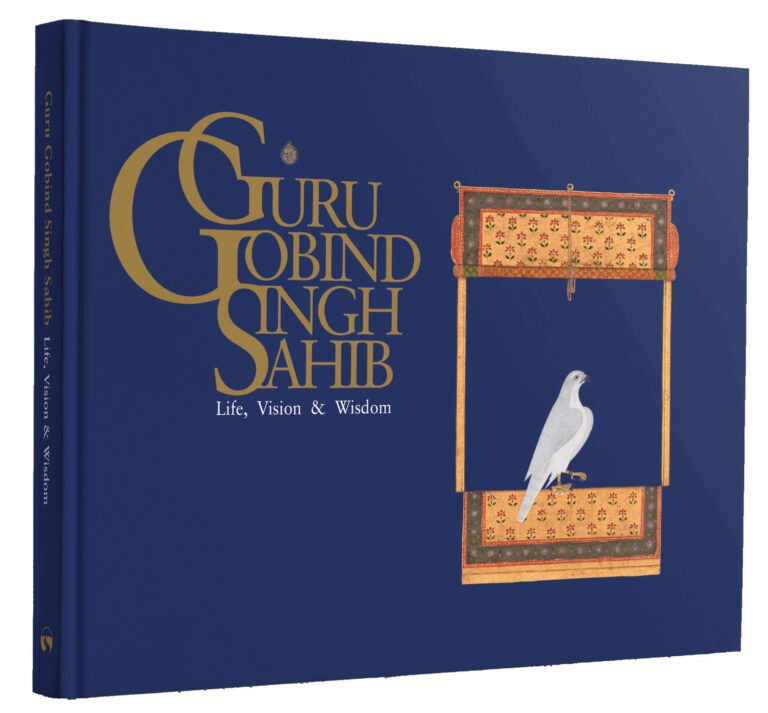
In time for the 350th anniversary of 10th Sikh Sovereign Guru Gobind Singh’s coronation, Harinder Singh, a senior fellow at the Sikh Research Institute, New Jersey explores the life of the last founder-Guru in his book Guru Gobind Singh Sahib: Life, Vision & Wisdom, released in late 2025. Working with a calligrapher Albel Singh, painter Kiran Kaur and graphic designer Praveen Kumar, Harinder combines poetic text, original art, and a contemporary translation of original manuscripts and secondary texts written by the Guru’s court poets—Bhai Nand Lal Goya in Persian, and Chandra Sain Sainapati in Braj and old Panjabi. Harinder also situates Guru Gobind Singh as 'the first diaspora Guru'. Born outside of Panjab and shaped by civilizations across South Asia, the Guru’s life modeled how to meet cultural conflict 'not with otherness, but with oneness'. Harinder says, 'I have two audiences in mind. One is Sikhs who want to know the Guru’s thoughts. The second is non-Sikhs who talk about the Guru, reference him, but don’t really know his thoughts. Sikhs and non-Sikhs who talk about Guru have reduced him to a particular stereotype.’ Harinder says the main stereotype of the Guru is that he was a great warrior and that feeds into this larger stereotype about Sikhs in India—that Sikhs are the martial race, which Harinder says is not just a colonial import, but is also part of the Indian nationalism import. ‘I’m not countering that, but I’m addressing it because the Guru is invoked by a set of political nationalistic people in India. One of the things I’m trying to say is the contemporary politics of India does not define who the Guru is. He created great poets. He created great warriors. He chiseled them...The Guru, in his representative democracy model, gave the next Guruship, or the leadership, to the Khalsa’, he adds. Among the first Panj Piare (enthroned lovers), only one was a Panjabi man, the other four were non-Panjabis from South Asia, including one from Gujarat. Harinder notes that this was how Sikh wisdom worked in South Asia back then. It was demonstrated that we treat everyone equally.
Fin Shots: The Canada-India uranium deal explained.

Panjab: Six districts ‘Ultrasensitive’ drug zones; Govt. promises 8% increase in DA; Over 10 cases of kidnapping & extortion of illegal emigrants. Sikh: UK's Johal gets bail; ‘Akal Takht’ expels SAD Leader & 'Granthi'; Truck driver attacked days after US poster; 'Takht Sri Hazur Sahib' marks Modi birthday—and more stories.

Panjab: Laborer names Cheema in dying declaration; Power crisis; Court restrains Majithia & Khaira; Sekhon joins AAP & Sidhana joins WPD. Sikh: DHS accused of bigotry over Mr. Singh poster; Pakistan stops pilgrims; Canada mishandles protest—and more stories.
