
Thank you! Your submission has been received!
Oops! Something went wrong while submitting the form.
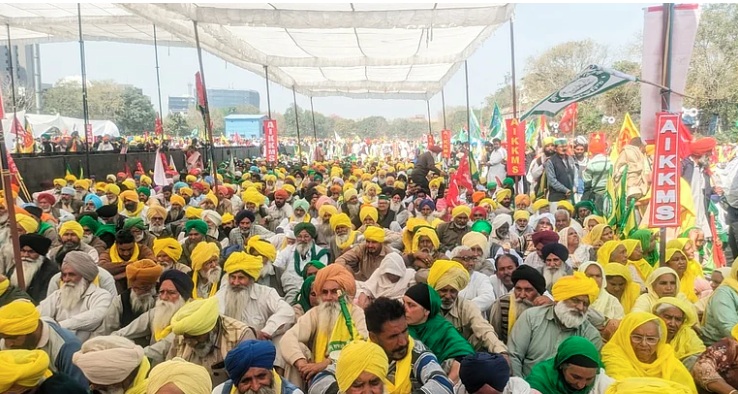
Farmers, agricultural workers, and labor unions observed All India Resistance Day on 16 Jan. On a call given by the Samyukt Kisan Morcha (United Farmers Front), village level meetings, demonstrations and gatherings were organized across India to oppose the Seeds Bill 2025, Electricity Amendment Bill 2025, Viksit Bharat Guarantee for Rozgar and Ajeevika Mission (Gramin) 2025 (rural employment scheme), and the four Labour Codes. The protesters said these legislations threaten farmers’ livelihoods, workers’ rights, food security, employment guarantees and the federal rights of states. Demonstrations were held throughout Panjab and 11 other Indian states. Krishna Prasad, finance secretary, All India Kisan Sabha (All India Farming Council) said, ‘The US government is putting pressure on India to open up sectors... There was a 7% import tax on cotton that has been totally withdrawn. The US is demanding there should be no tax for importing milk products and soybean, maize—whatever they are unable to sell in China, they want to dump in the Indian market. We will never allow this. If the government agrees to sign a Free Trade Agreement with the US, that means the government is not with the people of India, not with the farmers of India, not with the workers of India, but with foreign multinational corporations.’ Meanwhile, India has imposed a 30% import duty on pulses and lentils originating from the US. The decision is viewed as a retaliatory measure following higher tariffs imposed earlier by the US on certain Indian products. Furthermore, in light of escalating tensions in Iran, US president Donald Trump announced a 25% tariff on any country ‘doing business’ with Iran, a move that could impact India. The announcement has sparked concern about the fate of India-operated Chabahar port in Iran. India is currently operating under a six-month conditional US sanctions waiver that will expire in late April. The US has already imposed 50% tariffs on India, among the highest in the world, including 25% for purchases of Russian oil. Concurrently, India’s Directorate General of Foreign Trade has partially lifted a ban imposed in 2022 by allowing wheat products of 500K tons for export (earlier coverage).