Thank you! Your submission has been received!
Oops! Something went wrong while submitting the form.
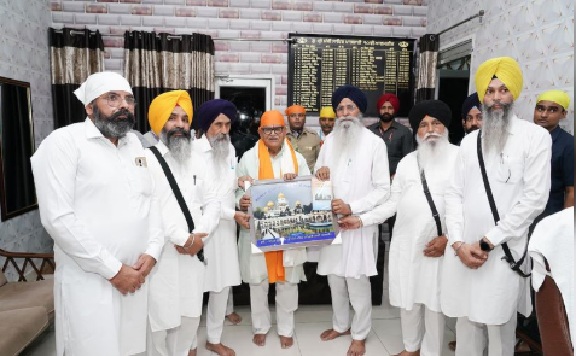
Sri Akal Takht Sahib (Eternal Throne) acting Jathedar (leader) Giani Kuldeep Singh Gargajj held a meeting on 24 May with representatives of Gurdwara management committees and Sikh organizations on the Jaagat Jot Sri Guru Granth Sahib Satkar (Amendment) Act (JJGGSS), 2026, at Gurdwara Dewan Asthan in Jalandhar. Giani Gargajj said, 'The first incident (of sacrilege) took place in the 1970s and culminated in the 1978 clash involving the Nirankari sect. Later, issues emerged around Piara Singh Bhaniarawala, and then the 2015 sacrilege incidents linked to the Sirsa dera (sect) surfaced. A pattern is clearly visible.' He said if followers of any sect were found involved in sacrilege incidents, legal provisions should also hold the heads of such sects accountable. ‘However,’ Giani Gargajj said, 'the new law creates suspicion around the Sikh sangat (community) itself and imposes restrictions on it.' On 19 May, at a press conference at the Kendri Sri Guru Singh Sabha office in Chandigarh, Justice Nirmal Singh, a retired judge of the Punjab and Haryana High Court, said the amended JJGGSS law must be repealed because its provisions lowered the sanctity of the Guru Granth Sahib (Sikh scripture and charter). Pointing at the gaps in the amendments, Justice Nirmal Singh said, 'How the holy scripture is kept as case property, could amount to sacrilege in itself.' He added, ‘When the JJGGSS Act was passed initially in 2008, it was objectionable and it is flawed even now.' On 22 May, Giani Gargajj and Shiromani Gurdwara Parbandhak Committee president Harjinder Singh Dhami met Panjab Governor Gulab Chand Kataria at Gurdwara Sri Manji Sahib Patshahi Daswi, Alamgir, Ludhiana and handed him a list of objections to the JJGGSS law. The Governor said he is considering convening a meeting with representatives of the state government to discuss objections raised by Sikh organizations. Concurrently, the Supreme Court of India on 20 May declined to entertain a Public Interest Litigation seeking a sweeping regulatory overhaul of Sikh religious and heritage properties across India. The Chief Justice of India said, 'If we step in, it might appear as though there is interference in religious matters,' and advised the petitioner to meet the Parliamentary Committee instead (earlier coverage).