


Thank you! Your submission has been received!
Oops! Something went wrong while submitting the form.
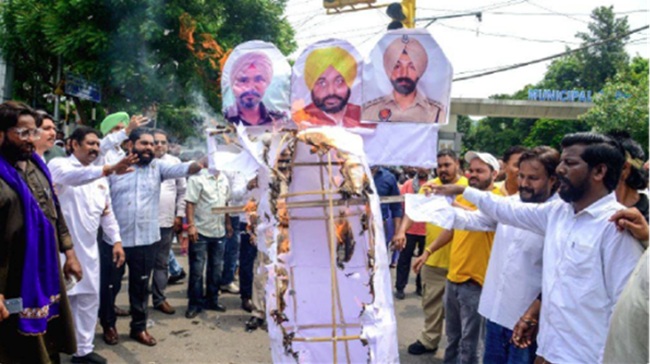
Sanitation workers across Panjab ended their nearly three-week-long strike on 1 Aug, after the state government implemented its decisions for sanitation workers, ensuring them better salaries and job security. Panjab Education Minister Harjot Bains said that from 1 Aug, outsourced sanitation workers will be brought under the contractual system with an enhanced monthly salary of USD 215, of which USD 178 will be given as in-hand salary, while the remaining will be deposited toward their savings. Additionally, sanitation workers serving on contract since 2021 will be regularized—a major demand raised during the negotiations. Referring to the recent Barnala baton-charge incident on 22 Jul, Bains said the concerned Deputy Superintendent of Police was suspended immediately, while the police personnel at the police station were transferred. National Human Rights Commission member Priyank Kanoongo had met the injured sanitation workers in Barnala on 29 Jul. Following the Barnala incident, sanitation workers called a state-level bandh on 30 Jul. Main markets in Barnala, Hoshiarpur, Sangrur, Tarn Taran, and Samana remained shut. In Hoshiarpur, workers of the Municipal Corporation Safai Karamchari Union (cleanliness workers union), including a large number of women workers led by the union's president, Karanjot Adiya, assembled at the Municipal Corporation complex before taking out a protest march through the city's main bazaars on two-wheelers. The strike had paralyzed sanitation services in urban areas, leading to overflowing waste collection points, foul smell, and growing concerns over public health, particularly during the ongoing monsoon season. Health concerns grew in Ludhiana, Panjab’s richest city, as rainfall inundated homes and commercial establishments, while age-old sewer lines overflowed and mingled with the growing mountains of garbage that had piled up on every street corner. Meanwhile, Kapurthala Deputy Commissioner Akash Bansal had to invoke emergency powers under Sections 233 and 234 of the Punjab Municipal Act, 1911, directing immediate alternative arrangements for sanitation services citing the risk of water-borne and vector-borne diseases. On 28 Jul, the Panjab Government had announced a welfare package for safai sevaks (waste workers) and sewermen, which was rejected by the sanitation workers’ union. The agitation had also renewed debate over the modernization of Panjab’s sanitation system. Following the meeting with Bains, the sanitation workers’ unions decided to resume garbage lifting and sanitation work across Panjab with JCBs (diggers and excavators) deployed to do the heavy lifting of garbage piles from the initial days (earlier coverage).