Thank you! Your submission has been received!
Oops! Something went wrong while submitting the form.
Panjab: Badal attacked; Shahi Imam on Partition; State-Union govt. spar over RDF funds; Farmers stopped from walking to Delhi; US Truckers at Employment Risk. Sikh: Ambala clash; ‘Quami Insaf Morcha’ march stopped; Partition prayers; Diaspora questions SGPC—and more stories.
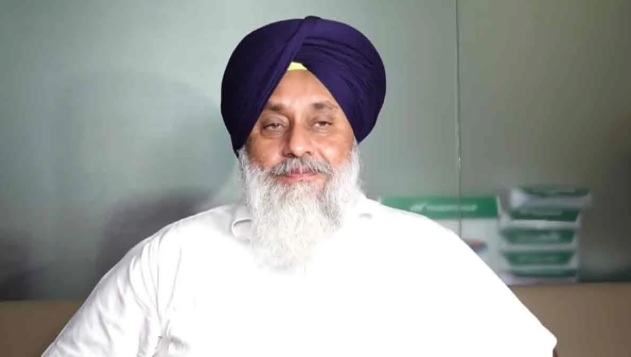
Shiromani Akali Dal (SAD) chief and former Panjab Deputy Chief Minister Sukhbir Singh Badal was attacked near Gurdwara Mata Sahib Deevan Ji in Nanded, Maharashtra on 13 Aug. Badal was attacked by 62-year-old Nihang (traditional warrior) Jaspal Singh with a sharp-edged weapon, allegedly a kirpan (traditional sword), and sustained an injury to his right hand. The attack took place at 1:30 pm IST when Badal was coming down the steps of the Gurdwara after offering prayers. Jaspal attempted to stab Badal in the stomach, but the security personnel intervened. Badal was rushed to Yashosai Hospital for treatment and was discharged the next day after treatment. A security personnel, Santosh Kendre, deployed in Badal's security, was also injured in the attack. Badal's wife and SAD Member of Parliament Harsimrat Kaur Badal was with him when the attack took place. Jaspal is from Pune, Maharashtra and used to work as a lawyer in a Pune court. For the past two years, however, he had been serving at Gurdwara Mata Sahib which is managed by Nihangs. Police have taken Jaspal into custody and are investigating his background, his activities at the Gurdwara and the events immediately preceding the assault. They have not yet established a clear motive behind the attack. Emerging from the hospital after treatment, with his right hand in a cast, Badal said he was 'feeling perfect' and 'is not afraid'. He added, 'A lot of forces do not want peace in Panjab and in this country. They feel Shiromani Akali Dal is a hindrance to their mission. These forces, which have been prevalent before, made an attempt on my life a year ago as well. They tried again. Their mission is to take control of the situation in Panjab and disturb peace, which as president of Akali Dal I will never allow it. Neither my father allowed it. Both times they attacked me in the holiest of places.' On 4 Dec 2024, Badal survived an assassination attempt outside the Darbar Sahib (Golden Temple), Amritsar. He was unharmed, and the gunman was quickly overpowered and arrested on the spot. Badal was attacked while he was performing duties after Sri Akal Takht Sahib (Eternal Throne) pronounced the tankhah (salary, implying punishment) for him and several other SAD leaders for 'mistakes' committed during the SAD’s rule in Panjab from 2007–17 (earlier coverage).
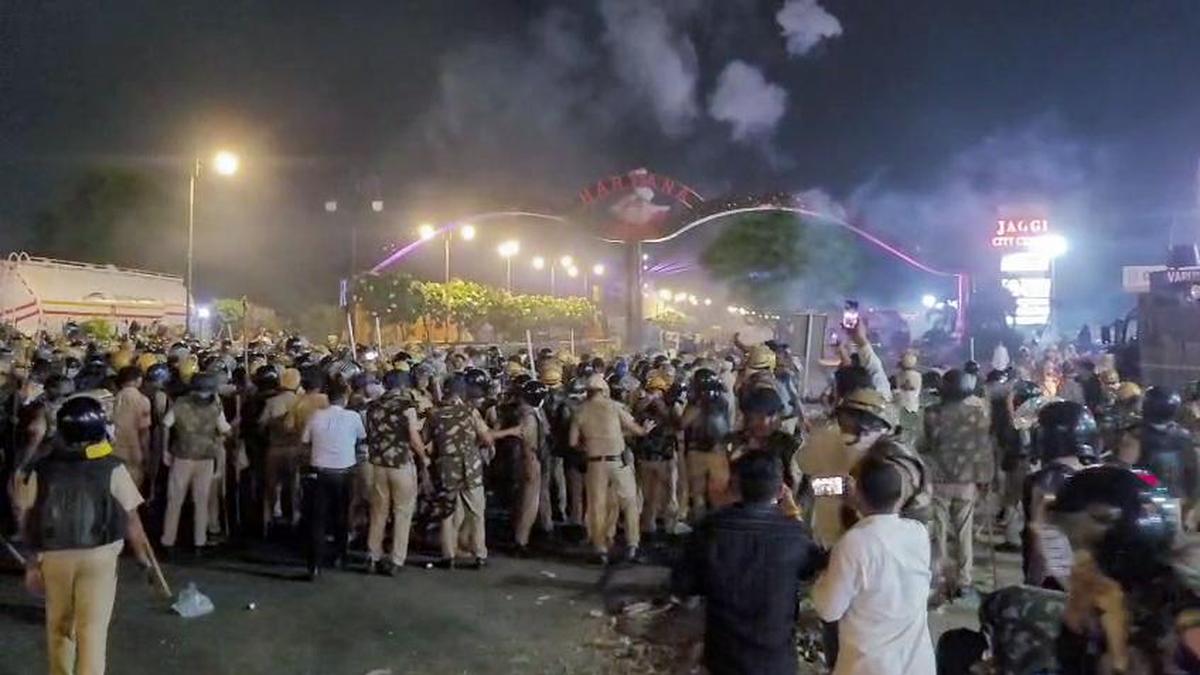
Police in Haryana on 13 Aug resorted to tear gas and baton charge to restore traffic on Delhi-Amritsar National Highway. Sikh protesters had blocked the road in Ambala, Haryana demanding action against national president of the International Anti-Khalistani Terrorist Front Gursimran Singh Mand. Nearly half a dozen policemen and several protesters sustained injuries in the clashes. The Sikh demand and blockade of the highway were related to incidents on 7 Aug, which was the eighth sovereign Guru Harkishan’s birth anniversary and a large number of people had gathered at Gurdwara Panjokra Sahib. Mand had demanded special entry to the Gurdwara. When denied, he drove through the crowd crushing a motorcyclist—27-year-old Surinder Singh whose spine was fractured—and injuring others. Mand also used derogatory words despite his security officers asking him to desist. After which Sikh youth beat him up. Instead of filing a First Information Report (FIR) against Mand, police had arrested Sikh youth Harvinder Singh and Anmol Singh for beating Mand. On 13 Aug, the Sikhs had given a call to gather at Gurdwara Panjokra Sahib to decide the next course of action. As the Sikhs approached the Gurdwara, police started caning and tear gassing protesters near NCC Senior Secondary School, risking the students and staff. After discussion at the Gurdwara, Sikhs decided to block the highway to force the police to register a case against Mand, and release Harvinder and Anmol. Haryana Sikh Gurdwara Management Committee (HSGMC) president Jagdish Singh Jhinda, who was also injured in the clashes, said the Chief Minister's office was also in talks with the HSGMC and had largely agreed to the demands. The police filed an FIR against Mand and his son Bhavjot Singh after which Ambala Superintendent of Police (SP) Ajit Singh Shekhawat appealed to protesters to lift the blockade. The protesters again insisted on the release of the Sikh youth leading to further police attacks and clashes. The blockade was finally lifted after six hours. On 18 Aug, the Haryana CM Nayab Singh Saini met the Sikhs and promised to cancel the FIRs against the youth and the protesters, and release the protesters by 23 Aug. Sri Akal Takht Sahib (Eternal Throne) Jathedar (leader) Giani Kuldip Singh Gargajj and Shiromani Gurdwara Parbandhak Committee president Harjinder Singh Dhami have condemned the Haryana police action (earlier coverage).
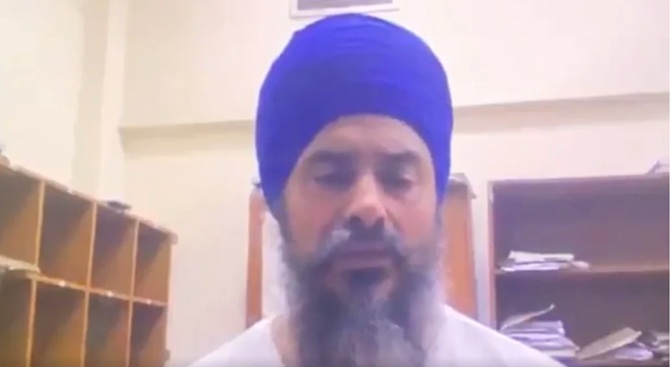
Panjab Chief Minister Bhagwant Mann met Panjab Governor Gulab Singh Kataria seeking a 10-day parole on humanitarian grounds for pro-Khalistan separatist Jagtar Singh Hawara who is currently serving life imprisonment at Delhi’s Tihar and Mandoli jails. Hawara was convicted as a conspirator in the 1995 assassination of the 12th Chief Minister of Panjab Beant Singh. Hawara's octogenarian mother is very ill, hence the request for parole. In a departure from his earlier stand when he opposed Hawara’s parole, Bharatiya Janata Party leader, former union minister, and Beant's grandson Ravneet Singh Bittu, thanked the Governor 'for sending a positive report'. On 13 Aug, seeking regular parole, Hawara declined Delhi Prisons Department’s two-day custody parole offer to meet his mother. Custody parole is a short-term, supervised release of a convicted prisoner from jail. An armed police escort stays with the inmate the entire time as they attend urgent family events. A senior police officer said, 'He’s a high-risk prisoner and we have to deploy staff with him. Top officials will take a final call on whether he’ll be given custody parole or normal parole.' Meanwhile, the Quami Insaf Morcha (Community Justice Front, QIM) seeking the release of Bandi Sikhs (Sikh prisoners)—who have been incarcerated for prolonged periods—and Hawara, had proposed a march from Sahibzada Ajit Singh (SAS ) Nagar to the Panjab Governor's residence. The Morcha has been maintaining a protest site along the Sector 52-53 Chandigarh-YPS Chowk stretch since 7 Jan 2023. Interestingly, on 13 Aug evening, Hawara released a two-minute edited video, apparently shot inside the prison, appealing to his supporters to strictly follow the directions of the Morcha leaders, and ensure that the protest remains peaceful. He said, 'I appeal to all those participating in the march being organized by the Quami Insaf Morcha to ensure that it remains peaceful. The Morcha has been continuing at the Chandigarh-Mohali border for four years. It is your duty to ensure that no untoward incident occurs on 15 Aug (India's Independence Day).' However, when the march tried to breach and bring down police barricades at the SAS Nagar-Chandigarh border, police used water cannons and tear gas to stop them. The protesters resisted the police action and resorted to stone-pelting, resulting in clashes. QIM has given a Panjab bandh (closure) call for 21 Aug (earlier coverage).
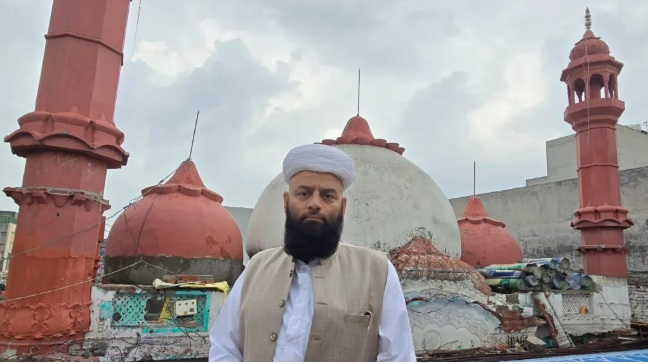
The Shiromani Gurdwara Parbandhak Committee (SGPC) organized an Ardas (prayers) ceremony at Sri Akal Takht Sahib (Eternal Throne) in memory of all Panjabis who were killed during the carnage and Partition of Panjab in August 1947. Addressing the congregation, Akal Takht Jathedar (leader) Kuldip Singh Gargajj said elders had described the 1947 Partition as the Punjab Da Ujaara (ruination of Panjab), during which more than 1M Panjabis were massacred. He said the Ardas was offered praying that such a time never returns. Ardas was also held at Gurdwara Shaheed Baba Deep Singh Ji, Amritsar. Separately, recollecting Partition, the Shahi Imam of Panjab, 48-year-old Maulana Usman Ludhianvi, said that before Partition, several Muslim families lived in the Brown Road area of Ludhiana. Almost all migrated to Pakistan in the aftermath of Partition and communal violence. But his great-grandfather Maulana Habib-Ur-Rehman, a freedom fighter and national president of the Majlis-e-Ahrar Islam Hind during the British Raj, appealed to people to remain in India, warning that Partition would leave behind painful memories for generations. When riots engulfed Ludhiana, his family found themselves virtually the only Muslim family left in the locality. Shahi Imam recalled how his great-grandfather’s friend, Bachittar Singh, protected the family from violence by guarding their house. Freedom fighter and local resident Prabha Devi, meanwhile, safeguarded historical literature and documents associated with the freedom struggle that were in his great-grandfather’s possession. Meanwhile, the decision by the Akal Takht and the SGPC to retain exclusive authority over the printing of Birs (tomes) of Guru Granth Sahib (Sikh scripture and charter) has sparked concern among Sikhs in Europe. Referring to the recent controversy over alleged Rehit Maryada (code of religious conduct) violations during the transportation of Birs to Canada by ship, after a virtual meeting with Sikh leaders from various European countries, Germany resident Jhujhar Singh said, 'Sikh organizations in Europe have the resources and capability to establish appropriate facilities for the printing of Birs in accordance with the Rehit Maryada. Why can’t Sikhs living abroad print the Birs ourselves?' Austria resident Surinder Singh Parmar said if the SGPC wants to retain responsibility for printing and transporting the Birs, it should arrange transportation on a dedicated or leased aircraft, equipped with a Palki Sahib (palanquin), and other facilities mandated under the Rehit Maryada (earlier coverage).
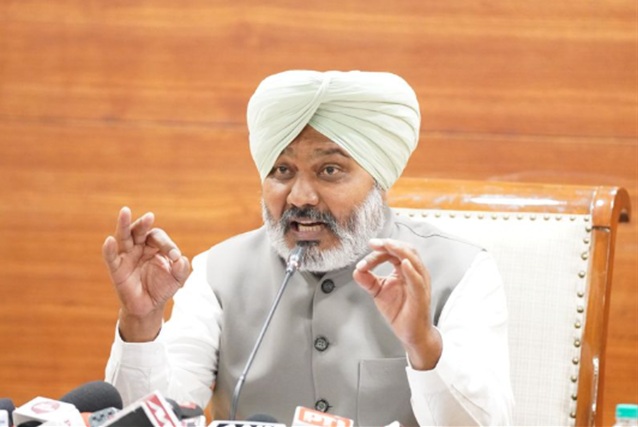
A war of words broke out between the Panjab and the union government on 14 Aug over the pending Rural Development Fund (RDF) amounting to USD 1.03B after Union Agriculture Minister Shivraj Singh Chouhan said that Panjab had always received the funds as per rules and faced ‘no discrimination’ in their release. Responding, Panjab Finance Minister Harpal Singh Cheema termed Chouhan’s statement as ‘highly irresponsible and misleading’ adding, ‘On 28 Nov 2024, I, along with minister Lal Chand Kataruchak, met Union Minister Prahlad Joshi and demanded the release of Panjab’s RDF money. On 17 Jul, Chief Minister Bhagwant Mann met Joshi and reiterated the demand.’ Cheema further said that he met Union Finance Minister Nirmala Sitharaman on 10 Jan following which CM Mann met Union Home Minister Amit Shah on 17 Jan requesting release of Panjab’s RDF. Cheema then sent an official letter to the union government on 14 Mar 2026, after which Joshi had assured them that he would hold a meeting with Shah and Sitharaman to discuss the matter. Cheema said, ‘Despite this, neither have the funds been released nor has any other positive step been taken’. He said the union government procures wheat and paddy at Minimum Support Price, for which 3% RDF is to be provided as per the rules. Additionally, the union government said it has allocated USD 139.3M for Panjab under the newly implemented Viksit Bharat–Guarantee for Rozgar and Aajeevika Mission Gramin scheme for 1 Jul 2026–31 Mar 2027, with USD 4.6M released as the first installment. Panjab initially opposed the new law, but later took a U-turn and notified the scheme in July. Concurrently, a report by the Forest Research Institute (FRI), Dehradun warns that Panjab’s ambitious plan to bring two lakh hectares of farmland under agroforestry over the next five years faces critical challenges—inadequate marketing infrastructure, fluctuating timber prices, and the continued dominance of middlemen impacting farmers’ returns. Panjab has been pushing agroforestry under its Green Punjab Mission, distributing improved eucalyptus and poplar planting material to farmers to encourage adoption. The report says that unlike conventional crops, farmers growing trees have limited marketing options, and often operate in a largely buyer-driven market. The absence of an adequate government marketing policy for tree-based produce remains a key concern (earlier coverage).
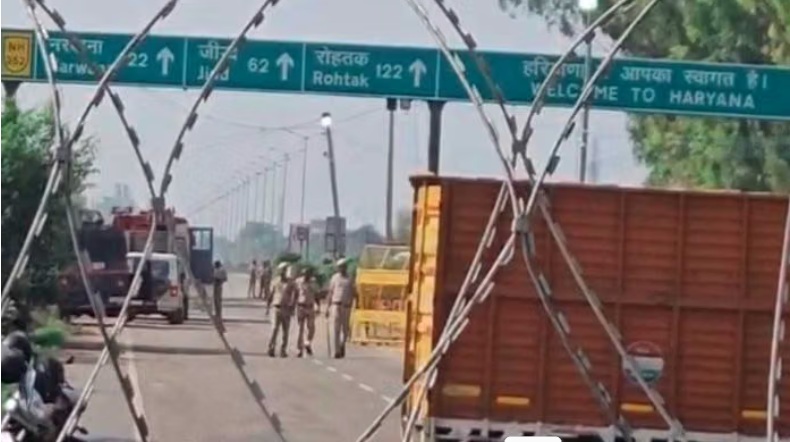
The farmers’ union Samyukta Kisan Morcha (SKM) (Non-Political), led by Jagjit Singh Dallewal, had given a call for the Kisan Bachao Padyatra (Save Farmers Walk) from Data Singh Wala village, Jind district, Haryana on the interstate border to Jantar Mantar in Delhi. The plan was to walk 228 kms to Delhi culminating in a farmers' meet on 29 Aug against the proposed India-US trade deal and to press for a legal guarantee for procuring crops at the Minimum Support Price. However, three rounds of talks between representatives of the SKM (Non-Political) and Haryana government officials remained inconclusive. Dallewal rejected the officials' offer of a meeting with the Haryana chief minister and insisted on arranging an appointment with the Union Agriculture minister to discuss their issues. The police had deployed multi-layered barricades, concrete blocks, metal barriers, and riot-control personnel to stop the pedestrians. On 15 Aug, as 51 padyatris (pedestrians) began their walk from the interstate border, the Haryana police stopped and detained them. Dallewal said, ‘This barricading has exposed the Bharatiya Janata Party government. On earlier occasions, it had a problem when farmers came with tractors. Now, when only a small group of farmers wants to march on foot to Delhi, it still has a problem and is not allowing us to proceed. This exposes the government's anti-farmer face.’ Commuters traveling through the border area have been advised to remain on alert and follow instructions issued by police and local administration. The farmers, now released, are camping at the Khanauri interstate border. They say their agitation will continue until their demands concerning agricultural policies and farmers’ interests are addressed. Meanwhile, some farmer unions in Panjab attacked the Bhagwant Mann-led Aam Aadmi Party (AAP) government over its opposition to the union government's E20 ethanol-blended fuel policy. They accused the state government of indulging in political posturing instead of engaging in constructive talks with the union government. The criticism came during a Kisan Vidhan Sabha (Farmers' Assembly) organized by the Azad Kisaan Morcha (Free Farmers' Front) in Chandigarh, in which 16 lesser known farmer unions participated. Concurrently, reduced rainfall in Maharashtra and Karnataka—India's biggest sugarcane-producing states—might force India to consider restricting the amount of sugarcane used for ethanol in the season beginning October to boost sugar output and try to calm record prices (earlier coverage).

The Panjab government purchased 434.4M tablets of Buprenorphine + Naloxone—a drug used to help wean addicts off substance dependence—in the past four-and-a-half years and supplied them to addicts seeking treatment for drug abuse, especially in the state's jails. As of July 2026, 88.7M tablets have been supplied in jails by the Punjab Health Systems Corporation (PHSC), indicating a sharp rise from 11.7M tablets supplied in 2022. 40,830 inmates have been registered for treatment in jails since 2022. Aam Aadmi Party Member of Legislative Assembly from Bathinda, Jagrup Singh Gill, shared the data while presenting the 129th Report of the Committee on Public Undertakings tabled in the Parliament. Panjab Health Minister Dr. Balbir Singh said the increase in tablet supply was due to the government's decision to set up treatment centers and Outpatient Opioid Assisted Treatment clinics in jails. Meanwhile, the Panjab government has launched a training program across 12 districts to help educators identify early signs of mental health concerns and vulnerability to drug abuse among students. More than 21,850 teachers are expected to undergo the training starting August 2026 under the Yudh Nashean Virudh (War on drugs) campaign. The first sessions were held in Fazilka and Tarn Taran districts, with more than 800 teachers participating. Additionally, schools across Panjab are dedicating 20 minutes every day for the mental health period under the state’s mindfulness program till 31 Aug. The program aims to help students manage stress and improve concentration for better learning in the classroom. During the sessions, students will take part in breathing exercises, guided reflection, affirmations, and gratitude activities. Concurrently, the parliamentary standing committee on health and family welfare has recommended Panjab’s Public-Private Partnership (PPP) model for providing subsidised MRI, CT scan and laboratory diagnostic services to the union government asking it to help other states adopt similar models. The observations are part of the committee’s report, which has been tabled in both Houses of the Parliament. The panel noted that Panjab’s model of providing high-end radio-diagnostic services at substantially discounted Central Government Health Scheme rates was a highly effective mechanism for reducing healthcare costs. The report says that PHSC entered into concession agreements with two private firms under the PPP model to improve affordability and expand access to quality diagnostic services (earlier coverage).
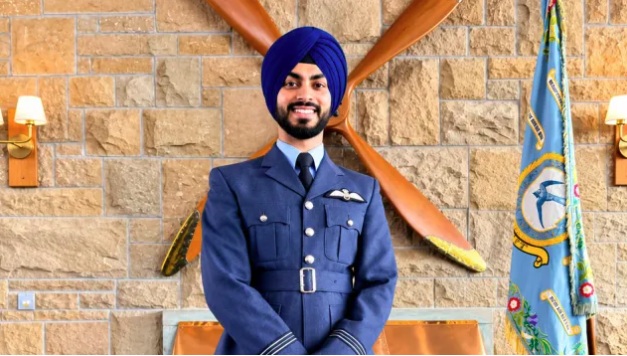
Thousands of foreign truckers, including Indian drivers from Panjab and Haryana, have been put at risk in the US, as authorities canceled more than 28K non-citizen Commercial Driving Licences (CDLs). US authorities canceled the licenses, saying many truckers did not meet ‘English-language rules’ or came from ‘poorly-run driving schools’. The campaign grew after a fatal crash in Florida in August 2025 gained traction. Military veterans are now being recruited to replace these drivers. According to data from the North American Punjabi Truckers Association, between 130–150K commercial drivers in the US come from Panjab and Haryana alone, many of whom arrived in the past two decades, building careers as long-haul drivers or setting up their own transport firms. A US-based advocacy group Sikh Coalition, says roughly a third of California’s truck drivers are Sikh. Legal director Munmeeth Kaur said that losing a CDL means losing an entire livelihood. Thousands of drivers were given cancellation notices without a chance to respond or correct errors. The Trump administration said it had also worked with the states to shut down 9.5K driving schools that have helped these truckers drive in the US. Meanwhile, Canada Border Services Agency (CBSA) officers conducted immigration status and identity checks at a protest site in Calgary on 12 Aug where hundreds of international students were demonstrating against rejected Post-Graduation Work Permit applications. More than 1K students, including many from Panjab, protested for 22 days, including through a rotating hunger strike. The CBSA flagged a dozen of these student protestors as ‘being possibly inadmissible’, who could be forced to leave Canada. The protesters are calling for rejected applications to be reviewed and for authorities to protect students who entered Canada under earlier immigration rules. Additionally, Indian-origin Flight Lieutenant Arshdeep Singh Dang made history by becoming the first Sikh to attain fighter wings in Britain’s Royal Air Force (RAF) since World War II. Dang graduated as a fighter pilot during a fast-jet pilot ceremony at RAF Valley in North Wales on 14 Aug. The RAF said Dang was the first Sikh trainee to graduate on Texan aircraft at its 4 Flying Training School under the UK Military Flying Training System. Born in Chandigarh in 1998, Dang moved to the UK with his family when he was six years old (earlier coverage).

Between 1983-95, Panjab lived under the most extraordinary legal architecture independent India has ever assembled. The Punjab Disturbed Areas Act, 1983 and the Armed Forces (Punjab and Chandigarh) Special Powers Act, 1983, conferred shoot-to-kill powers and barred prosecution of the forces without central sanction. The National Security Act (NSA) was amended in 1984 for Panjab alone, to permit two years’ preventive detention with deferred review. The Terrorist Affected Areas (Special Courts) Act,1984 created secret courts with anonymous witnesses and a reversed burden of proof. Terrorist and Disruptive Activities (Prevention) Act (TADA) followed in 1985, and was made harsher in 1987—when confessions made to police officers became admissible evidence, bail became unobtainable and guilt could be presumed. The Religious Institutions (Prevention of Misuse) Act,1988 policed the Gurdwaras. Above it all sat a constitutional layer: President’s rule stretched to five continuous years by successive amendments and the chilling 59th Amendment,1988, which for Panjab alone recorded ‘internal disturbance’ as a ground for emergency, and permitted the suspension of Article 21—the right to life and personal liberty itself—before being repealed, unused, in 1990. These Acts were not all invented for Panjab. The Armed Forces (Special Powers) Act (AFSPA) 1958 was written for the Naga Hills. West Bengal was given its own preventive detention law and then Maintenance of Internal Security Act (MISA) during the Naxalite movement in 1967. Andhra Pradesh used a 1948 Act to declare Srikakulam a disturbed area. The word ‘encounter’ entered the Indian political vocabulary in those years—in the killings of West Bengal and the staged deaths of Andhra Pradesh, and Panjab. Panjab Police, in other words, did not invent the method but inherited and industrialized it by giving it a bureaucracy of promotions and crematoria registers. Armed with this apparatus, the state in Panjab convicted almost no security personnel. Roughly 76K people were detained under TADA nationwide between 1985–94. Panjab recorded a disproportionately high number of arrests, yet its conviction rate was approximately 0.37%. If any legal regime could have tried Panjab’s militants, this one could. Instead, the state eliminated them through an economy of cash rewards and out-of-turn promotions. Bodies, not convictions, became the metric of counterinsurgency success. The template perfected in Panjab later moved to Kashmir, where the state’s own human rights commission confirmed thousands of bodies in unmarked graves (earlier coverage).
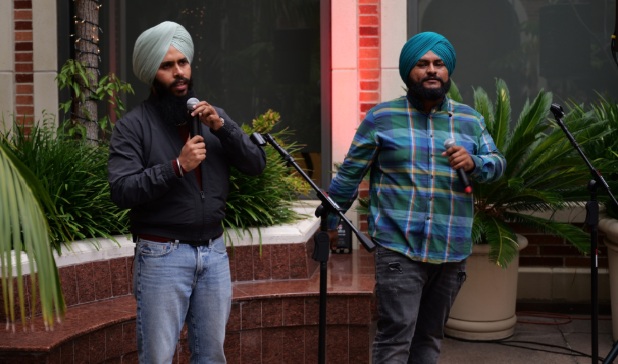
A Mexican-Spanish turbaned singer, Talibelico, is becoming an unlikely cultural bridge between California’s Panjabi and Mexican communities. His Panjabi-Spanish fusion music is getting millions of views online. The music, composed in collaboration with Harveer Singh, an immigrant from Jalandhar, draws attention to multiculturalism amid growing nativist backlash. Harveer and Talibelico attempt to highlight immigrants’ contributions to the US. Talibelico’s donning of the turban brings to light the ties between the Indian and US communities in California in the early 1900s. Back then, many Panjabi men in California married Mexican women because 17th Century US anti-miscegenation laws banned marriages between people of different races and were overturned by the US Supreme Court in 1967. Karen Leonard, who retired as an anthropology professor from University of California, Irvine, noted at least 385 marriages between Panjabi men and Mexican women in California’s agricultural valleys during the early decades of the 20th century. In her paper, Changes over Time: Punjabis, Punjabi Mexicans, and Sikhs in North America, she writes, ‘The post-1965 Panjabi Sikh immigrants have tried to downplay the early bicultural community’. Today, California’s Central San Joaquin Valley is home to nearly 2.4M Latino residents. The state also has US’ largest Sikh population—estimated at 250K by the US-based advocacy group Sikh Coalition. Referring to the past, Talibelico says, ‘Historically, Panjabi men married Mexican or Hispanic women. But many people don’t know that history. The message of this connection is strong. We need to unite.’ Talibelico, though, claims no such ancestry and says that he was drawn to Sikhi after seeing members of the Sikh community in Modesto, California three years ago. He then researched the significance of the turban, and ‘found it beautiful and dignified’. Talibelico says his experiences of wearing a turban has been overwhelmingly positive. He says, ‘I have received appreciation in public places and stores. When I visited a Sikh temple (Gurdwara) in Bakersfield, California I was embraced with tremendous love.’ Born as Esdras in Redwood City, California, and raised by a Mexican mother in Tijuana, Mexico, Talibelico says music was inevitable in his life. ‘On my mom’s side, everyone was immersed in music.’ He says the turban transformed him, ‘I feel different, like I am channeling powerful energy. I am also learning about the respect and responsibility it carries, and its profound personal significance.’
Dora Mengüç in Jacobian: Gen Z Isn’t Apolitical. It’s Lost Faith in Capitalism.
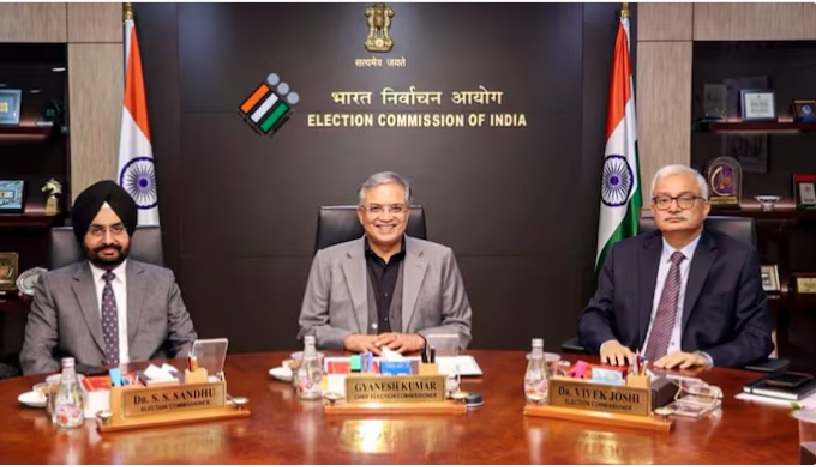
Panjab: Dissent in Indian Election Commission; ED probes GMADA; AAP admits serious accounting impropriety; Student unrest erupts in two private universities. Sikh: US Ambassador visits ‘Darbar Sahib’; SCI remarks on ‘Vande Mataram’ favor Sikhs; Carney’s deprioritizes safety for Canadians—and more stories.

Panjab: Six districts ‘Ultrasensitive’ drug zones; Govt. promises 8% increase in DA; Over 10 cases of kidnapping & extortion of illegal emigrants. Sikh: UK's Johal gets bail; ‘Akal Takht’ expels SAD Leader & 'Granthi'; Truck driver attacked days after US poster; 'Takht Sri Hazur Sahib' marks Modi birthday—and more stories.
