Thank you! Your submission has been received!
Oops! Something went wrong while submitting the form.
Panjab: Dissent in Indian Election Commission; ED probes GMADA; AAP admits serious accounting impropriety; Student unrest erupts in two private universities. Sikh: US Ambassador visits ‘Darbar Sahib’; SCI remarks on ‘Vande Mataram’ favor Sikhs; Carney’s deprioritizes safety for Canadians—and more stories.
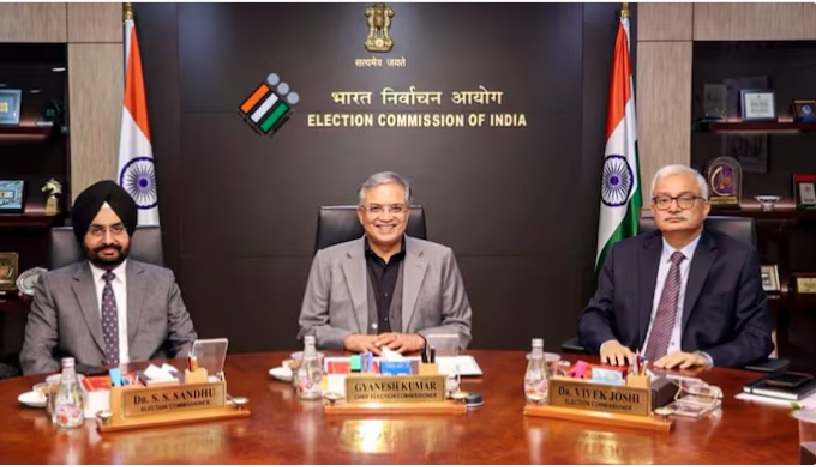
Since July 2025, when the Election Commission (EC) of India began the periodic Special Intensive Revision (SIR) of the voters' list, complaints have emerged about how voter names are being deleted. Until September 2026, over 130M names have been deleted across the country. On 23 Sep, ‘The Indian Express’ published a scathing report on how the Chief Election Commissioner (CEC) has been functioning. The report said that two of the three Election Commissioners, Sukhbir Singh Sandhu and Vivek Joshi, formally recorded written dissents and objections against CEC Gyanesh Kumar on at least 14 occasions over 10 months (Nov 2025–Aug 2026). The charges are: unilateral and unauthorized decisions pushed by Kumar without their approval; a statutory voter registration Form No. 6 for first-time voters—mostly the Gen Z demographic—as modified against their written advice; centralization of electoral roll software and digital platforms (ECINet), which the commissioners warned undermined the statutory powers of decentralized Electoral Registration Officers under the Representation of the People Act; and the CEC ignored proposals by the commissioners for an independent audit of software modules by experts to ensure legal compliance. The findings show that Kumar had acted unilaterally and undermined his own team. The report has revived the Leader of Opposition Rahul Gandhi and the opposition parties’ Indian National Developmental Inclusive Alliance (INDIA) bloc’s attack on the EC, which the ruling Bharatiya Janata Party (BJP) is defending even though the EC is a constitutional body and belongs to no political party. Although the EC has tried to defend itself, its explanation concedes a revert to the original Form No. 6, a promise to audit the ECINet application and software, but does not address control of the software. The INDIA alliance and the Cockroach Janata Party have demanded Kumar’s resignation. Protests demanding CEC’s resignation and a complete overhaul of SIR have started in Delhi and various parts of India. In Panjab, the Indian National Congress, led by state unit chief Amrinder Singh Raja Warring, staged a protest and marched to the EC office in Chandigarh on 25 Sep demanding Kumar's dismissal and arrest. The police used water cannons and dispersed the protesters (earlier coverage).

An Enforcement Directorate (ED) search and surveillance operation at the Greater Mohali Area Development Authority (GMADA) office in Sahibzada Ajit Singh Nagar (SAS Nagar) ended on 24 Sep after 50 hours. The searches were a part of a money-laundering investigation, a land bank scam, and land acquisition and compensation payments. The prolonged searches led the state government to approach the Punjab and Haryana High Court (PHHC) late at night on 23 Sep. The matter was taken up in a special hearing, with proceedings continuing well past 1 am. PHHC subsequently appointed a senior-rank warrant officer to monitor the search and seizure operations and submit a report. While the ED was conducting the searches under the Prevention of Money Laundering Act, the Panjab government raised concerns before the court over the manner and duration of the operation, and the alleged detention of senior officials. The ED team took over 30 bags of seized documents and hard discs. ED says it has gathered 'substantial material' to proceed with the investigations. ED has alleged financial irregularities that could have caused a potential loss of nearly USD 1,042M to GMADA. ED said reserve prices of portions of its unsold land bank were engineered downward before auctions. The agency has also alleged that senior Aam Aadmi Party leaders Satyender Jain and Manish Sisodia held unofficial meetings with GMADA officials over master plans, land auctions, and other key decisions. Sisodia rejected the allegations as 'false, baseless, and politically motivated'. According to the ED, critical decisions on fresh auctions, land acquisition, and compensation determination were allegedly taken informally under Jain’s instructions. ED claimed senior GMADA officials carried files outside Punjab Urban Development Authority Bhawan (mansion) for meetings with Jain and his Officer on Special Duty Amarender Jha. Meanwhile, Panjab Accountant General Abhay Kumar told the PHHC that USD 666M deposited with the state treasury was liable to be kept by the state as a 'dedicated fund' and its absorption in the consolidated fund to finance general budgetary deficits is an act of 'serious accounting impropriety'. He was responding to a Public Interest Litigation claiming that such an amount was required to be appropriated specifically for compliance under Section 10(3) of the Right to Fair Compensation and Transparency in Land Acquisition, Rehabilitation and Resettlement Act, 2013 and should have been kept separately (earlier coverage).

Panjab’s ruling political party, Aam Aadmi Party (AAP), has disclosed USD 1.2M in contributions for 2025–26, down 68% from 2024–25 when it earned USD 3.9M in contributions. In 2025–26, nearly 83% of the amount came from Prudent Electoral Trust and Trident Limited, a company founded by former AAP Member of Parliament Rajinder Gupta. Prudent and Trident each gave USD 438K to the AAP. The remaining contributions totaled about USD 219K. Gupta joined the Bharatiya Janata Party in April 2026. Under the rules, political parties must identify donors whose contributions exceed USD 200 during a financial year. These contribution reports do not show a party's full annual income, which is reported separately in its audited accounts. Meanwhile, a political confrontation between Indian National Congress Member of Legislative Assembly Sukhpal Singh Khaira and AAP leader Gayatri Bishnoi from Rajasthan over a Chandigarh government residence has opened a wider debate over the allotment, occupation, and alleged misuse of Panjab government bungalows. The controversy erupted after Khaira questioned Bishnoi’s presence at a government residence in Sector 39, Chandigarh, and alleged that AAP leaders are occupying government accommodation meant for Panjab ministers and officials. The Khaira-Bishnoi face-off has put the spotlight on whether Panjab's government residences are being used strictly according to entitlement rules, or whether political considerations are influencing their allotment and occupation. For the Bhagwant Mann government, the immediate question is whether it can provide a clear house-wise account of official allottees, actual occupants, permissions granted, and rent being paid. Additionally, when former INC Chief Minister of Panjab (2002–07 and 2017–21) and now a member of BJP, Captain Amarinder Singh was asked in a recent interview if BJP understood Panjab, he said, ‘No’. He added, 'I don’t think they’ve ever actually been in power here long enough to learn how to manage the political system…You have to start at the bottom, like all of us did — working at the block level, the district level. They should ask people like us.’ On a personal note, he said, ‘As for what I’ve gained in four years—nothing, really. If you join a party, you expect to be consulted, especially someone who’s spent close to sixty years understanding Panjab. I’m not claiming to have all the answers, but I do know this state' (earlier coverage).

On 26–27 Sep, protests broke out at two private universities in Panjab—Chitkara University (CU), Rajpura and Lovely Professional University (LPU), Phagwara—over disturbing claims involving female students. At both campuses, accounts of alleged rapes and deaths/suicide spread rapidly on social media. At CU, the story grew from a series of seemingly disconnected events: screams reportedly heard from a girls’ hostel, ambulances seen on campus, and a story about a supposedly haunted hostel room. Online, these fragments became a much more serious claim—that two female students were missing and the university was concealing their deaths. At LPU, online posts alleged that a female student had been raped on campus by a construction worker and the authorities had sent her home, where she died by suicide. By the time police and university officials responded, hundreds of students were already demanding answers. Students at CU started leaving campus. Students at LPU then blocked the Delhi–Amritsar National Highway. They also allegedly vandalized the university property. After that, outsiders entered LPU and looted shops, set fires, and destroyed property. At CU, police say they have found no evidence of a death or missing student. At LPU, the police have registered a First Information Report and constituted a Special Investigation Team to investigate the rape and suicide. In December 2019, a call from CU to the police alleged that a female student had died by suicide after being sexually assaulted. Students protested amid allegations that the university was covering up the incident. In September 2022, Chandigarh University in Sahibzada Ajit Singh Nagar erupted in protest after allegations emerged that a female student had filmed other women in a hostel washroom. CU and LPU are both a quarter century old and mostly cater to pan-Indian and international students. CU's student strength in Panjab—it also has a branch in Himachal Pradesh—was 23K in 2025–26, of which 20% of students were from Panjab. LPU's student strength was 36K in 2025–26, of which 8.8% of students were from Panjab. CU is owned by Ashok and Madhu Chitkara, LPU is owned by Ashok Kumar Mittal, the Aam Aadmi Party Member of Rajya Sabha (Upper House of Parliament), who joined the Bharatiya Janata Party in April 2026 (earlier coverage).

US Ambassador to India Sergio Gor visited Darbar Sahib (Golden Temple) in Amritsar on 28 Sep as part of a high-level, 28-member American delegation comprising prominent US senators, senior government officials, and foreign policy scholars. The apex Sikh management body Shiromani Gurdwara Parbandhak Committee (SGPC) president Harjinder Singh Dhami and Sri Akal Takht Sahib (Eternal Throne) Jathedar (leader) Giani Kuldeep Singh Gargajj met Gor and discussed various issues concerning the Sikh community. Amid the diplomatic engagement, acting president of Shiromani Akali Dal (Amritsar), Emaan Singh Mann, along with party workers, gathered outside the shrine's main entrance and briefly raised slogans such as 'Khalistan Zindabad' (Long live Khalistan) and 'God Bless America' before security personnel intervened and dispersed the group. Meanwhile, the Akal Takht Secretariat has sought a written explanation from Sri Guru Singh Sabha Gurdwara Association, Surrey, British Columbia over an alleged lapse in the handling and transportation of sacred birs (tomes) of Guru Granth Sahib (Sikh scripture and charter). Some Sikhs from Toronto recently visited the Gurdwara to receive sacred birs. The Gurdwara management allowed the birs to be taken to another location without checking whether the vehicles complied with Sikh maryada (code of conduct). Concurrently, Pakistan’s Khyber Pakhtunkhwa (KPK) Sikhs have moved to get the KPK Sikh Anand Karaj Bill, 2026, in the provincial assembly, seeking legal recognition and registration of Sikh marriages. Furthermore, in its initial remarks on the Indian government’s decision that the National Song ‘Vande Mataram’, which venerates Hindu Goddess Durga in its later stanzas, is mandatory to sing by all Indians, Justice Joymalya Bagchi of the Supreme Court of India said, 'It is for the democratically-elected state to decide and give aspiration as to what the National Song is, whether it should be two stanzas or four stanzas. But nobody can infract Article 25 & 26 (religious freedom) or subject a conscientious objector to penal consequences…the conscientious objector can recite one or all stanzas of the National Song without subjecting himself to criminal prosecution.' The remarks come as a relief for the Sikhs whose religion mandates that they must not revere any God or figure other than the ten Gurus and the Guru Granth Sahib.

Dismissed Assistant Inspector General (AIG) Raj Jit Singh Hundal, who had been absconding since 2023, has surrendered to the Patiala police, ending nearly three years of being on the run. Raj Jit was dismissed from service in April 2023 after investigations ordered by the Punjab and Haryana High Court found him complicit with dismissed Inspector Inderjit Singh, who was accused of involvement in drug-smuggling and extortion networks. Raj Jit was subsequently booked in two cases in 2023—one by the Vigilance Bureau over allegations of possessing assets disproportionate to his known sources of income and another by the Special Task Force in connection with allegations of extortion—falsely implicating people in drug cases and protecting alleged drug smugglers. Former Enforcement Directorate Deputy Director Niranjan Singh has questioned Raj Jit's surrender, alleging that it was carefully negotiated and timed ahead of the Panjab Assembly elections due in 2027. Niranjan was among the officers to initiate an investigation into Raj Jit. He said, 'The surrender shows Raj Jit was present all along. Then why was he not arrested earlier? Who was protecting him and who gave him shelter? Once these names are made public, the entire unholy nexus involving drug trafficking and sections of the police will be exposed before the people.' Niranjan had recently joined Akali Dal Waris Punjab De but quit after four days over differences. Meanwhile, Chandigarh Police Head Constable Nitin was shot dead at his home on 25 Sep. Nitin was posted in the Accounts Branch at Chandigarh Police Headquarters. Police found him lying on his bed with a bullet wound to his head. A country-made pistol, suspected to have been used in the shooting, was recovered from the spot. Concurrently, four days after escaping from custody, 19-year-old Karanbir Singh, alias Nandi, an accused in the shooting of Assistant Sub-Inspector Jaswant Singh, was killed in an encounter with the police at Kandowal village, Amritsar district, on 26 Sep. Furthermore, A young man, Jobanpreet Singh attempted suicide by consuming a poisonous substance at Dhanaula police station, Barnala district after making allegations against police personnel that went viral on social media. Earlier, his car had caught fire due to a short circuit and he had been visiting the police station for around 17 days to obtain a report but was being asked to pay USD 100 for preparing the report. However, in the hospital, while recovering, he denied that police had harassed him (earlier coverage).

Three men shot dead 45-year-old Navdeep Singh, husband of a Shiromani Akali Dal (SAD) sarpanch (village council head), Kulwinder Kaur of Gaggobua village, Tarn Taran district. Navdeep had an ongoing personal dispute with a local jeweler, Surinder Singh alias Sonu Kanda, and had reported him as a drug peddler. Meanwhile, on the eighth day of Bharatiya Janata Party’s (BJP) Nasha Mukti Yatra (Drug Free March), the party's state president Kewal Singh Dhillon blamed the Aam Aadmi Party government for the drug menace in the state, alleging that chitta (opioids) were being delivered to people’s doorsteps. He said, 'Panjab, known as the land of five rivers, is today witnessing what can be described as a sixth river, the flow of drugs.' Dhillon also linked the problem to a lack of industrial opportunities and economic challenges, which, he said, were making youngsters more vulnerable to drugs. The BJP's four parallel yatras in different parts of Panjab are scheduled to travel nearly 4K kms and cover all 117 Assembly constituencies before converging in Jalandhar on 30 Sep. The larger question behind this campaign is whether the BJP transforms itself from a party with pockets of support into a statewide organization. In the 2022 Panjab Assembly election, the BJP contested 73 seats, won only two and secured around 6.6% of the statewide vote. In 2024, contesting all 13 Lok Sabha (Lower House of Parliament) constituencies independently, its vote share rose sharply to about 18.5%. It still failed to win a parliamentary seat. A Lok Sabha election can benefit from a national narrative, central leadership, and broad consolidation across several Assembly segments. A state election is far more granular. Who is the candidate in the village? Who runs the booth? Which local leader can enter a farmer's home and be heard? Who has credibility within a community when a local dispute arises? That brings us back to drugs. Drug abuse is politically powerful precisely because, for many Panjabis, it is not primarily political. It is personal. It is the fear of parents watching their ward slip into addiction. It is a family spending money on rehabilitation. It is a young person losing productive years. It is also a question of policing, trafficking, organized crime, border smuggling, health infrastructure, and employment. That makes it easy to campaign on but extremely difficult to solve (earlier coverage).
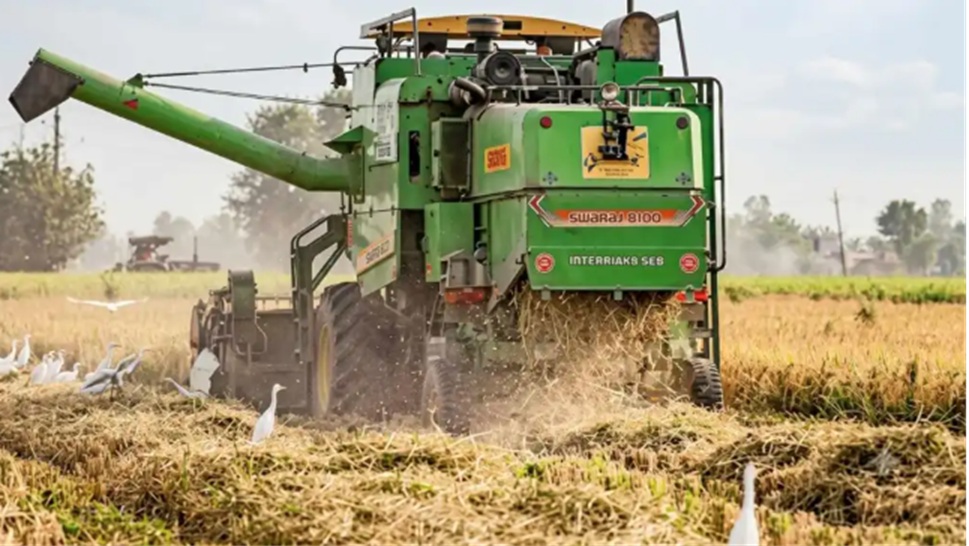
In 2026, Panjab's has reached 3.2M ha under rice cultivation and will deploy 125K Crop Residue Management (CRM) machines. Of these, 67K CRM machines distributed since the scheme launched in 2018 have been in use for more than five years and are now considered non-functional or scrap. To replenish the fleet, around 22K new CRM machines are being added, which cost USD 63M. The union and state government share the funding in a 60:40 ratio. Around 2K additional machines are also expected to come through other schemes and grants. Panjab now has around 6,100 Custom Hiring Centres (CHCs) from where farmers can hire CRM machinery instead of purchasing it. The state is adding 600 new CHCs in 2026. Panjab generates over 20MT of paddy stubble, out of which the state is expected to manage around 8MT through ex-situ utilization, including by making bales of the stubble through balers. These bales are used in several biomass plants and compressed biogas plants, as well as in pellet-making units. The state is also planning to deploy 8K agriculture and field-level personnel during the paddy harvesting period to monitor residue management and farm-fire incidents. The challenge is no longer simply one of making machinery available. The state must ensure enough functional machines reach fields at the right time, especially as the harvesting window remains compressed to about 15 days between paddy harvesting and wheat sowing. According to the Commission for Air Quality Management (CAQM), Panjab recorded 5,114 farm-fire incidents during the 2025 paddy harvesting season. This was 53% lower than the 10,909 incidents recorded in 2024 and 93% lower than in 2021. Meanwhile, speaking at a Kisan Mela (Farmers' Fair) at Punjab Agricultural University in Ludhiana on 24 Sep, Panjab Chief Minister Bhagwant Mann defended farmers ahead of the post-harvest season, during which the Delhi-NCR cluster sees deadly pollution that's partly blamed on paddy stubble burning. He said he's not in favor of registering cases against farmers who choose to burn the crop residue. He trained his guns on the Bharatiya Janata Party-led union government and targeted his counterpart from Pakistan's Panjab province, Maryam Nawaz. He said, 'The union government says Panjab has contributed 18MMT paddy to the central pool. But they do not consider how much stubble comes with the paddy' (earlier coverage).

The Federal Bureau of Investigation has offered USD 1M for information leading to the arrest of Satinderjeet Singh alias Goldy Brara linked to the Lawrence Bishnoi crime syndicate. The US law enforcement agency has added Goldy to its 'most-wanted' fugitive list for his alleged role in a spate of gang-linked crimes including murders, kidnappings, extortions, assaults, and drug trafficking. Goldy is also involved in the murder of Sikh activist Hardeep Singh Nijjar in Surrey, British Columbia, in June 2023. Canada's former Prime Minister Justin Trudeau raised the issue, which strained the relationship between trading partners India and Canada. However, Canada’s new PM Mark Carney has focused on rebuilding the relationship and has deprioritized the safety risk to Canadians. In a recent interview, Carney said there was 'some evidence' that the renewed relationship he’s charting with Indian Prime Minister Narendra Modi has led to 'progress' on improving the security of Canadians. When asked if he could assure Canadians that the Indian government would no longer be linked to crimes such as arson, extortion, blackmail, harassment, and even murder, he said no. Carney’s pronouncement acknowledges that Canada cannot claim to control the actions of a foreign government at all times, even on Canadian soil. An assistant professor at Queen’s University, Kingston, Ontario, Amarnath Amarasingam, who researches radicalization and transnational repression, said various minority ethnic groups in Canada—such as Sikhs, Tibetans, Uyghurs, Taiwanese, Chinese, and Iranian dissidents—have long complained that the government doesn’t do enough to protect them from foreign threats. A comment like Carney’s reinforces the sense that Ottawa views these threats as foreign, not domestic. He said, 'One of the take-home messages is that Canada isn’t treating this as a kind of Canadian problem, right? It’s treating it almost as this diaspora problem or as a problem of ‘imported conflict’ or as a problem of ‘people not leaving their politics back home’. It is not being treated with the seriousness it deserves.' The Indian government's involvement in transnational repression will almost certainly be discussed when India’s Prime Minister Narendra Modi visits Canada before the end of 2026, reportedly to sign his name on a new bilateral trade deal. For many Sikh activists and targets of India’s scorn in Canada, Carney’s rapprochement with India has had little to no effect on their safety. If anything, they fear the Carney government is taking the threat less seriously (earlier coverage).

Ranbir Sidhu’s father was found dead on his bathroom floor, just nine months after his mother passed away. Written between their deaths, 'No One Gets Out of Here Alive’ is a devastatingly heartbreaking memoir of their life, says Mandira Nayar. Intense, raw and laced with pain, it is a punch to your heart—one that will leave you wrecked. It is hard to walk away from the book untouched. Divided into two parts, Sidhu sketches the life of his father and his mother with unflinching honesty. His brother is blank, a silent figure who copes by blocking out the misery altogether. His mother is trapped in a marriage with a man 'unhinged’. Being a 'respectable Panjabi woman of her generation ' was the cage that would strangle and kill her. A cage she happily accepted, even welcomed, however much she hated her own life and where it had taken her’. While she lay dying, Sidhu writes about getting psoriasis so severe that he bleeds onto the sheets. His mother is in Panjab, living with unbearable pain from a slipped disc, which she won't take medication for. His father refuses to take her to the hospital. 'Every time I call and beg him to change his mind, to get my mother help, to get her to a hospital, he loses his temper and slams the phone down.' What happened during Partition shapes both of them. The scars they carry, invisible but deep, are passed down to him. The book is catharsis, helping Sidhu make sense of his parents' lives as he bares his own. What makes it deeply moving is that he stitches their flaws with love. It is grief—not for who they were, but who they could have been. He resists the attempt to whitewash his past—if anything, it is the opposite—or to sanitize his parents, even if he is protective of them. The book is ultimately about Panjab, the village his father escaped from to return to again, and the 'values' of the village that killed both his parents. In holding up the mirror to his parents’ flaws, he is also reflecting what ails Panjab—whether it is alpha masculinity, notions of sharam (shame) and honor, which persuaded young women to jump into wells to prevent their family being disgraced during Partition, or to willingly allow themselves to be killed (earlier coverage).
Nirvikar Singh in Sikh and Punjabi Studies, UC Santa Cruz: Is Punjab’s problem a Sikh problem?

Panjab: Six districts ‘Ultrasensitive’ drug zones; Govt. promises 8% increase in DA; Over 10 cases of kidnapping & extortion of illegal emigrants. Sikh: UK's Johal gets bail; ‘Akal Takht’ expels SAD Leader & 'Granthi'; Truck driver attacked days after US poster; 'Takht Sri Hazur Sahib' marks Modi birthday—and more stories.

Panjab: Laborer names Cheema in dying declaration; Power crisis; Court restrains Majithia & Khaira; Sekhon joins AAP & Sidhana joins WPD. Sikh: DHS accused of bigotry over Mr. Singh poster; Pakistan stops pilgrims; Canada mishandles protest—and more stories.
