Thank you! Your submission has been received!
Oops! Something went wrong while submitting the form.
Panjab: Opposition raises issues with cheating in exam; Sanitation workers beaten; ‘Waris Panjab De’ focuses on Hindu-Sikh unity; PHHC Stays Fund Diversion Under Welfare Scheme. Sikh: Sikhs earn praise at Gen Z protest; Gurdwaras host and ‘Nihangs’ protect student protesters; Grewal is new NCM chairman; Two movies await release—and other stories.
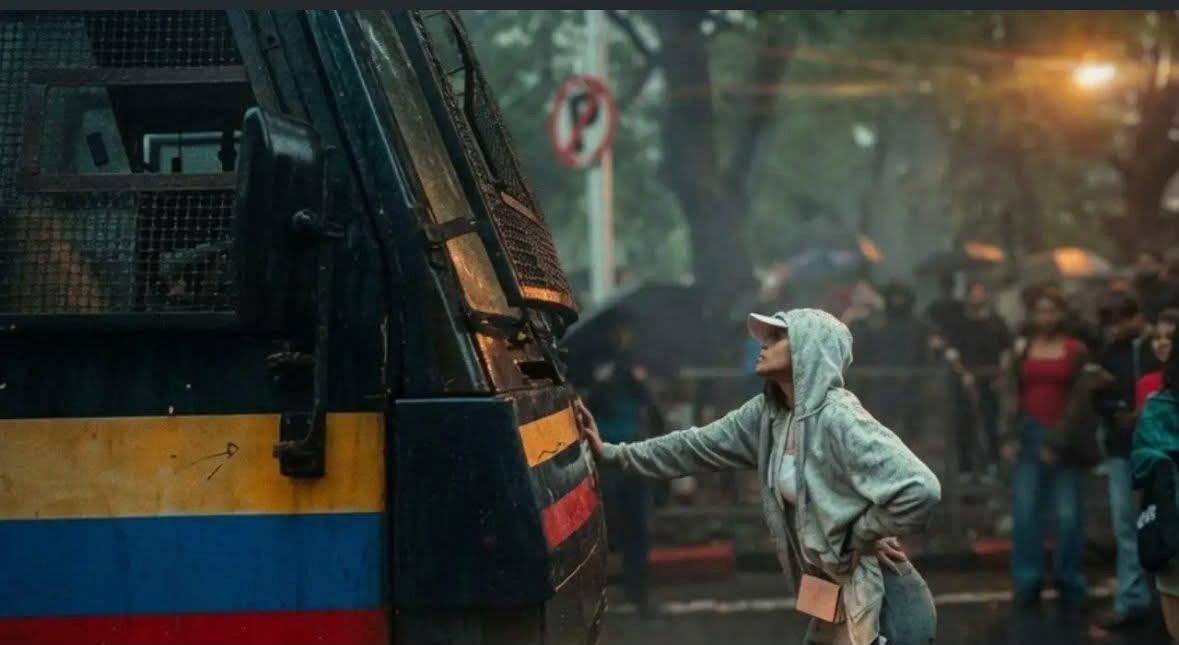
The Gen Z-led Cockroach Janta Party (CJP) called off its protest on 25 Jul, hours after the resignation of India's education minister Dharmendra Pradhan. The protests turned out to be one the biggest displays of dissent against Narendra Modi's government in years, with thousands camping at Jantar Mantar (Protest Site), New Delhi, as demonstrations spread in various states including Panjab. In a press conference after Pradhan's resignation, CJP leaders Sourav Das and Ashutosh Ranka announced the 37-day long protest was over. However, the leaders did not insist upon a written guarantee from the Indian government on their other demands: compensation to families of 21 students who committed suicide, no harassment of student-activists all over India, and a new framework for higher education examination. According to the National Crime Records Bureau, between 2014–24, over 123K students have committed suicide over examinations in India. The National Testing Agency has sacked 47 officials. However, that is not enough. There is a dire need to revamp the whole higher education examination system. Since 26 Jul, Bihar, West Bengal, and Assam state governments have been arresting student protesters and filing First Information Reports against them. Though the call for protest and the 20 Jul call to march to Parliament—during which police brutally beat up protesters—was by CJP, the support to the protest by students unions' Students' Federation of India, All India Students' Association, and the All India Students Federation was critical to the success of the protest. The huge response and turn out by the youth of India vastly outnumbered all expectations. The tone, tenor, humor, sarcasm, and resilience of Gen Z set it apart from earlier protests signaling a new generation has come of age. Gen Z is about a quarter of India's population. The medium of communication also shifted from print and television to social media, especially Instagram. The protest bridged religious, caste, and gender divisions. The Sikh community members and organizations which arrived at the protest site from 20 Jul evening, played a big role by making human chains to keep protesters safe from police, providing supplies including food, helmets, glasses, and mobile toilets to the protesters. As the protest wound up, from atop a police truck, Ranka called for a round of claps for Sikhs who had supported the protests (earlier coverage).
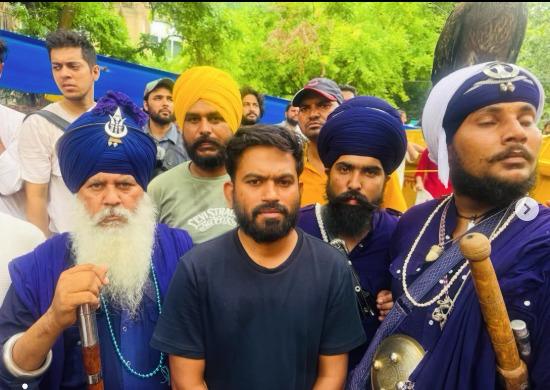
When police baton-charged and tear-gassed Gen-Z led Cockroach Janata Party (CJP) protesters marching towards the Indian Parliament on 20 Jul, Gurdwara Bangla Sahib emerged as a place of refuge for injured protesters and stranded commuters caught in the unrest. With roads around New Delhi’s Parliament Street, Connaught Place, and Shivaji Stadium choked with protesters and police barricades, Gurdwara sevadars (volunteers)—even at Gurdwaras Rakab Ganj, Sis Ganj Sahib, and others—welcomed those fleeing the violence, offering them a safe place to rest. This continued for the next five days until the protests ended. Protesters came for medical aid, langar (community kitchens), washrooms, and to sleep at nights. While protesters were served, behind the scenes, on 25 Jul, Shiromani Akali Dal, Delhi Unit president Paramjit Singh Sarna revealed that former Delhi Singh Gurdwara Management Committee president, now Bharatiya Janata Party minister in Delhi government, Manjinder Singh Sirsa, wanted Bangla Sahib to stop services to protesters. When the Bangla Sahibmanagement resisted, Sirsa got the outside road to the langar hall dug up so protesters had to walk over 2 kms to enter Bangla Sahib. Sirsa’s action is completely against Sikh tenets and philosophy. Sarna and other Sikhs leaders also addressed the protestors from the Jantar Mantar (protest site) stage saying, ‘Not only Gurdwaras, every Sikh home is open to protesters to stay, to dine, and to rest.’ Meanwhile, as the news of police brutality towards student protesters spread, Nihangs (traditional warriors) descended upon the protest site. They said, ‘They had come to protect the young students, especially women, from police brutality.’ For the next five days, the Nihangs became an armor around the students and also regulated them. They also helped the police clear vehicles and traffic, keep protesters in check, and sometimes even reprimanded the protesters upon their misconduct. The Nihangs who came to the protest were mostly from Uttarakhand, Madhya Pradesh, and other states. They spoke excellent Hindi and communicated well with both protesters and police. On 24 Jul, a video clip emerged in which Nihangs had taken offense at CJP founder Abhishek Dipke’s comment but that proved to be fake news. Meanwhile, Tripura Director General of Police Anurag Dhankar, who headed the Special Investigative Team which re-investigated the 1984 Sikh genocide in Delhi, was found dead in his office toilet at Agartala on 20 Jul. The government has ordered a magisterial probe (earlier coverage).
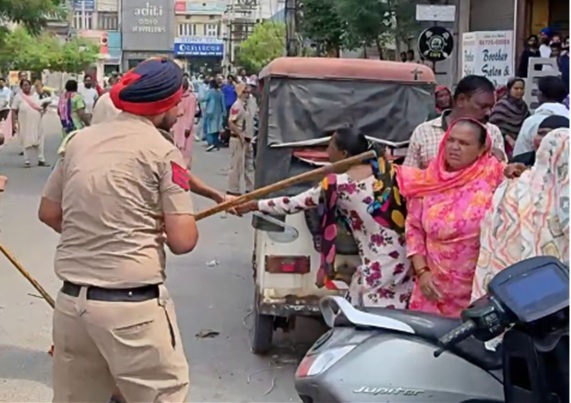
The Panjab police have busted an inter-state cheating racket in operation during the Pharmacy Officer Recruitment Examination, conducted by Baba Farid University of Health Sciences (BFUHS) in Faridkot, Panjab on 19 Jul. The police have arrested 35 persons, including seven key conspirators, and 28 candidates. They were using miniature Bluetooth devices concealed inside their turbans, socks, and undergarments. Around 7K candidates took the exam to fill 454 Pharmacy Officer posts. It was conducted by BFUHS at the request of the Panjab Health and Family Welfare Department. According to investigation, a candidate identified as Ayush in Ferozepur allegedly used a concealed pen camera to scan the question paper, which he sent via WhatsApp to an accomplice Sajan in Bhiwani, Haryana. Sajan sent it to a ‘control room’ in Faridkot. The main accused, Manjit Singh and Deepak, allegedly dictated answers in real time through wireless devices to several candidates inside the examination halls. Candidates paid USD 10K through post-dated checks for the leaked exam. With Panjab’s ruling Aam Aadmi Party (AAP) actively supporting the Cockroach Janata Party (CJP) protest in New Delhi against examination paper leaks in India, the Panjab opposition has raised the issue about cheating in the state’s exams. India’s ruling Bharatiya Janata Party (BJP) has sacked their education minister Dharmendra Pradhan. When AAP leader Manish Sisodia reached the New Delhi protest site, Jantar Mantar, to congratulate CJP on the success of their protest, Panjab Youth Congress president Shuvam Devgun asked him if Panjab Education Minister Harjot Singh Bains would also resign. Meanwhile, on 22 Jul, amid an ongoing strike by sanitation workers, the Barnala district administration launched a garbage collection drive in the city. Protesters opposed the drive, prompting the police to baton-charge in an attempt to disperse them. Leaders of the Shiromani Akali Dal (SAD), Indian National Congress (INC), and farmer unions condemned the police action. Bathinda SAD Member of Parliament Harsimrat Kaur Badal said, 'It was an unprovoked assault on poor people, and it is totally unacceptable. We demand immediate medical assistance and acceptance of their long-pending legitimate demands without any further delay.' INC Member of Legislative Assembly from Barnala, Kuldeep Singh Dhillon said, 'Demanding one’s rightful dues is not a crime, but it seems that under the AAP government.' Panjab government has suspended Deputy Superintendent of Police Satvir Singh in the matter (earlier coverage).
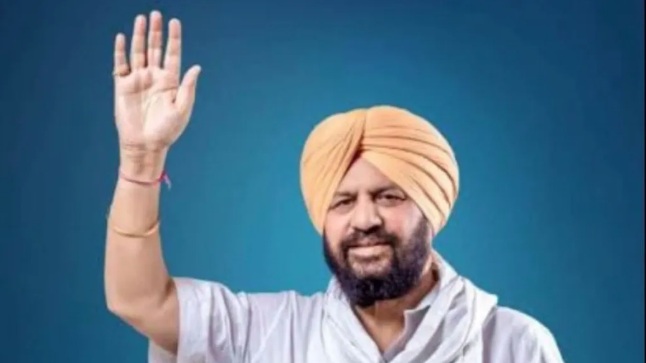
The Bharatiya Janata Party (BJP)-led Indian government has appointed 69-year-old Harjeet Singh Grewal as the Chairman of the National Commission for Minorities (NCM). Grewal is the third Sikh to head the NCM. BJP leader Iqbal Singh Lalpura was appointed to the post in September 2021. His three-year tenure—with a brief rupture Jan–Apr 2021 to contest elections—ended in April 2025. Before him, Tarlochan Singh served as the NCM chairman from 2003–06. Grewal’s rise within the BJP has been driven by organizational work rather than electoral success. Over the years, he has worked to expand the BJP’s organizational network in Panjab, Haryana, and the Andaman and Nicobar Islands. In 1990, he founded the BJP’s Kisan Morcha (Farmers Wing) and later served as its national president. In the late 1990s, he became the party’s first Sikh national secretary. He is currently a member of the BJP National Executive. Grewal's appointment is significant as it comes ahead of Panjab Assembly polls in early 2027. However, despite NCM being headed by a Sikh thrice, Sikh issues are hardly NCM’s priority. For example, even a simple issue like initiated Sikhs across India continuing to face occasional discrimination over their article of faith—the kirpan (traditional sword)—has not been resolved. Meanwhile, Akali Dal (Waris Punjab De) has confirmed that jailed Khadoor Sahib Member of Parliament Amritpal Singh will contest the upcoming Panjab Assembly elections as the party's chief minister candidate. Member of Legislative Assembly from Dakha, Ludhiana district, Manpreet Singh Ayali announced the party's focus will be on Panthic (Sikh Collective) issues, and Hindu-Sikh unity. He said, 'Making Panjab safe for Hindus, Sikhs, Muslims, and all other communities is our top priority. I assure you that all talk of radicalism about our group is wrong. We represent all Panjabis and we work within the framework of the Indian Constitution.' Concurrently, security forces in Bahraich, Uttar Pradesh arrested a wanted member of Waris Punjab De from the Nepal border. Vikramjit Singh is wanted in a 2023 attack on the police station at Ajnala, Amritsar district. He was accompanied by US national Manveer Singh Dhillon, a native of Moga district (earlier coverage).

Chair of the Young Sikh Professional Network (YSPN), Australia, Amardeep Singh Gill says, 'Australian Sikhs are more than just Uber and truck drivers.' YSPN's 2023 Economic Impact Report found that while Sikhs make up around 0.8% of Australia's population, they contribute more than 1% of the national economy, generating an estimated AUD 15.4B annually. Gill said this contribution comes despite many migrants working below their skill level because of skills and employment mismatches. Gill added, ‘Sikhs have been in Australia for over a 100 years. At present they work in transport, healthcare, community services, information technology, retail, and sports sectors. Australia had 200K Sikhs in 2021 and they have been doubling in numbers every census year.’ Meanwhile, the family of a 15-year-old Indian-American Sikh student Aangad Singh, has questioned the scoring of the Trump administration’s ‘Presidential 1776 Award civics competition’ after he narrowly missed a top-three finish. Aangad, a high school student from Milford, Connecticut, believes errors in judging may have cost him a place among the winners of the national civics contest organized by the US Department of Education as part of celebrations marking US’ 250th anniversary. The congressional Asian Pacific American Caucus called the result foul in a social media post, ‘Why did the judges improperly grade a Sikh student’s correct responses as wrong? Why did the Department of Education refuse to conduct a review?' Also, a scholarship winner 20-year-old Gurikpreet Singh died when his father's licensed firearm allegedly misfired when he was cleaning it at his native village Ganda Singh Wala, Barnala district. Gurikpreet was studying at Pennsylvania State University on the prestigious Penn State Provost Award. Gurikpreet had played a key role in the passage of New Jersey Senate Resolution 108 (SR 108) in December 2023, which introduced Sikhism into the state's social studies curriculum. Concurrently in Canada, 23-year-old Damanpreet Kaur from Samrala, Ludhiana district was strangled to death at her home in Edmonton. Police have arrested her live-in partner Ritish Kumar in connection with the murder. Simultaneously, the Panjab Police has secured the extradition of fugitive gangster Jobanjit Singh alias Joban Billa from Indonesia. Joban Billa has been evading arrest by operating across multiple countries over the past six months (earlier coverage).
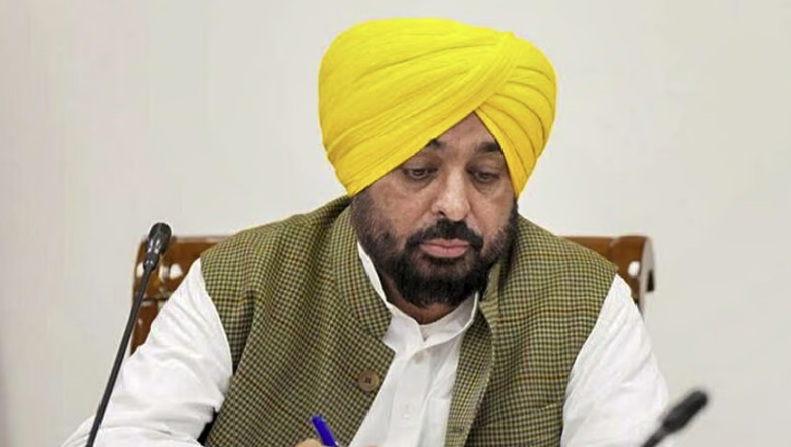
The Punjab and Haryana High Court stayed the diversion of funds from a construction workers’ welfare corpus to other schemes, including the flagship Mukh Mantri Mawan Dheeyan Satkar Yojana (welfare scheme for women) that promises a cash dole to nearly 10M women of Panjab. Finance minister Harpal Singh Cheema said the state government had earmarked USD 9.69B for the scheme. The Public Interest Litigation (PIL), filed by Dr. Ambedkar Workers Union, a Patiala-based body, had sought stay on fund diversion and further demanded that the diverted money be transferred back to the corpus. The petition claims that on 16 Mar, the Punjab Building and Other Construction Workers Welfare Board was re-constituted by the Labour Department through the Building and Other Construction Workers (Regulation of Employment and Conditions of Service) Act 1996. This board took the decision to divert funds from the Board to other schemes, including the women scheme. However, the board’s decision was illegal as it has been constituted under the law that stands repealed and merged with the Code on Social Security Act 2020 that came into effect in November 2025. The PIL further alleged that the board has not only approved transfer of funds for the scheme in question, but in January 2026, reduced the amount of monthly pension payable to the registered construction workers, the primary beneficiaries of the fund. Meanwhile, youth protesting under the banner of the Berozgar Sanyukt Morcha Punjab (United Unemployed Front) clashed with police in Sangrur on 26 Jul, while attempting to march towards the residence of Chief Minister Bhagwant Mann. The protesters, who have been staging a sit-in outside the Deputy Commissioner's office for a prolonged period, began their march demanding government jobs and the fulfillment of their pending demands. Concurrently, in a significant U-turn, the Panjab government assured the National Green Tribunal (NGT) that ecologically sensitive land released from protection under the Punjab Land Preservation Act (PLPA) and areas delisted under a 2011 notification, will be excluded from the ambit of its Farm Stay Policy, 2026. The policy had triggered concerns that commercial tourism activities would be permitted on land that was earlier part of the protected forest cover under the PLPA. The state's Farm House Policy framed by the Housing and Urban Development Department has already been stayed by the NGT (earlier coverage).
The week-long strike by employees of the Punjab State Power Corporation Limited (PSPCL), which had severely affected power restoration across Panjab was called off on 27 Jul, a day after the Panjab government assured a time-bound resolution of the employees' long-pending financial demands. The decision to withdraw the agitation was announced by the Joint Coordination Committee of PSPCL employees following a marathon meeting with Finance Minister Harpal Singh Cheema. Cheema assured them that a committee constituted to examine their financial demands would submit an interim report by 31 Jul and a final report by 15 Aug. The committee will recommend the manner in which the employees' financial demands can be implemented by the PSPCL management. Union leaders said the government also accepted another key demand concerning electricity concessions for employees recruited after 2011, resolving an issue that had remained a major point of contention for several years. The unions also sought the regularization of outsourced workers, contending that thousands of contractual employees had been performing the same technical duties as regular staff for years while receiving substantially lower wages, without service benefits. The working of PSPCL and Punjab State Transmission Corporation Limited was adversely affected in the past week, since 85% of power utility employees, under the banners of various trade unions, had remained on strike despite PSPCL’s 'No Work, No Pay' rule. Almost the entire technical workforce, including linemen and assistant linemen, has remained off-duty, forcing PSPCL to manage operations with a skeletal workforce. In Rupnagar district, each subdivision was being managed by only four to five senior technical officers, including Executive Engineers, Sub-Divisional Engineers, and Junior Engineers. In Jalandhar too, regular employees had joined the statewide mass leave protest on 20 Jul, after talks with Power Minister Tarunpreet Singh Sond failed to resolve their demands. One of the key demands raised by the employees included the release of pending Dearness Allowance, which the PSPCL failed to release despite running into profits worth over USD 230M in 2025–26. VK Gupta, spokesperson of the All India Power Engineers Federation said, ‘By running its own captive coal mine and making optimal use of its power plants, the PSPCL has increased profitability. Despite profits, the arrears of staff are still pending’ (earlier coverage).

Women are emerging as key drivers in Panjab’s campaign against drug abuse—Yudh Nashean Virudh (war on drugs) launched on 1 Mar 2025—with families increasingly stepping in to support treatment and recovery. Officials and participants at an awareness program in Moga pointed to the role played by women in identifying addiction early on within a family. Since drug addiction often hits families hard, triggering financial stress, emotional strain, and domestic conflict, officials said families are now recognizing addiction as an illness and are playing a more active role in recovery by motivating patients and preventing relapse. At the program, Ludhiana resident Ragini Kaur said, ‘My husband was a drug addict since before our marriage. But I only came to know about it once we started living together. We had lost all hope when someone guided us to take him to a drug-de-addiction and rehabilitation center. That helped. Today he is completely sober.’ Additionally, the Panjab government has introduced an internationally accepted drug de-addiction treatment known as Methadone maintenance Therapy (MMT) for people with severe opioid dependence. Health Minister Balbir Singh said the expansion of MMT facilities is part of the state’s anti-drug campaign. Six dedicated methadone clinics are now operational across Panjab at Government Medical College, Faridkot; Civil Hospital, Ludhiana; Government Medical College, Patiala; and district hospitals in Gurdaspur, Sahibzada Ajit Singh Nagar, and Jalandhar. The government plans to establish six more MMT centers in the coming months. Furthermore, Panjab Police says it has arrested more than 68,850 alleged drug traffickers and attached or confiscated assets worth USD 33.28M during the 500 days of the war on drugs campaign. Director General of Police Gaurav Yadav added that 52,432 First Information Reports have been registered under the Narcotic Drugs and Psychotropic Substances Act, 1985 during this period, and the Safe Punjab Anti-Drug Helpline received 46,342 anonymous tip-offs leading to the arrest of 22,960 alleged traffickers. Commenting on the drug situation, Panjab Governor Gulab Chand Kataria in an interview said, ‘I have seen young people lose their lives within months of becoming addicted to synthetic drugs. Earlier, liquor abuse would kill in years, but this only takes months.’ He added ‘I also feel drug trafficking cannot flourish without the involvement of the police and the administration’ (earlier coverage).
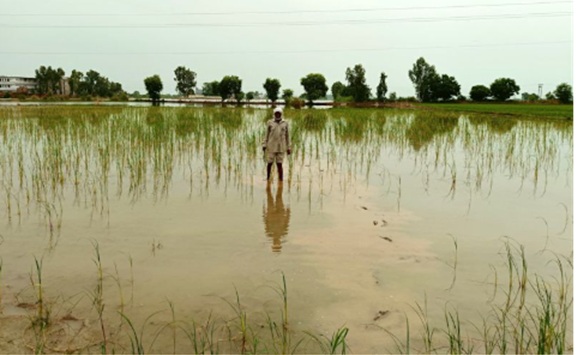
Recent rains in Panjab have left residents of Ajnala district worried with hundreds of acres of paddy along the river Ravi submerged. As farmers began fearing a flood-like situation similar to 2025, the district administration sought to assure them that there won’t be any floods this year and that the overall situation was in control. Deputy Commissioner Dalwinderjit Singh visited vulnerable areas along river Ravi and the Sakki Nullah (rivulet) to review flood preparedness. Dalwinderjit said the Ravi was flowing well within its banks and that there was no immediate threat of flooding in the district. The India Meteorological Department has issued an orange alert (be prepared) for Panjab, Haryana, and Chandigarh, warning of an active monsoon spell between 28–30 Jul. Meanwhile, a Punjab Agriculture University, Ludhiana, study warns that the deterioration of Panjab’s groundwater is faster than previously imagined. Groundwater reserves in the state have been dwindling fast over the past 27 years. The average pre-monsoon water table dipped sharply from 7.8 metres below ground level in 1998 to over 21 metres in 2025. The study points out that Panjab continues to witness an average annual groundwater depletion rate of more than 50 cm, underlining the growing pressure on underground water resources. Additionally, a latest assessment by the union government has identified 111 of Panjab’s 153 groundwater assessment blocks as over-exploited and cautioned against excessive dependence on groundwater for irrigation and dominance of water-intensive paddy cultivation. It said that the state is extracting 56% more groundwater than its annually extractable resources. The Union Minister of Jal Shakti, CR Paatil, said that Panjab’s annual groundwater recharge had been assessed at 18.60 billion cubic metres (BCM) while the annual extractable groundwater resource stood at 16.80 BCM. The district-wise assessment also reveals stark disparities—Sangrur has the highest groundwater extraction level at 310%, followed by Malerkotla (302%), Jalandhar (281%), Kapurthala (243%), Moga (233%), Barnala (219%), and Patiala (209%). Concurrently, a farmer from Thulewal village in Barnala, 39-year-old Satnam Singh Aulakh, has emerged as a successful example of crop diversification by replacing conventional farming with dragon fruit cultivation. The farmer grows the high-value fruit on four acres, earning around USD 12.5K annually while significantly reducing water consumption compared to paddy cultivation (earlier coverage).
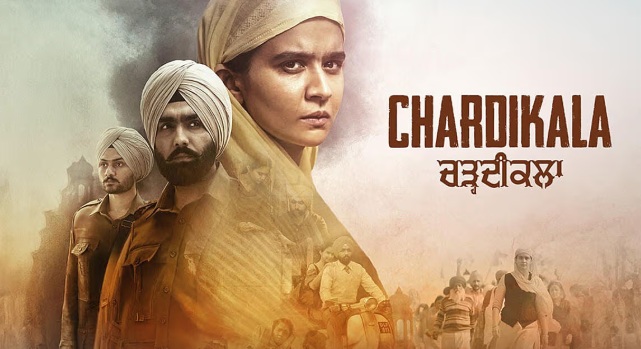
After being stuck for four years with India's Central Board of Film Certification (CBFC), the movie ‘Satluj’ was briefly released on subscription video-on-demand on 3 Jul, but two movies from Panjab are still awaiting release. The movie 'Chardikala' is a biographical retelling of the life of Bibi Bimal Kaur Khalsa and was due for release in India on 29 May. However, it has still not been released in India but has been released internationally. In early May, the movie premiered at Cannes Film Festival's Marche du Film Market. The movie's narrative revolves around a devoted mother working in Delhi as a nurse. Following the 1984 assassination of former Prime Minister of India Indira Gandhi by her husband Beant Singh, Bimal’s world collapses. She is subjected to harsh interrogations, social stigma, and isolation. By focusing on a mother’s struggle to raise her children under the crushing weight of systemic harassment, the movie touches on themes of maternal love and endurance. The movie is produced by Pinky Dhaliwal and Gurkaran Singh Dhaliwal of the production company Mad 4 Films. It is directed and written by Amarjit Singh Saron. Actors Roopi Gill, Ammy Virk, and Himmat Sandhu feature in the movie. The real Bibi Bimal Kaur was elected Member of Parliament (MP) in 1989 from Shiromani Akali Dal (Amritsar). She died on 2 Sep 1991 under mysterious circumstances. Police say her death was by electrocution but her family and relatives claim the police picked her up and poisoned her with cyanide. Her son, Sarabjeet Singh Khalsa is a current MP from Panjab. Another movie 'Dastaar' scheduled to release on 17 Jul, has also not yet received the certificate by the CBFC. Set in 1980s UK, the movie tells the story of a Sikh immigrant whose life is upended by a brutal racist attack. He rises as a community leader turning his dastaar (turban) into a symbol of hope and resilience. The movie reflects the hardships, prejudice, and discrimination faced by early Sikh families who moved to the UK and fought to protect their faith, identity, and dignity. The movie is produced by Gunbir Singh Sidhu and Manmord Singh Sidhu under the banner of White Hill Studios. It is directed by Amar Hundal. It features Tarsem Jassar and Yograj Singh in key roles (earlier coverage).
Harjeshwar Pal Singh on Social Media: How CJP protests expose a widening cultural divide between generations.

Panjab: Govt. employees on strike again; State moves SCI for DA Dues; Justice Mishra takes oath as Chief Justice; SAD targets Dr. Gurpeet. Sikh: Youth alleges torture & assault; Long delay in SGPC elections; Relief for Nepal flood victims—and more stories.

Panjab: Saffron & independents win Panjab University polls; Employees vs. Govt. standoff intensifies; River Sirsa under PPCB scanner. Sikh: SAD targets WPD, explores alliance with BJP. After INC, BJP Leaders condole Kumar; ‘Akal Takht’ directions on singing full ‘Vande Matram’ sought—and more stories.
