Thank you! Your submission has been received!
Oops! Something went wrong while submitting the form.
Panjab: State closed over anti-drug activist’s murder; Shah meets Jhota’s family; Delhi battleground as protesters & police clash; ECI announces SSR; US ends 540-Day extension for immigrants; J&K promises Panjabi as official language. Sikh: Orgs say FBI Hate Crime report flawed; Jhota in Sikh Museum—and more stories.

The Mansa pharmacy owner, Ashwani Kumar, who shot dead anti-drug activist Parvinder Singh Jhota on 13 Oct, was arrested in Salasar, Churu district, Rajasthan on 14 Oct. Over the past few years, Kumar had multiple run-ins with Jhota, which led the ruling Aam Aadmi Party (AAP) to claim that the murder was due to personal enmity. However, two videos of the incident—one being filmed by Jhota until he was shot—clearly show Jhota confronting Kumar over synthetic drugs. While at Kumar’s shop, Jhota contacted police multiple times. But they did not respond. Jhota also did not get medical help in time. Since 2021, police and Punjab Food and Drugs Administration have raided Kumar 10 times and canceled his license thrice. Kumar’s wife, Neelam Rani, who held the pharmacy license, has also been arrested. Mansa Station Head Officer Beant Kaur has been suspended. The murder has sparked outrage in Panjab. People set the pharmacy ablaze. The district administration brought in earth movers to tear down the property. Authorities justified the action by citing unauthorized construction on the premises and said the crackdown aligned with the state's broader anti-drug campaign Yudh Nashian Virudh (War Against Drugs). Jhota’s father, Bhim Singh, called for a Panjab Bandh (closure) on 15 Oct and initially demanded the resignations of Panjab Chief Minister Bhagwant Mann and Director General of Police Gaurav Yadav. All opposition parties, farmer unions, and the apex Sikh management body, Shiromani Gurdwara Parbandhak Committee, backed the Bandh. Despite police efforts to stop people, activists, and politicians from gathering at Mansa, they arrived in large numbers. The Bandh was successful—highways, shops, and educational institutions remained closed—reflecting the people’s contempt towards drugs. Jhota’s family has still not cremated his body. On 20 Oct, Panjab government asked for a Central Bureau of Investigation probe into the murder. Union Home Minister Amit Shah met Jhota’s family and assured them of justice. Shah also met Gulzar Singh’s family in Sangrur. Gulzar had committed suicide after police harassed him for questioning Panjab Finance Minister Harpal Cheema on drugs. Meanwhile, drug sellers attacked another anti-drug activist, 40-year-old Bikramjit Singh, and two others with sharp weapons at Pannawan village, Gurdaspur district, for opposing the sale of drugs on 16 Oct. Bikramjit died from the injuries (earlier coverage).
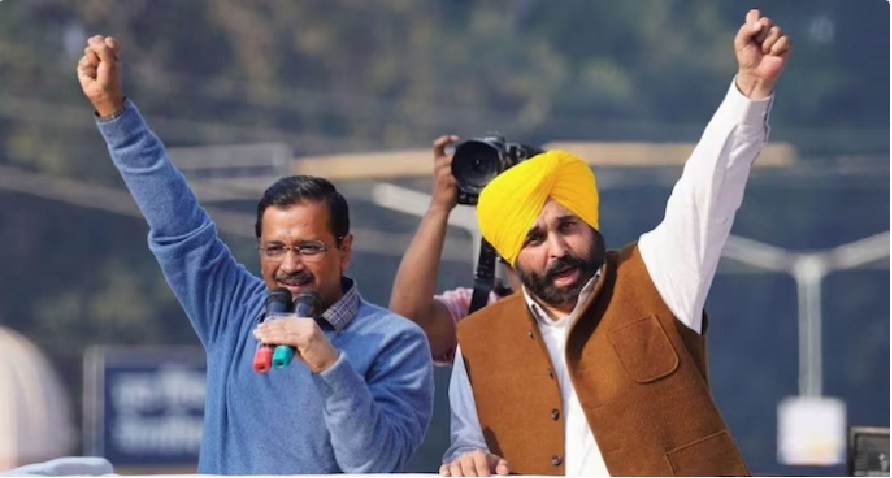
The daylight murder of anti-drug activist Parwinder Singh Jhota has brought Panjab’s drug issue back to the center of the state’s political discourse, putting the ruling Aam Aadmi Party (AAP) government on the defensive, as the opposition steps up its attacks ahead of the 2027 Assembly elections. Jhota was shot dead at a pharmacy in Mansa on 13 Oct. The opposition is targeting Panjab government's Yudh Nashian Virudh (War Against Drugs, YNV), now in its fifth phase, after it missed all earlier targets. Even before AAP formed the government in March 2022, AAP chief Arvind Kejriwal had declared his party would rid Panjab of drugs within six months. When that did not work, on India's Independence Day, 15 Aug 2023, Chief Minister Bhagwant Mann announced a new target of 15 Aug 2024, which was then moved to 31 Dec 2024. The AAP government had launched YNV in early March 2025, setting 31 May 2025 as the deadline to eradicate the menace. Four days after the deadline expired, Panjab Director General of Police Gaurav Yadav announced that the police had prepared a fresh roadmap to eliminate drugs through a two-pronged strategy: dismantling narcotics networks by targeting major suppliers and peddlers, while separating drug users from traffickers and encouraging users to undergo de-addiction treatment. Jhota was killed on the 591st day of YNV. According to a Panjab government release, between 1 Apr 2025–30 Sept 2026, the Punjab Food and Drugs Administration (FDA) conducted 16,788 inspections and suspended the licenses of 520 chemists for violating drug laws. FDA filed 54 court cases, of which 35 resulted in convictions and fines. The Panjab Bharatiya Janata Party chief, Kewal Dhillon has demanded a Central Bureau of Investigation probe into the activist’s killing. He also called for the Chief Minister’s resignation, alleging that the drug problem had spiraled out of control. Shiromani Akali Dal president, Sukhbir Singh Badal, described the killing as a reflection of the 'collapse of law and order' in Panjab. After Jhota’s murder, the Union Ministry of Home Affairs (MHA) has asked the Panjab government to submit a detailed account of the murder and has also sought details of measures taken to combat drug trafficking and substance abuse (earlier coverage).

Protests in Central Delhi continue almost daily demanding the resignation of Chief Election Commissioner (CEC) Gyanesh Kumar and rollback of the Special Intensive Revision (SIR) as Delhi police and paramilitary forces continue to detain students, journalists, and lawyers. On 16 Oct, the Cockroach Janta Party (CJP) called for a gathering at the Central Park in Connaught circle for a Tiranga March (Indian Tricolor Flag March). In response, the New Delhi Municipal Council shut down the park for two days and cordoned it off. 220 companies of paramilitary forces and Delhi police were deployed on site. CJP’s Abhijeet Dipke and All India Students' Association (AISA) president Neha Bora were detained before reaching the location along with 150 others. Neither was allowed to contact lawyers until late into the night. Bora was released from detention the following morning. She refused to sign the bond that restricted her right to protest. Dipke walked free on conditional bail. For over a decade, the Bharatiya Janata Party-led (BJP) union government had crushed dissent and arrested students. The union government is now cracking down heavily on social media platforms, deleting posts of mostly Gen Z journalists’ reporting from the ground and blocking their social media handles. In Chandigarh, around 50 protesters from AISA All India Students’ Association), Panjab Students Union (PSU) Lalkaar, Sath, and Students for Society (SFS) protested in support of the CJP’s call. They marched from the Panjab University Student Centre to the Election Commission office in Sector 17 seeking the CEC’s resignation. Indian Youth Congress activist Gurmehar Kaur, from Jalandhar, has emerged as a prominent face in the protests. In Panjab, BJP leaders fear that images of young protesters being pushed, injured, and detained by Delhi Police, widely circulated on social media, could hurt the party’s prospects in the upcoming elections. A former BJP Jalandhar office-bearer, speaking anonymously, admitted, ‘We had been quite upbeat over the past few months…following Prime Minister Narendra Modi’s two visits to Jalandhar. Union Home Minister Amit Shah’s rally was also expected to strengthen the party. But the Delhi episode has cast a shadow over these major activities.’ The Aam Aadmi Party (AAP) and the Indian National Congress, meanwhile, are attempting to capitalize on the developments (earlier coverage).

The Election Commission announced on 15 Oct that the Special Summary Revision (SSR) of electoral rolls in 17 states and union territories—including the poll-bound states of Panjab, Uttar Pradesh, Uttarakhand, Manipur, Goa, and Gujarat—will begin from 2 Nov, and conclude with the publication of the final voters’ list on 4 Jan 2027. The SSR is conducted every year for the enrolment of eligible electors but is not held in the year Special Intensive Revision (SIR) is conducted. But in 2026, SSR is still being conducted despite the SIR being held. The Election Commission of India (ECI) said parties will receive a soft copy of the draft and final electoral roll in readable PDF format without electors’ photos but introduced no new safeguards to address the risks of potential data misuse. The decision was a major reversal for ECI. In June 2025, Indian National Congress (INC) president Mallikarjun Kharge and Leader of Opposition Rahul Gandhi demanded consolidated, digital, and machine-readable voter rolls for the 2024 Lok Sabha (Lower House of Parliament) and Maharashtra Assembly elections, with version histories and timestamps showing changes to the rolls. ECI rejected the demand at the time, arguing that it exposed voter rolls to privacy violations. The change in stance may be due to the ongoing protests and petition filed by Gandhi and other INDIA bloc leaders alleging large-scale voter deletions in the ongoing SIR. In response on 15 Oct, the Supreme Court of India issued notice to the ECI, Chief Election Commissioner (CEC) Gyanesh Kumar, and Election Commissioners Sukhbir Singh Sandhu and Vivek Joshi. The plea seeks disclosure of official records, including files, minutes, notings, and objections recorded by Election Commissioners, as well as access logs relating to the ECINET and ERONET electoral-roll databases. The opposition leaders also raised concerns over changes to Form 6, which is used to enroll new voters. The Panjab INC state President, Pargat Singh, also declared the amended Form 6 ‘totally illegal’ and INC coordinator Hardeep Singh Kingra asserted that the party never consented to the final electoral rolls. The INC's stand contradicts Panjab Chief Electoral Officer Anindita Mitra's claim that political parties cooperated with the exercise, expressed satisfaction with the process, and gave written consent for deletions. The SIR initiated by ECI in 2025 is being cited as the only such exercise in India’s history that resulted in the shrinking of electoral rolls. Historically, the eight times that an intensive revision exercise of the electorate was carried out, it resulted in more voters being added than deleted (earlier coverage).

The US Department of Homeland Security (DHS) is ending a former US President Joe Biden-era policy that allowed many immigrants to continue working for up to 540 days after their employment authorization expired while their renewal applications were pending. The extension window was designed to ensure immigrant workers were not pushed out of jobs because of processing delays at US Citizenship and Immigration Services. The policy affects immigrants, including Panjabis, who rely on Employment Authorization Documents, as well as asylum seekers, and spouses of H-1B visa holders on H-4 visas. Meanwhile, the US President Donald Trump's waiver of Russian sanctions eases energy concerns for India, one of the top importers of Russian oil. President Trump's waiver of Russian sanctions eases energy concerns for India. US Secretary of State Marco Rubio, who arrived in India on 20 Oct, said trade talks with New Delhi are underway, 'We are trying to finalize a trade deal with India right now and we are very close to doing that. That's one of the things we take into consideration when the President makes a decision about national security waivers.' Indian Union Commerce and Industry Minister Piyush Goyal said the first tranche of the proposed India-US trade agreement had been finalized and was currently undergoing legal drafting. However, the trade deal has also been held back because Washington has yet to complete a Section 301 trade investigation into several nations, including India, over alleged excess manufacturing capacity. There is no word on it yet. Furthermore, three dozen organizations—including the Sikh Coalition, the Muslim Public Affairs Council, Jewish Council for Public Affairs, and the Union for Reform Judaism—pointed at the flawed methodology of the Federal Bureau of Investigation (FBI) 2026 Hate Crimes report. The FBI’s Uniform Crime Reporting report, released in August, indicates the number of hate crimes reported to the agency dropped by 7% between 2024–25. At the same time, Sacramento, California police have arrested Gurinder Gill for allegedly killing his wife, Jasmine Gill. Gurinder had earlier claimed Immigration and Customs Enforcement agents had taken Jasmine into custody. Additionally, in London, UK, 24-year-old Deepak Sandhu, who stabbed his 39-year-old girlfriend to death after she ended their relationship, has been sentenced to life with a minimum term of 28 years in prison (earlier coverage).

Panjab film producer Amardeep Singh Grewal, a relative of Chief Minister Bhagwant Mann, was detained at the Delhi airport on 17 Oct and is being questioned by the Enforcement Directorate (ED). He has not been arrested but is being questioned in the USD 525K graft charges in which CM Mann's wife, Dr. Gurpreet Kaur, has been named. Amardeep had earlier skipped ED summons twice. Meanwhile, the Punjab Housing and Urban Development Department has revoked concessions worth USD 4.2M to a Delhi-based builder Remigate Buildestates (India) Private Limited. ED is investigating the circumstances of the site allotment in Sector 62, Sahibzada Ajit Singh Nagar and the subsequent waiver of dues by the Greater Mohali Area Development Authority (GMADA). In August, the agency’s Delhi office summoned three GMADA officers—chief engineer Ajay Garg, former chief engineer Sunil Kansal, and then land acquisition officer Hardeep Singh—to furnish evidence in connection with the investigation under the Prevention of Money Laundering Act, 2002. The inquiry covers the allotment, engineering assessments, and the subsequent waiver of dues. Additionally, ED has intensified its investigation into an alleged USD 53M panchayat (village council) land scam involving illegal mining on 91.75 acres in Pathankot. The agency’s officials visited the headquarters of the Punjab Rural Development and Panchayats Department in SAS Nagar and seized records linked to the alleged irregularities. Furthermore, the Central Bureau of Investigation (CBI) has intensified its probe into the corruption case against Officer on Special Duty to Panjab Chief Minister, Rajbir Ghuman, by focusing its scrutiny on original notesheets, draft files related to 15 state departments, and transfer and posting records of 22 officers. CBI has sought files related to transfer policies for the years 2023–24 and 2024–25, a group housing project on Airport Road in Zirakpur, requests for arms licences, housing companies, Punjab Pollution Control Board clearance to a group of colleges, state policies for Foodgrains Labour & Cartage 2024 by the Punjab Food and Civil Supplies Department, and the recruitment of Punjab Public Service Commission assistant town planners by the Punjab Local Government Department in 2024. Ghuman appeared before CBI for the second time on 19 Oct for questioning (earlier coverage).

The Government of Union Territory of Jammu and Kashmir (J&K) gave written assurance to the Punjabi Morcha on 14 Oct for the inclusion of Panjabi language, besides Gojri and Pahari as official languages of J&K. The National Conference‑led government has decided to introduce a bill in the 2027 Budget Session of the Assembly to declare the inclusion. After the government’s assurance, the Morcha in Jammu suspended its agitation and took out a victory march. Meanwhile, Shiromani Gurdwara Parbandhak Committee (SGPC) organized a special seminar titled ‘Guru Varosai Gurmukhi’ to mark Gurmukhi Diwas, dedicated to the Gurtagaddi Diwas (Coronation) of Guru Angad, at the Sri Guru Angad Dev College in Khadoor Sahib, Tarn Taran district. The Granthi (reciter) of Darbar Sahib (Golden Temple), Amritsar, Parvinderpal Singh drew attention to the problem of Panjabi language and Gurmukhi script being ignored in schools these days. Additionally, SGPC president Harjinder Singh Dhami said a portrait of anti-drug activist Parvinder Singh Jhota, who a pharmacy owner in Mansa killed on 13 Oct, will be displayed at the Central Sikh Museum located within the Darbar Sahib complex, Amritsar. Dhami said that the portrait would serve as a symbol of remembrance of Jhota’s commitment to saving Panjab’s youth. He met Jhota’s family on 16 Oct. Ironically, the announcement comes at a time when SGPC has put on hold the installation of a portrait of the former Prime Minister Manmohan Singh in the Central Sikh Museum despite approving it on 13 May 2025. The then SGPC secretary Partap Singh said Dhami had ordered the matter put on hold temporarily after objections from various groups. Concurrently, ahead of 2027 Panjab assembly elections, the Bharatiya Janata Party (BJP) is trying to build a pro-Sikh image by weaving historical Sikh narratives and appropriating Sardar Teja Singh Samundri—a key architect of the Sikh Gurdwara reform movement and a co-founder of the SGPC. Ironically, Samundri refused to compromise and declined conditional release from British custody, subsequently dying at the Lahore Central Jail at the age of 43. In comparison, BJP’s ideologue Veer Savarkar from its parent organization, the Rashtriya Swayamsevak Sangh, compromised with the British by submitting multiple mercy petitions between 1911–1920 while serving a 50-year sentence at the Cellular Jail in the Andaman Islands (earlier coverage).

The Punjab Pradesh Beopar Mandal (PPBM) demanded that the union government abolish the Long-Term Capital Gains Tax and reduce the Securities Transaction Tax to encourage investment in the Indian stock market, curb foreign capital outflows, and bolster the country’s economy. PPBM president Piara Lal Seth said, ‘Union Finance Minister Nirmala Sitharaman’s willingness to listen to various stakeholders’ views on equity taxation was a positive sign. However, the government has not yet made a final announcement on abolishing or reducing these taxes. Seth said that a 12.5% tax was applicable on long-term capital gains exceeding USD 1,318 in a financial year on eligible listed equity investments. Other factors driving these outflows are global interest rates, a stronger dollar, crude oil prices, and investment opportunities in other countries. Meanwhile, Panjab Finance, Planning, Excise, and Taxation Minister Harpal Singh Cheema announced the unearthing of a multi-state Goods and Services Tax (GST) fraud network involving a suspected taxable value of USD 254.34M and alleged tax evasion of USD 45.26M. Cheema said a First Information Report has been registered in Ludhiana under the provisions of the Bharatiya Nagarik Sanhita and Section 132 of the Central Goods and Services Tax Act. Additionally, the Punjab and Haryana High Court has sought a response from the Panjab government on a plea challenging the state’s purported move to transfer 10 market committees to the Punjab Mandi Board. The PIL questions whether the Mandi Board had the authority to float and award tenders before the formal transfer of the committees. Furthermore, the Punjab State AIDS Control Employees Welfare Association has warned of a statewide agitation if its long-pending demands, including a 20% salary hike, are not addressed. The association accused the state government of ignoring its repeated assurances and delaying action. Concurrently, five months after food supply disruptions began at Anganwadi (day-care) centers across Panjab, children, pregnant women, and lactating mothers continue to face difficulties. An Anganwadi worker in Jalandhar, Mandeep Kaur, said, ‘For the past five months, we have not received any food to serve children. Earlier, we would buy biscuits and toffees with our own money. Now, we are asking the children to bring their own tiffins’ (earlier coverage).

Chandigarh’s iconic Sukhna Wetland has been declared a Ramsar Site, making it the city’s first wetland to enter the global list of wetlands of international importance and placing its conservation under greater international scrutiny. Panjab Governor and Chandigarh Union Territory administrator Gulab Chand Kataria said, 'This international recognition is a proud moment for Chandigarh, but it also brings greater responsibility. Our priority must be to protect Sukhna Wetland, its catchment and biodiversity through sustained conservation, so that this natural heritage is preserved for future generations.' According to the Ramsar Secretariat’s 15 Oct announcement, along with Sauj Jheel (lake), Uttar Pradesh, Sukhna Wetland's inclusion brings India's total to 103 Ramsar Sites. Meanwhile, the Punjab and Haryana High Court has directed the Panjab government to take action on a ‘Survey of India’ report identifying nearly 233 sites where illegal mining activities are allegedly being carried out in Pathankot and Gurdaspur districts, warning that the matter could be handed over to an independent agency if appropriate action is not taken. In parallel, former Panjab Chief Minister and Indian National Congress Member of Parliament Charanjit Singh Channi visited a mining site in Rupnagar district on 15 Oct night in a tipper truck. Channi claimed mining operations were underway at around 1 am, with poclain machines excavating sand and long queues of tipper trucks waiting to be loaded. He alleged that those present at the site panicked when they saw him and that some drivers fled, leaving machinery and equipment behind. He said he called the Rupnagar Deputy Commissioner, informed him about the alleged illegal mining, and requested officials be sent to the site. However, he claimed that no official arrived for a considerable time. Alleging large-scale irregularities, Channi said hundreds of tipper trucks carrying sand leave the site every day. Questioning the state government's claim of generating USD 2.1B annually from mining, Channi alleged the revenue from the operations does not reach the state exchequer but instead benefits Aam Aadmi Party (AAP) leaders and the Panjab Chief Minister. Concurrently, a technical assessment by the National Institute of Technology, Jalandhar found 19 existing overhead water tanks in Ludhiana unfit for rehabilitation. The structures will have to be demolished and reconstructed. This is a setback for the World Bank-funded Ludhiana’s 24x7 surface water supply project (earlier coverage).

The iconic Amritsari kulcha (stuffed flatbread) has been known for its crisp crust and buttery stuffing. Punjab Food Processing Department has also placed the kulcha at the center of its bid to secure a Geographical Indication (GI) tag. A GI tag identifies a product as originating from a particular geographical region and possessing a quality, reputation, or other characteristic linked to that place. The exercise seeks to establish the link between the product’s distinctive characteristics, traditional method of preparation, and geographical origin. The city’s kulcha makers and vendors have also formed an 18-member Amritsari Stuffed Kulcha Vendors’ Association (ASKVA). Aman Khalsa, head of ASKVA is a fourth-generation kulcha-maker and certified chef. He says, ‘When the association was announced, it was received with a lot of amusement and even ridicule...The association’s agenda goes well beyond pursuing a GI tag. It proposes a system of chef identification cards, experience certificates, uniforms, hygiene standards, and standard operating procedures, alongside a cloud-based website to maintain digital records of chefs and vendors who make authentic Amritsari kulcha.’ Under the proposed framework, kulcha chefs would receive identity cards and experience certificates, while vendors would be encouraged to follow prescribed standards of sanitation, dress, and product quality. Khalsa says, ‘To this day, most chefs earn meager wages and their livelihoods are not secure. Most business establishments earn anything between USD 105–316 a day, but the industry as such remains unorganized.’ Khalsa says preparing an Amritsari kulcha can involve between 10–40 ingredients, measured and mixed in specific quantities. The kulcha is made from refined flour and is baked in a tandoor (clay oven) until crispy on the outside and soft on the inside. It is typically stuffed with spiced mashed potatoes, cauliflower, cottage cheese, onions, or even keema (minced meat). It is then generously slathered with butter or ghee and served hot with chhole (spicy chickpea curry), tamarind chutney, pickled onions, and sometimes yogurt or dal (lentils). The server often scrunches the kulcha with both hands just before placing it on the plate to release steam from the inside and to unlock its flavors and aroma. Panjab has two GI tags so far—phulkari embroidery and basmati rice though neither is unique to the state alone.
Kanwal Singh in Daily Excelsior: Panjabis’ place in J&K’s history.

Panjab: Protests against CEC intensify; Delhi fortified; Rain disrupts paddy procurement; CBI files FIR against Ghuman; Sinha apologizes to PHHC over pending DA; Anti-Drug activist & another ASI shot dead. Sikh: Gurdwara in the eye of protest storm; J&K Sikhs protest for inclusion of Panjabi language—and more stories.

Panjab: SCI notice to ECI; INC appoints Pargat Singh as state chief; ECI flags WPD; Maiserkhana Targets AAP; PHHC orders CBI to probe CM aides; Panjab goes to SCI; LGBTIQ+ influencer shot dead. Sikh: Jaggi Johal released; VanDyke release raises questions about ‘Bandi Singh’—and more stories.
