Thank you! Your submission has been received!
Oops! Something went wrong while submitting the form.
Panjab: Urea production stopped; LPG crises; Amit Shah visit; BJP will fight elections solo; USCIRF calls for ban on RAW & RSS. Sikh: Telangana court orders land back to Gurdwara Barambala; Sikh manuscripts restoration; First Sikh superhero film—and more stories.

After discussions progressed between India and Iran, Iran allowed two Indian-flagged gas tankers to pass through the Strait of Hormuz on 14 Mar. Twenty-two Indian-flagged vessels are still waiting for clearance. Indian Minister for External Affairs S. Jaishankar said he is hopeful other ships will get permission but there was no 'blanket arrangement' for all Indian ships to pass through the narrow waterway. In the call, Iranian Foreign Minister Seyed Abbas Araghchi asked India to release three tankers it had seized in February 2026. He also stressed the importance of BRICS as a forum for multilateral cooperation and asked it to condemn Israel and the US military action against Iran. India is currently the chair of BRICS. Iran joined BRICS in 2024. Two US allies Saudi Arabia and the United Arab Emirates are also part of BRICS. India is walking the tight-rope in BRICS but its not taking a stance against the unprovoked attack has eroded its credibility as Iran’s partner with long ties. Meanwhile, the US President Donald Trump is scrambling to find allies to help US ships through the Strait. Most European nations—members of the North Atlantic Treaty Organization—have refused to step into the war against Iran. Alongside the disruption in oil and gas supplies, Indian industrial bodies have raised alarm over a potential shortage of sulphur. Sulphur is largely recovered during crude oil refining and disruption of its supply will affect key manufacturing segments like fertilizers, chemicals, metal processing, and textiles. Panjab’s National Fertiliser Limited (NFL) plants at Bathinda and Nangal have stopped urea production after supply of Liquefied Natural Gas (LNG) was lowered by 40%. Bathinda NFL and Nangal NFL produce 512 KMT and 479 KMT urea annually, respectively. India has asked China to consider easing export restrictions as the expanding conflict upends supplies of liquefied natural gas. China controls urea exports under a quota system. While some shipments were permitted in 2025—including to India—it has yet to allocate allowances for outbound shipments in 2026. India’s request comes just as it eased investment rules for bordering countries, a step that signals improving economic ties with its largest neighbor and geopolitical rival (earlier coverage).

Amid the ongoing war in the Persian Gulf, the Indian government has invoked the Essential Services Maintenance Act, 1968 and the Essential Commodities Act (ECA), 1955 to ensure uninterrupted domestic cooking gas supply. The two laws keep essential services open and regulate the supplies of commodities. The government has directed refineries and petrochemical units to maximise Liquefied Petroleum Gas (LPG) production and divert key hydrocarbon streams to the national LPG pool. The Indian Ministry of Petroleum and Natural Gas order states that the supply of natural gas to certain sectors shall be treated as priority allocation and shall be maintained subject to operational availability to 100% of their average past six-month gas consumption. The order says that segments that directly impact millions of common consumers—piped natural gas for households, compressed natural gas for vehicles, and liquefied petroleum gas—will take precedence over other natural gas-consuming sectors. The ministry has issued orders to oil refineries to increase LPG production and has directed such additional output be channelled specifically for domestic use. During the Farmers Protest 1.0 (2020–21), one of the demands was to repeal the amendments to the ECA. Had the amendment been allowed, India today would not have a law with any teeth to maintain a steady cooking gas supply. Meanwhile, 66-year-old Bhushan Kumar from Sehna village, Barnala district died while waiting in queue for an LPG cylinder. Concurrently, with over 10K weddings estimated to take place across Panjab, LPG in short supply could hamper the preparations. The situation has triggered panic buying and hoarding in some areas. To curb hoarding and black-marketing, a 25-day inter-booking period has been introduced for domestic cylinders. However, the LPG crisis has not slowed down the world's largest community kitchen—the Guru Ka Langar at Darbar Sahib (Golden Temple) that serves nearly 100K devotees every day. The shrine's management, which uses piped gas and requires 25 LPG cylinders daily, is expecting regular delivery of cylinders and has over 500 quintals of firewood in reserve in case of any contingency. The Delhi Sikh Gurdwara Management Committee has written to Indian Union Petroleum Minister Hardeep Singh Puri to ensure there is no interruption of cylinders to the Gurdwaras in Delhi.

On 14 Mar, senior Bharatiya Janata Party (BJP) leader and union home minister Amit Shah addressed a rally in Killi Chahlan village, Moga district. The Badlav (Change) Rally was Shah's first direct outreach to the people of Panjab ahead of the 2027 Assembly election. Shah arrived at the venue wearing a turban. Acknowledging the significance of the first day of Nanakshahi (Sikh) new year, Shah highlighted the symbolism of his saffron turban, stating that it reflects faith while paying homage to the teachings of the Sikh Gurus (Sovereigns). Shah said the BJP has consistently acted to safeguard Sikh shrines across the borders in Pakistan and Afghanistan. Referring to the Kartarpur Sahib Corridor (KSC), Shah asserted that it was the BJP’s resolve that made the pilgrimage possible, adding that had the party been in power during Partition of India in 1947, Kartarpur would have been an integral part of India. He criticized the Indian National Congress over the attack on Sri Akal Takht Sahib (Eternal Throne) in June 1984 and accused it of deliberately creating a chasm between the Hindu and Sikh communities. He promised that a BJP government would introduce a stringent law against forced religious conversions. Ending speculation over a patch-up with the Shiromani Akali Dal (SAD), Shah declared that the BJP will contest the 2027 Panjab Legislative Assembly elections alone. He said BJP is done playing the younger brother to SAD, referring to their alliance from 1996–2020. Shah promised a double-engine government (union and state) to rescue Panjab from drugs and debt. Other senior BJP leaders such as state BJP chief Sunil Jhakar, acting state unit chief Ashwini Sharma, union minister Ravneet Singh Bittu also addressed the crowd. Former Panjab Chief Minister Captain Amarinder Singh, now in BJP, was absent. In the context of KSC, Shah’s speech twisted history because BJP did not exist during India’s independence and Partition. BJP's mother organization Rashtriya Swayamsevak Sangh (RSS) did not participate in the freedom struggle. Since May 2025, the BJP-led union government has closed the KSC. BJP and RSS had endorsed ‘Operation Blue Star.’ Shah did not address the issue of Chandigarh being transferred to Panjab, Sikh political prisoners, and jailed Member of Parliament Amritpal Singh (earlier coverage).

On 15 Mar, in a bid to end a dispute between Sikhs and Hindus who both claim the land next to Gurdwara Barambala in Rambagh, Attapur, the Hyderabad Disaster Response and Assets Protection Agency erected a fence around the 2.34 acres and declared it government property. The police also arrested the Gurdwara president Chetan Singh along with senior Gurdwara members Lal Singh and Harbans Singh. The Sikhs claim the land belongs to the Gurdwara Barambala gifted to it by the Nizam of Hyderabad when Maharaja Ranjit Singh sent his forces in 1832 for support. The apex Sikh body Shiromani Gurdwara Parbandhak Committee (SGPC) has issued a sharp condemnation accusing the Indian National Congress-led Telangana administration of violating religious sentiments. SGPC said the site holds significant historical value for the Sikhs globally and the reported incursion has sparked fears of a broader pattern of state overreach. SGPC president Harjinder Singh Dhami has warned that the attempt to take possession of the Gurdwara's property is an assault on the community's heritage. On 17 Mar, Telangana High Court intervened, asking the police to return the land to the Gurdwara and instructing the administration to remove the boards declaring it government property. Shiromani Akali Dal Delhi unit president Manjit Singh GK has congratulated the Sikh community. Meanwhile, on 12 Mar, Indian Union Minister of Culture Gajendra Singh Shekhawat termed the damage caused to rare Sikh manuscripts and literature at the Sikh Reference Library in Darbar Sahib (Golden Temple) during ‘Operation Bluestar’ in 1984 as 'unfortunate' and said the union government will explore possibilities to restore the damaged material using advanced digital technologies. Shekhawat was responding to a question raised in the Rajya Sabha (Upper House of Parliament) by Member of Parliament Satnam Singh Sandhu. Concurrently, the Association of United College Teachers, Panjab and Chandigarh, has condemned a resolution passed by the SGPC over unfair implementation of the 7th Pay Scale in colleges under its management. According to the resolution, effective 1 Feb 2026, aided teachers and principals would receive full benefits of the 7th Pay Scale, while unaided teachers would get the same scale with zero Dearness Allowance, only 8% House Rent Allowance and no arrears (earlier coverage).

In its 2026 annual report, a US federal government body, the US Commission on International Religious Freedom (USCIRF) has explicitly recommended targeted sanctions on the Rashtriya Swayamsevak Sangh (RSS), an unregistered body operating from India with branches in many countries. RSS is the ideological mentor of Bharatiya Janata Party—in power in India since 2014. USCIRF has called on the US government to 'impose targeted sanctions on individuals and entities, such as India’s Research and Analysis Wing (RAW) and the RSS,' for their 'responsibility and tolerance of severe violations of religious freedom,' including asset freezes and/or entry bans into the US. RAW is India’s premier foreign intelligence agency, recently implicated in the hire-to-murder plot of US citizen Gurpatwant Singh Pannun and assassination of Canadian citizen Sikh separatist Hardeep Singh Niggar in Jun 2023. The Indian Ministry of External Affairs spokesperson Randhir Jaiswal said, 'We have taken note of the latest USCIRF report. We categorically reject its motivated and biased characterization of India. For several years now, USCIRF has persisted in presenting a distorted and selective picture of India, relying on questionable sources and ideological narratives rather than objective facts...USCIRF would do well to reflect on the disturbing incidents of vandalism and attacks on Hindu temples in the US, selective targeting of India, and growing intolerance and intimidation of members of the Indian diaspora in the US, which merit serious attention.' Meanwhile, after the US Supreme Court struck down President Donald Trump's previous use of tariffs on other countries by declaring an economic emergency, the Trump administration has opened a new trade investigation into manufacturing in 16 countries, including India. US Trade Representative Jamieson Greer said the administration will begin investigations under Section 301 of the Trade Act of 1974, which could eventually lead to new import taxes. India and the US recently announced a bilateral trade deal, after the US reduced its tariffs on India from 50% to 18%. Concurrently, on 10 Mar, the Panjab Legislative Assembly unanimously passed a resolution condemning the proposed trade agreement between India and the US, with Chief Minister Bhagwant Mann warning that the pact could severely impact farmers and the agricultural economy (earlier coverage).

A political slugfest erupted between Panjab’s ruling Aam Aadmi Party (AAP) and the Indian National Congress (INC) over women's dignity after a social media post by INC Member of Legislative Assembly (MLA) leader Sukhpal Singh Khaira; it sparked controversy and drew sharp reactions from the treasury benches. The budget had allotted USD 10.8 (INR 1K) to every adult woman and USD 16 (INR 1.5K) to Scheduled Caste women. AAP advertised the scheme by showing women dancing. Khaira said on social media, 'How can women who are made to perform Giddha (popular folk dance) for just INR 1K be expected to raise brave sons?' Khaira also criticized Chief Minister Bhagwant Mann over remarks made during a Women's Day event in Ludhiana, where Mann narrated an anecdote from his college days about a one-sided crush—a story that drew laughter from the audience but also triggered political reactions. In another social media post Khaira also called the AAP MLAs bandhua mazdoor (bonded labor) implying they followed the AAP central command in Delhi’s diktats. On 12 Mar, the Treasury benches led by Finance Minister Harpal Cheema moved a resolution to refer the conduct of Khaira to the Special Privileges Committee of the House. The resolution was supported by MLA Sukhwinder Kumar Sukhi. Leader of Opposition Partap Singh Bajwa also sought the Speaker’s reply on a condemnation notice moved against the Chief Minister for his remarks on women. It is after a long time in the last four years that the Panjab Legislative Assembly had scheduled a multi-day session but these distractions robbed it of dialogue on the real issues of Panjab. Meanwhile, the Narcotics Control Bureau (NCB) has arrested the AAP-backed sarpanch (village council head) Paramjit Singh alias Pamma of Kalsian Kalan village, Tarn Taran district and seized 18 kg heroin, worth nearly USD 10M. Bajwa said, 'This shocking incident exposes the deep nexus between those in power and the drug trade… It raises serious questions about the credibility of the government’s claims of eliminating drugs from Panjab’ (earlier coverage).

In a major push to attract global investment, the three-day Progressive Punjab Investors Summit 2026, took place in Sahibzada Ajit Singh Nagar from 13–15 Mar, drawing industrialists and investors from across the world. The Panjab government secured commitments worth USD 1.08B on the opening day of the summit with industrialist Lakshmi Niwas Mittal announcing that HPCL-Mittal Energy Limited (HMEL) will invest USD 281M in the fine chemicals sector and JSW Group will plan USD 330M expansion of its Rajpura plant. Tata Steel, JSW, Trident Group, Hero Industries and several others announced plans to set up more ventures in Panjab. Panjab Chief Minister Bhagwant Mann said, ‘This marks the beginning of a new phase of economic growth, employment, and industrial expansion, as the state positions itself as a major investment destination.’ He urged industries to invest, create jobs, and contribute to Panjab’s vision of a progressive and prosperous state, while the government works to connect skill development programs to industry needs for building a skilled workforce. On the second day of the summit, Aam Aadmi Party national convener Arvind Kejriwal promised all necessary support to the industry to compete with China in the manufacturing sector. The Republic of Korea Country Session highlighted the growing economic partnership between Panjab and Korea with discussions focusing on advanced manufacturing, technology collaboration, MSME linkages, and future investment opportunities. During the session ‘Bicycles and e-bikes’, industry leaders proposed a shift towards high-tech e-mobility and Swiss-inspired tandem bikes. The session underscored that Panjab produces around 90% of India's bicycles for elite global markets, yet cycling has not caught up in the state and it was time to re-invent the proverbial wheel. On 11 Mar, the PANJ Foundation organized The Punjab Plan 2026, a Policy and Governance Summit in Chandigarh. The summit brought together a distinguished gathering of policymakers, academics, administrators, and media professionals to deliberate on Punjab’s pressing challenges and chart a strategic roadmap for the state’s future. The summit concluded with a declaration resolving to establish seven working pillars to guide future policy engagement: Governance as a Public Asset; Rejuvenation of Punjab’s Economy; Professional Management of Public Finances; Harmonious Sectoral Development; Human Resources as Drivers of Development; Resource and Ecological Security; and Institutionalised Leadership and Empowerment.

The sudden rise in temperatures has triggered anxiety among farmers, as the wheat crop is currently in the grain formation stage—a critical phase that determines final yield. Experts warn that prolonged exposure to higher-than-normal temperatures during this stage can accelerate crop maturity and reduce grain size, ultimately affecting productivity. Meteorological data shows on 13 Mar all districts of Panjab recorded maximum temperatures above 30°C. Meanwhile, government data suggests that India's wheat production is estimated at a record 120.21 MMT in 2026 which is 2% more from 117.94 MMT in 2025. Meanwhile, a young farmer Gurjot Singh from Matta village, Faridkot district, is transforming the region into a center for a new purple seed potato variety. He says that the production of purple potatoes can lead to earnings between USD 6.5K to USD 21.7K per acre. In 2022 Gurjot imported around 20 kg of purple potato seed tubers from Bolivia in South America. He planted the seed on a small portion of his land to assess whether the crop could thrive in Panjab’s soil and climate. The experiment proved successful and within a few years the crop expanded rapidly. By the fourth year Gurjot was cultivating purple potatoes on about 35 acres of his own land, while another 25 acres are now being developed through contract farming. In Aug 2024, India officially launched its own purple potato variety Kufri Jamunia, but farmers like Gurjot were already cultivating the variety. Another woman entrepreneur from Abohar, Fazilka district is keeping the drink Kanji (probiotic superfood) alive in Panjab and also exporting it to Canada, US, and Ireland. Dolly Setia’s black carrot venture Kanjiwala—Say Hanji to Kanji has given employment to at least 20 local women from Toot Wala village. Dolly’s son Sharad Setia said, 'We are growing black carrots on five acres at our farm. The venture started in 2023 with a very small investment as the shed/building was already in place as earlier we had a kinnow waxing plant. The annual turnover now is USD 108K.' Apart from black carrots, Dolly also manufactures kanji with beetroot, Indian gooseberry, turmeric, red chilli, green chilli, and cucumber flavors (earlier coverage).
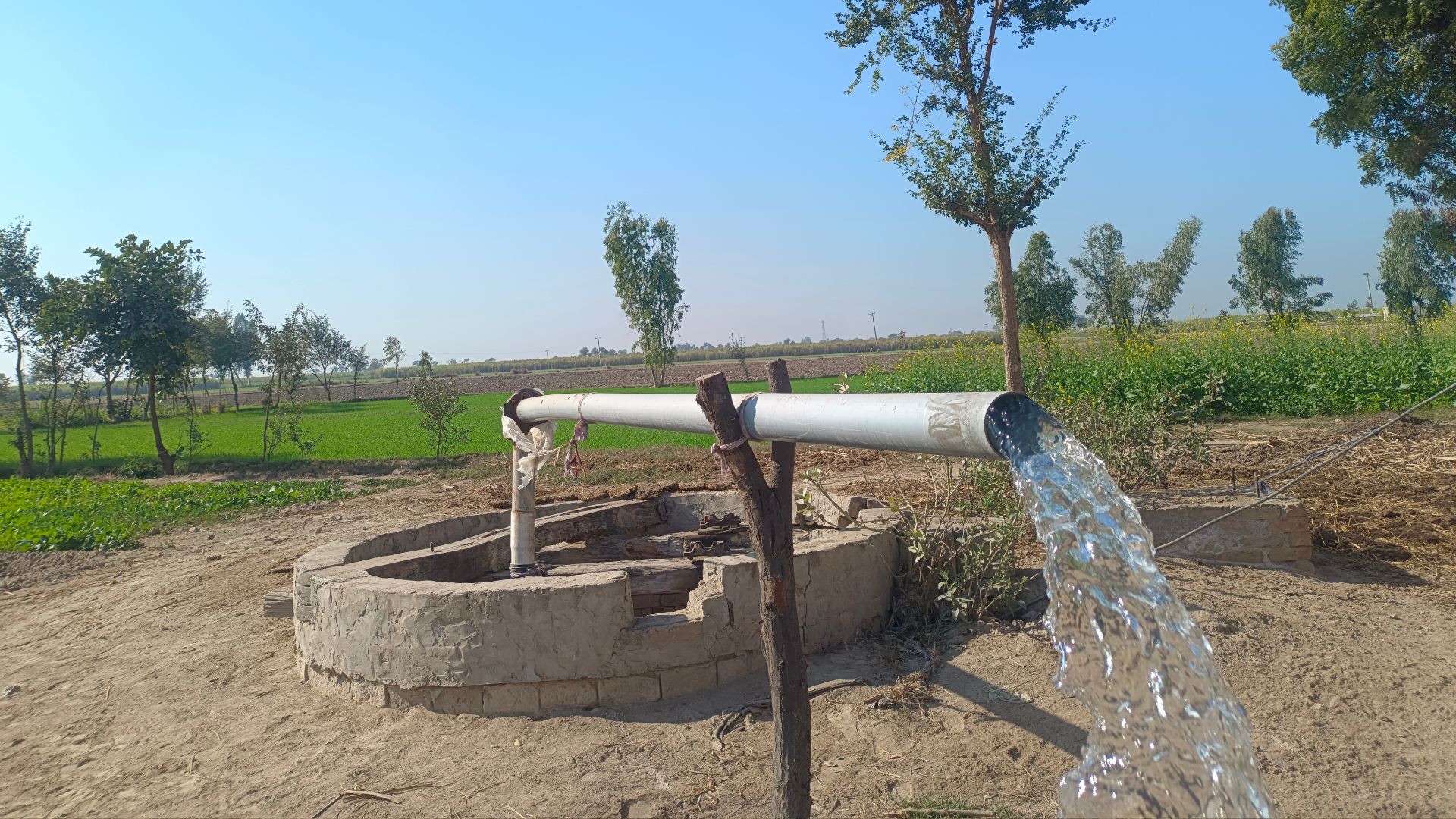
India’s Central Ground Water Board data shows approximately 57% of the wells monitored in Panjab have registered a rise in groundwater levels while 43% wells have shown decline over the past decade. The rise is mostly in the range of 0–2 meters. The union government has shared the aquifer maps covering an area of 50,369 sq. km. and management plans with the respective state governments. The union government has also shared a master plan for artificial recharge of groundwater covering an area of 45,592 sq. km. Meanwhile, former Secretary Agriculture, Panjab Kahan Singh Pannu has been actively working on innovative farming techniques on his own land that use less groundwater. He is also encouraging other farmers to adopt them. Narinder Tiwana from Dittupur village, Patiala district decided to experiment with this new technique of growing paddy. Tiwana did not flood his two acres farm with water but instead shaped the land into a row of narrow elevated soil beds, separated by deep furrows. He planted rice seeds on the soil beds and the furrows filled with water. Tiwana said, ‘Only 50% of water is needed to grow rice this way as compared to traditional paddy farming’. He got a yield of around 24 quintals from one acre, which is the same as with traditional methods. Bahadur Singh a farmer from Amloh village, Fatehgarh Sahib district also benefited from moving to the less water-intensive technique. Concurrently, as many as 68 people died of cancer every day in Panjab in 2025 with the incidence of the disease and mortality rising over the years. According to fresh data, the cases increased from 39,251 in 2021 to 43,196 in 2025. This means every year, nearly 25K people in Panjab are dying of cancer. Additionally, a pharmaceutical company Roche Pharma India has partnered with the Panjab government to launch an initiative Neuro Sakhi (friend) to strengthen support systems for women living with Multiple Sclerosis (MS) in the state. MS is a complex neurological condition with a strong predilection for women where timely diagnosis and appropriate treatment can significantly alter the course of the disease (earlier coverage).
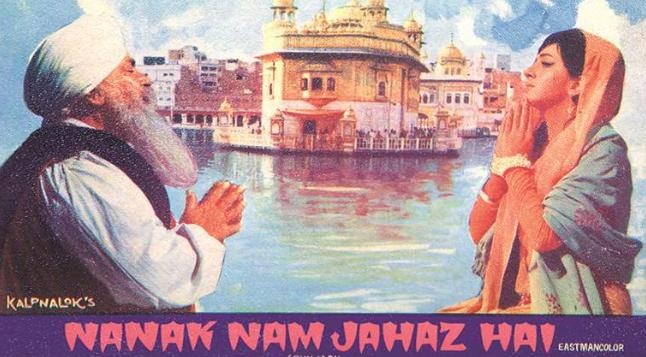
Growing up in Wolverhampton, UK director Flex Singh said he 'never really saw someone who looked like me' in films from Hollywood or British cinema. His film, Ninth Master: Way of a Warrior, is a martial arts action movie with themes of courage and discipline but 'rooted in modern Britain'. Flex says his creation is 'the world's first Sikh superhero film in the English language' and adds, 'For me, the turban is my crown. It is my identity, my strength and my responsibility.' The film was developed over four years and shot in locations including Birmingham, Wolverhampton, London, and Wales. Meanwhile, a retired employee of the Reserve Bank of India, 75-year-old Bhim Raj Garg, author of the book The Illustrated History of Punjabi Cinema (1935–1985) is currently working on a book-cum-documentary on Panjabi cinema (1935–2025) to be aired on the state-run television channel Doordarshan. Garg says, 'I grew up listening to Panjabi songs on the radio. Back then, on radio they announced only the singer's name, neither film, nor music director, lyricist etc. My pursuit into Panjabi cinema began with the search for answers on those creating this world.' Panjabi cinema has had three stages: silent era, pre-Partition of India in 1947, and Golden era 1950s–60s. Garg says, ‘In the silent era, theater was strong, cinema did not get much draw. When Daughters of Today was released in 1924, in Lahore eight theater spaces were converted to cinema halls but the audience was sparse.’ With sound, Panjabi cinema moved to Ishq-e-Punjab alias Mirza Sahiban released in 1935 and Krishen Dev Mehra's Pind Di Kuri in 1937 created a huge stir. Mangti released in 1942 ran 60 weeks in a single theater. 'The tragedy with Panjabi cinema is that almost all films from the silent era to Partition of India in 1947 are lost. There is no print, brochure, nothing is left. Four big film studios in Lahore—two owned by Pancholis, one by Satya Dev Narang and another by Shouries were set on fire during Partition, reduced to ashes.’ The Golden age of Panjabi cinema coincided with great music. Films like Gul-e-Bakawali, Heer Syal, Sohni Mahiwal, and Yamla Jatt were backed by great music by Ghulam Haider.
Sanjay Hegde in The Tribune: The Union must not devour its States.

Panjab: Govt. employees on strike again; State moves SCI for DA Dues; Justice Mishra takes oath as Chief Justice; SAD targets Dr. Gurpeet. Sikh: Youth alleges torture & assault; Long delay in SGPC elections; Relief for Nepal flood victims—and more stories.

Panjab: Saffron & independents win Panjab University polls; Employees vs. Govt. standoff intensifies; River Sirsa under PPCB scanner. Sikh: SAD targets WPD, explores alliance with BJP. After INC, BJP Leaders condole Kumar; ‘Akal Takht’ directions on singing full ‘Vande Matram’ sought—and more stories.
