Thank you! Your submission has been received!
Oops! Something went wrong while submitting the form.
Panjab: Seven AAP MP’s defect to BJP; Jailed MP Amritpal re-arrested; Agrarian crises looms large; 4 districts without clean water. Sikh: Anti-sacrilege amendments challenged; 65% Canadian Sikhs are victims of hate; UK Man sentenced for rape of Sikh woman—and more stories.
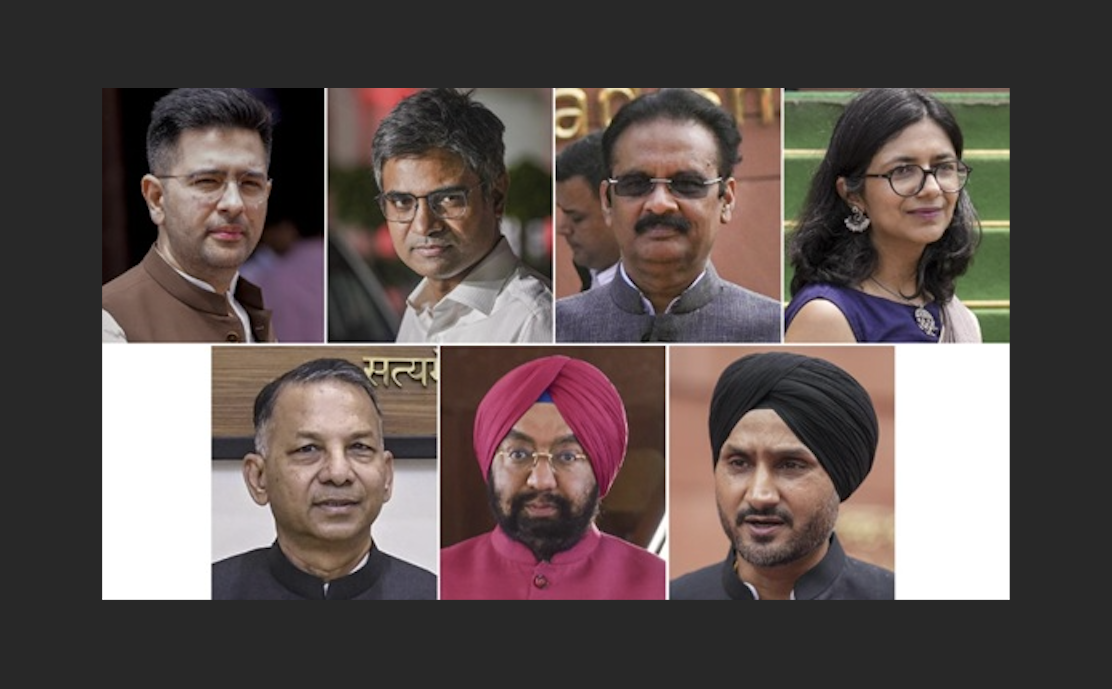
In a major setback to the Arvind Kejriwal-led Aam Aadmi Party (AAP) seven of its Rajya Sabha (Upper house of Parliament, RS) Members of Parliament (MPs)—six from Panjab—quit the party on 24 Apr to join the ruling Bharatiya Janata Party (BJP). RS Chairman CP Radhakrishnan accepted the merger on 27 Apr. The MPs who have signed the defection letter and given their consent are Raghav Chadha, Sandeep Pathak, Swati Maliwal, Harbhajan Singh, Vikramjit Singh Sahney, Ashok Mittal, and Rajender Gupta. The move takes the ruling BJP-led National Democratic Alliance's strength in RS to 148 from 141. AAP party leader Sanjay Singh said Panjab will ‘never forget these traitors who stabbed the people in the back’. Panjab Chief Minister Bhagwant Mann added, ‘The BJP’s lack of political ground (in Panjab) has pushed it towards such tactics’. Singh also mentioned that Operation Lotus is being executed in the state and that government bodies Enforcement Directorate and Central Bureau of Investigation are being used to execute this—referring to the raid and searches on the now defected MP Ashok Mittal’s education group on 15 Apr, believed to be an attempt to pressurize him to join the BJP—a political tactic BJP has used in the past. While AAP had suspended its Deputy Leader in RS Raghav Chadha on 2 Apr following internal rifts, it is strategist Sandeep Pathak’s loss that the party will suffer the most. Pathak had built the party organization from scratch before the Panjab legislative polls in 2022. Therefore for the BJP, Pathak is the ‘more precious’ import from AAP, considering that Panjab is set to go to polls in 2027. The AAP had faced criticism when it chose two non-Panjab residents for Panjab’s RS seats in 2022—Pathak from Chhattisgarh and Chadha from Delhi. Harbhajan Singh, Mittal, and industrialist Sanjeev Arora were from Panjab. The party later chose two Padma Shri-winning eminent Panjabis—Balbir Singh Seechewal and Vikramjit Singh Sahney of which Sahney has also defected. Seechewal claimed that Sahney had approached him to join them but he refused saying, ‘The defectors had a responsibility towards the party which sent them to RS... But they have committed bewafai (betrayal) with AAP’ (earlier coverage).
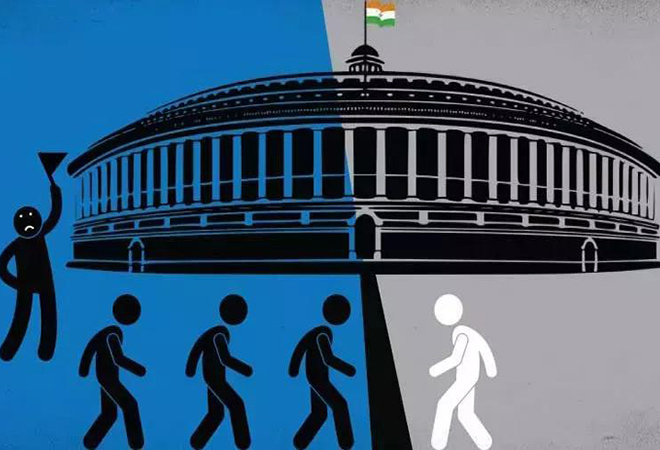
The defection by seven Aam Aadmi Party’s (AAP) Members of Parliament (MPs) was possible by them cleverly using the Anti-Defection Law (ADL) to their advantage. Ironically, the ADL was enacted in 1985 in India to prevent political defection and not to facilitate it. Before ADL was implemented, legislators elected on a party’s ticket would leave that party to join the ruling party in most cases, or topple the incumbent government and help form another government resulting in rampant political instability. Raghav Chadha and other MPs who joined the Bharatiya Janata Party (BJP) voluntarily gave up the membership of their original political party which would bring them under ADL’s Paragraph 2(1)(a) of the 10th Schedule, subjecting them to disqualification. However, Chadha submitted a letter to the chairman of Rajya Sabha (Upper house of Parliament, RS), CP Radhakrishnan, claiming that he and the six others constitute two-thirds of the members of AAP in the RS. Therefore, the provision of disqualification would not apply to them. The 10th Schedule also contained Paragraph 3 that provided grounds for immunity to the legislators—if they pleaded that they belong to a faction that has arisen in the party as a result of a split and that they constitute two-thirds of the legislature party in that legislature. The walk out was carefully planned and might have been in the works for months. The speculation is BJPs decision to accommodate AAP MPs was taken around the time Home Minister Amit Shah visited Panjab for a rally on 14 Mar. But whether it will help BJPs case in the 2027 Panjab elections is open to debate. While some believe that it will strengthen the party when it comes to public perception and enhance its negotiating leverage for an alliance with the Shiromani Akali Dal (SAD), others like an Indian National Congress MP, who chose to remain anonymous, believe that ‘Panjab voters are a different lot and they don’t like gaddars (traitors)’, as was evident when protestors spray-painted the word gaddar on defected MPs Harbhajan Singh and Ashok Mittal homes’ boundary walls. The Congress MP also said that none of the seven MPs carried a strong grassroots base that the BJP could leverage within the state (earlier coverage).

The Panjab police formally arrested Khadoor Sahib Member of Parliament Amritpal Singh at Dibrugarh jail on 23 Apr—the day his detention under National Security Act ended. Amritpal's arrest is in connection with the Ajnala Police Station attack on 23 Feb 2023. The police’s action has drawn sharp criticism from members of the co-ordination committee of Akali Dal (Waris Punjab De) and Shiromani Akali Dal Punar Surjit (revival). Parallelly, on 22 Apr, 10 United Nation human rights experts called on India to release UK citizen Jagtar Singh Johal detained in India for over eight years after being targeted for his activism. The experts said Johal’s prolonged detention 'is a form of psychological torture' and called on India to drop remaining charges and release him without delay. Meanwhile, Jalandhar-based Simranjeet Singh has filed a petition in the Punjab and Haryana High Court against the anti-sacrilege related amendments made by the Panjab government to the Jaagat Jot Guru Granth Sahib Satkar Act, 2008. The amendments propose stricter punishment for acts of sacrilege of Guru Granth Sahib (Sikh scripture and charter, GGS). The petition says, 'By excluding other religious scriptures, the State has failed the test of ‘Equality before Law’ and violated the basic structure of the Indian Constitution—Secularism.' Kendri Singh Sabha (Central Sikh Council), Chandigarh says the law is redundant because Section 295A of the Indian Penal Code already penalizes deliberate and malicious acts intended to outrage religious feelings and the absence of procedural safeguards could lead to misuse by police and vigilante groups. Various Sikh groups call the amendments 'partial' and a 'contemptuous circumvention' by recognizing the GGS as a 'juristic person' instead of a 'living Guru'. Sri Akal Takht Sahib (Eternal Throne) acting Jathedar (leader) Giani Kuldeep Singh Gargajj has called a meeting of Sikh bodies lawyers and scholars on 3 May to deliberate over issues pertaining to the new law. Concurrently, the Supreme Court of India has denied bail to former Indian National Congress leader Sajjan Kumar serving a life sentence in Tihar Jail for the killing of five Sikhs at Raj Nagar, Ghaziabad and a double life imprisonment for the murder of Jaswant Singh and his son Tarundeep Singh in Saraswati Vihar, Delhi during the 1984 Sikh Genocide (earlier coverage).

Panjab’s agriculture sector, which contributes nearly USD 8.5B annually to the state economy—USD 3.7B from wheat and USD 4.8B from paddy—is facing an unusual convergence of challenges. The three pillars that sustain this system—efficient wheat procurement, assured fertilizer supply and reliable power—are all under strain, threatening a cascading economic impact. The immediate concern stems from wheat procurement. Early delays due to heavy rains combined with a noticeable dip in yield, have slowed the flow of income to farmers. Of the 9.9 MMT wheat that arrived in grain markets till 25 Apr, 9.5 MMT has been procured but only 19% of it has moved. The grain markets remain clogged with over 6.5 MMT of unlifted grain. Panjab’s fertilizer-intensive agriculture also faces a potential crunch—particularly of urea. While 480 KMT is currently available, the requirement for the monsoon season stands at 1.6 MMT. Rural areas are already witnessing long, often unscheduled outages which officially attribute to maintenance work. Outages have triggered protests, with farmers laying siege to power stations in Mansa and clashing with officials at Dagru village, Moga district. The vice-president of the Kirti Kisan Union (a farmer’s union) Rajinder Singh Deepsinghwala says, 'If electricity is not reliably available from June to August, paddy production will suffer badly. Farmers may then rely more on fertilizers—which will also be in short supply.' Concurrently, Panjab Rehabilitation and Disaster Management minister Hardeep Singh Mundian announced a relief package of USD 13M for farmers whose crops were damaged due to hailstorms that struck parts of the state. Additionally, for the past week murky, dark green-colored water has been flowing through canals across Ferozepur, Faridkot, Muktsar, and Fazilka districts, posing a potential health risk to residents and farmers who use it for drinking and irrigation. The situation has arisen because the Rajasthan Feeder canal is closed for relining work in Faridkot district till 3 May, which can extend. As temperature has crossed 41°C, there is an acute shortage of potable water. Several waterworks dependent on canal supply have either shut down or shifted to groundwater, which in many areas is considered unfit for consumption due to high Total Dissolved Solids levels (earlier coverage).

65% of Canadian Sikhs say they’re victims of hate, fueled in part by domestic racism, xenophobia, and transnational repression and disinformation from India, says a report on anti-Sikh Hate released by World Sikh Organization (WSO) Canada. The survey was conducted between Jan–March 2025 and recorded more than 1,600 Canadian Sikhs. 80% of respondents believed that hate and discrimination against Sikhs has increased since 2021 with more than 70% of victims choosing not to report hate incidents to authorities. The WSO says the report is the first comprehensive effort to document and analyze the experiences of Canadian Sikhs facing discrimination by combining survey data with insights from community town halls. The report defines anti-Sikh hate as ‘prejudice or hostility against individuals who are or are perceived to be Sikh based on their appearance, beliefs, or advocacy related to their identity.' The report says 97% of women who wear head coverings reported experiencing hate; 77% of those that don’t wear head coverings also experienced hate; and so did 47% of men who wore visible Sikh articles of faith. Meanwhile, a video of an elderly Sikh man being racially harassed by a young man in Woodstock, Ontario surfaced on 22 Apr. The man shouted, ‘What are you doing in my country? You ain’t from here, get out of my country.’ The footage has triggered widespread condemnation and renewed concern over rising hate incidents in Canada. Parallelly, the Financial Transactions and Reports Analysis Centre of Canada (FINTRAC) has issued a critical special bulletin detailing a sustained campaign of coercion involving 'financially vulnerable, young male, Indian nationals in Canada on study permits who are being used as foot soldiers by gangs for targeted violence' against South Asian diaspora in Canada. The bulletin warns that smaller criminal elements are leveraging the fearsome reputation of these major gangs to maximise the impact of their own extortion demands. Alongside, at least 11 people were injured after a violent clash erupted at a Gurdwara in the Duisburg locality in Moers, Germany on 21 Apr. Around 40 people were involved in the altercation over community donations to the Gurdwara (earlier coverage).

The Birmingham Crown Court, UK sentenced a UK resident John Ashby for life on 27 Apr. Earlier, Ashby had admitted to raping a Sikh woman in her home in Walsall, UK in October 2025, while also subjecting her to religiously aggravated abuse. The court learnt that Ashby subjected his victim to a stream of Islamophobic abuse, wrongly believing her to be a Muslim. Armed with a two-foot stick, Ashby had followed the Sikh woman as she got off a bus and entered her property. On hearing a noise inside her home, the woman tried to lock herself in the bathroom but he barged his way in and went on to rape her. The prosecutor said, ‘Once inside the bathroom he turned the light off, telling her that he was here to have fun.’ The judge, Justice Pepperall, said that the details of the attack expose the rapist as a ‘deeply unpleasant racist and Islamophobe’. Before the attack, Ashby had watched anti-women material on social media, some from the influencer Andrew Tate. Ashby was awarded a minimum term of 13 and a half years—a life term which is rare for a single rape—because ‘Ashby was so dangerous, especially to women’. The judge praised the victim, who came back into court after having a panic attack during the sentencing, saying, ‘I have nothing but admiration for your bravery.’ Meanwhile in Chandigarh, more than two months after 24 women staff members of a government senior secondary school lodged a formal complaint against a male colleague alleging harassment and intimidation, the accused continues to remain on duty with no interim administrative action taken so far. The complaint was submitted on 12 Feb to the school's Internal Complaints Committee under the Sexual Harassment of Women at Workplace (Prevention, Prohibition and Redressal) Act. Despite the complaint and the number of signatories, the accused continues to attend school, sharing the same workspace as the complainants. Additionally, despite opposition by the Indian union government, the Supreme Court of India (SCI) on 23 Apr held that courts can’t force a woman, especially a minor, to carry a pregnancy against her will. SCI allowed a 15-year old girl (identity, location masked) to medically terminate her over seven-month pregnancy (earlier coverage).

The autopsy of Border Security Force (BSF) constable Jaswinder Singh who was picked up by the Narcotics Control Bureau (NCB) in a drug-related case on 3 Mar from Amritsar has revealed as many as 34 external injuries indicating custodial torture. Around 25 injuries were inflicted 2–4 days prior to death, while nine were sustained 18–24 hours before death. The constable was on leave when he was arrested in connection with an earlier Narcotic Drugs and Psychotropic Substances (NDPS) Act, 1985 case registered against his brother, Pupinder Singh. Pupinder was discharged by a Jammu court on 9 Mar. NCB has suspended investigating officer Akash Rai in connection with the case. Meanwhile, acting on concerns flagged by Panjab Police, the Indian Union Ministry of Information and Broadcasting has advised OTT platform ZEE5 not to release a web series based on gangster Lawrence Bishnoi, warning that the content could 'incite violence' and disturb public order. Panjab Indian National Congress (INC) chief Amarinder Singh Raja Warring had filed a Public Interest Litigation against the series in the Punjab and Haryana High Court. After the series was stopped, public figures in Panjab have received threats by the Bishnoi gang. They include Warring, INC's Sukhjinder Singh Randhawa, Shiromani Akali Dal leader Bikram Singh Majithia, and Balkaur Singh, father of slain singer Shubhdeep Singh Sidhu alias Sidhu Moosewala. Warring said the Panjab INC would continue its fight against gangsters and asserted that a 'gangster-free Panjab' would be a top priority for the party. Randhawa accused the gangsters of being patronized by the Indian union government. He questioned how Bishnoi, lodged in Sabarmati Jail in Gujarat, is still issuing threats and made serious allegations about use of mobile phones by Jagdeep Singh alias Jaggu Bhagwanpuria, lodged in Dibrugarh Jail, Assam. Additionally, Panjab police's War on Gangsters completed three months on 20 Apr. Police conducted 62,302 raids across the state, arrested 22,605 people including 461 associates of gangsters and 22,144 wanted individuals. In addition, police took 915 proclaimed offenders into custody. Firing incidents decreased from 29 cases reported in January 2026, to nine recorded until 20 Apr, a decline of nearly 69% (earlier coverage).
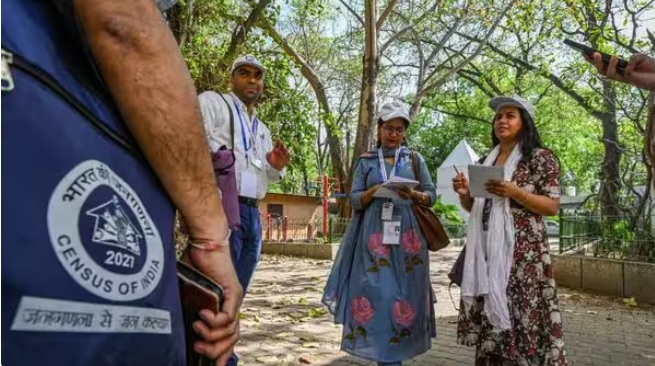
Nearly 900 Assistant Professors working as guest faculty in 64 government colleges of Panjab have not been paid salary for the past four months. Dr. Hukam Chand, member of the Guest Faculty Assistant Professors’ Association, said despite repeated requests the Higher Education and Finance Departments had failed to come to their rescue. Educators say the delay has pushed them into financial strain amid rising living costs, triggering anger and anxiety. Shivani Arora, faculty from the English department of Government College for Girls, Ludhiana, said, ‘The monthly pay of guest faculty ranges between USD 372–499, out of which nearly USD 117 is paid through the parent-teacher association fund by colleges and the remaining by the state government. We are still waiting for the government’s share.’ Panjab spends about USD 3.2B annually on salaries, averaging over USD 340M per month. According to the State Finances Audit Report for 2023–24, interest payments, salaries and pensions together accounted for 65% of revenue expenditure in 2023–24, down slightly from 69% in 2019–20. Despite the reduction, this category still dominated the state’s spending profile. Panjab’s subsidy bill stands at USD 2.8B and includes free power for farmers, monthly payouts to women, free ration, pilgrimage schemes and free bus travel. The subsidy burden in Panjab exceeds its revenue deficit, estimated at USD 2.6B. Several economists have flagged concerns that a large part of government expenditure is financed through borrowings, adding that rising debt, coupled with high subsidies, reflects structural fiscal stress which could lead to long-term economic stability. Moreover, at least 70% of government school teachers are currently engaged in ‘non-academic’ work—Census 2027, Panjab government’s drug census, Panjab government’s health insurance scheme and working as Booth-Level Officers (BLO) for the Election Commission’s Special Intensive Revision exercise. A headmaster in a government school in Bathinda district said that of the 10 teachers in his school, three were performing BLO duty and six were on census duty. A headmistress, also from Bathinda district, said that of the 11 teachers in her school, five were on census duty, three on BLO duty and one was sent to another school on deputation. The impact is borne by the students (earlier coverage).

US President Donald Trump shared on social media the transcript of remarks made by an American political commentator on birthright citizenship in the US on 22 Apr. The transcript termed India among 'hellhole' countries and Indians in the US as ‘laptop-wielding charlatans’. The remarks were made by Michael Savage, an author and political commentator, on US-based TV channel Newsmax when he claimed, 'A baby here becomes an instant citizen, and then they bring the entire family in from China or India or some other hellhole on the planet.' On 23 Apr, the Indian Ministry of External Affairs Spokesperson Randhir Jaiswal said, 'The remarks are obviously uninformed, inappropriate, and in poor taste. They certainly do not reflect the reality of the India-US relationship, which has long been based on mutual respect and shared interests.' Later in the day, the spokesperson for the US Embassy in New Delhi Christopher Elms said Trump has described India as a 'great country with a very good friend of mine at the top'. The remark comes on the back of the US ordering India to stop Russian oil imports in February 2026 jeopardizing India’s international image. Parallelly, on 25 Apr, speaking at the Hudson Institute in Washington, US former Bharatiya Janata Party (BJP) national general secretary and BJP's ideological mentor Rashtriya Swayamsevak Sangh (RSS) leader Ram Madhav said, 'We agreed to stop buying oil from Iran and Russia...We agreed to 50% tariffs…In the new trade deal also, we agreed to 18% tariffs.' Madhav argued that the three pillars underpinning the India-US relationship—geostrategic alignment, economic ties and people-to-people engagement—were all under stress. 'We don’t understand what the geostrategic priorities of the US government are now. Not just we, even NATO, Europeans and the members of the Quadrilateral Security Dialogue don’t understand it.' A coalition of US-based civil rights and advocacy organizations such as The Sikh Coalition, Sikh American Legal Defense and Education Fund, Hindus for Human Rights, and others have condemned the Hudson Institute for platforming leaders of RSS, an organization that a US congressionally-mandated federal panel—USCIRF—has called to be sanctioned for its role in persecution of religious minorities in India. The coalition said the decision to host RSS leaders raises serious concerns not only about human rights but also about US national security (earlier coverage).

Boxer Arshdeep Kaur from Gurdaspur recently became the toast of the town by bagging a gold medal at the prestigious boxing championship Sagi Ramakrishnam Raju Trophy, 2026 which concluded recently in Andhra Pradesh. Experts say Arshdeep has delivered a knockout punch to the ‘glass ceiling’ by defying conventional notions of softness associated with femininity and established herself in the male-dominated domain of boxing. Arshdeep, a student of Pandit Mohan Lal SD College for Women, dedicated her victory to Principal Neeru Sharma and head of the physical education department Gagandeep Kaur. According to coaches, the standard of the sport and competition in the national-level boxing meet is much tougher, harder, and harsher than what one endures in other national championships. For Arshdeep, boxing is a transformative sport that offers empowerment, physical strength, and intense discipline and serves as a therapeutic outlet for aggression, while being a vehicle to challenge traditional gender norms. While Arshdeep is punching holes in the ceiling set for women in Panjab, Charan Kaur Dhesi from the UK is setting her eyes on the world-stage. Charan is being touted as a future world champion as she prepares for a fight in her home city of Hull. Charan is one of UK's few Sikh female sport professionals and will appear at the Connexin Live arena at the end of May. The 21-year-old took up the sport in her early teens after watching her brothers practising at the East Hull Amateur Boxing Club. Charan says, ‘It's something not many women do, especially an Asian girl. I want to pave the way for the other girls as well.’ East Hull head coach Sean Ross recalled the then 13-year-old standing by the doorway as her brothers trained, ‘I went up to her and said why don't you join in instead of watching. The rest is history. She went on to excel in the sport and went on to international competitions with Team England. I knew 100% that she would make it.’
Arjun Sheoran in Live Law: Punjab's Anti-Sacrilege Amendment: a dangerous and disproportionate precedent.

Panjab: Govt. employees on strike again; State moves SCI for DA Dues; Justice Mishra takes oath as Chief Justice; SAD targets Dr. Gurpeet. Sikh: Youth alleges torture & assault; Long delay in SGPC elections; Relief for Nepal flood victims—and more stories.

Panjab: Saffron & independents win Panjab University polls; Employees vs. Govt. standoff intensifies; River Sirsa under PPCB scanner. Sikh: SAD targets WPD, explores alliance with BJP. After INC, BJP Leaders condole Kumar; ‘Akal Takht’ directions on singing full ‘Vande Matram’ sought—and more stories.
