Thank you! Your submission has been received!
Oops! Something went wrong while submitting the form.
Panjab: Panjabi travellers stuck due to Israel-US Operation Epic Fury against Iran; Canadian PM visits India; Court discharges AAP leaders; Rahul warns Congress against factionalism. Sikhs: RAW involved in Nijjar assassination reports Canadian media; SGPC retires Head Granthi—and more stories.

On 28 Feb, Israel and the US launched Operation Epic Fury against Iran. The attack was unilateral, without provocation, and took place while talks between the US and Iran were still on. Oman’s Foreign Minister Badr Albusaidi, who was conducting the talks, said on X, ‘I am dismayed. Active and serious negotiations have yet again been undermined...I urge the United States not to get sucked in further. This is not your war.’ Right after the first attack in which a primary school in Minab was hit, killing 165 girls plus staff, Iran started bombing Israel and the US military assets in Bahrain, Saudi Arabia, Qatar, the United Arab Emirates, Iraq, and Kuwait, causing significant damage. On 1 Mar, Iranian media declared the Supreme Leader of Iran, Grand Ayatollah Ali Khamenei, dead. Iran described Khamenei as a shahid (martyr) and announced a 40-day mourning. US President Donald Trump said, ‘Khamenei, one of the most evil people in history, is dead’ and described the killing as ‘the single greatest chance for the Iranian people to take back their country’. The US and Israel claimed Iran under Khamenei was a repressive, anti-women state. The provocation for the attack was that Iran is enriching uranium to make nuclear bombs. However, after Khamenei's death, Iran’s retaliation has increased while the US and Israel continue to bomb Iran, destroying hospitals and other civilian facilities. The Iranian Red Crescent said at least 550 people have died and 130 cities have come under attack. Notably, Indian Prime Minister Narendra Modi visited Israel on 25–26 Feb where he condemned the Hamas attack on 7 Oct 2023, but refrained from mentioning the Gaza genocide carried out by Israel. He received a freshly minted Medal of Knesset. Modi has also not issued a statement on Khamenei’s death, even though Iran has been India’s long-standing ally. The Indian National Congress has criticized Modi’s visit, saying it ‘creates a perception of endorsement of the military attacks’. The bombings have disrupted flights in the Gulf region, leaving thousands of Panjabis stranded. Panjab’s political leaders across parties have urged the Indian government to bring back over 10M Indians who live and work in the Gulf countries (earlier coverage).

In an attempt to restore their diplomatic relations after tensions that had escalated since Sep 2023 and to further trade, Canadian Prime Minister Mark Carney visited India from 27 Feb–2 Mar. Indian Prime Minister Narendra Modi and Carney agreed on a wide-ranging set of measures to deepen economic cooperation. Among the agreements is a long-term CAD 2.6B uranium supply deal, which is supposed to bolster India’s energy security as it comes under pressure from the US. Plans for an expanded economic partnership could also boost trade and investment between the two nations. Cooperation in areas such as critical minerals, clean energy, space, and higher education promises new opportunities for India. Ahead of Carney’s visit, Canadian officials said that they believed India is no longer linked to violent crimes in Canada. However, the statement is belied by the head of Sikh Federation of Canada, Moninder Singh, who said the Vancouver Police Department delivered him a ‘caution’—a formal warning—on 22 Feb. Moninder said the officer informed him that police were tipped off on the threat from a confidential informant and his ‘wife and children were also deemed to be at risk’. Meanwhile, a Canadian media has reported that national security officials were presented with evidence that Indian consular staff operating in Vancouver had supplied information to assist in the assassination of Sikh separatist Hardeep Singh Nijjar in June 2023. The case is being heard in Canadian courts. The reports alleged that an Indian official, working as a visa officer in the consulate, used his position to gather information about Nijjar from members of the Indian diaspora in Surrey, British Columbia (BC). Canadian authorities believe the visa officer Kanwaljit Singh also worked for India’s external intelligence agency, the Research and Analysis Wing (RAW). Information about Nijjar was then passed to Vikash Yadav, another RAW officer in New Delhi, who communicated it to the Lawrence Bishnoi group. Yadav is already under scrutiny over the murder-for-hire case to assassinate Sikh leader Gurpatwant Singh Pannun in the US. A coalition of Sikh groups, including the Gurdwara councils of BC, Ontario, and Quebec have written to 20 Canadian Members of Parliament across parties asking for a full disclosure of evidence and a public inquiry into the circumstances surrounding Nijjar's assassination (earlier coverage).
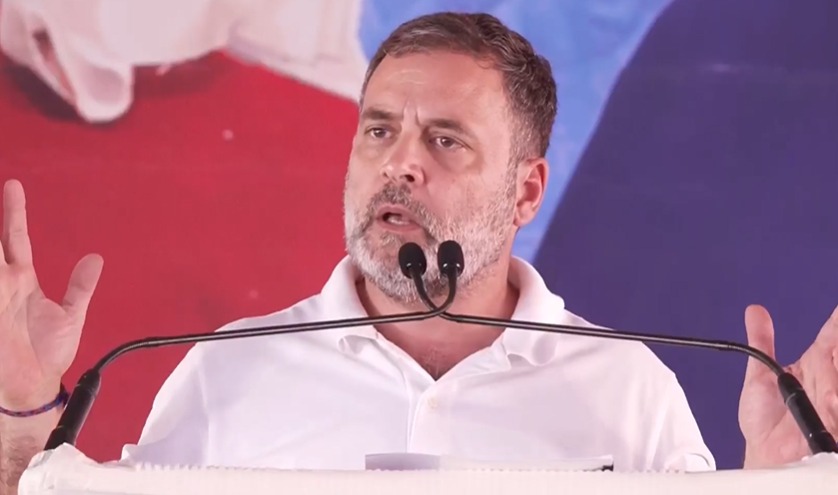
Special Judge Jitendra Singh of Rouse Avenue Court, Delhi, discharged Aam Aadmi Party (AAP) chief Arvind Kejriwal, leader Manish Sisodia, and others on 27 Feb in the Central Bureau of Investigation’s corruption case linked to an excise policy scam. The judge said, 'The prosecution case doesn’t stand scrutiny...The overarching conspiracy theory fails here. There are internal contradictions in the case.' The case arose out of a report submitted in July 2022 by Delhi Chief Secretary Naresh Kumar to Lieutenant Governor Vinai Kumar Saxena, pointing out alleged procedural lapses in the formulation of the Delhi Excise Policy 2021–22. Kejriwal and Sisodia had earlier spent 5 and 17 months in jail, respectively, in the case. Panjab Chief Minister Bhagwant Mann said the discharge vindicates AAP’s stand that India's agencies were being misused by the Bharatiya Janata Party (BJP)-led union government to target political rivals. Kejriwal’s release has galvanized the AAP workers ahead of Panjab election in early 2027. On 1 Mar, AAP held a rally in Delhi involving all its senior leaders, including Mann. Addressing the gathering, AAP leaders made it clear that the party now intends to capitalize on nationwide voter sentiment against the BJP. Meanwhile, on 28 Feb, the Indian National Congress held a massive rally at Barnala. Addressing a factionalized INC in Panjab, Rahul Gandhi said, 'I want to give a message to Congress leaders. Work is done through teamwork. No single player wins (a match). You are all senior leaders sitting here. Become team players or we will make you sit at home.' In his address, Rahul largely focused on Prime Minister Narendra Modi, targeting him over the scrapping of the Mahatma Gandhi National Rural Employment Guarantee Act and the India-US trade deal. He said the trade deal would ruin farmers and small industries, warning that a ‘storm is coming’ if agricultural imports from the US flood Indian markets. He also accused the union government of shielding industrialist Gautam Adani and claimed that international pressures had influenced policy decisions. Referring to security issues, he said, ‘If Panjab is safe, the country would be safe’ (earlier coverage).
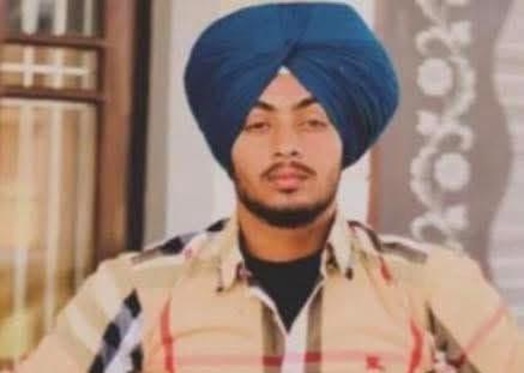
The Panjab police killed a 19-year-old Ranjit Singh in an ‘encounter’ on 24 Feb for his alleged role in the 21 Feb killing of two policemen near the Pakistan border in Gurdaspur district. Deputy Inspector General, Border Range, Sandeep Goel, identified the suspects as Ranjit Singh and Dilawar Singh (also arrested), both teenagers from Adhiya village, Gurdaspur district. A third suspect, 21-year-old Inderjit Singh of Ali Nangal, Gurdaspur district, believed to be the recruiter and handler, is absconding. Police picked up Ranjit from his home and took him to recover a hidden weapon at around 3 am. According to the police, their vehicle overturned due to heavy fog, allowing Ranjit to escape. Police then traced Ranjit to the Purana Shala, Gurdaspur district, and when confronted, Ranjit opened fire, wounding Crime Investigation Agency Inspector Gurmeet Singh. Police returned fire, killing Ranjit. In the last three months Panjab police have reported 34 encounters resulting in five deaths and injuries to 45 people. Ranjit’s mother, Sukhwinder Kaur, asked if her son had engaged in the murder of policemen Gurnam Singh and Ashok Kumar on the border post, why was he sitting at home? She said the police had told them they were taking Ranjit for questioning. Panjab activists and political organizations are raising accusations of misconduct against the police, asking: Why did the police pluck out the CCTV DVR installed in the village? Why the midnight rush to recover the weapons? If policemen were injured when the vehicle overturned, why wasn't Ranjit injured? If Ranjit escaped from police with handcuffs on, how did he get a motorcycle and weapons, 30 kms away from the site of the accident at 6 am? The Punjab Human Rights Organization (PHRO) has expressed concern and doubt over the death of Ranjit. PHRO has asked the Panjab government to get the case investigated by a judicial commission and suspend the concerned police officials. Meanwhile, in Samana, Patiala district, activists and farmer unions who have camped on behalf of Gurjeet Singh Khalsa have declared themselves united under the banner of Dharam Yudh Morcha (Principled Battle Front). On 3 Mar, they were on Day 8 of the protest, raising questions about the committee formed in July 2025 to decide laws pertaining to sacrilege cases (earlier coverage).

The apex representative body of the Sikhs, Shiromani Gurdwara Parbandhak Committee (SGPC), has retired the head granthi (reciter) of Darbar Sahib (Golden Temple), Giani Raghbir Singh, days after he flagged corrupt practices and irregularities in the Gurdwara body. On 19 Feb, the SGPC served him a notice to substantiate his allegations within the next 72 hours. The SGPC noted that the decision was taken on the grounds that Giani Raghbir failed to produce any evidence to substantiate his allegations within the stipulated time. Giani Raghbir responded to his retirement, saying he was not surprised at the decision. He claimed that the seeds of the face-off between him and the SGPC were sown when he had delivered a verdict against Shiromani Akali Dal (SAD) president Sukhbir Singh Badal on 2 Dec 2024. He had awarded tankhah (salary, implying punishment) to Badal, former SAD ministers, and the party’s core committee members for their religious misconduct during the SAD government’s tenure from 2007–17. Additionally, the monthly magazine, Gurdwara Gazette, published by the SGPC, has sparked resentment among readers and devotees after incorrect dates for significant historical events were printed in its latest edition, particularly for Hola Mohalla (Sikh mock-battles festival). For 2026, while Hola Mohalla is being observed on 4 Mar, the Gurdwara Gazette listed 15 Mar as the festival date. Similarly, the Nanakshahi New Year marks the commencement of the 558th Nanakshahi Samvat (year). But the Gurdwara Gazette printed it as Nanakshahi Samvat 557. Concurrently, in an attempt to mark a plastic-free Hola Mohalla, the Punjab Pollution Control Board (PPCB) has requested the Sikh apex body to issue an advisory to all devotees and organizations arranging langars (community kitchens) to serve food in steel utensils instead of disposable plastic plates, bowls, and glasses. Meanwhile, a group of Sikh activists, the Sikh Collective (SC), has expressed objection to extending the tenure of the Delhi Sikh Gurdwara Management Committee and its executive board by nine months, as per an order by the Lieutenant Governor of Delhi, Vinai Kumar Saxena. SC claimed that the order reinforces the public perception that the Bharatiya Janata Party-led state government is interfering in Sikh religious affairs (earlier coverage).

The Punjab and Haryana High Court (PHHC) has ruled that the right to life and personal liberty cannot be denied to consenting adults in a live-in relationship. It said that an individual has the right to formalize the relationship with the partner through marriage or to adopt the non-formal approach of a live-in relationship, citing that the law postulates that the life and liberty of every individual is precious and must be protected under Article 21 of the Constitution. In another case, the PHHC declined bail in a matter related to ‘honor killing’ in Panjab. The case registered in Moga revolves around the brutal killing of a young couple who had solemnized a court marriage against the wishes of the woman’s family. PHHC noted that offences of such nature ‘strike at the very root of public order and societal conscience.’ Meanwhile, a two-day-old baby girl was sold for USD 2310 in Ludhiana, leading to the arrest of five people, including the infant’s mother, an ayurvedic doctor, and a private hospital. Locals raised the alarm after noticing a woman suspiciously carrying the crying newborn. Additionally, in Fatehgarh Sahib, Rupinder Kaur, a 37-year-old woman, was left stranded after her Canada-based husband and in-laws reportedly fled the country following a domestic dispute. This has prompted the local police to file criminal charges against the family that lives in Brampton, Canada. Rupinder claims that she was mistreated by her in-laws over dowry demands when she was abroad and frequently excluded from family trips to India. The situation escalated during a recent family visit to India, prompting the in-laws to flee without her knowledge. Additionally, in a historical move, separate toilets for the transgender community are being constructed at the Pathankot District Court Complex. The estimated cost of the project is USD 745K. The move comes after recognition that transgender persons often lack adequate sanitation facilities in public buildings, including court complexes. It is in line with the Supreme Court of India ruling, which directed court complexes and other public institutions to provide separate and accessible toilet facilities for all genders, including transgender persons and persons with disabilities (earlier coverage).

Despite intervention by the National Green Tribunal (NGT) and the Punjab and Haryana High Court, illegal construction in the Shivalik foothills remains rampant. It is the same area for which the state government had brought the farmhouse policy, which was stayed by the NGT. Forest Department officials said that the land mafia is taking advantage due to the absence of demarcation of the protected area. Chief Conservator of Forests, Mahavir Singh, said that a JCB and other machinery belonging to the responsible persons had been confiscated in the Mirzapur village, Sahibzada Ajit Singh Nagar (SAS Nagar) district, and the police have been asked to register a case against violators. A survey of the area reveals that in Chotti & Badi Naggal, Parol villages, and other areas in SAS Nagar district, seasonal rivulets have been diverted to reclaim land for farm houses. The land mafia is also leveling village hills and forest land, carving out plots and farmhouses to sell them illegally. Additionally, NGT has ordered the closure of 13 stone crushers in the Hoshairpur-Ropar Shivalik Hills area and imposed a USD 20M environmental compensation penalty on the crushing units. NGT has given the Punjab Pollution Control Board (PPCB) three months to complete inspections and verify the sources of raw material. The area is concentrated in the ecologically fragile Shivalik Hills, spanning the Beet area of Garhshankar, Hoshiarpur district, and the Kheda Kalmot cluster, Ropar district. Illegal excavation has reportedly leveled hills up to 200 feet high in a region that serves as a critical sub-mountainous forest zone and Panjab’s primary groundwater recharge area. Concurrently, a report submitted to the NGT by PPCB contradicts claims made by the Sangrur Municipal Council (MC) on solid waste management. The MC had claimed that dumping sites had been cleared. However, an inspection by a PPCB environmental engineer found otherwise. Meanwhile, the Shahpur Kandi Dam on the Ravi river, Pathankot district, nears completion. Surplus Ravi river’s waters—previously flowing downstream into Pakistan—will now be stored and redirected for irrigation and power generation within Panjab and Jammu & Kashmir regions, significantly altering longstanding water distribution patterns between India and Pakistan. Despite being authorized under the Indus Waters Treaty of 1960, India lacked the infrastructure to capture and store excess Ravi river water, leading much of it to flow into Pakistan. The dam’s completion is expected by 31 Mar (earlier coverage).

The services of the Vice Chancellor (VC) of CT University have been terminated after a controversy erupted over alleged harassment and eviction threats faced by Kashmiri Muslim students who had sought special meal arrangements during the holy month of Ramzan. The students on campus said that they requested sehri (pre-dawn) and iftar (post-dusk) meals in the university mess. The Chancellor cum Chairman of the CT University, Charanjit Singh Channi (not to be mistaken with the politician with the same name), confirmed VC Nitin Tandon’s resignation. The students alleged that Tandon abused them, made derogatory comments, and threatened to cancel their admissions. The district administration confirmed that the matter has now been resolved amicably following dialogue and an official inquiry. Concurrently, on 27 Feb, amid controversy over alleged remarks by Aam Aadmi Party (AAP) leader Atishi against the ninth Sikh Sovereign Guru Teghbahadar, the Delhi Assembly had summoned Panjab officers to appear before its privileges committee in person. During a three-hour session, the officers—Panjab Additional Chief Secretary Alok Shekhar, Director General of Police Gaurav Yadav, and Jalandhar Commissioner of Police Dhanpreet Kaur—were individually questioned regarding the registration of the 7 Jan First Information Report on uploading and circulating a doctored video to prove Atishi had not abused the Guru. The assembly committee found their replies unsatisfactory. Meanwhile, Rashtriya Swayamsevak Sangh (RSS) supremo Mohan Bhagwat began a three-day visit to Panjab. RSS has maintained that Bhagwat's visit is part of the RSS’s 100th anniversary celebration. However, the timing of the visit is being linked to the 2027 state Legislative Assembly elections. RSS is the parent organization of the ruling Bharatiya Janata Party (BJP). Additionally, AAP Panjab has accused Haryana Chief Minister Nayab Singh Saini from the BJP of orchestrating the induction of Haryana-based members into the Panjab unit of the BJP. In a statement on X, the party alleged that Saini presided over the joining of several members in Chandigarh who were presented as members of the Panjab BJP but were actually from Haryana (earlier coverage).
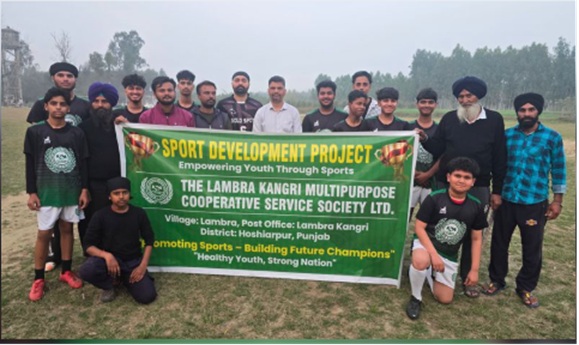
While announcing the Panjab government’s commitment to enhance sports infrastructure in the state to counter the drug issue, Chief Minister Bhagwant Mann described sports as the ‘most lethal weapon’ against the drug menace. He was attending a gathering at the Kila Raipur Rural Olympics, Ludhiana district. He announced that the state government will increase the sports budget in 2026–27. Echoing the sentiment, Cabinet Minister Laljit Singh Bhullar spoke at an event in Gopalpur village, Ludhiana district, ‘It is high time that we understand sporting spirit is the key to a disciplined, peaceful, and drug-free state.’ Meanwhile, keeping in line with the spirit, youngsters in Lambra village, Hoshiarpur district, have formed their own football team. Former Indian Administrative Services officer Kahn Singh Pannu launched the initiative by adopting the Lambra Kangri Agriculture Cooperative Society in 1999 and preparing the youngsters to play football. The aim is to start a larger sports project under which teams for various games will gradually be formed to keep children under 18 years of age engaged in healthy activities and away from the harmful influences of drugs and excessive screen time. The project has appointed a dedicated coach, footballs have been distributed, and evening practice sessions are in full swing in the village. Villagers have been urged to send their daughters to join practice sessions, making the initiative also about inclusion and societal change. Meanwhile, to boost grassroots women's sports and nurture emerging talent, Roundglass Hockey Academy has started the Punjab Hockey League—a statewide league that will culminate on 8 Mar, International Women's Day. The event will be held across Malerkotla and Jalandhar districts and will feature 19 teams. Additionally, a massive nationwide athletics league at 250 locations will be held to celebrate women in sport under the Union Ministry of Youth Affairs and Sports' program to commemorate International Women's Day. Union Minister of State, Ministry of Youth Affairs and Sports, Raksha Nikhil Khadse said, ‘There can't be a better opportunity to integrate our young women across the nation.’ The aim is to increase the women’s participation in sports and to identify new talent across the length and breadth of India (earlier coverage).

The Turks have confined us in codes of Quran, the Hindus too imprison us; one follows the West, the other follows the South…Trapped they are in their differing ways. What to do with the women? They both do not know. This verse speaks of the hardships faced by women in the 18th-century Panjab. It is from the autobiography of the Sufi Poet Piro Preman—Ik Sau Sathh Kafian (160 Kafis). Kafi is a folk song in Panjabi. Piro Preman, born in 1832, shapes her autobiographical work, Ik Sau Sathh Kafian, amid a fraught cultural landscape of the undivided Panjab where disparities based on caste, class, and gender abounded. A special Sufi session dedicated to the trailblazing poet was held at Majha House in Amritsar, featuring author and historian Anshu Malhotra, Professor and Kundan Kaur Kapany Chair in Sikh and Punjab Studies in the Department of Global Studies at the University of California, Santa Barbara. In the Sufi tradition, Piro was the first female poet of Panjab, and in that context, her work and presence are significant. She became the voice of dissent and feminism in 18th century Panjab but remains omitted from today’s history and memory. As historical accounts document, Piro was a Muslim courtesan sold to a brothel in Lahore’s Heeramandi (red light district) area. But Piro joined the Ghulab Dasi sect, rejected the tenets of religion and society, and lived by her own rules. Malhotra, in her latest book Piro and the Gulabdasis: Gender, Sect and Society in Punjab, explores Piro’s Ikk Sau Sathh Kafian, and examines how she challenged social and religious hierarchies, becoming perhaps the lone voice of a woman of the time. Malhotra studied the research work of former Guru Nanak Dev University professor Santokh Singh Sheharyar, who documented and archived Piro’s original manuscripts. Malhotra says, ‘Piro was a woman who had no sect, no clan, and no panth. She claimed her space as a shudra (low caste) woman…which made her all the more marginalized. But she never thought of that as her weakness. It’s a tragedy that with time, Piro’s literary footprints disappeared’ (earlier coverage).
News 18: Indian President’s bodyguards recruit troopers from only 3 communities.

Panjab: Protests against CEC intensify; Delhi fortified; Rain disrupts paddy procurement; CBI files FIR against Ghuman; Sinha apologizes to PHHC over pending DA; Anti-Drug activist & another ASI shot dead. Sikh: Gurdwara in the eye of protest storm; J&K Sikhs protest for inclusion of Panjabi language—and more stories.

Panjab: SCI notice to ECI; INC appoints Pargat Singh as state chief; ECI flags WPD; Maiserkhana Targets AAP; PHHC orders CBI to probe CM aides; Panjab goes to SCI; LGBTIQ+ influencer shot dead. Sikh: Jaggi Johal released; VanDyke release raises questions about ‘Bandi Singh’—and more stories.
