Thank you! Your submission has been received!
Oops! Something went wrong while submitting the form.
Panjab: SIR begins; Civic polls announced; Girls Shine in PSEB results; CBI FIR mentions PVB chief; India rejects CoA award on IWT. Sikh: Leadership in conflict with Panjab Govt.; ‘Punjabi Devils’ founder sentenced; Tech Companies meet religious representatives over AI—and more stories.

Panjab Chief Electoral Officer Anindita Mitra has announced the Special Intensive Revision (SIR) of the voter list will be conducted across the state over the next four months. The final electoral roll in Panjab will be published on 1 Oct 2026. SIR is an exercise to verify and remove dead and duplicate voters from the voter list. Panjab is among 19 Indian states and Union Territories where SIR is being undertaken in Phase 3 beginning 20 May. The last SIR was conducted across India in 2003. As a preparatory measure, out of a total of 21.4M voters, the Panjab Election Commission (EC) has already mapped 17.9M or 83.69% voters—89.58% rural and 73% urban. Since the voters will be required to fill enumeration forms, Mitra said, 'The entire election machinery has been deployed including 24,453 Block Level Officers, 2,476 supervisors, 117 Electoral Registration Officers, and 234 Assistant Electoral Registration officers. An indicative list of 12 documents has been provided. However, Aadhaar (Identity) card will only be accepted as a source of identification and not as proof of citizenship.' Mitra appealed to all political parties in Panjab to appoint their Block Level Agents for the smooth conduct of the exercise. In the last two SIR phases in other states, a huge number of voters have been disenfranchised: Uttar Pradesh 20.4M (13.2%), West Bengal 9.1M (11.8%), Tamil Nadu 6.7M (10.6%), and Bihar 6.5M (8%). The issue is compounded by the fact that by the date of elections in West Bengal, 3.4M (4.7% of voters) appeals were pending but were not addressed. In the West Bengal elections, SIR also added 700K unknown voters with no details provided. This has led opposition parties to allege that the Election Commission of India (ECI) is furthering Bharatiya Janata Party's (BJP) agenda of winning the 2027 Panjab elections by hook or crook. Panjab's ruling Aam Aadmi Party's Member of Parliament Malvinder Singh Kang alleged that the BJP is hatching a conspiracy and would try to get bonafide voters deleted through the SIR. Meanwhile, the Panjab EC has announced the schedule for elections in eight Municipal Corporations and 102 Municipal Councils. Polling will be held on 26 May, results will be declared on 29 May (earlier coverage).

On the directives of Sri Akal Takht Sahib (Eternal Throne) acting Jathedar (leader) Giani Kuldeep Singh Gargajj, Takht (Throne) Sri Damdama Sahib Jathedar Baba Tek Singh Dhanaula called a gathering at Talwandi Sabo in Bathinda district on 17 May to deliberate the anti-sacrilege law Jaagat Jot Sri Guru Granth Sahib Satkar (Amendment) Act (JJSSGG), 2026. A Panthic (Sikh collective) congregation reiterated their opposition to certain provisions of JJGGSS saying the law interferes in Sikh religious affairs. The leaders said instead of focusing on punishment for sacrilege, the law appeared to fix responsibility on Sikh institutions—Gurdwara committees, devotees, and granthis (reciters). The congregation was held after the 15-day ultimatum by the Giani Gargajj to the Panjab government to remove what Panthic organizations describe as objectionable provisions from the amended anti-sacrilege law had lapsed. Shiromani Gurdwara Parbandhak Committee (SGPC) president Harjinder Singh Dhami said the SGPC was not opposed to strict punishment for sacrilege but wanted certain provisions removed in line with the sentiments of the Sikh sangat (community). He said, 'We do not want confrontation with the state government, but it should respect Sikh sentiments,' adding that no suggestions were sought from the SGPC while framing the legislation. Giani Gargajj said no government can frame Panthic laws and alleged that the amended law diluted the Panth's authority over matters concerning Guru Granth Sahib (Sikh scripture and charter, GGS). The Shiromani Akali Dal said the recently passed anti-sacrilege law was a direct attack on the Sikh faith and has instilled fear among the devotees, granthis and Gurdwara committees regarding the installation of GGS in their homes. SAD said it will launch a campaign against the amendments to the JJGGSS law. Misl Satluj president Ajaypal Singh Brar said GGS' sanctity and honor can be protected through Sikh vigilance and Panthic responsibility rather than government legislation. He said bringing Sikh religious matters under government laws goes against Sikh principles, traditions, and Panthic autonomy. Meanwhile, SGPC has installed boards outside Gurdwaras to flag concerns over the new JJGGSS law. Incidents of sacrilege have plagued Panjab elections since 2017. In the 2027 elections, the law against sacrilege is set to be the issue between Sikhs and the incumbent Aam Aadmi Party government (earlier coverage).

After the students took India’s most coveted undergraduate medical entrance exam—the National Eligibility-cum-Entrance Test (NEET)—news came that the question papers had leaked. In 2026, India’s National Testing Agency (NTA) had conducted the NEET exam across 551 Indian cities and 14 overseas centers on 3 May, with nearly 2.3M registered candidates. According to the NTA, information regarding alleged malpractice was received on the evening of 7 May which lead to a nationwide chaos with students emerging on streets to protest and three students commiting suicide. The Central Bureau of Investigation took over the investigation leading to the arrest of nine people so far, including Pune-based Professor PV Kulkarni and teacher Manisha Gurunath Mandhare—allegedly the ‘sources’ of the leak. Kulkarni had served on panels involved in setting the NEET question paper for years. The NEET exam has been cancelled, to be held again on 21 Jun. Leader of Opposition Rahul Gandhi held the Narendra Modi-led Bharatiya Janata Party government responsible for repeated examination paper leaks and asked for the sacking of Union Education Minister Dharmendra Pradhan. A student protestor said, ‘In the last 10 years under the Modi government, there have been 89 instances of paper leaks. The union government, NTA, and the ministries have failed to conduct even a single NEET exam without irregularities.’ Panjab Health and Family Welfare Minister Dr. Balbir Singh criticized NTA for losing credibility and failing to conduct a fool proof medical entrance examination. Meanwhile, girls topped the Punjab School Education Board (PSEB) 2026 Class 12 with three of them scoring a perfect 100%. Leading the toppers is Supneet Kaur from Mansa district. Additionally, a controversy has erupted in Panjab after Army Public Schools sent out messages to the parents asking them to submit a consent form if they wanted their wards to study Panjabi language. As per the message, the language will be taught and a dedicated teacher will be provided only if sufficient numbers of students opt for it. The move is aimed at standardizing the curriculum across Army schools nationwide but violates Punjab’s language law according to which Panjabi is mandatory as a subject up to Class 10 in all schools operating in the state (earlier coverage).

As the stalemate in the US and Israel war on Iran continues, the Strait of Hormuz remains blocked, India is facing a grave oil, gas and fertilizer crisis and the country’s foreign exchange is fast depleting. On 17 May, addressing the diaspora in the Netherlands on his five-nation tour, Indian Prime Minister Narendra Modi said, 'The world is dealing with new challenges. First came the COVID pandemic, then wars broke out, and now there is an energy crisis. This decade is turning into a decade of crises for the world.’ He further said, ‘If these situations are not rapidly changed, achievements of the past many decades would be washed away, and a huge section of the world's population would be pushed back into poverty.' Before visiting the Netherlands, PM Modi visited UAE and signed an agreement on a framework for Strategic Defence Partnership, a Memorandum of Understanding on petroleum reserves and supplies of Liquified Petroleum gas (LPG). UAE has recently left the Organization of the Petroleum Exporting Countries which had capped its oil and gas exports. While Modi was in UAE, Iranian Foreign Minister Abbas Arghachi was in New Delhi for the BRICS Foreign Ministers meet. Araghchi said Tehran has 'never wanted nuclear weapons' and emphasized that diplomacy remains the only viable path forward amid the ongoing regional conflict and fragile ceasefire situation in West Asia. The BRICS meet concluded on 15 May without a joint statement because of 'differing views among member states' on the situation in West Asia. Without naming UAE, Araghchi said that the country has a ‘special relationship’ with Israel and hosts US military bases and installations which were used against Iran. He added, ‘They are not our target.’ Meanwhile, though India claims it has LPG stocks for 45 days, a fact check showed the current stock will last only 17 days. Concurrently, with paddy sowing 20 days away, Panjab farmers are concerned about shortage of fertilizers such as urea and Diammonium Phosphate and the USD 0.041 (INR 3.90) hike in diesel prices which will push up plantation and harvesting costs. Panjab has 5.5M tractors and combine harvesters, nearly 120K crop residue management machines, and 150K diesel-powered tubewells which consume 50% of the total diesel in the state between June–September (earlier coverage).

Panjab’s former Industries and Commerce Minister and former Rajya Sabha (Upper House of Parliament) member, Sanjeev Arora has approached the Punjab and Haryana High Court on 12 May challenging his arrest by the Enforcement Directorate (ED) under the Prevention of Money Laundering Act (PMLA). He termed the action ‘illegal’, ‘arbitrary’, and violative of constitutional safeguards. ED had alleged that Arora’s firm, Hampton Sky Realty Limited (HSRL) had paid USD 29M in remittances to a firm registered in the name of a daily-wage laborer. In another HSRL case related to buying mobile phones locally and selling them abroad, ED says, ‘Multiple supplier entities are interconnected through common mobile numbers, email IDs, and other identifiers, indicating that these entities are controlled by a single group of persons for the purpose of generating accommodation entries and fake invoices.’ Counsel of Arora argued that ED’s case is based on Goods and Services Tax remittance against the exports of mobile phones but the Investigating Officer has not collected any material from Department of Customs to verify whether mobile phones were actually exported or not. The counsel added the grounds of arrest were ‘demonstrably pre-typed and predetermined,’ as the investigating officer allegedly perused Arora’s statement at 3:25 pm, and the arrest was effected at 4 pm on 9 May, with a detailed 17-page document. Meanwhile, on 18 May, the special PMLA court sent Arora to judicial custody. ED has also issued notice to the Chairman-cum-Managing Director of Punjab State Power Corporation Limited (PSPCL), Basant Garg, and Director (Commercial) Harsharan Kaur Trehan, in a case of returning of bank guarantee worth millions of dollars to a company associated with Arora. Additionally, after the raid by Central Bureau of Investigation (CBI) in a corruption case against police Inspector OP Rana, reader to the Punjab Vigilance Bureau (PVB) chief and three others on 11 May, the agency's First Information Report mentions the name of Panjab Director General of Police (Vigilance) Sharad Satya Chauhan. The middleman arrested Raghav Goel is also associated with the BJP Youth Wing. However, the larger question is when the Panjab government had withdrawn its general consent to CBI in November 2020, how did the agency conduct raids in the state? (earlier coverage).

The Indian union government has approved a hike in Minimum Support Price (MSP) of 14 kharif (monsoon) crops for 2026–27. Paddy MSP has been increased by 3% to USD 25.36 per quintal. The highest increase in MSP has been recommended for sunflower seed at USD 6.46 per quintal, followed by cotton (USD 5.79 per quintal), niger seed (USD 5.35 per quintal) and sesamum (USD 5.19 per quintal), signaling farmers to opt for oilseeds over other crops and to reduce India’s import bills of edible oils. The hike will come into force from the marketing season beginning 1 Oct. The government estimates the total payout to farmers at USD 27B, after factoring in the annual procurement, projected at 82.4MT. Meanwhile, as Panjab moves into another paddy sowing season, concerns over shrinking groundwater reserves are once again emerging. Despite warnings from agricultural experts and environmentalists, the area under paddy in Panjab has expanded to 3.22M hectares in 2025–26, from 3.24M hectares in 2024–25. The Panjab government has aggressively promoted Direct-Seeded Rice (DSR) for the past decade as an alternative to the conventional puddled transplanted paddy system. DSR can reduce water consumption by 15–20% and reduce labor dependency—which has become another major challenge. But whether Panjab can stave off its aquifers from depleting remains a question. Furthermore, India rejected an award by the Court of Arbitration (CoA) at The Hague on 15 May concerning maximum pondage at Indian hydroelectric projects on the Indus river system. India reiterated that it does not ‘recognize the tribunal as legitimately constituted’. The CoA concluded a three-day hearing from 28 Apr on Pakistan’s request on the status of the Indus Water Treaty which was put in abeyance by India in April 2025. India did not respond to an invitation to participate in the hearing and did not appear. Additionally, Panjab Chief Minister Bhagwant Mann raised the issue of shortage of canal water in the state’s border belt before the Ravi-Beas Water Tribunal, which visited Amritsar and Ferozepur to assess the availability and distribution of river waters among Panjab, Haryana, and Rajasthan (earlier coverage).

The Central Bureau of Investigation announced the successful extradition of high-profile fugitive Prabhdeep Singh from Azerbaijan, marking a significant breakthrough in a major international narcotics investigation. Prabhdeep was the subject of an Interpol Red Notice. He was escorted back to India by a specialized three-member team from the Delhi Police and arrived in Delhi on 13 May. Additionally, the National Investigation Agency (NIA) arrested fugitive Iqbal Singh alias Shera, a key conspirator in a Hizbul Mujahideen (HM) terror financing case at Delhi’s Indira Gandhi International Airport hours after securing his extradition from Portugal. Shera, a native of Amritsar, masterminded a Panjab-based network smuggling heroin from Pakistan and channeling the drug proceeds via hawala (informal money transfer) to HM operatives in Kashmir and Pakistan for terror activities. An NIA spokesperson said, ‘Shera had fled to Portugal in 2020 following a non-bailable warrant issued against him. An Interpol Red Notice has been active since June 2021.’ Meanwhile, 27-year-old Jashanpreet Singh, a resident of California who founded the outlaw motorcycle club Punjabi Devils in California’s Stockton area, was sentenced to five years and four months in a US federal prison on 12 May for illegally dealing in firearms and possessing a machine gun. Jashanpreet had attempted to flee to India in 2025 after the offences came to light but was arrested at San Francisco International Airport. Punjabi Devils was considered an ‘outlaw motorcycle gang’ associated with the Hells Angels—one of America’s most infamous biker organizations. Furthermore, a 23-year-old British Indian Sikh man Vickrum Digwa is facing trial for murdering an 18-year-old white British student Henry Nowak at Southampton University with a 21-inch knife. Nowak, who was a first-year accountancy and finance student, was walking home from a night out when he was stabbed to death on 3 Dec 2025. Digwa’s mother Kiran Kaur, an Indian citizen, is charged with assisting the offender by removing a weapon from the murder scene. Both deny the charges. Concurrently, a Sikh man in Canada Jaspal Singh Gill has alleged religious discrimination after he was reportedly denied the opportunity to write a police recruitment examination because he refused to remove his kirpan—the sacred article of faith worn by initiated Sikhs (earlier coverage).

After the recent state elections in Assam, West Bengal, Tamil Nadu, and Kerala, the Bharatiya Janata Party (BJP)-led National Democratic Alliance now rules in 21 Indian states and Union Territories. BJP is now focusing on Panjab in the 2027 state Assembly elections. Since the BJP and Shiromani Akali Dal (1996–2020) alliance, BJP has managed to gain support from urban Panjab’s Hindu trading class voters who comprise around 10–15% of total voters. However, the party lacks a base among rural Panjab's Sikh voters. Yet, no set of voters is a monolith, even on religious lines. Panjab’s Scheduled Caste population is 31.94%—the highest proportion among Indian states. Other Backward Classes (OBC) are estimated at roughly 31% including groups such as Sainis and Ramgarhias, many of whom are Sikhs. Nearly 70% of Panjab’s population exists outside the Jatt Sikh fold that has dominated the state's politics. BJP's Panjab plan is led by Haryana Chief Minister Nayab Singh Saini who in the last seven months has visited Panjab 70 times. On 4 May, CM Saini addressed an OBC meet in Rupnagar. He highlighted the community’s contribution to nation-building and alleged it had long been denied due opportunities in Panjab. Urging support for the party, he listed measures for OBCs by the BJP government in other states: representation in party, reservation in education, and the constitutional status for the OBC Commission. Before Rupnagar, CM Saini attended the 24th Nirvana (Liberation) Day ceremony of Brahmanand Ji Maharaj Bhuriwale, a Dalit (marginalized caste) icon in Shaheed Bhagat Singh Nagar district, where he described him as a 'walking embodiment of divine light’. After that, CM Saini visited Mandi Gobindgarh, one of Panjab’s key industrial hubs where he held a meeting with industrialists to discuss investment opportunities, industrial development and ways to strengthen economic co-operation in the region. However, BJP’s outreach among farmers continues to be unsuccessful. On 15 May, Chandigarh police used tear gas and water cannons to disperse protesting Panjab farmers who tried to march into Chandigarh to submit a memorandum to Chandigarh Administrator and Panjab Governor Gulab Chand Kataria. The farmers were demanding a legal guarantee on Minimum Support Price, resolution of the river water dispute and repeal of certain provisions of the Punjab Reorganisation Act, 1966 (earlier coverage).

As AI systems become more influential in shaping information, decisions, and public discourse, the debate around use of AI is increasingly moving beyond technical safety into questions of ethics, values, and accountability. While AI systems can code, generate images, solve complex calculations, and even automate workflows, it generates responses based on patterns in data. AI struggles with understanding morality. That means AI can misstate facts, or even produce convincing but incorrect references especially on religious matters. There are also concerns around AI’s misuse, including generation of deepfakes and producing misleading content when systems are prompted maliciously. Against this backdrop, executives from technology companies OpenAI and Anthropic recently met religion representatives from the Sikh Coalition, Hindu Temple Society of North America, the Baha’i International Community, the Greek Orthodox Archdiocese of America, and The Church of Jesus Christ of Latter-day Saints as part of a Faith-AI Covenant roundtable. The event was organized by the Geneva-based Interfaith Alliance for Safer Communities, an organization that works on issues of extremism, radicalization and human trafficking. Participants explored the idea that AI cannot independently distinguish right from wrong. The meeting focused on how AI can be developed in line with human values and moral responsibility. As AI becomes more embedded in daily life, the central challenge is shifting from 'what can AI do?' to 'what should AI do, and who decides?' Companies like Anthropic and Google DeepMind are hiring philosophers and ethics researchers to work on aligning AI systems with human values. The efforts compliment the apex Sikh management body Shiromani Gurdwara Parbandhak Committee (SGPC) constituting a sub-committee earlier in 2026 to review and suggest ways to check the growing misuse of AI to distort the history and teachings of the Sikh religion. Upon receiving complaints regarding altered text, misinformation, SGPC had written to ChatGPT, DeepSeek, Grok, Gemini AI, Meta, Google, VEO 3, Descript, Runway ML, Pictory, Magisto, InVideo, DALL·E 2, MidJourney and DeepAI, among others. SGPC president Harjinder Singh Dhami had said in this era of technology, distorted depictions of Sikh Gurus and historical narratives through AI-generated content, especially altered images, have deeply hurt the sentiments of the Sikh community (earlier coverage).

An illustrator and author from Patiala, Anantjeet Kaur has won the prestigious Batsford Prize 2026 in the book illustration category, becoming the first Indian to receive this recognition. Anantjeet, who is currently pursuing a masters in Children’s Book Illustration at the Cambridge School of Art, London won the prize for her accordion book ‘Terrace Tales—A Celebration of Indian Rooftops’ Traditionally, an accordion is a book made from a continuous sheet of paper folded back and forth in a zigzag pattern just like the musical instrument accordion. Anantjeet’s illustrated, wordless book depicts life on rooftops in Indian households. She aims to build a body of work that speaks directly to children growing up in India and in the diaspora. She says, ‘I want to make inclusive books which are not just high quality, but also foster a joy of reading which is declining across the globe, but sadly even more in India.’ Anantjeet has published eight illustrated books for children, language learning, and children’s biography. These works include One Amazing Sikh at a Time, a celebrated collection of 51 stories about remarkable Sikhs across history and disciplines written in collaboration with author Seerat Kaur Gill. Additionally, a new book titled The Veil and the Sword: Women in the Court and Life of Maharaja Ranjit Singh by Ranjit Powar was released recently. Powar’s book brings into focus the women who shaped Maharaja Ranjit Singh’s life and influenced his decisions—his mother-in-law Rani Sada Kaur, who was instrumental in his rise and his wives Maharanis Mehtab Kaur, Datar Kaur, Jind Kaur, Moran Sarkar, and Gulbahar Begum. Furthermore, a new book Fourteen Springs of Separation by Chandigarh-based author Sakoon Singh bridges the gap between 19th-century Sikh history with a contemporary search for identity. The book recounts the dramatic, heartbreaking story of Jind Kaur, the youngest wife of Maharaja Ranjit Singh, detailing her exile to Fort Chunar and her daring escape. It also touches upon her son, Maharaja Duleep Singh, and the tactics of imperial manipulation while juxtaposing the story with a 20-year-old graphic novelist Mehr from Chandigarh who stumbles upon Jind Kaur's story and resolves to uncover her unrecorded history (earlier coverage).
Harjeet Singh in The Wire: How Bollywood assimilates and stereotypes Sikh identity.
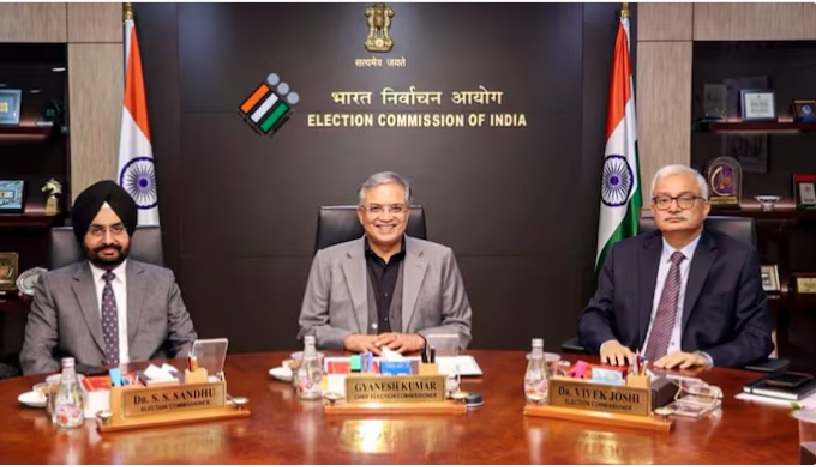
Panjab: Dissent in Indian Election Commission; ED probes GMADA; AAP admits serious accounting impropriety; Student unrest erupts in two private universities. Sikh: US Ambassador visits ‘Darbar Sahib’; SCI remarks on ‘Vande Mataram’ favor Sikhs; Carney’s deprioritizes safety for Canadians—and more stories.

Panjab: Six districts ‘Ultrasensitive’ drug zones; Govt. promises 8% increase in DA; Over 10 cases of kidnapping & extortion of illegal emigrants. Sikh: UK's Johal gets bail; ‘Akal Takht’ expels SAD Leader & 'Granthi'; Truck driver attacked days after US poster; 'Takht Sri Hazur Sahib' marks Modi birthday—and more stories.
