Thank you! Your submission has been received!
Oops! Something went wrong while submitting the form.
Panjab: Laborer names Cheema in dying declaration; Power crisis; Court restrains Majithia & Khaira; Sekhon joins AAP & Sidhana joins WPD. Sikh: DHS accused of bigotry over Mr. Singh poster; Pakistan stops pilgrims; Canada mishandles protest—and more stories.

The death by suicide of a 53-year-old Dalit (marginalized caste) agricultural laborer, Gulzar Singh of Toor Banjara village, Sangrur district on 8 Sep has led to criticism of Aam Aadmi Party (AAP) government by Panjab's opposition. On 6 Sep, Panjab Finance Minister Harpal Singh Cheema visited a gathering at the village Gurdwara where Gulzar publicly questioned him about the easy availability of chitta (opioid) in the village. Gulzar told the minister that his own son, Prabhjot Singh, was addicted to chitta and could obtain drugs easily. Gulzar was pushed out of the meeting, and later the police dropped him off at home. That evening, the village sarpanch (council head) Baljinder Kaur Sidhu called him and threatened him. On 7 Sep, the village panchayat (council) members visited Gulzar’s home and asked him to apologize to Baljinder's husband, Baljit Singh alias Raj, by touching his feet. Gulzar's wife Pal Kaur said, 'My husband felt very humiliated.' Gulzar’s second son, 23-year-old Sehbaz Singh, a student at Government Ranbir College, Sangrur, said his father left home later that day. Gulzar had consumed a pesticide. He was rushed to Government Hospital, Sangrur from where he was referred to Rajindra Hospital, Patiala where a ventilator could not be arranged for him. Gulzar was then referred to Dayanand Medical College Hospital, Ludhiana where he died. On the way to Ludhiana, Gulzar recorded a video in which he said Cheema was responsible for his death. Police have registered a First Information Report (FIR) against the sarpanch and four others for alleged abetment to suicide, harassment, and offenses under the Scheduled Caste/Scheduled Tribe (Prevention of Atrocities) Act. However, the FIR does not name Cheema. The police forcibly cremated Gulzar under intense security cover. The family has decided not to hold Ardas (final prayers) until justice is served. The National Human Rights Commission (NHRC) has taken note of the complaint filed by former Punjab State Commission for Scheduled Castes chairman Rajesh Bagha. NHRC has issued notice to the Chief Secretary of Panjab, Director General of Police, Panjab, District Magistrate, and Senior Superintendent of Police, Sangrur, asking them to submit an Action Taken Report. Indian Leader of Opposition (LoP) Rahul Gandhi and Panjab LoP Pratap Singh Bajwa, both from Indian National Congress, have demanded that the Finance Minister resign so an independent and impartial investigation can be conducted (earlier coverage).

Panjab is reeling under a severe power crisis, with electricity demand rising to around 16K MW and continuing to remain high due to a weak monsoon. Industrialists and farmers are protesting unscheduled and prolonged power cuts lasting as long as 12–14 hours. Meanwhile, the state government has transferred Punjab State Power Corporation Limited (PSPCL) Chairman and Managing Director Dr. Basant Garg and appointed Principal Secretary Gurkirat Kirpal Singh to the post. The Panjab Government has maintained that the power cuts were necessitated by inadequate coal supplies to the state's thermal power plants from the union government. Erratic coal supplies have restricted power generation to around 6K MW. The state's peak load touched 16,619 MW on 11 Sep, compared with 12,489 MW on the same day in 2025. Experts say a pan-India coal shortage and poor monsoon planning worsened the problem. Plants that failed to maintain adequate coal reserves were among the first to face reduced power production. Heavy rainfall in coal-producing states, including Odisha, Jharkhand, and Chhattisgarh, has disrupted mining operations and slowed coal movement to thermal plants. Power utilities are being forced to buy expensive electricity from the market as several thermal power plants are operating below capacity. Rice millers have been forced to shut down their milling operations. Of the state’s 5,500 rice mills, a small section receives Category I supply, while the majority fall under Categories II and III, which have been severely affected by power cuts. President of the Rice Millers Association Bharat Bhushan Binta said, ‘The cuts last as long as 15 hours a day. The situation has been acute for the past 15 days, and because our industry runs round-the-clock operations, we are bearing heavy losses.’ Senior Indian National Congress leader and former Panjab Power Minister Rana Gurjit Singh accused the Aam Aadmi Party government of mismanaging Panjab’s power sector, causing unannounced cuts across agricultural, industrial, and domestic sectors. He alleged that the government had failed to prepare for the El Niño weather pattern despite warnings from meteorological agencies, leaving Panjab without adequate power reserves or coal buffers before the peak paddy season. Panjab Power Minister Tarunpreet Singh Sondh has said that several private power plants across India are operating at around half their capacity due to the coal shortage (earlier coverage).

The US Department of Homeland Security (DHS) sparked a controversy over social media posters promoting the US President Donald Trump administration’s self-deportation campaign. The poster, shared amid the Trump administration’s immigration crackdown, carries an image of a brown-bearded man wearing a head covering, facing a ‘Transformer’ (from the popular movie franchise). The poster carries warnings—'Self-deport or find out' and 'America for Americans. Get off our roads. You don’t know how to drive, Mr Singh'. The reference to the surname Singh has drawn criticism from Indian-American and Sikh groups, who say the messaging unfairly stereotypes people of South Asian origin. DHS said the image referred specifically to truck driver Harjinder Singh, accused in a 2025 Florida crash. Critics say linking the surname Singh to alleged driving violations amounts to racial and ethnic profiling. Raman Singh Dhillon, who has worked in the trucking industry for 30 years and runs the North American Punjabi Trucking Association, said the post uses 'Singh', a common Sikh surname, as a derogatory reference to Sikh truck drivers generally, not to one particular driver. California Governor Gavin Newsom called the post 'disgusting'. DHS replied, 'Hey Gavin, YOU gave him his CDL (Commercial Driver's License), and then he killed three people with his tractor-trailer.' Democratic Senator Adam Schiff accused the administration of ‘obvious bigotry’, arguing that the campaign risked casting suspicion on millions of Americans because of their background and appearance. A Sikh advocacy group Sikh Coalition reached out to Assistant Attorney General for Civil Rights at the US Department of Justice Harmeet Dhillon asking her to 'stand for the Sikh community...by issuing a public statement.' The owner of the 'Transformers' franchise Hasbro said it did not give the DHS permission to use the character of Optimus Prime. In India, no Sikh leader condemned the DHS post. Instead, an All India Trinamool Congress Member of Parliament Mahua Moitra asked Indian Prime Minister Narendra Modi to bring up the matter with President Trump. Amid growing criticism, DHS removed the post. The episode has since become a wider debate over the use of government social-media campaigns, AI-generated imagery, and the targeting of immigrant communities (earlier coverage).
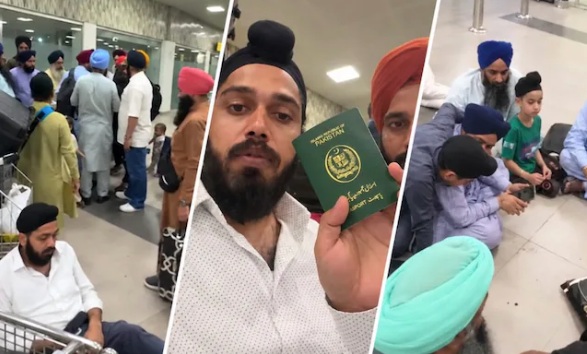
Pakistan has stopped 92 Sikhs, including women and children, with valid visas for pilgrimage to Sri Hemkund Sahib, Uttarakhand, from boarding an indirect flight to India. The pilgrims had arrived at Faisalabad International Airport where the authorities stopped them from boarding a Gulf-bound flight as they did not possess a return ticket and a No Objection Certificate (NOC) from the Pakistan federal government. An official from the federal government said, 'The Sikhs had arranged their Indian visas through the Delhi Sikh Gurdwara Management Committee. They should have coordinated with the Pakistan Sikh Gurdwara Parbhandhak Committee for their travel and preferred Wagah Border for crossing into India.' However, currently there is no direct air, rail, or road link between Pakistan and India. Meanwhile, according to data from Australia's Department of Home Affairs, the nation's international student visa regime has become significantly tougher with the overall refusal rate reaching a 10-year high of 24.2% in June 2026. The refusal rate has risen sharply from 7.9% in June 2016. Applicants from Panjab, the rest of India, and Nepal faced particularly high refusal rates in 2025–26, with a refusal rate of 40% for India and 51% for Nepal. By comparison, the refusal rate for applicants from China was 5.8%. One of the key areas of assessment is the Genuine Student requirement. Applicants must demonstrate that their proposed studies are consistent with their work history, personal circumstances, and future career plans. Most rejected candidates allegedly could not do that. Concurrently in Canada, more than 250 rights groups including Amnesty International, Greenpeace, and the Canadian Union of Public Employees have sought an independent review of how border officials handled a student protest in Calgary. The protest was one of four held after roughly 1,500 people who completed non-credit courses at Portage College sites in Alberta lost their post-graduation work permits when new eligibility rules were applied to those courses. Furthermore, a Panjabi family that arrived in Canada in 2018 has been deported to India after Canadian authorities rejected its asylum claim and subsequent request to remain in the country on humanitarian and compassionate grounds. Originally from Jalandhar and residing in Quebec, the family had spent nearly eight years in Canada, where the couple worked, paid taxes, and raised their two children (earlier coverage).

Civil Judge (Junior Division) Dr. Prikshit of Chandigarh District Court has passed orders restraining head of Punjab Human Rights Organisation, retired Justice Ranjit Singh, Shiromani Akali Dal leader Bikram Singh Majithia, and Indian National Congress Member of Panjab Legislative Assembly Sukhpal Singh Khaira, from publishing, circulating or making any 'unverified defamatory content' over the alleged bribe demand by Panjab Chief Minister Bhagwant Mann’s wife Dr. Gurpreet Kaur to secure the release of an accused in a rape case. The order was based on a suit filed by Dr. Gurpreet. The court held that reputation is an integral part of each individual's dignity, and that freedom of speech and expression must be balanced against the right to reputation. Meanwhile, ahead of the Panjab Assembly election, the Aam Aadmi Party has revamped its organizational setup by inducting CM Mann and Finance Minister Harpal Cheema, a prominent Dalit (marginalized caste) face, into its 10-member Political Affairs Committee (PAC), while Panjab unit chief Aman Arora has been moved from being a member of the National Executive to being its ex-officio member. AAP inducted Mann’s Officer of Special Duty Rajbir Ghuman and national convener Arvind Kejriwal’s close aide Bibhav Kumar into its 23-member national executive. Ghuman’s name had recently figured in the Enforcement Directorate’s investigation into the alleged cash-for-transfer and land fraud case, which is currently being heard by the Punjab and Haryana High Court. Alongside, gangster-turned-politician Gurpreet Singh Sekhon, who has had 47 criminal cases registered against him and was the main accused in the sensational 2016 Nabha jailbreak, joined AAP on 6 Sep in the presence of CM Mann at a public rally in Ferozepur. Sekhon, from Mudki, Ferozepur district, had announced to contest the 2027 elections as an independent candidate. Welcoming Sekhon into AAP, CM Mann said, 'The resounding applause from the people present on this occasion indicates that the public is thoroughly fed up with the plunder by traditional parties and now only favors politics of work.' Concurrently, Akali Dal Waris Punjab De (WPD) has appointed gangster-turned-social activist-turned-politician Lakhvir Singh Sidhana, alias Lakha Sidhana, as its in-charge for the Maur Assembly constituency, Bathinda district. WPD has also appointed the advocate brother of late activist and WPD leader Sandeep Singh, alias Deep Sidhu, Mandeep Sidhu as its in-charge for Talwandi Sabo, Bathinda district (earlier coverage).

Forty-two years after the shops around the Darbar Sahib (Golden Temple) were badly damaged during ‘Operation Blue Star’ (OBS)—Indian Army attack in June 1984—the Punjab and Haryana High Court (PHHC) has directed the Panjab government to allot booths or sites to the affected families at the rate of USD 10.44 per square yard. PHHC said: ‘We have issued the aforesaid directions in view of the rigor and hardship which the petitioners have faced for the last 42 years, which this court is of the firm view have infringed upon their fundamental rights, including the rights guaranteed under Articles 14, 21, and 19 of the Constitution.’ The primary grievance of the petitioners was that both the union and state governments had been delaying the matter for over four decades. Additionally, in the matter concerning Dearness Allowance (DA) dues of Panjab state employees and petitioners, PHHC told Panjab government to pursue its challenge before the Supreme Court of India against the PHHC direction to clear the DA dues within a fortnight, and made it clear that the state could not keep the High Court’s directions in limbo while its Special Leave Petition remained in defects. The court said: ‘Don't try to play. Don't try to hoodwink the Court. Do not try to play games with the Court. You have a right of appeal. Please pursue that right.’ Meanwhile, the Panjab government has formally ordered the dropping of the show-cause notices issued to employees and officials for remaining absent from duty during their mass leave on 27 Aug, after employee organizations called off the pen-down strike on 9 Sep. The move is part of the government-employees’ understanding to end the standoff over their demands, particularly payment of pending DA dues. Furthermore, Central Board of Film Certification (CBFC) has informed the PHHC that two orders regarding film certification of Panjabi feature film ‘Chardikala’—one passed by the Examining Committee on 26 May and the other by the Revising Committee on 14 Jul—have been withdrawn. Directed by Amarjit Saron, ‘Chardikala’ premiered at the Cannes Film Festival in 2026. The film was supposed to release in India on 29 May but faced several hurdles with the CBFC (earlier coverage).

Bharatiya Janata Party (BJP) president Nitin Nabin led an event in Uttarakhand to honor the contributions of Panjabis and Sikhs in the election-bound state. During his two-day visit to the state on 9–10 Sep, Nabin attended the Punjabi Gaurav Sammelan in Rudrapur. A BJP statement said: ‘The event will celebrate the rich cultural heritage and traditions of the Punjabi community while acknowledging its distinctive contributions to the social, economic, and cultural development of Uttarakhand.’ Sikhs constitute just 2.34% of Uttarakhand’s population, but have significant electoral influence in as many as nine Assembly constituencies in Udham Singh Nagar, where 180K of the state’s nearly 250K Sikhs reside. However, it remains to be seen whether Nabin will promise to help the Sikh community build the Gyan Godri Sahib Gurdwara at Har Ki Pauri, Haridwar where land was identified with the support of the National Commission for Minorities in 2003. The Gurdwara was obliterated during the 1984 Sikh genocide. BJP’s aim is Sikh outreach—not just in Uttarakhand but also in Panjab, where Assembly polls are due in 2027. Meanwhile, the 125-year-old Wadda Gurdwara Sahib in Penang, Malaysia, reopened on 12 Sep after conservation and restoration work preserving the building’s original heritage appearance. The opening coincided with the Gurdwara’s 125th anniversary of its establishment in 1901 and the first Prakash Purab (enshrinement) of Guru Granth Sahib (Sikh scripture and charter) performed by Sri Akal Takht Sahib (Eternal Throne) Jathedar (leader), Giani Kuldeep Singh Gargajj. Speaking at the function, Giani Gargajj stressed the need to preserve Sikh heritage sites everywhere under expert supervision. Wadda Gurdwara Sahib is a Category One heritage building within the George Town UNESCO World Heritage Site and an enduring symbol of Penang’s multicultural heritage. The founder and chairman of SUNWAY Group—a leading real estate conglomerate in Malaysia—Tan Sri Sir Dr. Jeffrey Cheah donated USD 245,881 to help complete the Gurdwara's restoration. Gurdwara chairman Datuk Santok Singh said restoration work involved a team of seven specialist artisans from Rameshwaram, Tamil Nadu, who worked on the decorative and detailed sculpture work. Concurrently, members of the Sikh community came forward to support repairs to the historic Jama Masjid in Hisar, Haryana. The 200-year-old mosque needed repairs, and Sikh-led multi-religious people contributed to raise funds for preservation and restoration (earlier coverage).
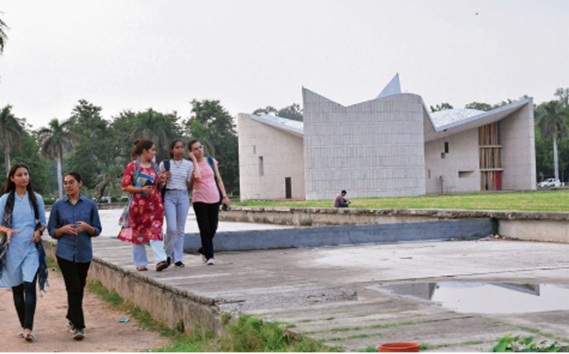
The outgoing Panjab University Campus Students Council (PUCSC) Vice President Ashmeet Singh, from the Sikh-leaning students’ union Sath, alleged that the university had changed the Master of Arts (MA) History syllabus. Ashmeet said that, with the paper made optional, sections on Sikh Gurus and Sikh history have been significantly reduced, leaving out key biographies and events, and effectively ‘erasing’ Sikh history. Indian National Congress Member of Legislative Assembly, Sukhpal Singh Khaira, backed Ashmeet’s view saying, ‘This amounts to dilution of the glorious history of Panjab and the great sacrifices made by our Guru’s for mankind and humanity.’ The apex Sikh management body, Shiromani Gurdwara Parbandhak Committee (SGPC) president, Advocate Harjinder Singh Dhami said the changes are 'deeply unfortunate' for an institution with a longstanding association with Panjab’s history, language, culture, and heritage. He said Panjab’s history was not limited to a particular region but was an important part of India’s broader history. Referring to the lives and contributions of the Sikh Gurus, the inauguration of the Khalsa, Sikh struggles, the Sikh Empire, and other historical developments, Dhami said these subjects were important for understanding Panjab’s contribution to Indian history. According to Dhami, removing such subjects from postgraduate-level studies could distance students from their historical heritage and weaken their understanding of the region’s history. However, on 13 Sep, Panjab University's (PU) Department of History decided to restore the earlier Panjab and Sikh history papers in the two-year MA history program. The department said the revised curriculum was designed with the National Education Policy’s four-year Bachelor of Arts (BA) plus one-year MA (4+1) structure, under which the fourth-year BA was intended to be an advanced year of study. The fourth-year BA and first-year MA syllabus will now be separated, while students pursuing the conventional two-year MA will continue with the earlier syllabus. Meanwhile, amid the ongoing PU Senate elections, the Punjab Students Union (PSU) has leveled allegations of serious irregularities and potential vote rigging, claiming that there is nearly 900% rise in the number of votes from Samana, Patiala district. PSU state president Ranvir Singh Randhawa and Senate candidate Dr. Amandeep Singh Khiowali alleged that votes rose from 168 in 2020 to 1,692 in 2026 (earlier coverage).

Kisan Mazdoor Morcha (KMM) has begun a five-day protest from 14 Sep outside the residences of Panjab Assembly Speaker Kultar Singh Sandhwan and seven Aam Aadmi Party (AAP) ministers, including the state party president Aman Arora. The immediate trigger is the power supply crisis and fertilizer shortage for the paddy crop. But the demands extend to Minimum Support Price (MSP), farm debt, river waters, land acquisition, drugs, unemployment, and Panjab’s relations with the union government. KMM is demanding MSP-based procurement of basmati, maize, moong, mustard, and potatoes. KMM joined hands with Bharatiya Kisan Union (BKU Ekta Ugrahan), which protested outside the residences of AAP ministers on 12 Sep and of Bharatiya Janata Party (BJP) leaders on 13 Sep. In Muktsar district, a large number of farmers and farm workers gathered at the residence of Panjab Agriculture Minister Gurmeet Singh Khuddian, demanding cancellation of the proposed India-US free trade agreement, withdrawal of the state’s land pooling policy, and an end to drone surveys. The protests signal that in the coming months, the farmers’ agitation could form a political challenge for the BJP-led union government and the AAP-led Panjab government. Meanwhile, a seven-day protest under the banner of Samyukt Kisan Morcha (SKM) was called off on 7 Sep after the Panjab government conceded to demands of the farmers, including convening a special session of the Panjab Assembly to take up issues concerning the state’s river waters and farming. In Faridkot, farmer-police stand-off ended in truce on 9 Sep with farmers agreeing to defer their agitation until 23 Sep in view of the annual Baba Farid Festival in town. The stand-off began when police, preventing farmers from congregating in Faridkot for a Kisan Panchayat (farmers’ gathering) called by the Samyukt Kisan Morcha (Non-Political), placed several prominent farm union leaders, including Jagjit Singh Dallewal, under house arrest. Additionally, union Agriculture Minister Shivraj Singh Chouhan said that the Seeds Bill 2025 protects farmers' rights to grow, sow, save, exchange, and sell farm-saved seeds, while adding that there was no deadline yet to finalize the Bill. He rejected concerns that the proposed law will interfere with farmers’ traditional seed practices and said that more suggestions from farmers and farmer organizations would be considered before the final draft is prepared (earlier coverage).

‘Sab toh khatarnak hunda hai supneyan da marr jaana—the death of dreams’ was considered the ‘most dangerous’ by Panjabi poet Pash—real name Avtar Singh Sandhu (1950–1988). The words have traveled far beyond Talwandi Salem, his birthplace and place of assassination in Jalandhar district. Four decades after he was killed by Khalistani militants at the peak of militancy in Panjab—his poetry continues to surface wherever people gather around democratic rights and resistance—during farmers’ protests, workers’ meetings, student gatherings, and literary forums. For generations of readers, Pash was not merely a poet who wrote about struggle; he was a poet who participated in it and his assassination is proof of that. For his 76th birth anniversary on 9 Sep, hundreds of people arrived eager to mark their presence at the tube well where he was assassinated. Event organizer Amolak Singh said more than 4K people attended the commemoration, including retired Indian Police Service officer and former Punjabi Tribune editor and writer Dr. Swarajbir, farmer union leader Joginder Singh Ugrahan, and nephew of Shahid (martyr) Bhagat Singh, Prof Jagmohan Singh. Recalling Pash’s enduring relevance, Prof Jagmohan Singh said, ‘Jadon main Bhagat Singh nu samajhna hunda, te main Pash nu samajhda (when I want to understand Bhagat Singh, I try to understand Pash).’ Bhagat Singh considered Lenin as his role model, and Pash considered Bhagat Singh as his. Both were born in September (1907, 1950) and died on 23 Mar (1931, 1988). There have been controversies over Pash’s statements and assassination, with justifications ranging from him verbally—not in his writing—supporting the Indian Army attack on Darbar Sahib (Golden Temple) in June 1984, abusively condemning Sant Jarnail Singh Bhindranwale (1947–1984, the leader of the Khalistan movement), and declaring that Left organizations will finish the Khalistan movement. The last one was fairly common ‘heat of the moment’ rhetoric by both sides during the militancy phase in Panjab. These allegations are denied by the Left. No one has been convicted of Pash’s assassination. Pash’s legacy has also become the center of a dispute in his native village. Tension erupted after the village panchayat (council) stopped members of the Paash-Hans Raj Memorial Committee from erecting a pandal (tent) for the celebrations and refused to part with the land already earmarked for the memorial. The local administration deployed police to prevent a confrontation (earlier coverage).
Dominique Maria Bonessi, Ruth Tam & Ayan Sheikh in NPR: How life changed for Washington Muslims and Sikhs after 9/11, in their own words.

Panjab: Govt. employees on strike again; State moves SCI for DA Dues; Justice Mishra takes oath as Chief Justice; SAD targets Dr. Gurpeet. Sikh: Youth alleges torture & assault; Long delay in SGPC elections; Relief for Nepal flood victims—and more stories.

Panjab: Saffron & independents win Panjab University polls; Employees vs. Govt. standoff intensifies; River Sirsa under PPCB scanner. Sikh: SAD targets WPD, explores alliance with BJP. After INC, BJP Leaders condole Kumar; ‘Akal Takht’ directions on singing full ‘Vande Matram’ sought—and more stories.
