Thank you! Your submission has been received!
Oops! Something went wrong while submitting the form.
Panjab: Farmers protest Indo-US FTA; Students march to Indian Parliament; Chandigarh police detains PU students; Rank 22nd in Investment Friendliness Index. Sikh: Controversy on GGS Shipment, DSGMC forms National Capital Region body, Sikh Woman murdered in UK—and more stories.

Prime Minister Narendra Modi inaugurated and laid the foundation stone of rail and road infrastructure projects worth USD 570M in Jalandhar on 17 Jul. PM Modi also inaugurated 75 redeveloped railway stations, including Jalandhar Cantonment (Cantt), under the Amrit Bharat Station Scheme (Railway Station Improvement). PM Modi was accompanied by the Union Minister of Railways and Information and Broadcasting, Ashwani Vaishnav, and also flagged off the Sant Ravidas Express Train from Jalandhar Cantt railway station. The train connects Amritsar and Varanasi, Uttar Pradesh. Seer Govardhanpur in Varanasi is the birthplace of Bhagat or Guru Ravidas, well revered among the Dalit (marginalized caste) community. This was PM Modi's second visit to Jalandhar after he visited the Dera (sect) Sachkhand in village Ballan, Jalandhar district in February. The visit has launched Bharatiya Janata Party's (BJP) Panjab campaign, with an attack on the Aam Aadmi Party government over law and order. He accused Indian National Congress of being caught up in infighting and Shiromani Akali Dal of being too selfish to work for the state's progress. He said, 'Only BJP can bring about real badlav (change),' and added, 'Those ruling Panjab would earlier boast of changing the politics of the country but now their reality lies bare before the entire country.' However, a day after PM Modi inaugurated the redeveloped Jalandhar Cantt railway station with a promise of an 'airport-like experience', several of the much-touted facilities remain out of reach of passengers, with many struggling to find even basic amenities. Meanwhile, farmers from Panjab, Haryana, and Himachal Pradesh left for Delhi to participate in a Kisan Mahapanchayat (big gathering) under the banner of Desh Bachao Morcha (Save the Country Front) on 21 Jul, demanding cancellation of the proposed Indo-US Free Trade Agreement. Farmer union Kisan Mazdoor Sangharsh Committee secretary, Sarwan Singh Pandher, said both countries have agreed to work towards negotiating the first tranche of a mutually beneficial, multi-sector Bilateral Trade Agreement by fall 2026. He added, 'This indicates the proposed agreement will not be limited to a few commodities but may encompass agriculture, dairy, industry, digital trade, e-commerce, investment, government procurement, intellectual property rights, and the services sector.’ As Panjab farmers leave for New Delhi, the Haryana government has closed the Shambhu inter-state border between Panjab and Haryana as it had done during Farmers Protest 2.0 (2024–25) (earlier coverage).
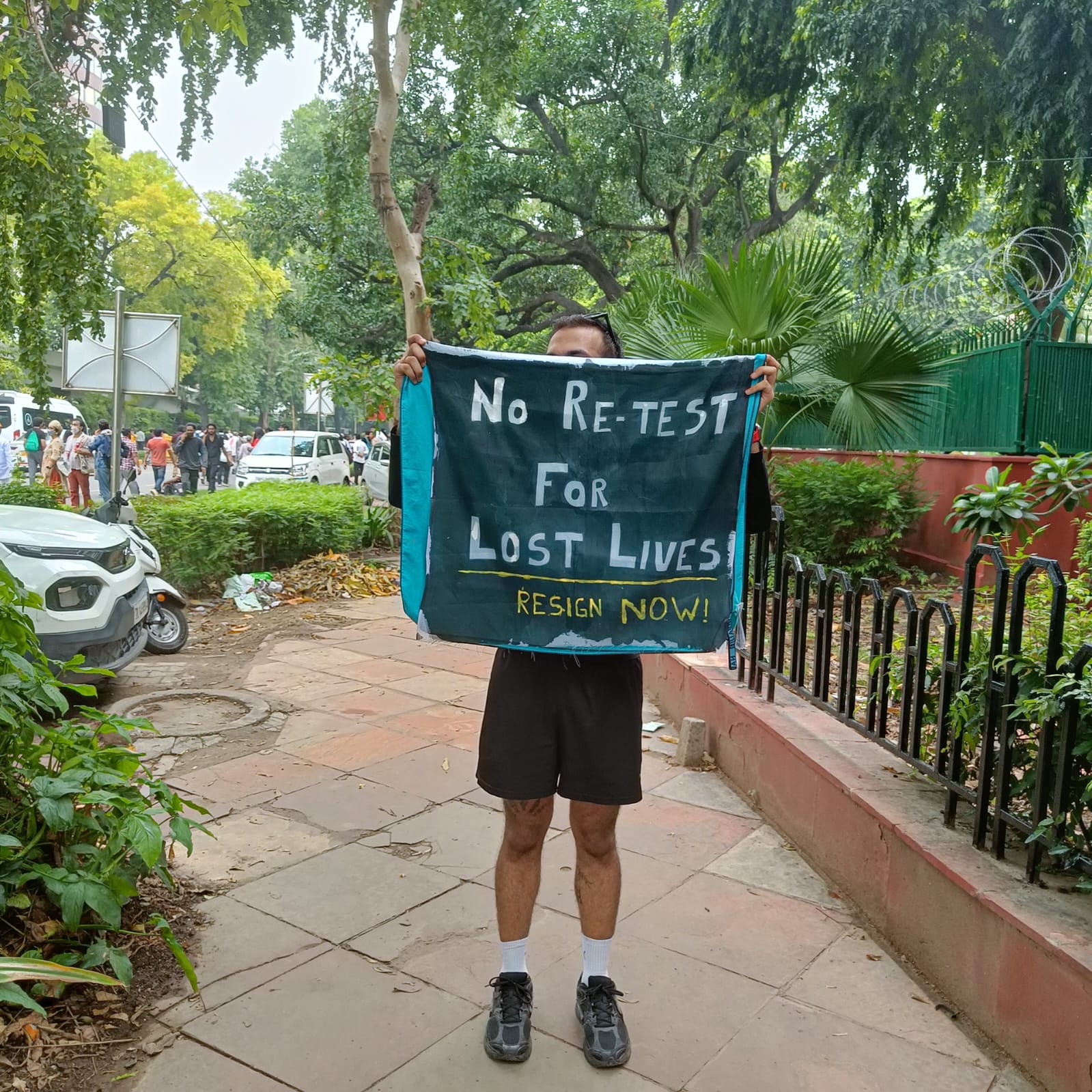
A student from Ludhiana, Aryan Gupta, topped the National Eligibility cum Entrance Test Under-Graduate (NEET-UG) 2026 examination by scoring an all-India Rank 1. Aryan scored 715 out of 720 marks. Aryan said he studied for nearly 16–17 hours daily to achieve this goal. He aspires to become an oncologist. 2.2 M candidates had appeared for the examination. The NEET-UG examination has been riddled with controversy since the paper was leaked in May and was reconducted in June. The mishandling of the exam led to the suicide of at least 20 students nationwide and gave rise to a students’ movement demanding the resignation of Union Education Minister Dharmendra Pradhan. The students’ movement led by the Cockroach Janta Party (CJP) has been leading the protests at Delhi’s Jantar Mantar (protest site) for the past three weeks. Students from all across India have gathered at the site, expressing their anger at the system that has failed them. Many students, accompanied by their parents, have frequented the site expressing their solidarity. Students of All India Students' Association (AISA) began an indefinite hunger strike demanding Pradhan’s resignation. Educationist and scientist, Sonam Wangchuk from Ladakh, joined the movement, lending his strength to the protest, and joining the hunger strike. Despite claims by Panjab Education Minister Harjot Singh Bains that 882 students from government schools in Panjab cleared the NEET-UG, students feel there is not much left to celebrate in an exam that is a reflection of a broken education system. Some parents at the protest site were scared that their children may meet the same fate as the others who lost their lives due to the re-examination. Many exempted their children from appearing for NEET retest because they felt it was leading their children into depression. The stress on parents who had taken loans to put their children through coaching for these tough exams was palpable. The family of Riya Thapa from Dehradun, who lost her life as she couldn't take the pressure of appearing for NEET a second time, said that these exams are not worth it. Many teachers who also frequented the sites also spoke of the stress the education system lays on students to compete when jobs were becoming less available (earlier coverage).
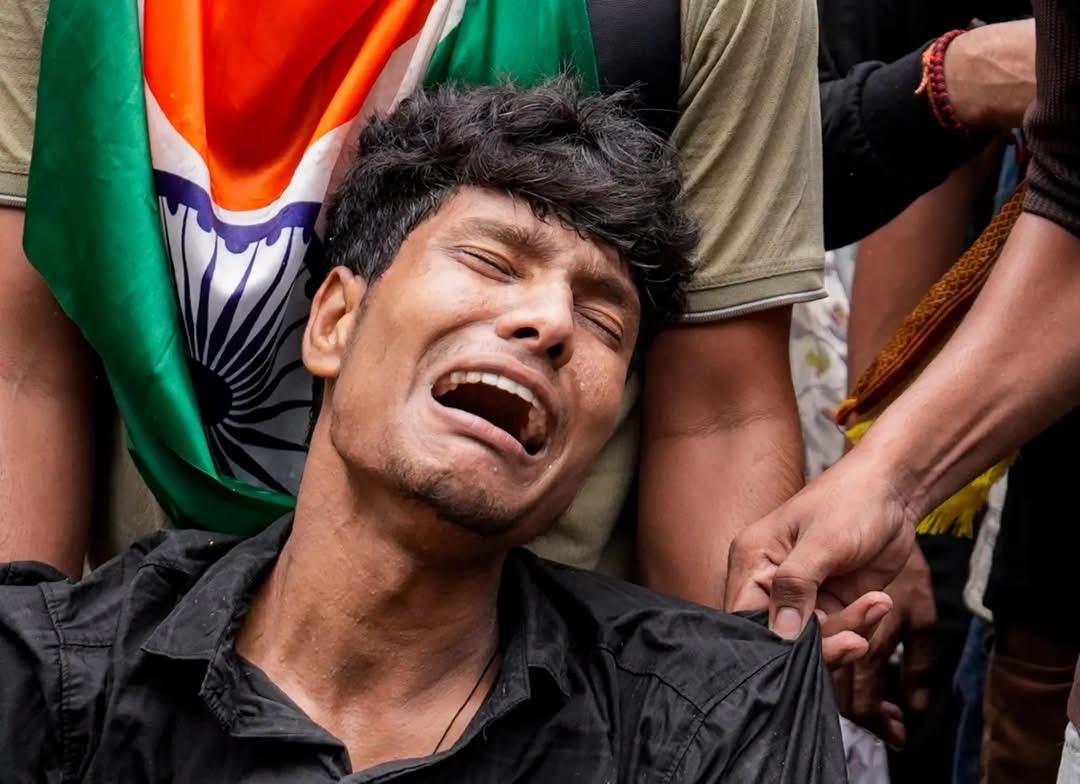
On the morning of 18 Jul, an educationist from Ladakh, Sonam Wangchuk, who had been on a hunger strike for 21 days at the protest site Jantar Mantar (JM), New Delhi, demanding the resignation of Union Education Minister Dharmendra Pradhan, was surreptitiously picked up and detained by Delhi police, Rapid Action Force, and the Central Reserve Police Force. Wangchuk was taken and confined to Safdarjang Hospital, New Delhi without his consent. ‘I stand with Sonam Wangchuk’ posts began circulating on social media. Cockroach Janata Party (CJP) founder Abhijeet Dipke had given a nationwide call, Sansad Chalo, to march to the Indian Parliament on 20 Jul, the first day of its monsoon session. On 19 Jul, hundreds of thousands of students and parents from across India began reaching Delhi. Actors Shabana Azmi and Prakash Raj, and social activist Yogender Yadav joined the crowd and spent the night at JM. Police turned JM into an open jail by welding the barricades together. No one could come out or go in. Protesters kept streaming into Delhi and spent the night on Janpath near Parliament Street. On 20 Jul, upon repeated requests, three students from the All India Students' Association Neha, Amin, and Manish, ended their hunger strike. CJP was denied permission for the protest march. While CJP leaders were in dialogue with the government, the crowds began marching towards the Parliament. Police tear-gassed and cane-charged the protesters throughout the day, who took over central Delhi. Some took refuge at Gurdwara Bangla Sahib. Protests were held in various Indian cities, including Chandigarh. The cries of the protestors still did not reach the Parliament. The moment Opposition parties brought up the students’ protest, the Speaker would adjourn the Parliament. Wangchuk, who had earlier decided to discontinue his hunger strike upon the government promising him to bring the matter of exam paper leaks to discussion in Parliament, announced he would continue his hunger strike. By 9.30 pm, the police had destroyed the protest site at JM. However, hours later, students and the CJP had reinstated the protest site, including the stage. Azad Samaj Party chief and Nagina Member of Parliament Chandrashekhar Azad staged a sit-in protest near the statue of celebrated jurist and reformer Dr. B.R. Ambedkar, inside the Parliament premises demanding accountability over the action taken against the protesters. The protest continues (earlier coverage).
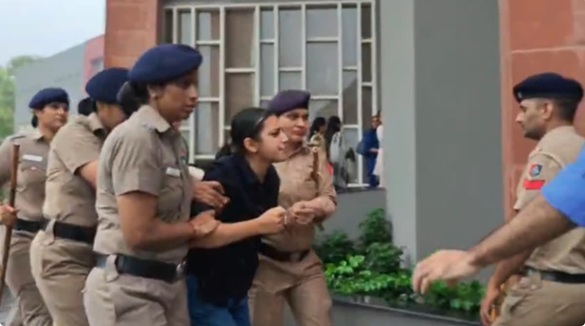
The Chandigarh Police detained student activists of Panjab University (PU) who were protesting against a Rashtriya Swayamsevak Sangh (RSS) sponsored program at the university. On 10 Jul, a coalition of student organizations under the banner PU Against Saffronisation (PUAS), had demanded the cancellation of an event scheduled at PU, alleging that it promotes ‘a communal and patriarchal ideology’. PUAS objected to the university program, Shakti and Srishti (Women Power and the Universe), centered on women and sustainability, which was slated to feature V Shanta Kumari, chief of the Rashtriya Sevika Samiti, and Sadhvi Ritambhara, founder-chairperson of Durga Vahini—both right-wing Hindutva outfits. PUAS alleged that both speakers are associated with organizations linked to the RSS and have made controversial remarks in the past. PUAS claimed the event was part of an attempt to saffronize educational institutions and argued that universities should remain spaces for democratic, secular, and inclusive dialogue, adding that inviting the speakers was contrary to the values of a public university and demanded that the program be withdrawn. On 20 Jul, the day of the seminar, protesters began marching towards the program when Chandigarh Police stopped them at the auditorium entrance. Following this, the students began sloganeering. PUAS claims that a scuffle broke out between the police and the students, leading the police to detain several students. They were transported to the Sector 24, Chandigarh police station. PUAS condemned the police action, calling it an attempt to suppress the peaceful protest. On 19 Jul, representatives of the students’ union Akhil Bharatiya Vidyarthi Parishad (ABVP), the students’ wing of Bharatiya Janata Party (BJP), and another students’ union, Sath confronted each other and came to blows during the Common University Entrance Test—Undergraduate counseling process outside the Law Auditorium, PU. ABVP representatives alleged that Sath activists tore their banner that bore a photo of freedom fighter Bhagat Singh. Sath accused the university administration of extending preferential treatment to RSS/BJP-affiliated groups by allowing them to set up a helpdesk right at the entrance of the auditorium. Police had to disperse both the union representatives (earlier coverage).
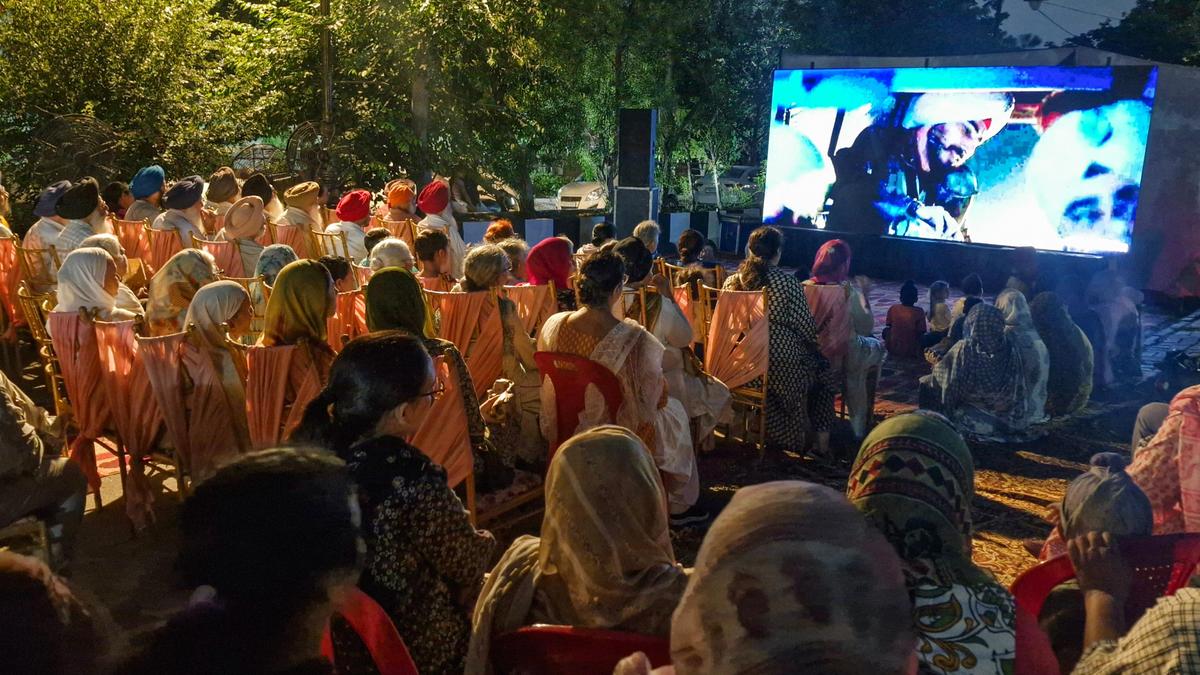
With the immense popularity of the movie 'Satluj', a debate is raging on the number of deaths, especially of Hindus, in militant violence in Panjab in the 1980s–90s. Earlier, when senior politicians would mention 25K–35K deaths, the implication was they included Sikhs and Hindus. However, in the battle of narratives around the movie, based on real-life incidents of the disappearance and trial of slain human rights activist Jaswant Singh Khalra, these figures are now being projected as specific numbers of ‘Hindus killed'. On a Right to Information query by Lokesh Sharma, filed in 2015, the government of India's responded that during the militancy years (1980–2000), 11,694 citizens lost their lives, 8,069 militants were killed, and 1,784 security force personnel were either killed or injured in Panjab. Author Amandeep Sandhu cites this figure in his book PANJAB Journeys Through Fault Lines. Journalist and author Jagtar Singh, in his book Rivers on Fire: Khalistan Struggle, reproduced a reply of Panjab government to a question by Indian National Congress Member of Legislative Assembly, Tarlochan Singh, in the Panjab Legislative Assembly on 14 Oct 2005, which gave out yearly and district-wise data from 1982–1995. He puts the number at 11,336. Paul Wallace's essay Political Violence and Terrorism in India: The Crisis of Identity, in the book Terrorism in Context, edited by Martha Crenshaw, reproduced union Ministry of Home Affairs data, which says 3,871 Hindus and 6,177 Sikhs were killed by militants from 1981–1991. V N Narayanan in his book Tryst With Terror Punjab's Turbulent Decade, provides the same number of Hindu killings but puts the number of Sikhs at 6,207 between 1981–91. These show the number of Hindus victims being bandied is false and an exaggerated projection. On those disappeared and killed extrajudicially, the human rights organization, Ensaaf, has counted and verified 5,316 victims of enforced disappearances and extrajudicial killings in Panjab from 1981–2008. The estimated figure of 25K came from Khalra’s speech at Khalsa Darbar Gurdwara, Ontario in April 1995. The figure was an extrapolation of his findings at the cremation grounds in Durgiana, Amritsar city, and Patti and Tarn Taran, where he found 2,097 unclaimed bodies, out of which around a quarter were Hindus, says former Chairperson of Human Rights Wing of Akali Dal, Jaspal Singh Dhillon (earlier coverage).
On 8 Jul, Union minister of state Ravneet Singh Bittu said, 'I specifically want to ask Hindu families, when will you stand up, and speak up? You lost 25K families.' Bittu also challenged the makers of the movie ‘Satluj' to provide evidence that 25K persons were cremated as unidentified by Panjab Police. Betraying an unease within the Bharatiya Janata Party’s (BJP) state unit over Bittu's claims, Panjab BJP leader Iqbal Singh Lalpura said Bittu 'should-remain-within-his-limit'. He added, ‘When Jaswant Singh Khalra—the human rights activist on whose trial and disappearance the film is based—spoke about the disappearances of 25K people, he gave a message. The claim was verified by the National Human Rights Commission.’ Another way of looking at police violence in the name of fighting militancy is to look at how many policemen were awarded under the policy of rewards and promotions for dealing with militants. According to human rights activist Inderjit Singh Jaijee's book The Legacy of Militancy in Punjab, former Indian National Congress Chief Minister Beant Singh of Panjab, had mentioned in the state Legislative Assembly that 41,684 Panjab policemen received monetary awards from 1991–92. Among them were 21 Superintendents of Police, 22 Deputy Superintendents of Police, 576 Inspectors, 1,365 Sub-Inspectors, 2,875 Assistant Sub-Inspectors, 8,589 Head Constables, and 23,245 Constables. The police force at the time was 75K strong and more than half of it was awarded for dealing with militancy, which shows their policing involved extrajudicial killings and exaggeration of numbers. Meanwhile, Sri Akal Takht Sahib (Eternal Throne) has asked the Sikh apex management body Shiromani Gurdwara Parbandhak Committee (SGPC) to create an official archive of Sikhs who were killed, declared 'unclaimed', and cremated between 1982–95. The Akal Takht’s sphere of influence is over the Sikh community; hence, Akal Takht Jathedar (leader) Giani Kuldeep Singh Gargajj mentioned an archive of Sikhs. Such an archive should ideally count all Sikhs, Hindus, and those from other communities. Chairperson, Institute for Development and Communication, Pramod Kumar writes, 'Punjab now needs a Truth and Reconciliation Commission with an independent mandate to document the experiences of all victims—those killed by militants, those subjected to disappearances, and fake encounters, families of police personnel, public servants, and ordinary citizens... Democracies mature by confronting difficult histories rather than suppressing them' (earlier coverage).
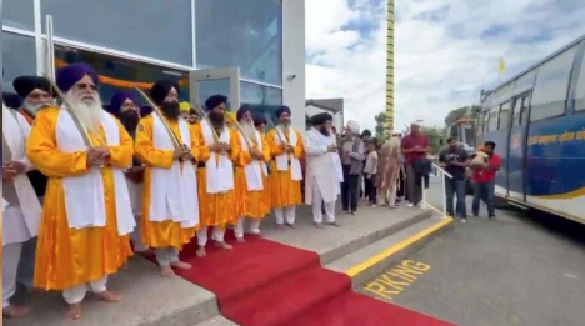
A controversy has erupted among Sikh organizations and Gurdwara committees in Canada over the shipment of 225 saroops (tomes) of the Guru Granth Sahib (Sikh scripture and charter) by the apex Sikh management body, the Shiromani Gurdwara Parbandhak Committee (SGPC), to Gurdwara Sri Guru Singh Sabha, Surrey, Canada, through a sea cargo container. Several Sikh bodies have approached Sri Akal Takht Sahib (Eternal Throne), alleging violations of Sikh Rehit Maryada (code of conduct) and expressing concern over the handling and transportation of the saroops. The complaint has been submitted by the British Columbia Gurdwara Council Ontario Gurdwara Committees, and the Quebec Sikh Council. A separate representation was also submitted to the Akal Takht Secretariat by Sikh organization Awaaz-e-Qaum led by Nobaljeet Singh. SGPC secretary, Balwinder Singh Kahlwan, said on 13 Jul that the GGS saroops sent to Canada were transported with strict adherence to Sikh Rehit Maryada. He said that the reports of damage to the saroops were propaganda to malign the Sikh body. Meanwhile, the Delhi Sikh Gurdwara Management Committee has formed an NCR (National Capital Region) Gurdwara Federation (NCR-GF) to bring hundreds of Gurdwaras in Delhi, New Delhi, Ghaziabad, and Noida from Uttar Pradesh (UP), and Faridabad and Gurugram from Haryana under one umbrella. While UP does not have a Gurdwara management body, the move raises conflicts with the Haryana Sikh Gurdwara Management Committee (HSGMC). It is unclear where the Sikhs from these two cities will go for conflict resolution—HSGMC or NCR-GF. Simultaneously, a property dispute in Sanaur, Patiala district turned violent after a group of Nihangs (traditional warriors) allegedly assaulted members of a family during an attempt to take possession of a house. The property belonging to Ravinder Singh was allegedly sold to Tarvinder Singh for USD 44K a few months ago, of which USD 36K had already been paid. However, a court case related to the property is currently pending. Police alleged that Tarvinder brought a group of Nihang Sikhs to help him take possession of the house. Concurrently, a 45-year-old man, Mewa Singh, accused in a sacrilege case 2020 and recently released on bail, was hacked to death with a sharp-edged weapon in Ladpur Tooran village, Fatehgarh Sahib district. Police have launched a manhunt to trace the accused and are investigating the motive behind the murder (earlier coverage).

24-year-old Sikh woman Kirandeep Kaur from Piddi village, Tarn Taran district, who had moved to the UK two years ago, was murdered on 12 Jul on Uxbridge Road in Hayes, UK. Another man in his 20s was found outside the property with stab injuries and is in hospital. No further information is available on him at this time. The Met Police arrested 44-year-old Daniel Sean James, who appeared before Willesden Magistrates’ Court on 13 Jul, charged with murder, attempted murder, and possession of a bladed article. The victim's father, Sukhdev Singh, and mother, Baljit Kaur, said they had sold their land to send their daughter to the UK on a student visa. Kirandeep later secured a work permit and had been living and working there. Sikh groups have expressed concerns that the attack may have been an anti-Sikh hate crime. In Canada, the Hamilton Police have identified 29-year-old Taranpreet Singh Sidhu, who was found dead in a culvert in Stoney Creek. Taranpreet came to Canada in 2022 and worked as a truck driver in Brampton. The cause of his death has not been disclosed. Meanwhile, Canada has announced that it is pausing new applications under its Parents and Grandparents Program amid a massive scaling back of immigration. Immigration, Refugees and Citizenship Canada (IRCC) announced it will pause the intake of new sponsorship applications for parents and grandparents until further notice. Officials said they will instead focus on processing existing applications, planning to approve up to 15K people for permanent residence through the program in 2026–27. Parents and grandparents of immigrants can still travel to Canada through the country’s Super Visa program, which allows eligible applicants to stay with their children or grandchildren for up to five years at a time and provides multiple entries over 10 years. Concurrently, thousands of students, mostly Indians including Panjabi, who attended the Business Management Diploma program offered through Portage College and the Canadian Institute of Osteopathic Therapy in Calgary, are in limbo as they are not getting a post-graduation work permit from Canada. These graduates claimed they paid up to CAD 32K tuition fee each, and then the Canadian Immigration changed the rule, making non-credit programs ineligible for the work permit. IRCC, meanwhile, said there has been no change to any rule (earlier coverage).

The NITI Aayog's Investment Friendliness Index 2026 has ranked Panjab 22nd overall and 14th among large states. The state scored 44.7. Haryana ranked 15th overall, Chandigarh 16th and Himachal Pradesh 17th. While Panjab performed strongly in institutional environment (72%), environmental resilience (69%), and regulatory ease (67%), its lower scores in government policy (20%), resources (32%), and financial health (42%) weighed down its overall ranking. The state scored 48% in infrastructure and 36% in business climate. According to the report released on 17 Jul, Panjab's strengths include its rail infrastructure and institutional environment, but the state has scope to improve its financial health due to high outstanding liabilities. The opposition, however, attacked the ruling Aam Aadmi Party (AAP) government, labeling the report as ‘hollow claims’, ‘drama’ and ‘false promise’. The Bharatiya Janata Party (BJP), Shiromani Akali Dal, and the Indian National Congress alleged that the state's performance exposed the gap between the government's investment claims and the ground reality. Panjab BJP president Kewal Singh Dhillon said the rankings exposed what he described as the ‘hollow claims’ of the AAP government. He alleged that despite investment summits, Memorandum of Understanding worth billions, and extensive publicity campaigns, the government failed to create an investor-friendly ecosystem and restore investor confidence. Meanwhile, the Panjab government transferred USD 13.71M directly into the bank accounts of nearly 3.3 M women under the Mukh Mantri Mawan Dheeyan Satkar Yojana (welfare scheme for women), providing financial assistance through the Direct Benefit Transfer mechanism. The government said registrations remain open, with more than 6.6 M women enrolled under the scheme so far. Additionally, a protest by Mahatma Gandhi National Rural Employment Guarantee Act (MGNREGA) employees demanding regularization of their services and release of eight months’ pending salaries turned violent in Khanna, Ludhiana district on 15 Jul, when police baton-charged, tear gassed, and water cannoned demonstrators marching towards the residence of Panjab Rural Development and Panchayat Minister Tarunpreet Singh Sond’s residence in Khanna. Ten protestors suffered injuries in the police action and were admitted to the Khanna Civil Hospital and private hospitals. AAP government’s reversal and implementation of the Viksit Bharat Guarantee for Rozgar and Aajeevika Mission-Gramin has snowballed into a political controversy amid an indefinite strike by 2,100 MGNREGA workers and arrests of union leaders (earlier coverage).

A hundred years after the martyrdom of Akali leader Sardar Teja Singh Samundri, historians continue to regard him as one of the principal architects of the Gurdwara Reform Movement, whose blend of personal sacrifice, organizational acumen, and commitment to education helped shape modern Sikh institutions. Samundri’s association with the movement began in September 1920 when he volunteered in response to an appeal seeking '100 martyrs' for the restoration of the boundary wall of Gurdwara Rakab Ganj in Delhi. The wall had been partially demolished by the British administration to make way for a road leading to the Viceroy’s Palace, after the imperial capital shifted from Calcutta to Delhi. A World War I veteran known for championing public causes, Samundri was the first to enlist for the proposed martyrdom campaign. While pro-government Sikh leaders defended the official action, nationalist leaders mobilized public opinion through publications such as The Sikh Review to raise awareness and funds for rebuilding the wall. Historians view the Rakab Ganj agitation as a precursor to the larger Akali Movement (1920–25), the non-violent campaign to wrest control of historic Sikh gurdwaras from hereditary mahants (priests) and managers accused of corruption and mismanagement. Beyond politics, Samundri viewed education as central to Sikh social reform. Despite receiving limited formal schooling himself, he championed girls’ education and established a network of institutions in the canal colonies of undivided Panjab, including Khalsa High School in Lyallpur, Baar Khalsa High School in Chak No. 41, Khalsa Middle School in Chak No. 140, and Guru Gobind Singh Khalsa High School in Sarhali. The Gurdwara Reform Movement culminated in the enactment of the Sikh Gurdwaras Act,1925, establishing elected management of historic Sikh shrines through the apex Sikh body Shiromani Gurdwara Parbandhak Committee. When several moderate leaders accepted conditional release from Lahore Central Jail, Samundri refused to do so. He remained imprisoned and died in custody on 17 July 1926, becoming one of the movement’s most enduring symbols of sacrifice. On the centenary of his martyrdom, Samundri is remembered not only for his steadfast role in the Gurdwara Reform Movement, but also for helping lay the foundations of democratic Sikh institutions, a vibrant nationalist press and a network of educational institutions that outlived him by generations. The current Lieutenant Governor of Delhi, Taranjit Singh Sandhu, is Samundri's grandson.
Saher Hiba Khan in The Outlook: Why Ravidassias want a separate religion in the Census—and why it matters.

Panjab: Saffron & independents win Panjab University polls; Employees vs. Govt. standoff intensifies; River Sirsa under PPCB scanner. Sikh: SAD targets WPD, explores alliance with BJP. After INC, BJP Leaders condole Kumar; ‘Akal Takht’ directions on singing full ‘Vande Matram’ sought—and more stories.
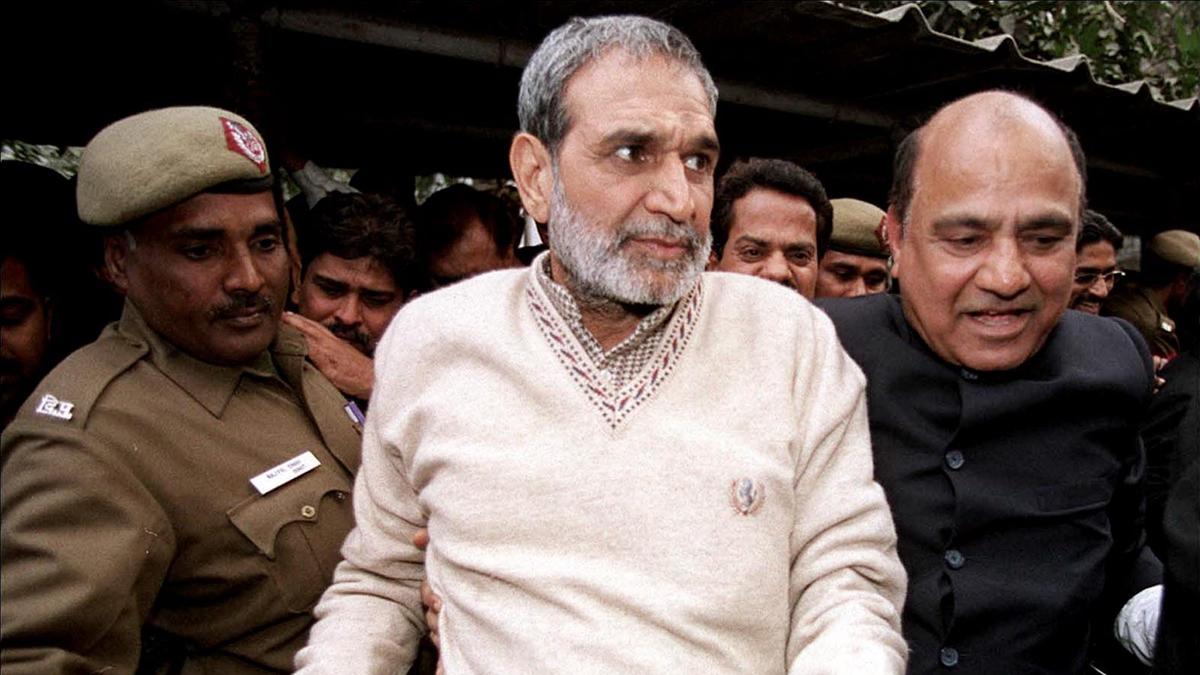
Panjab: Sajjan Kumar dies; No genocide law in India; Govt. employees protest in CM’s village; Diplomat asked to prove citizenship; AAP’s double face on media freedom. Sikh: INC betrays former PM’s apology to Sikhs on 1984 genocide; ‘Quami Insaf Morcha’ shutdown; Two stabbed in Canada Gurdwara; Anti-Sikh hate crimes Rose by 25% in 2025—and more stories.
