Thank you! Your submission has been received!
Oops! Something went wrong while submitting the form.
Panjab: Anti-Sacrilege Bill passed; Wheat procurement begins; Another loan raised; Asian Champions Trophy; Mehron deported; Badshah apologizes; Sikh: Sikhs Arrive in Pakistan; Iran delegates visit Darbar Sahib; 3.7K% rise in US hate crimes against Sikhs—and more stories.

The Panjab Legislative Assembly has passed the Jaagat Jot Sri Guru Granth Sahib Satkar (Amendment) Bill, 2026 (anti-sacrilege amendment, JJGGSS). The Bill proposes a minimum imprisonment of seven years, extendable up to 20 years, along with a fine ranging from USD 2,144–10,720 for desecration. For sacrilege carried out as part of a conspiracy to disturb communal harmony the punishment includes life imprisonment and fines up to USD 26.8K. Before passing the Bill, the government did not show the draft Bill to either the Opposition or the apex Sikh management body—Shiromani Gurdwara Parbandhak Committee (SGPC). The government also did not listen to SGPC’s and Sri Akal Takht Sahib’s (Eternal Throne) suggestion to pass a separate Bill against sacrilege and not amend the JJGGSS Act whose main intent is publication and handling of Guru Granth Sahib (Sikh scripture and charter, GGS). Instead, the Bill has now limited the SGPC to maintain a register of records pertaining to printing, storage, distribution, and supply of the GGS saroops (tomes). While the Bill was passed unanimously, opposition members asked if the Bill will turn into an Act. The opposition’s concern stemmed from the fact that previous Shiromani Akali Dal-Bhartiya Janata Party and Indian National Congress (INC) governments had tabled anti-sacrilege Bills during their terms in 2016 and 2018, respectively. The Governor referred the Bills to the President of India whose assent is still pending. Chief Minister Bhagwant Mann replied, 'As this is a State Bill, presidential assent is not required. If there is a delay by the Governor, I will personally urge him to expedite the process.' INC Member of Legislative Assembly Sukhpal Singh Khaira supported the Bill but asked why had the Aam Aadmi Party not delivered on its earlier promise to apprehend all those involved in previous incidents of sacrilege from 2015 onwards. Since 24 Feb, a protest is ongoing under the banner of Dharam Yudh Morcha (Principled Battle Front, DYM) at Baba Banda Singh Bahadur Chowk in Samana town, Patiala district in support of Gurjeet Singh Khalsa who has been atop a telephone tower in a nearby park since 14 Oct 2024 demanding a strict sacrilege law. DYM organizers said Gurjeet will come down from the tower only when the Governor gives his nod and the Bill becomes an Act (earlier coverage).

A 2,238 member Sikh group crossed over to Pakistan on 10 Apr via the Attari-Wagah check post to celebrate Khalsa Sajna Diwas (Khalsa Foundation Day) at historic Sikh shrines and Vaisakhi, a harvest festival, which marks the development and enthronement of ten founder-Gurus’ ideal being the Sikh collective—Guru Khalsa Panth. The Sikh pilgrims arrived at Gurdwara Janam Asthan in Nankana Sahib via special buses but 150 members were stopped by Indian authorities from proceeding because they failed to get security clearance from the Indian Union Home Ministry. The Shiromani Gurdwara Parbandhak Committee (SGPC) has introduced stricter norms for solo women travelers after the 2025 controversy involving Sarbjit Kaur, who stayed back in Pakistan during a religious visit and later married a Pakistani national. Over 240 solo women devotees had to submit a written undertaking confirming the purely religious purpose of the pilgrim. The pilgrims are scheduled to return on 19 Apr. Additionally, devotees from across the world gathered at Darbar Sahib (Golden Temple) to commemorate the birth anniversary of the fifth Sikh Sovereign Guru Arjan on 9 Apr. An alaukik jalao (divine radiance) exhibition was arranged at Darbar Sahib, Sri Akal Takht Sahib (Eternal Throne, AT), and Baba Atal Rai Tower for the occasion which showcased rare and valuable items preserved in the Darbar Sahib toshakhana (treasury). Concurrently, a high-level Iranian delegation led by religious leader Dr. Mohammad Hussain Jivand visited the Darbar Sahib on 7 Apr to pay obeisance and meet SGPC officials. Dr. Jivand extended an invitation to SGPC president Harjinder Singh Dhami and the AT Jathedar (leader) Kuldip Singh Gargajj for a special commemorative event on 12 Apr at the Iran Culture House, Delhi. The event was attended by president Shiromani Akali Dal (Delhi) Paramjit Singh Sarna and a few representatives of the Indian government. Dr. Jivand also lauded the resolution passed by the Panjab Assembly in support of Iran. Furthermore, Sikh families based in the UK have donated a sound system to the Darbar Sahib and as Gurdwara Sahib Pontian, Malaysia marks its 50th anniversary, the Johor state government has announced a USD 465K funding for the Sikh community (earlier coverage).

The US and Iran failed to reach an agreement after talks in Islamabad on 11 Apr. US Vice President JD Vance said after 21 hours of negotiations Tehran has refused to accept Washington’s terms on not developing nuclear weapons. Responding to Vance, Iranian Foreign Minister Seyed Abbas Araghchi said, ‘If there are doubts and concerns regarding Iran’s nuclear program, we will answer it. But no one has the right to say you must not do this because I don’t want you to.’ Araghchi went on to add that ‘Iran takes orders from no one’. Iran spokesperson Esmail Baghaei said, ‘Naturally, from the beginning, we should not have expected to reach an agreement in a single session.’ The leader of Tehran’s delegation in Islamabad said the US failed to gain the trust of his delegation in the talks. Tehran is demanding control of the Strait of Hormuz, payment of war reparations, and a ceasefire across the region, including in Lebanon as well as the release of frozen assets abroad. Post the talks, US President Donald Trump sought to ratchet up pressure on Iran by saying that the US military will begin a blockade of all Iranian ports and coastal areas on 13 Apr, in a move that risks driving oil prices even higher and reigniting the war. Iran responded, ‘Security in the Persian Gulf and the Sea of Oman is either for everyone or for no one,’ and has threatened to blow up posts in all its neighboring countries aligned with the US. Meanwhile, amid the Strait of Hormuz blockade, India has launched a special diplomatic initiative in West Asia establishing diplomatic contact with key oil and natural gas-producing countries, specifically Saudi Arabia, Qatar, and the United Arab Emirates. Minister of Petroleum and Natural Gas Hardeep Singh Puri completed a two-day visit to Qatar in a bid for resumption of Qatari gas imports. The blockade is spilling over to critical supply chains, threatening shortages of medical supplies, fertilizers, semiconductors, and everyday consumer goods, including textiles, footwear, and cosmetics. Petrochemicals producers in Asia, the key exporters of plastics and other derivatives to the global markets, are cutting production and operations, and Panjab Basmati farmers are set to declare force majeure. Panjab farmers remain anxious about the possibility of a fertilizer shortage and feel they are being kept in the dark by the government (earlier coverage).

Hate crimes against Sikhs in the US have seen a massive rise over the past decade. Federal Bureau of Investigation (FBI) data shows a 3.7K% increase from just six in 2015 to 228 in 2025, highlighting growing concern about targeted violence against the Sikhs. Across the US, total hate crime incidents increased by 88% between 2015 and 2025. However, in 2025, there was an 11% drop compared to 2024. A 2025 report by the Sikh Coalition found that Sikhs were the third most targeted religious group in 2024. It is important to note that anti-Sikh hate crimes have only been tracked as a separate category in recent years. This means earlier data may not fully show the scale of the issue. The data also shows an increase across several other groups over the past decade. Anti-transgender hate crimes recorded the largest rise at 395%, followed by anti-Latino incidents at 239%. Anti-Asian hate crimes rose by 195%, while anti-Jewish hate crimes increased by 123%. Anti-Black hate crimes rose by 66%, anti-white by 51%, and anti-gay male incidents by 27%. Meanwhile, after Canada’s House of Commons passed the Combatting Hate Act aimed in part at curbing Khalistani extremism, the Act also strengthened penalties for hate crimes and introduced protest-free zones around places of worship. Amid this, residents in parts of Canada reported disruptions over the Easter weekend as Khalistan-related demonstrations took place in residential neighborhoods. Witnesses described groups of demonstrators gathering outside, chanting and displaying signs related to political issues originating outside Canada, namely India. Concurrently, starting April 2026, Canada has introduced a series of immigration changes that affect citizens, permanent residents and visa applications, including by Panjabis. With Guaranteed Investment Certificate already more than doubled from CAD 10K to CAD 22K, these fee hikes work as further deterrents to students, including Panjabi students, seeking admission in Canada. A 10-year adult passport now costs CAD 163.50 while a 5-year adult passport is priced at CAD 122.50. Rural employers can now employ up to 15% of their workforce as low-wage foreign workers, up from the previous 10%. This measure is in place until March 2027, depending on provincial participation (earlier coverage).

After the devastation caused to monsoon crops by 2025 floods in Panjab, unseasonal rains have raised concerns among farmers as their standing wheat crop is nearing harvest. Between 3–9 Apr, Panjab recorded an average weekly rainfall of 21.7 mm against a normal of 3.8 mm causing damage to 130K acres. Panjab Chief Minister Bhagwant Mann met Union Food Minister Pralhad Joshi requesting him to relax wheat buying specifications as offered by the ministry to neighboring Bharatiya Janata Party-ruled Rajasthan. Panjab Agriculture Minister Gurmeet Singh Khudian urged the union government to send a high-level team to assess the damage caused to wheat and other crops by unseasonal rains accompanied by hailstorms. Meanwhile, on 9 Apr, Panjab Labour Minister Tarunpreet Singh Sond initiated the wheat procurement season at Asia’s largest grain market in Khanna, Ludhiana district. Sond said Panjab has received a Cash Credit Limit of USD 3.3B. The state has set a target of procuring 12.2 MMT of wheat, with arrangements in place to handle up to 13.2 MMT. He assured that wheat will be purchased at the Minimum Support Price of USD 27.5 per quintal, and payments will be credited directly to farmers’ bank accounts within 24 hours. The union government has also agreed to operate special trains to lift 15.5 MMT of rice and food grains from the state, which will ease the storage crisis. However, on 13 Apr, Panjab paused wheat procurement after recent rains left crops with way too much moisture of up to 22% when the limit is 12%. A few sunny days ahead should dry the wheat. Parallelly, in a bid to revive cotton cultivation, the Panjab government has announced a 33% subsidy on seeds for farmers cultivating both indigenous and Bt cotton. Concurrently, the union cabinet has approved the Department of Fertilisers proposal for fixing the Nutrient Based Subsidy rates for the Kharif (monsoon) season 2026 on Phosphatic and Potassic fertilizers. The subsidy will be applicable for the Kharif season from 1 Apr–30 Sep 2026. The tentative budgetary requirement has been estimated at USD 4427M which is about USD 460M higher than allocated for the Kharif 2025 season (earlier coverage).

Within seven days into the new fiscal year, on 7 Apr, the Panjab Government raised a USD 160M loan for a period of 10 years, drawing the ire of Opposition Indian National Congress and Shiromani Akali Dal over the deteriorating fiscal health of the state. During 2026–27, the state government intends to raise a loan of USD 4670M through market borrowings. Of that, USD 4528M will be used to repay old loans and service the debt. Additionally, the Punjab and Haryana High Court (PHHC) has directed the state administration to clear pending Dearness Allowance of the employees and pensioners by 30 Jun which would cost the state another USD 160M. The fund-starved Panjab government has decided to file an appeal before a PHHC division bench. Meanwhile, Panjab government employees got their March salary after 10 Apr instead of on 1 Apr. Finance Minister Harpal Cheema blamed technical issues and bank holidays. He said, 'The salary for March is delayed every year. There are issues with the software. There were bank holidays for two days.' Concurrently, the PHHC issued a notice to the Panjab government on a Public Interest Litigation (PIL) challenging its failure to appoint a Lokpal (Ombudsman) for over six months. A division bench of Chief Justice Sheel Nagu and Justice Sanjiv Berry directed the counsel for Panjab to seek specific instructions on the timeline for filling the vacancy, which has rendered the state’s anti-corruption statutory body non-functional. The PIL filed by advocate Vishal Mehta argued by advocate Mayank Mathur states that the office of the Lokpal has been lying vacant since the retirement of Justice Vinod Kumar Sharma on 8 Oct 2025. Simultaneously, on 11 Apr the Panjab Cabinet cleared a massive solar street lighting program covering 11,500 villages with nearly 300K lights, and gave its nod to host the Men’s Asian Champions Trophy 2026—a hockey tournament in which six international teams will participate—for the first time in Panjab. The Panjab government is also adding 1,265 buses to significantly improve connectivity across the state (earlier coverage).

Panjab police have announced cash rewards for 28 proclaimed offender 'gangsters' who run extortion rackets, order killings, and smuggle arms and drugs into the state from hideouts spread across three continents. Most of them have not set foot in India for years. The government has approved rewards from USD 1–2K to informants upon providing correct and genuine information. The policy is part of the ongoing Gangstran Te Vaar (Strike Against Gangsters) campaign. Under the campaign, the Panjab police has conducted 56,487 raids at identified locations linked to associates of gangsters across the state. Police have arrested 19,894 and taken preventive action against 9,353, while 15,284 individuals were verified and released after questioning. Police have also arrested 851 proclaimed offenders. Alongside, a Batala, Gurdaspur district-born international drug lord, wanted by the Federal Bureau of Investigation, has managed to flee India under mysterious circumstances, triggering allegations of police collusion in his escape. Shehnaz Singh alias Shawn Bhinder, arrested in March 2025 from Ludhiana by Panjab police during Yudh Nashian Virudh (War Against Drugs) campaign, secured bail from the Punjab and Haryana High Court nearly two months ago. Subsequently, he applied to have his passport suspension revoked. Inspector Prabhjit Singh gave clearance to revoke his passport suspension. Bhinder fled India at the end of March 2026 after getting his passport. Meanwhile, A Central Bureau of Investigation (CBI) court has summoned two Panjab police officers on 1 May to face trial in the alleged custodial death of Ramandeep Kaur from Ludhiana arrested with her fiancé Mukul Garg over ATM frauds. Ramandeep was found hanging inside a washroom at the Dugri village, Ludhiana district police station early morning on 5 Aug 2017. The state government has refused to grant prosecution sanction against two others—Additional Deputy Commissioner of Police Kuldeep Sharma and Assistant Commissioner of Police Rupinder Kaur Bhatti named as accused in the CBI chargesheet. The CBI court of Special Judicial Magistrate Karanvir Singh Maju has ordered Sub-Inspector Dalvir Singh who was then Station Head Officer and Assistant Sub-Inspector Manjeet Singh to face trial for multiple offences including wrongful confinement, forging a legal document, intentionally submitting fabricated evidence, criminal conspiracy, and causing disappearance of evidence (earlier coverage).
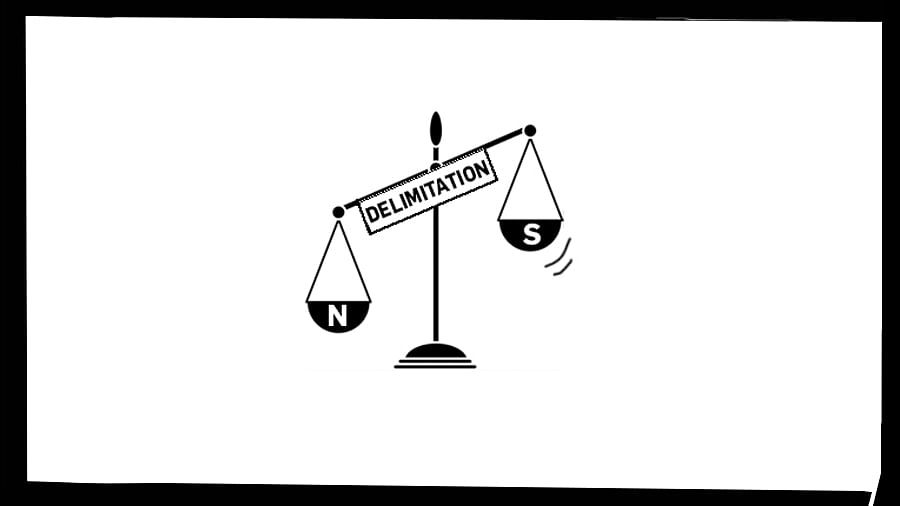
The Indian union government has convened a three-day special session beginning 16 Apr to amend the Constitution so that the Women’s Reservation Law which reserves 33% seats for women and the delimitation exercise can be carried out. The government wants both changes to be implemented on the basis of the 2011 census data in the 2029 Lok Sabha (Lower House of Parliament) election. Delimitation is a binding process of redrawing Lok Sabha and State Assembly boundaries to bring population parity among them. The exercise has been suspended since 1976 as it is deemed controversial which has resulted in vast unevenness in numbers of voters among constituencies. India's southern states argue delimitation unfairly penalizes regions like Tamil Nadu and Kerala that have successfully controlled population growth in the last few decades. Panjab Indian National Congress chief Amarinder Singh Raja Warring said Panjab seats will go up from 13 to 20 but still place the state at great disadvantage in the Parliament and sought an all-party consensus on the issue. Karnataka CM Siddaramaiah said, ‘Under the proposed expansion, while every state may see an increase, the rate and scale of increase clearly favor Bharatiya Janata Party (BJP)-dominated states. Uttar Pradesh is expected to go from 80 to 120 seats, Maharashtra from 48 to 72, Bihar from 40 to 60, Madhya Pradesh from 29 to 44 , Rajasthan from 25 to 38, and Gujarat from 26 to 39. In contrast, southern states see smaller gains. Karnataka rises from 28 to 42, Tamil Nadu from 39 to 58–59, Andhra Pradesh from 25 to 38, Telangana from 17 to 26, and Kerala from 20 to 30. Five southern states together gain barely 66 additional seats, while seven BJP-dominated states gain about 131 seats—nearly double. Even after expanding the Lok Sabha to 816 seats, the collective share of southern states remains around 24%—unchanged and already modest. The BJP-led government is attempting to weaken our voice through a manipulative restructuring of representation. Such a structural change cannot be pushed without consultations or public debate.’ Tamil Nadu chief minister MK Stalin warned that recalculating the seats using current population figures would diminish southern states’ representation, affecting their ability to secure funding and protect their cultural, linguistic, and developmental priorities (earlier coverage).

Jasveen Sangha, a Los Angeles based drug dealer dubbed the ‘Ketamine Queen’ was sentenced to 15 years in prison in connection with popular TV series Friends star Matthew Perry's 2023 death including her role in supplying the dose of the powerful anesthetic that killed the actor. Sangha, admitted to running a ‘stash house’ for illegal narcotics out of her home in the North Hollywood district. She pleaded guilty in September 2023 to five felony drug counts stemming from Perry's death at age 54. During a search of her home in March 2024, authorities recovered multiple substances, including cocaine, counterfeit Xanax, methamphetamine pills, and nearly 80 vials of liquid ketamine. Sangha was born in London to parents Nilem Singh and Baljeet Singh Chhokar and is of Sikh origin. Meanwhile, Amritpal Singh Mehron, the alleged mastermind in the murder of social media influencer Kanchan Kumari alias Kamal Kaur Bhabhi, was taken into custody in the United Arab Emirates and deported to Panjab. Kanchan’s brutal murder had sent shockwaves across Panjab in June 2025. The influencer was allegedly lured to Bathinda under the pretext of a promotional event and strangled to death on the night of 9 Jun 2025. Her body was found three days later inside a car parked at Adarsh University, Bathinda. Investigations said that Mehron, a Nihang Sikh (dressed as traditional Sikh warrior), along with two accomplices—Jaspreet Singh and Nimratjit Singh—carried out the killing. The motive was linked to Kanchan’s social media content which the accused claimed offended Sikh sentiments. Mehron is now in the custody of Bathinda police. Additionally, rapper-singer Aditya Prateek Singh Sisodia alias Badshah, issued an apology to the National Commission for Women over the release of his new song Tateeree which had sparked controversy over misogyny. He said the song has been taken down from all platforms and pledged to sponsor the education of 50 girls from economically weaker sections. The Delhi High Court has also asked for the immediate removal of another track Volume 1 released in 2007 by Badshah and Hirdesh Singh alias Honey Singh stating its lyrics are highly inappropriate, offensive, and disrespectful towards women (earlier coverage).

The recent Supreme Court of India ruling that converting to a religion other than Hinduism, Sikhism, and Buddhism would be seen as losing Scheduled Caste (SC) status, has touched a sensitive spot across the country, but especially among the Dalits (marginal caste) of Panjab. Panjab has the highest proportion of SCs—nearly one-third (31.9% as per Census 2011) of the population. Around 1.5% of Panjab’s population is Christian and there has been a resurgence within the community with independent ministries and churches coming up in villages, towns, and cities in the Majha (north) and Doaba (central) regions. The Dalit Christians mostly live in the Doaba region, a belt with over 32% of the Panjabi Dalit population across faiths. Conversely, the Majha belt has a sizable population of the Valmiki community and Mazhabi Sikhs who too have a significant number of followers from the Christian faith. On 14 Mar, union Home Minister Amit Shah, during a badlav (change) rally at Moga, said the Bharatiya Janata Party would ban religious conversion in Panjab through a new law. Christian organizations in Panjab called Shah’s proposal politically motivated, warning that treating conversion as a threat risked stigmatizing marginal communities while drawing attention away from caste inequality and rural distress. Many Dalits in Panjab who have embraced Christianity are not changing their names or religion in official records so they continue getting reservation benefits in jobs and education. For the Dalits, Christianity offers dignity, community support, and an escape from entrenched caste hierarchies. The loss of reservation benefits acts as a strong deterrent against formalizing this shift. Additionally, independent ministries represent a relatively newer, popular face of Christianity in Panjab, not like the traditional Roman Catholic Church. These churches are independent entities influenced by the Pentecostal movement that places more emphasis on a ‘direct encounter with God’, rather than any structured, organized conversion. Sermons are delivered in Panjabi and Hindi, hymns resemble bhajans (Hindu devotional songs) and community meals are in line with the langar tradition and continue to wear turbans like Sikhs. The political debate over conversion gets complicated by this unique, fluid nature of faith practiced by these ministries and the laity (earlier coverage).
Justice RS Sodhi in The Tribune: Faith thrives on openness, not control

Panjab: SCI notice to ECI; INC appoints Pargat Singh as state chief; ECI flags WPD; Maiserkhana Targets AAP; PHHC orders CBI to probe CM aides; Panjab goes to SCI; LGBTIQ+ influencer shot dead. Sikh: Jaggi Johal released; VanDyke release raises questions about ‘Bandi Singh’—and more stories.
Panjab: Dissent in Indian Election Commission; ED probes GMADA; AAP admits serious accounting impropriety; Student unrest erupts in two private universities. Sikh: US Ambassador visits ‘Darbar Sahib’; SCI remarks on ‘Vande Mataram’ favor Sikhs; Carney’s deprioritizes safety for Canadians—and more stories.
