Thank you! Your submission has been received!
Oops! Something went wrong while submitting the form.
Panjab: Protests against CEC intensify; Delhi fortified; Rain disrupts paddy procurement; CBI files FIR against Ghuman; Sinha apologizes to PHHC over pending DA; Anti-Drug activist & another ASI shot dead. Sikh: Gurdwara in the eye of protest storm; J&K Sikhs protest for inclusion of Panjabi language—and more stories.

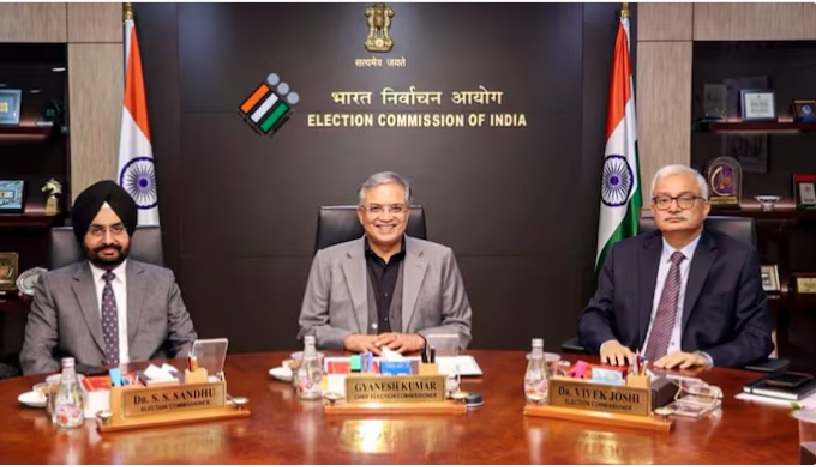
Protests in New Delhi against the Chief Election Commissioner (CEC) Gyanesh Kumar’s resignation and rollback of the Special Intensive Revision (SIR), which disenfranchised 134M across 30 states and union territories, intensified after Delhi police (which is under the control of Indian Ministry of Home Affairs) imposed Section 163 of the Bharatiya Nagarik Suraksha Sanhita (BNSS), 2023, ‘prohibiting gatherings of four or more’ in central Delhi since 2 Oct, and began illegally detaining protestors, journalists, Opposition leaders, and lawyers. To many, the situation in Delhi today is a reminder of 1975, when the then Prime Minister Indira Gandhi declared Emergency, curbing media persons, arresting Opposition leaders, and civilians. On 10 Oct, on a call given by the Cockroach Janta Party (CJP) and other student unions in Delhi such as the All India Students' Association led by Neha Bora, Students' Federation of India led by Aisha Ghosh, and Krantikari Yuva Sangathan led by Mudita Kushwaha, mostly Gen Z protestors gathered in large numbers in Delhi. Despite unconstitutional restrictions like sealing of Delhi borders, cancellation of trains between 04:00–14:00 hrs on 10 Oct, placing CJP and other student leaders, journalists and media personalities like Dhruv Rathee under house arrest, many students from across the country, including Panjab, reached Delhi to protest. Farmers from Uttar Pradesh and Haryana were also stopped at Delhi borders. Throughout the day, especially women protestors were assaulted by police personnel, while independent journalists were unconstitutionally detained and stopped from doing their work. Most notably, there was a huge presence of right-wing Hindu organization goons around the Connaught Place area who were abusing journalists, assaulting protestors, and creating scenes with the patronage of Delhi Police. The police neither arrested them nor asked them to stop. Since 2 Oct, Delhi has witnessed protests every day despite the restrictions curbing free movement through the presence of 40K police and paramilitary forces, more than 35K barricades, illegal blocking of 45 metro stations, and most notably the unconstitutional blocking of designated protest site Jantar Mantar, which was denotified as a protest site on 12 Oct. On the same day, at a call given by Leader of Opposition Rahul Gandhi, INDIA bloc leaders, including Mamata Banerjee and Akhilesh Yadav, joined by student leaders Bora and Kushwaha, protestors, journalists, and lawyers in hundreds of thousands flooded the streets and marched to the Supreme Court of India to file a petition against the CEC. Meanwhile, in Panjab, the voter list has shrunk by 6.3% post SIR, leaving 20.10M eligible to vote (earlier coverage).

Similar to the Gen Z protests of 20 Jul, Gurdwara Bangla Sahib, New Delhi, has once again emerged as a sanctuary for protesters demanding India's Chief Election Commissioner (CEC) resign and rollback of the Special Intensive Revision. Heeding Cockroach Janta Party’s (CJP) call to protest at Jantar Mantar on 10 Oct, hundreds of protesters camped at the Gurdwara the night before. Earlier on 9 Oct, the Delhi police carried out a flag march through the Gurdwara with their heads bare and boots on, violating Sikh protocols. The police say they marched on the connecting pedestrian path between Baba Kharak Singh Marg and Ashoka Road—the Gurdwara is at the intersection. The path is a thoroughfare inside the Gurdwara property. On 10 Oct, the police first sought permission to enter the Gurdwara to arrest protesters, but the Delhi Sikh Gurudwara Management Committee (DSGMC) denied it. By afternoon, the police started dragging and detaining several protesters from inside the Gurdwara. On 11 Oct, the Aam Aadmi Party (AAP) sought Home Minister Amit Shah’s resignation over alleged disrespect to the Gurdwara by Delhi police personnel. In a turnaround, DSGMC president Harmeet Singh Kalka approached the Delhi police with a complaint against AAP leaders, including party chief Arvind Kejriwal, accusing them of disrupting the Gurudwara’s sanctity. DSGMC said AAP workers and supporters entered the Gurdwara and staged protests, creating disturbance and using the sacred premises for political purposes. Former DSGMC president Manjit Singh GK has said Kalka lodged the complaint under pressure from Bharatiya Janata Party (BJP) minister in Delhi government, Manjinder Singh Sirsa. In Sikh tradition, all Gurdwaras are sanctuaries that welcome everyone who needs food and shelter. Within 1 km of New Delhi's long-designated protest site Jantar Mantar, Gurdwara Bangla Sahib has provided food to protesters for years, regardless of their political affiliations or demands. In this case, the police should not have entered Gurdwara or arrested people there. Gurdwara management, which is allied with BJP, should not run to court on matters of religious tradition. The sanctity of a Gurdwara is a sense or an observance, which law cannot fix (earlier coverage).

Officer on Special Duty to Panjab Chief Minister, Rajbir Singh Ghuman, evaded appearing before the Central Bureau of Investigation (CBI) for the second time on 8 Oct. Rajbir was asked to appear and join the investigation in connection with a case involving allegations of corruption and influence peddling. The CBI’s First Information Report (FIR) into alleged influence over government decisions in Panjab has flagged 21 instances of suspected interference in transfers and postings across 20 state government departments between September 2023–March 2026. These conclusions are based on the material submitted by the Enforcement Directorate (ED), which had recently raided several Panjab government offices. The ED gathered material evidence upon investigating builder Ajay Sehgal and associates of the Indian Cooperative House Building Society. Searches of the alleged intermediary Nitin Gohal’s premises led to the seizure of his phone and examination of WhatsApp chats, call records, and documents, following which the agency sent its dossier to the Panjab Director General of Police. The Panjab police examined the material and issued notices but did not register an FIR. That is when the Punjab and Haryana High Court asked the CBI to intervene. Panjab CM Bhagwant Mann has said that targeting senior political rivals, their aides, or family members is a standard operating practice of the Bharatiya Janata Party. He said, 'This happened in Chhattisgarh, and in Jharkhand when Hemant Soren was arrested just two months before elections. The same occurred in West Bengal with leaders close to Mamata Banerjee, in Delhi when Arvind Kejriwal and Manish Sisodia were jailed, and in Haryana when the ED raided senior Indian National Congress leaders.' Ghuman has moved the PHHC seeking quashing of the corruption case registered by the CBI against him and five others. On the Panjab government's earlier plea against the CBI investigation, the SCI refused to stay the graft FIR but has restrained the CBI from coercive action such as arrests. Meanwhile, Dera (sect) Sachkhand Ballan chief Sant Niranjan Dass visited Panjab's ruling Aam Aadmi Party leader Gagandeep Singh Kaku Ahluwalia’s home on 9 Oct. Ahluwalia is an aide of Ghuman and his name figures in the ED probe. Though the visit details are unknown, it has stirred the religious and political circles in the state (earlier coverage).

The Punjab and Haryana High Court (PHHC) took a stern view of the Panjab government on 6 Oct over its failure to comply with directions to pay long-pending Dearness Allowance (DA) arrears to state government employees and pensioners. PHHC questioned Panjab Chief Secretary (CS) Kumar Anugraha Prasad Sinha over the government's failure to submit the compliance report by the 11 Aug deadline, and asked why criminal proceedings should not begin. PHHC issued a contempt notice to the CS for making a 'prima facie false statement' to the press and on social media. The Panjab government argued that it had approached the Supreme Court of India by filing a Special Leave Petition (SLP) seeking relief. However, during the hearing, the PHHC noted that the SLP filed before the Supreme Court was defective and unsigned, raising serious questions over whether it was merely an attempt to delay compliance with the court's orders. On 9 Oct, Sinha offered an unconditional apology. Meanwhile, Sahizada Ajit Singh Nagar-based PANJ Foundation has released a report, ‘State of Punjab: Data Story of 15 Years', which presents an overview of the key changes and challenges in the state’s economy and finances, employment, human development, crime and drug-related issues, and environment over the past 15 years. The report says state government salaries, pensions, interest payments, and power subsidies account for 98% of Panjab’s revenue receipts, constraining the fiscal space for development expenditure on areas such as education and infrastructure. Economist Upinder Sawhney said almost everything Panjab earned was spent before a rupee reached schools or infrastructure. Economist Lakhwinder Singh said that graduate unemployment rose from 13.1% to 16.9% between 2017–18 and 2023–24, while India’s fell from 17.2% to 13% during the same period. However, according to the Periodic Labour Force Survey report published by the Press Information Bureau, India's unemployment rate declined from 6% in 2017–18 to 3.2% in 2023–24. Parallelly, the SCI has directed the Panjab government to submit a proposal to provide adequate land for compensatory afforestation in areas where the National Highways Authority of India requires land for road construction. SCI expressed concern over reduction of forest cover in Panjab at 3.67% and has sought the Panjab government’s response by 27 Nov (earlier coverage).
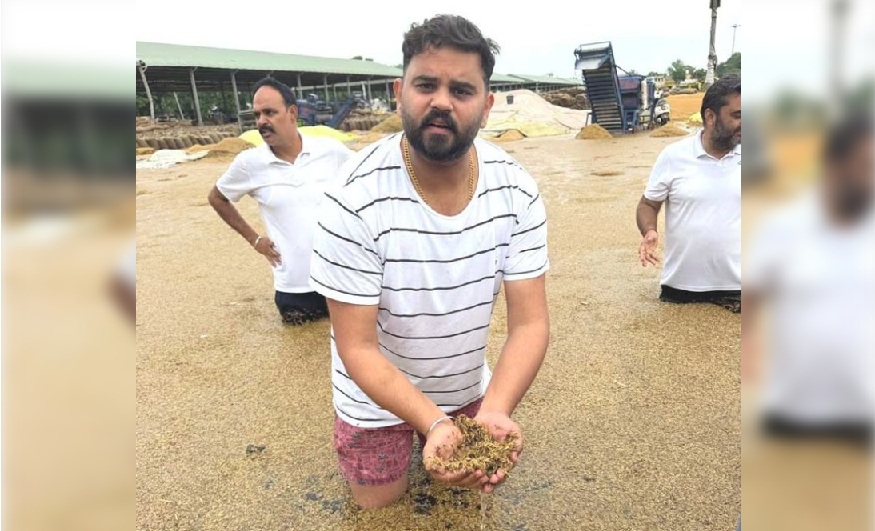
Heavy rainfall on 11 Oct in Panjab has dealt a major blow to paddy procurement. Rain flooded parts of the Fazilka grain market and submerged produce lying in the open at several wholesale markets, including Khanna, Batala, and Wadala Granthian, Gurdaspur district. Waterlogging was also reported in parts of Bathinda, Fazilka, and Muktsar districts, while farmers in Sangrur and other areas reported damage to standing paddy, as ripening plant stalks fell over or broke. Farmers fear that harvesting operations in affected areas could be delayed by at least a week, adding to concerns over grain quality and potential losses. In Hoshiarpur, standing paddy along with potato, sugarcane, vegetables, and other crops was damaged. In the Fazilka grain market, rain washed away large quantities of paddy and submerged bags under three to four feet of water, causing losses worth millions to farmers and commission agents. Inadequate drainage arrangements left the 90-acre market inundated, forcing some people to use boats to move between shops. Farmer Ravi Chaudhary says, ‘My paddy has been washed away. Although it was covered with tarpaulins, the incessant rain swept away the produce.’ President of the Arhtiya (commission agent) Association Sanjeev Goldy Sachdeva said, ‘We had brought the issue to the notice of the concerned authorities several times and urged them to make advance arrangements, but to no avail.’ Commission agent Sumant Setia demanded accountability for lapses and that affected farmers be compensated after a proper assessment of the losses once the accumulated rainwater had been drained out. Farmers and commission agents blocked the Fazilka–Ferozepur highway demanding compensation for their losses. Fazilka Market Committee Secretary Mandeep Kamra described the incident as a natural calamity. He said the administration had started draining the accumulated water using pumping motors and claimed that the process would be completed within a few hours. Fazilka Deputy Commissioner Amarpreet Kaur Sandhu said she recommended action against the Mandi Board (Grain Market Board) authorities. In 2026, paddy was cultivated on 131K hectares in the district, of which only around 4% had been harvested so far. Meanwhile, a 21-year-old laborer, Shanbaz, was found dead under mysterious circumstances in the fields at Sidhwan Dona village, Kapurthala district. The police have launched an investigation into the matter (earlier coverage).

An anti-drug activist, Parvinder Singh Jhota from Mansa, was shot dead on camera on 13 Oct by a medicine shop owner. The murder was captured in a Facebook Live video he was shooting. The video shows Jhota confronting the medicine shop owner Ashwani Kumar and accusing him of selling synthetic drugs. Kumar is seen threatening Jhota with a pistol before opening fire. Police said he is now on the run. Four of Jhota’s companions also sustained bullet injuries. Many appreciated Jhota’s work; the killing has shocked his well-wishers. Meanwhile, a 55-year-old Assistant Sub-Inspector (ASI), Iqbal Singh, was shot dead by bike-borne assailants on his way back home from duty in Ferozpur. Iqbal served in the Counter Intelligence wing at Ferozepur. Panjab Director General of Police announced compensation of USD 100K for Iqbal’s family. Police suspect the crime might be linked to his nephew’s murder, Ajmeet Singh, who bike-borne assailants also shot on 11 Sep. Ajmeet faced half a dozen serious criminal charges, including a rocket-propelled grenade attack at the Sarhali police station, Tarn Taran district. These targeted killings put the Panjab Police in a bind with two distinct security challenges ahead of the 2027 Assembly elections—a string of attacks on police allegedly backed by Pakistan-based handlers and a spate of killings of social media influencers in the name of moral policing. Three influencers and six policemen have been targeted in recent months. Additionally, the Amritsar Police claims to have solved the murder case of social media influencer Madhusudan Singh, known as Mad Sandhu, after arresting six accused—including the alleged main shooter Parminder alias Kaka—in a joint operation with the Gujarat Police. The investigation has indicated that the murder was allegedly carried out at the behest of the Jagga gang of Tarn Taran. Sandhu was shot dead in Amritsar on the evening of 3 Oct. Police said they made arrests based on technical evidence, human intelligence, and sustained efforts following a complaint by the victim’s father, Bhupinder Singh. Sandhu was cremated after his post-mortem, days after two motorcycle-borne attackers allegedly opened fire on him in Amritsar. Sandhu’s younger brother says the friends who once spent time and money with him were nowhere to be seen at his cremation or funeral (earlier coverage).

Panjab government has set up a three-member Special Investigation Team (SIT) to probe a rape case in Anandpur Sahib, in which a former member of the apex Sikh management body Shiromani Gurdwara Parbandhak Committee (SGPC), Amarjit Singh Chawla, has been booked. Chawla was booked on the charge of rape in Anandpur Sahib on 21 Aug, following a complaint by a woman who had returned from Bahrain and was reportedly housed in an SGPC-managed inn. Chawla, who resigned as SGPC member after the registration of the First Information Report, has termed the allegations ‘false’ and ‘fabricated’. Aam Aadmi Party (AAP) Panjab media in-charge Baltej Pannu said, ‘Chief Minister Bhagwant Mann has constituted the three-member SIT to be headed by senior Panjab Police officer Gurbans Singh Bains, with Simranjit Singh and Karan Singh Sandhu as members.’ The SGPC had sought a Central Bureau of Investigation probe into the matter after finding irregularities in the inn’s records. AAP, however, said the SGPC had not clarified who recommended the booking of a room for the woman. Meanwhile, the Panjab government has told the Punjab and Haryana High Court (PHHC) that investigation into the alleged incident of rape that sparked arson and violence at Lovely Professional University (LPU) in Phagwara in September has not been confirmed so far. The government further told the court that the person who posted about the rumors of rape on social media has been identified, but that person said that they heard it from others. The government response came in a Public Interest Litigation filed by a Bachelor of Technology LPU student Ravi Raj. Additionally, the Enforcement Directorate (ED) summoned CM Mann’s brother-in-law and Panjabi film producer, Amardeep Singh Grewal, for questioning on 9 Oct in connection with an alleged USD 521K bribery case in which the CM’s wife, Dr. Gurpreet Kaur Mann, had been named. Grewal failed to appear before the ED in response to summons. An ED official, who wished to remain anonymous, said, ‘Grewal didn’t appear before the agency. He had not communicated anything to the agency regarding his absence or sought any extension of the summons.’ The alleged controversy relates to a rape case registered in Amritsar, in which it was alleged that Grewal had offered to get the investigation scuttled in return for a bribe of USD 521K (earlier coverage).

A protest by Sikhs of Jammu and Kashmir (J&K) demanding inclusion of Panjabi as an official language of the union territory entered its 12th day on 13 Oct. The protest started in Jammu and has spread to Srinagar and Baramulla. It is led by Chairman of Gurdwara Rani Talab, Digiana, Taranjit Singh Tony. The issue has come up against the backdrop of the Jammu and Kashmir Official Languages Act, 2020. Under the Act, Kashmiri, Dogri, Urdu, Hindi, and English are recognized as official languages for official purposes in the union territory. Panjabi is not on that list. The demand for Panjabi’s inclusion dates back to the discussions around the language legislation in 2020. Sikh organizations had objected to Panjabi being left out of the proposed list of official languages and had held protests seeking its recognition. Sikh organizations again raised the issue in 2022. In 2024, a delegation of the J&K Sikh Coordination Committee also met Lieutenant Governor Manoj Sinha and raised issues concerning the Sikh community, including the promotion of Panjabi. Community representatives have also been seeking greater access to Panjabi education in government schools. They have argued that providing more opportunities to learn the language would help preserve its literary and cultural connection among younger generations. Meanwhile, the Indian union government has opposed a plea by death-row convict Balwant Singh Rajoana seeking commutation of the death sentence awarded to him in the 1995 assassination of former Panjab Indian National Congress Chief Minister Beant Singh. Rajoana, who has been in custody for more than 30 years, had approached the Supreme Court of India over the delay in deciding a mercy petition that has been pending before the President since 2012. Additional Solicitor General KM Nataraj, appearing for the union government, told a Bench headed by Justice Vikram Nath that the delay was due to the prevailing situation in Panjab. The Bench said it would proceed to hear the matter on merits on 28 Oct. Concurrently, Panjab Chief Minister Bhagwant Mann has assured a four-member committee of the Quami Insaf Morcha (Community Justice Front) that the state government would pursue all possible legal and constitutional measures for an early resolution of the issue concerning Bandi Singh (Sikh prisoners) lodged in various jails for about 30 years (earlier coverage).

Indian National Security Adviser Ajit Doval and Senior Diplomatic and International Affairs Advisor to the Canadian Prime Minister David Morrison met in New Delhi on 6 Oct. India and Canada have agreed to deepen coordination on combating transnational organized crime, terrorism, and the extradition of criminal offenders. Both sides also welcomed efforts to advance negotiations for a Comprehensive Economic Partnership Agreement (CEPA), adding that they discussed the growing potential to advance a substantive bilateral defense relationship. The discussions are significant against the backdrop of India and Canada seeking to rebuild security cooperation after years of strained ties. Canada's Sikh advocacy network Sikh Federation (SF) has expressed grave concern about the developments. SF legal counsel Prabhjot Singh wrote to the Canadian Minister of Public Safety Gary Anandasangaree saying, 'These developments raise serious questions about Canada's commitment to addressing Indian transnational repression, particularly given the documented history of Indian foreign interference targeting the Sikh community in Canada and documented instances of Indian state involvement in violence against Sikh activists.' SF recommended Canada suspend and independently review security, intelligence, and legal cooperation arrangements with India; implement the recommendations of the Standing Committee on Justice and Human Rights' June 2023 report; undertake a transparent review of cases in which Sikh activists have been subjected to criminal, immigration, national security, or administrative measures potentially influenced by India; ensure meaningful accountability for Indian officials implicated in foreign interference, surveillance, intimidation, and violence in Canada; and establish an independent public inquiry into Indian transnational repression in Canada. Meanwhile, the US President Donald Trump has announced a deal under which Russia will supply hundreds of thousands of tonnes of diesel to the US and global markets. The irony is the US has repeatedly targeted India over its purchases of Russian oil—from additional penal tariffs last year to a recent law empowering President Trump to impose up to 100% tariffs on top buyers of Russian energy. The US administration has often argued that India is effectively funding Russia’s war in Ukraine by buying Moscow’s crude oil. The US government is also suspending several large Indian IT firms from a key program that allows skilled foreign workers to gain permanent residency. The companies are Cognizant, Infosys, Tata, Wipro, HCL, and Capgemini. The US administration cited alleged fraud and claimed that foreign workers got jobs in the US at the cost of US workers (earlier coverage).
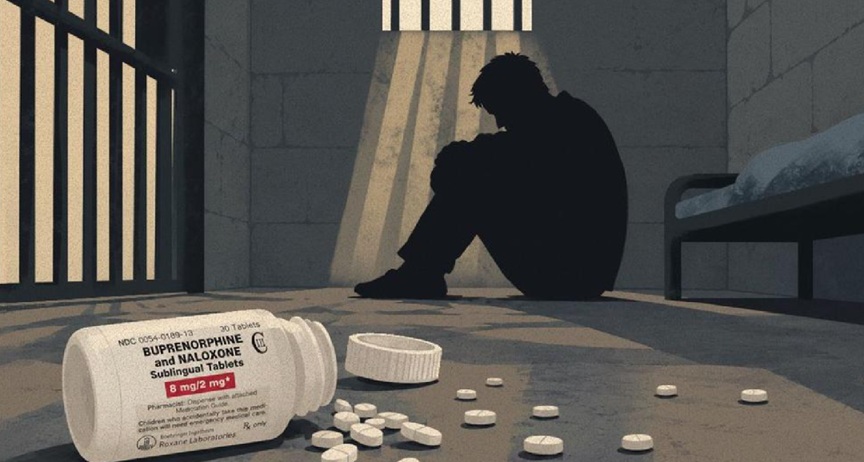
In 2017, the Panjab government introduced a new therapy for victims of drug abuse, which involved putting users of opioids like heroin, locally called chitta, on a combination of less potent opioids—buprenorphine and naloxone pills—to wean them off their addiction. These pills were meant to be taken orally and under medical supervision. According to a psychiatrist working in one of Panjab’s central jails, the therapy drastically reduced the vulnerability of an addict. He said, ‘Firstly, there is no intravenous use, because of which an addict is less likely to get infected with HIV, hepatitis, or other diseases. There is almost zero chance of drug overdose death.’ The therapy was rolled out across more than 529 clinics over the years. However, in November 2023, the state government informed the Panjab Assembly that around 80–90% of patients who complete this treatment at the state’s Outpatient Opioid Assisted Treatment (OOAT) clinics relapse into addiction. Since then, the supply of buprenorphine pills to Panjab’s prisons has surged, and the number of inmates registered with deaddiction clinics has doubled. On 3 Sep, the Punjab and Haryana High Court (PHHC) asked the government to explain the staggering use of buprenorphine pills in the state’s prisons. In June, a judge filed a report to PHHC flagging that nearly 70% of the Mansa district jail’s inmates were dependent on drugs like buprenorphine and naloxone prescribed to them by an OOAT clinic in the jail. Nearly 45% of the inmates lodged in different jails were victims of drug abuse. Incidentally, 83% of the drug-dependent inmates had no history of seeking treatment for substance abuse before entering the jail, the government disclosed. While medical officers posted in jails say the drugs are administered to inmates under their supervision, shortage of staff often compels them to seek help from senior or educated prisoners in ensuring the distribution of the drugs. India's 1,332 prisons also face significant overcrowding. By 2023, these prisons across India held 530,333 incarcerated persons—the fourth-highest in the world. The vast majority of prison inmates in India have not been convicted of any crime, and three out of four inmates are undertrials. The prison population saw a record jump during the COVID-19 pandemic—due to increased arrests and the delay in bail hearings. Uttar Pradesh, Bihar, Madhya Pradesh, Maharashtra, and Panjab have the most prison inmates. The five states account for 51% of the country's prison population, though they represent 43% of the country's total population (earlier coverage).
Harjant S Gill in The Wire: From Amritsar to Ithaca, patriarchy protects its own

Panjab: SCI notice to ECI; INC appoints Pargat Singh as state chief; ECI flags WPD; Maiserkhana Targets AAP; PHHC orders CBI to probe CM aides; Panjab goes to SCI; LGBTIQ+ influencer shot dead. Sikh: Jaggi Johal released; VanDyke release raises questions about ‘Bandi Singh’—and more stories.
Panjab: Dissent in Indian Election Commission; ED probes GMADA; AAP admits serious accounting impropriety; Student unrest erupts in two private universities. Sikh: US Ambassador visits ‘Darbar Sahib’; SCI remarks on ‘Vande Mataram’ favor Sikhs; Carney’s deprioritizes safety for Canadians—and more stories.
