Thank you! Your submission has been received!
Oops! Something went wrong while submitting the form.
Panjab: Sajjan Kumar dies; No genocide law in India; Govt. employees protest in CM’s village; Diplomat asked to prove citizenship; AAP’s double face on media freedom. Sikh: INC betrays former PM’s apology to Sikhs on 1984 genocide; ‘Quami Insaf Morcha’ shutdown; Two stabbed in Canada Gurdwara; Anti-Sikh hate crimes Rose by 25% in 2025—and more stories.
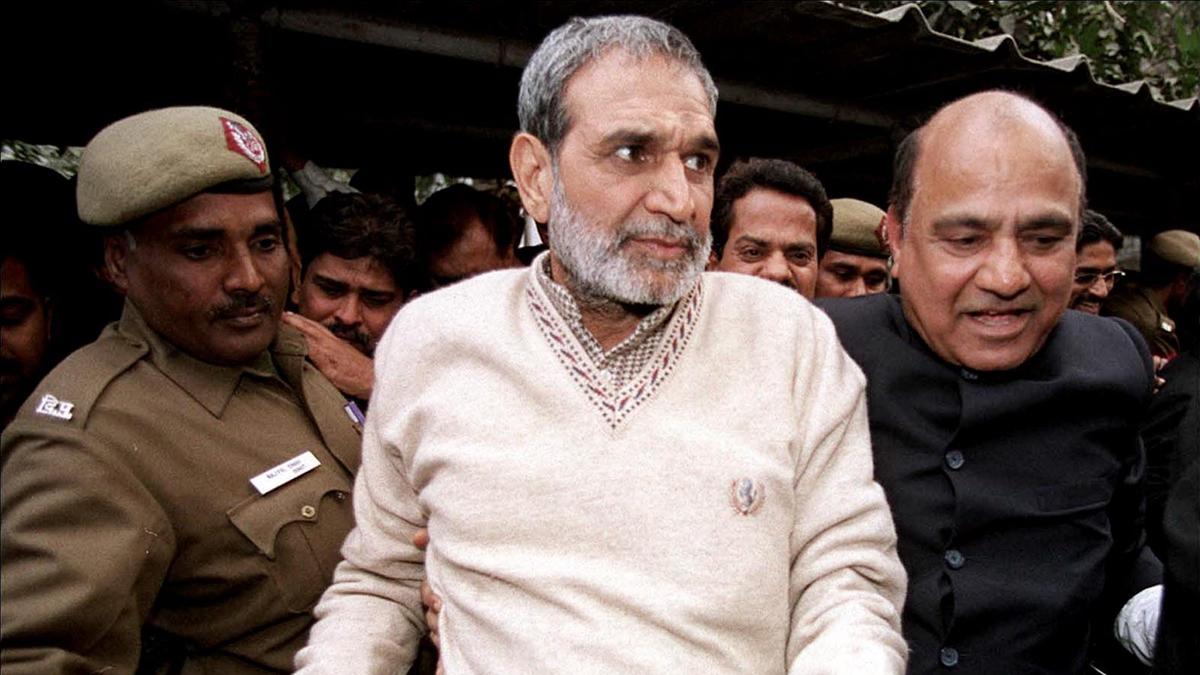
Former Indian National Congress Member of Parliament, 80-year-old Sajjan Kumar, died in Tihar jail, New Delhi on 20 Aug. He was convicted for the murders of seven Sikhs during the 1984 Sikh genocide and was serving three life sentences. He was first sentenced to life imprisonment on 17 Dec 2018 for the murder of five Sikhs and burning a Gurdwara in Raj Nagar, Delhi. The other two sentences—for the murders of Jaswant Singh and his son Tarundeep Singh in Saraswati Vihar, Delhi, and arson and looting of homes—were passed on 25 Feb 2025. Kumar was also serving another 10 years for beating one of his victims, Jaswant Singh’s wife (name withheld). Delivering the first verdict, the Delhi High Court bench of Justices S Muralidhar and Vinod Goel called for strengthening of India's legal system to ensure that perpetrators of mass crimes are made answerable. On mass killings and strengthening of the legal system, Justice Muralidhar said, 'Neither 'crimes against humanity' nor 'genocide' is part of the domestic law on crime and this loophole needs to be addressed urgently...There was 'mass killing' of Sikhs in Delhi and the rest of the country, 'engineered by political actors with the assistance of the law enforcement agencies'. Criminals responsible for the mass crimes have enjoyed political patronage and managed to evade prosecution and punishment.' He added, 'India has been no stranger to such mass killings since the time of partition in 1947. The mass killings in Punjab, Delhi and elsewhere during Partition (1947) remain a collective painful memory as are the killings of innocent Sikhs in November 1984. There has been a familiar pattern of mass killings in Mumbai, Maharashtra in 1993, in Gujarat in 2002, in Kandhamal, Odisha in 2008, in Muzaffarnagar, and Uttar Pradesh in 2013 to name a few. Common to these mass crimes were the targeting of minorities and the attacks spearheaded by the dominant political actors being facilitated by the law enforcement agencies.' However, eight years after the judgment, India still does not have laws on crimes against humanity and genocide. Shiromani Akali Dal, Delhi Unit president Paramjit Singh Sarna said, 'The government of India must fulfill the orders of the Delhi High Court and enact a Genocide Act. Such an Act will be able to bring justice to those who died in 1984 and compensate them for their losses' (earlier coverage).
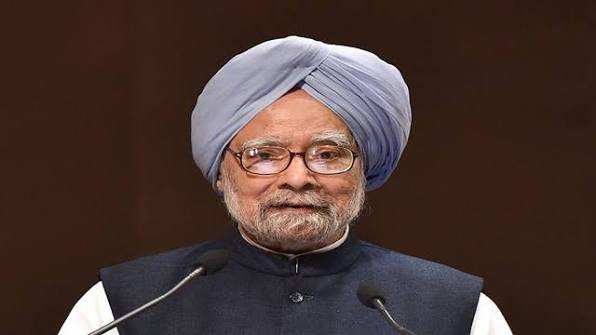
On 11 Aug 2005, after the Nanavati Commission's report on the 1984 Sikh genocide was tabled in the Parliament, Indian National Congress (INC) Prime Minister Manmohan Singh, a Sikh, apologized on behalf of his political party and government. He said, 'I have no hesitation in apologizing not only to the Sikh community, but to the whole Indian nation because what took place in 1984 is the negation of the concept of nationhood enshrined in our Constitution.' An apology is meaningful if the remorse for wrong action is genuine and if the apology is a solemn promise that such action will never be repeated. On 20 Aug 2020, former INC Member of Parliament (MP) Sajjan Kumar, convicted for murder and arson in the genocide, and punished with three life sentences, died in Tihar jail, New Delhi. Sajjan Kumar had resigned from INC’s primary membership in December 2018. However, that did not stop the Delhi Congress X handle from offering condolences to Kumar. The Chairman Delhi Pradesh (State) Congress Committee Devendra Yadav posted information about Sajjan’s last rites which was well attended by INC members. Haryana INC MP, Deepinder Hooda, called Kumar an 'example' for all of north India. Though Hooda later tried to retract his statement claiming Sikhs are his brothers, INC MPs, Randeep Surjewala and Pawan Khera also praised Kumar. The way INC leaders have rallied to pay eulogies to Kumar shows that the Delhi leadership has little remorse for the 1984 Sikh genocide and Kumar’s role in it and would rather give in to Jat (farmer) appeasement for political mileage. The INC praise for Kumar stands in sharp contrast with Panjab INC MP Charanjit Singh Channi’s call that Kumar should have been hanged to death in a public square for his crimes against humanity. Panjab INC Member of Legislative Party, Pargat Singh said that Kumar is no role model for Panjabis and Sikhs. Several Sikh leaders and members of families affected by the genocide staged a protest outside INC's Rahul Gandhi’s residence on 22 Aug, demanding an apology over remarks by INC leaders. However, though the 1990s–2000s, the INC had kept genocide accused Jagdish Tytler and Kamal Nath as its ministers in the union cabinet. INC has been more interested in appeasing voters and protecting the accused than genuinely addressing the community and its wounds (earlier coverage).

After being stopped from proceeding towards the Panjab Governor's house on 15 Aug, the Quami Insaf Morcha (Community Justice Front, QIM) had given a call for a seven-hour shutdown across Panjab on 21 Aug. QIM has been demanding the release of Bandi Singhs (Sikh prisoners) who have remained behind bars for decades despite completing their sentences, and the release on 10-day parole of pro-Khalistan separatist Jagtar Singh Hawara, who is currently serving life imprisonment at Delhi’s Tihar and Mandoli jails. Hawara was convicted as a conspirator in the 1995 assassination of the 12th Chief Minister of Panjab Beant Singh. Panjab Chief Minister Bhagwant Mann had recently requested his release but the request has not been fulfilled yet. QIM, which has been protesting in Sahibzada Ajit Singh (SAS) Nagar since 7 Jan 2023, appealed to traders, transporters, and educational institutions to support the shutdown, while assuring that medical emergencies, airport travel, exams, and weddings would not be affected. The Panjab government tightened security at the Chandigarh-SAS Nagar border. Heavy police deployment was in place in Amritsar, Ludhiana, Jalandhar, and other major cities to maintain law and order. QIM supporters blocked roads. Shops in Sangrur, SAS Nagar, and elsewhere stayed closed, though medical stores remained open. Over 7,500 schools had declared a holiday and Panjab University postponed exams scheduled for the shutdown. The Shiromani Gurdwara Parbandhak Committee, Shiromani Akali Dal (Punar Surjit, revival), and Akali Dal Waris Punjab De (WPD) extended support. After people’s response to WPD’s march to Panjab Governor’s house on 29 Jul, which was stopped by Chandigarh police, this shutdown indicates a tilt towards Panthic (Sikh collective) politics in Panjab. However, elections since 1992, when Panjab entered its post-militancy electoral phase, shows that the state has rarely voted on an explicitly religious plank. The state elected three Indian National Congress governments despite the shadow of 'Operation Blue Star'—the attack on Darbar Sahib (Golden Temple) complex and more than a hundred Gurdwaras throughout Panjab by Indian Army in June 1984—and the 1984 Sikh genocide. Sikhs have never voted as a bloc in Panjab and neither have Hindus or Dalits (marginal caste). Panjab electoral politics has been driven by a complex mix of issues and, increasingly, governance and performance (earlier coverage).

Two men, 75 and 51-year-old, were stabbed by a 27-year-old man with a screwdriver early morning on 21 Aug, during a gathering at a Nanaksar Gurdwara, Edmonton, Canada. Their identities have not been revealed. Police said the suspect is known to them and has a 'significant history of violent offences'. He was released from prison a day before he committed the crime. The Edmonton Police Services hate crimes unit has been engaged to help with the investigation. The World Sikh Organization, based in Canada, has said the attack is deeply troubling and has occurred against the backdrop of rising anti-Sikh hate across the country. Canadian Prime Minister Mark Carney and other leaders have condemned the attack. Meanwhile, three pro-Khalistan activists in Canada have received police 'duty to warn' over 'credible and imminent' threats to their lives. A 'duty to warn' notice is issued when police have credible intelligence indicating a potential threat to an individual’s life. Such warnings generally do not disclose the specific nature, source or details of the threat. The warnings have been issued to Surrey-based Narinder Singh Randhawa, Caledon-based Inderjeet Singh Gosal, and Abbotsford-based Manjinder Singh. Additionally, on 14 Aug, the Federal Bureau of Investigation (FBI) released their 2025 hate crimes data. While the overall hate crimes saw a slight decrease of 7% since 2024, anti-Sikh hate crime incidents increased by 25%—from 142 in 2024 to 189 in 2025. US-based advocacy group, Sikh Coalition said, ‘The anti-Sikh hate crimes peaked in September 2025 to nearly one per day on average. This was the month following the high-profile roadway accident involving truck driver Harjinder Singh in Florida.’ Sikh Coalition Senior Federal Policy Manager Mannirmal Kaur said, 'Minority and immigrant populations have faced an openly hostile political and social climate. Sikhs specifically have been one of many groups in the spotlight, from discrimination against and targeting of Sikh truck drivers to fear-mongering around Sikh articles of faith from the highest levels of our government.' Concurrently, 28-year-old Gurdeep Singh from Begowal village, Kapurthala was shot dead by an unidentified shooter while he was out delivering pizza in New York City. Gurdeep's father Pyara Lal said his son had taken a huge loan to go to the US (earlier coverage).
Thousands of government employees staged a massive protest in Chief Minister Bhagwant Mann's native village Satauj, Sangrur district to demand full implementation and formal rollout of the Old Pension Scheme (OPS) instead of the National Pension System (NPS). The protestors, organized under the Old Pension Restoration Joint Forum, began marching toward the Chief Minister's residence in the village, where they were met with water cannons. The forum leaders accused the Panjab government of not fulfilling the promises made before the elections. They said that despite the notification regarding the OPS being issued on 18 Nov 2022, no work has been done to implement it. The protest was later called off after a meeting was arranged with the CM to be held on 27 Aug. Additionally, retired and serving personnel of the Punjab Home Guard blocked a highway in Ludhiana on 20 Aug to press the government to accept their long-pending demands—implementation of the Pay Commission for serving personnel, and pension benefits after retirement. Meanwhile, a contempt petition has been filed in the Punjab and Haryana High Court (PHHC) by retired and working employees of Panjab, after the government failed to release the Dearness Allowance (DA) dues to employees and pensioners within the stipulated 15-day period, which ended on 17 Aug. The PHHC had directed the Panjab government to release all pending DA installments on 3 Aug. Responding, the Panjab government sought time to file a compliance report in respect of the 3 Aug order. The matter was deferred to 27 Sep. Concurrently, former diplomat and grandson of Panjabi writer Nanak Singh, Navdeep Suri, raised concerns over the process of establishing citizenship during the ongoing Special Intensive Revision (SIR) of electoral rolls in Panjab. Writing about his ordeal on X, he said that he was issued a notice by the Election Commission and asked to produce documents after discrepancies were flagged in his details from the 2003 electoral roll: ‘I happen to have documents other than Voter ID and Aadhaar (Identity) Card. But can’t help asking: If I have trouble establishing my citizenship after representing India in three countries, what’s the fate of the common citizen?’ After Suri, another former diplomat, 75-year-old Ramesh Chander, has been asked to furnish additional documents to establish his eligibility as a voter by the Jalandhar SIR (earlier coverage).

For the first time in its more than 100-year-old history, the Punjab and Haryana High Court (PHHC) has 19 women judges on its bench, following the swearing-in of nine additional judges. On 20 Aug, the union government notified the appointment of nine additional judges, three months after the Supreme Court of India cleared the names of advocates for elevation. Women now account for nearly 30% of the sitting judges. The increased representation of women is expected to contribute to greater diversity of perspectives, particularly in matters concerning women, children, and gender justice. The PHHC, which exercises jurisdiction over Panjab, Haryana, and the Union Territory of Chandigarh, is among the largest constitutional courts in India. It was earlier functioning with only 55 judges against a sanctioned strength of 85. Additionally, the PHHC directed all Senior Superintendents of Police (SSP) and Police Commissioners in Panjab to submit details of First Information Reports (FIRs) by 14 Oct, in which investigations have been pending for more than three years. The court has also sought the reasons for the delay and directed that meetings be convened with all Station House Officers to issue directions to expedite investigations in such criminal cases. A report filed by SSP (Amritsar Rural) revealed that investigations in 565 FIRs have been pending for more than three years, while 1,168 accused have not been arrested, and only 48 accused have been declared as proclaimed offenders/proclaimed persons. The PHHC also directed the Panjab and Haryana governments to file complete details of cases instituted against Members of Parliament & Members of Legislative Assemblies by the Central Bureau of Investigation, Enforcement Directorate, and the Income Tax Department. Statistics produced in the PHHC reveal that as of 31 Jul, 59 cases were pending in Haryana, 66 cases in Panjab, and 10 cases in Chandigarh. Furthermore, the PHHC sought a status report from the Panjab police on the investigation into an FIR against a 25-year-old student, Gagandeep Singh from Gurdaspur, over an alleged threatening comment on an Instagram post of Udhayveer Singh Randhawa, son of former Panjab Deputy Chief Minister Sukhjinder Singh Randhawa. Gagandeep has claimed that the pending FIR is affecting his education, career, and prospects as nearly a year has passed since it was registered without the investigation being completed (earlier coverage).
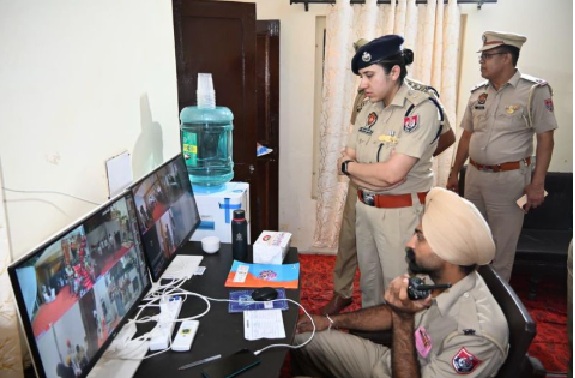
A Union Home Ministry (HM) order restricting the movement of accused gangster Anmol Bishnoi from Delhi’s Tihar Jail on public order and safety grounds is limiting the probe in two murder cases—singer Shubhdeep Singh Sidhu alias Sidhu Moosewala’s killing in Panjab in 2022 and Nationalist Congress Party leader Baba Siddiqui’s killing in Mumbai in 2024. Anmol, the 25-year-old younger brother of incarcerated gangster Lawrence Bishnoi, is wanted in both these cases. However, neither the Panjab Police Special Investigation Team nor the Mumbai Police crime branch has been able to secure his custody to take the probes forward. Bishnoi, who faces 18 cases, was deported from the US in November 2025, and has since remained in Tihar Jail, New Delhi. Concurrently, the Federal Bureau of Investigation (FBI) has added Panjab-linked gangster Major Singh to its wanted list over his alleged role in a transnational crime network operated by Jagdeep Singh alias Jaggu Bhagwanpuria organized crime group. Major is among those named in Operation Hard Ball, an FBI-led crackdown targeting crime networks of India-based gangs. A federal arrest warrant was issued for Major on 25 Jun by the US district court in Los Angeles, California, for racketeering conspiracy, and conspiracy to deal in firearms without a licence. Meanwhile, the Panjab police has secured the deportation of three wanted suspects linked to the Davinder Bambiha gang from Malaysia, as they are wanted in multiple cases involving murder and extortion. Additionally, in a first for Panjab, the Khanna police have successfully installed a facial recognition system (FRS) to strengthen surveillance. This system has been developed along the lines of the advanced setup recently deployed by the Delhi Police at the Jantar Mantar protest site during the students protest that led to the resignation of Union Education Minister, Dharmendra Pradhan. The use of the technology is being seen as a major step towards modernizing policing. Khanna Senior Superintendent of Police Darpan Ahluwalia said that after a photograph and related details of a wanted person were uploaded to the FRS, the system generated a unique 512-dimensional facial embedding. It then scanned faces captured through dedicated CCTV cameras and live feeds, and upon detecting a potential match, it issued an alert displaying the individual’s name, match percentage, location, and the date and time of detection (earlier coverage).

Panjab Education Minister Harjot Singh Bains said that the Panjab government has transformed the state’s education system through a USD 241M reform program. Presenting the four-and-a-half-year status report of school education, Bains said that 36.4K students have shifted from private schools to government schools since 2022, reflecting the growing public trust in government schools. He said the government has constructed 13,920 toilets, distributed nearly 200K desks, built more than 9K classrooms and laboratories, and provided advanced computer laboratories in 5,012 schools, while all government schools have been equipped with Wi-Fi. However, despite the government claims, a report by Democratic Teachers’ Front (DTF) says the school education department is struggling with an administrative lacuna, with one-fourth sanctioned posts of District Education Officers (secondary) and District Education Officers (elementary) lying vacant in Panjab—11 of 44 posts. The gap is most severe in Malerkotla, which has not even been allotted the posts since the district was formed in 2021. DTF says 1,100 principal posts are vacant, constituting more than 56% of the 1,927 sanctioned posts, and at 110, nearly half of the 228 Block Primary Education Officer posts were also lying vacant. DTF Panjab president Vikram Dev Singh and general secretary Mahinder Kaurianwali said as a result, several districts were being administered through additional charge arrangements rather than by regularly appointed officers. Bains said the process of filling vacant posts had been delayed due to pending promotions. Additionally, around 180 members of the Elementary Teacher Training (ETT) Teachers Union, accompanied by their families, staged a protest outside Panjab Finance Minister Harpal Cheema’s residence over large-scale irregularities during the recruitment process of 180 ETT teachers. Police later detained the protesters. Meanwhile, the Enforcement Directorate is examining complaints by the Department of Social Security, Women and Child Development (SSWCD) related to the sourcing of food items by Punjab State Cooperative Supply and Marketing Federation Limited (Markfed) from private suppliers for the Supplementary Nutrition Programme (SNP) in anganwadi (day-care) centers. SSWCD had flagged that the sourcing of material from private suppliers by Markfed had led to several complaints. Till 2020, loose and raw ration was supplied under the SNP. However, after the pandemic, Markfed began providing ready-to-cook food items which it sourced from private companies (earlier coverage).

The National Human Rights Commission (NHRC) has taken cognizance of allegations that Panjab Chief Minister Bhagwant Mann’s wife Dr. Gurpreet Kaur Mann had sought USD 524K to suppress a rape case. The allegation of suppression was made by former Panjab and Haryana High Court Justice Ranjit Singh (retd). NHRC has directed the Chief Secretary and Director General of Police, Panjab, to hold an inquiry and submit an action-taken report within two weeks and forwarded the matter to the Women Safety Division, Ministry of Home Affairs, Government of India. Meanwhile, three women climbed a 60-feet water tank at the District Courts Complex, Barnala on 19 Aug, threatening to jump if immediate action was not taken against the three men who had allegedly sexually exploited them on the pretext of marriage. The women claimed that despite filing police complaints nearly a month ago, no action was taken, forcing them to take the step. The police registered three First Information Reports based on women’s complaints, following which they came down after nine hours. Taking sou-motto cognizance of the matter, the Punjab State and Chandigarh Human Rights Commission has sought a report from the Barnala Senior Superintendent of Police before the hearing in the matter on 27 Oct. Concurrently, the Ludhiana district police registered a case after a woman alleged she was forced into prostitution by her family after marital disputes with her husband. The police registered a case against the woman’s parents, brother, and a family acquaintance. The woman married a Mumbai-based man in 2013 but returned to her parental home a couple of times following disputes. During her stay in Mumbai, her family members, and acquaintances forced her into prostitution again and again. She registered a case with Mumbai police which was later transferred to Ludhiana. Additionally, a Border Security Force personnel on leave allegedly beat his wife to death in Badhalian village, Hoshiarpur district. The accused has been arrested. Additionally, National Commission for Women Chairperson, Vijaya Rahatkar, visited the Central Jail Hoshiarpur on 19 Aug and interacted with women inmates, urging them to prepare for a better life in the mainstream after completing their sentences. Rahatkar stressed the importance of free legal aid, skill development, rehabilitation, and economic empowerment to facilitate their dignified reintegration into society (earlier coverage).
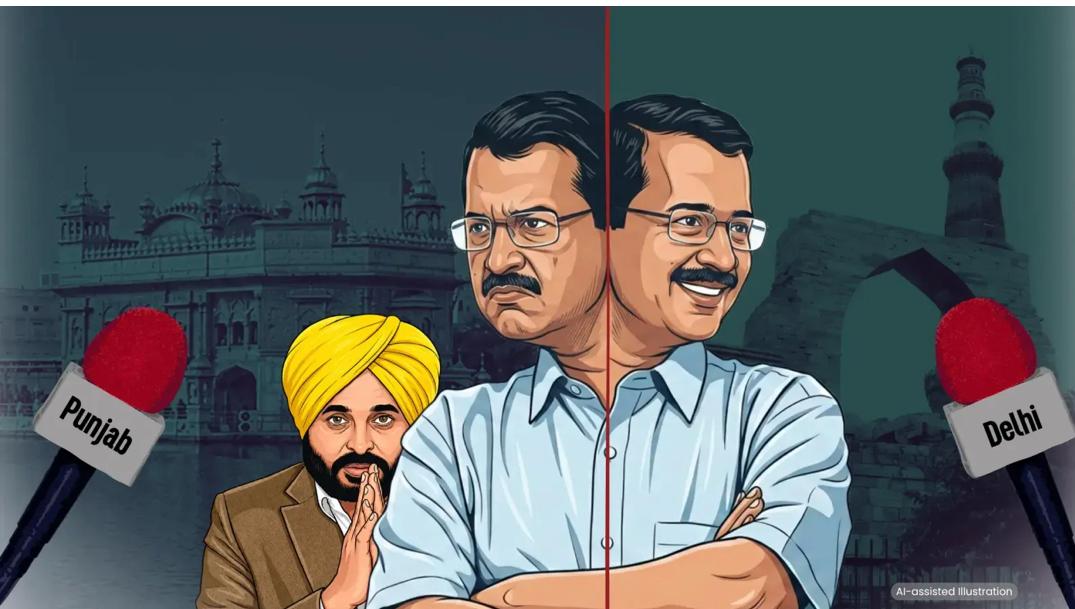
The Aam Aadmi Party (AAP) has repeatedly accused other parties, including the Bharatiya Janata Party (BJP), of controlling and gagging the media. However, in AAP-ruled Panjab, since October 2025, the party has claimed copyright ownership of at least 48 videos and posts uploaded by journalists on Facebook that were critical of them. Four Facebook pages were taken down between Jan–Apr 2026, after copyright infringement notices for content AAP claimed as its own. A fifth was removed after a Panjab police notice was sent, which was separately hit with five copyright notices. Together, the five pages had over 3M followers when they were taken down. The five cases included Facebook accounts of RMB Television, Lok Awaz TV, Maninderjeet Sidhu, Rattandeep Singh Dhaliwal, and Parmeet Singh Bidowali. Four Panjabi journalists run these pages. A copyright strike is a legal penalty issued by an online platform to take down content when a genuine copyright owner claims their work was used without permission. The pages stayed inaccessible for months, until The Reporters’ Collective sent a questionnaire to Meta, which owns Facebook. A Meta spokesperson said, 'The content and accounts were removed in error and have since been restored.' Four of the five pages were restored. The content AAP flagged as copyright infringement included press releases from Shiromani Gurdwara Parbandhak Committee, Panjab Chief Minister Bhagwant Mann’s own social media posts, AI-generated images, a government notification on state board appointments, and photos of the state legislative assembly. Since forming the government in Panjab in 2022, AAP has been accused of threatening journalists and Right to Information activists with police cases, blocking the circulation of newspapers including The Indian Express, running a targeted witch-hunt of the Punjab Kesari group, and getting journalists’ social media accounts suspended. Opposition parties called it a 'chilling attack on press freedom'. When asked about the copyright strikes, Panjab AAP’s media in-charge Baltej Pannu claimed that the four men whose Facebook pages were deleted were 'not journalists'. In India, journalists require no degree to practice journalism. Media practitioners, along with common citizens, have the right to critique any government and its policies. By exploiting intellectual property laws, AAP has found a new way to target journalists critical of the state government. Meanwhile, across India, the BJP government brought down 200K social media posts in the last five months (earlier coverage).
Ravinder Singh Robin in NDTV: Punjab's Bandi Singhs: A cause every party uses, nobody owns.

Panjab: SCI notice to ECI; INC appoints Pargat Singh as state chief; ECI flags WPD; Maiserkhana Targets AAP; PHHC orders CBI to probe CM aides; Panjab goes to SCI; LGBTIQ+ influencer shot dead. Sikh: Jaggi Johal released; VanDyke release raises questions about ‘Bandi Singh’—and more stories.
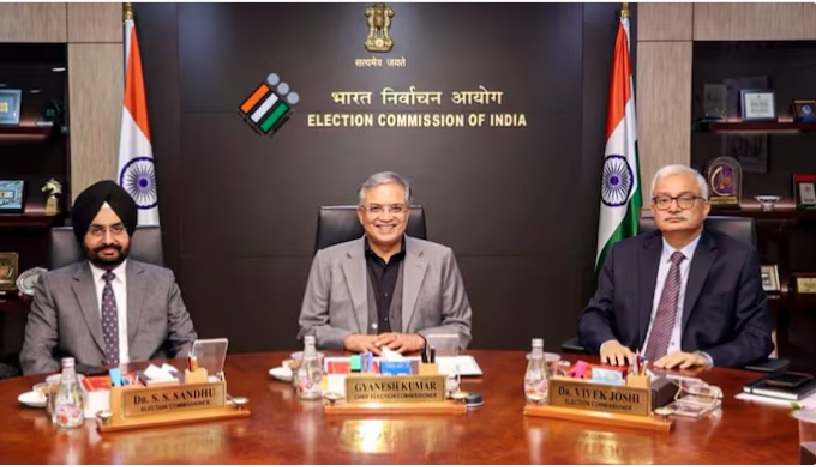
Panjab: Dissent in Indian Election Commission; ED probes GMADA; AAP admits serious accounting impropriety; Student unrest erupts in two private universities. Sikh: US Ambassador visits ‘Darbar Sahib’; SCI remarks on ‘Vande Mataram’ favor Sikhs; Carney’s deprioritizes safety for Canadians—and more stories.
