Thank you! Your submission has been received!
Oops! Something went wrong while submitting the form.
Panjab: India removes MGNREGA; AAP wins in Panjab District & Block Polls; RTI reveals major funds for Panjab. Sikh: Church Members Stop NZ Nagar Kirtan; Sikh lawyer changes rules in Canada; Meghalaya Minister supports Sikh claim; INC leader apologizes for barp on Sikhs—and more stories.
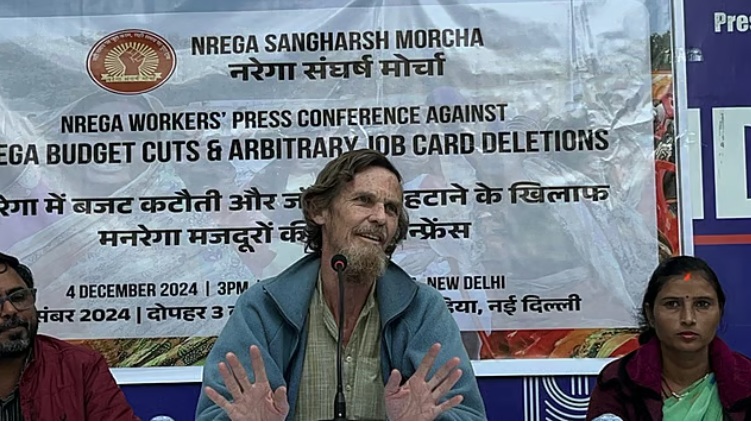
The Indian union government introduced the Viksit Bharat Guarantee for Rozgar and Ajeevika Mission (Gramin) or VB-G RAM G Bill, 2025 on 16 Dec amid protests by the Opposition. The Bill replaces the two-decade-old Mahatma Gandhi National Rural Employment Guarantee Act (MGNREGA). Indian National Congress (INC) Member of Parliament (MP) Priyanka Gandhi said, ‘The new Act weakens the right-based structure of the MGNREGA’. The opposition parties protested in the Parliament but were fixated on the name change of the Act—removing Gandhi and the new Act’s religious sounding name—rather than the implications of the Act. While MGNREGA was demand driven, under VB-G RAM G the union government will allocate funds to states for each financial year and any expenditure incurred in excess would be borne by the state government. Under MGNREGA, the material cost was shared between the union government and states in the ratio of 75:25. Under the new law, the financial liability will be shared between the union and the state governments in the ratio 60:40 for most states. In Panjab, the ruling Aam Aadmi Party (AAP) has condemned the move. AAP Panjab spokesperson Neel Garg said, ‘The union government has sounded the death knell of MGNREGA’. Garg warned that more than 120M rural workers, who currently hold MGNREGA job cards, will be directly affected. While the government claims an increase in guaranteed workdays from 100 to 125 days, critics argue this is deceptive as the new law takes away the guarantee of work. Clause 68 of the new Act states that during 60 days of the agricultural season, there is no obligation to provide employment. Under MGNREGA, employment demand was assessed at the grassroots level, with workers approaching the panchayat (village council) directly. Garg questioned how rural laborers would now access employment. MGNREGA had marked a conscious effort to rethink the Indian state’s relationship with rural workers. Senior INC leader Sonia Gandhi clarified that MGNREGA was not only an INC Act, but was supported by the whole country and had proven a lifeline during the COVID pandemic. The INC will now lead a India-wide protest against the new Act. (earlier coverage).

On 20 Dec, in a suburb in South Auckland Manurewa, New Zealand (NZ), a group of protestors linked to 'Apostle Bishop' Brian Tamaki, who heads the Pentecostal Christian organization the Destiny Church, confronted the Sikh Nagar Kirtan (religious procession). Though there was no direct confrontation, the standoff continued for a while. Police stood between the two sides. The video footage shows the protestors raising slogans 'One True God', 'Jesus-Jesus', and performing the Haka (traditional Maori dance) while the participants in the Sikh procession watched passively. Tamaki posted: 'Since when is it acceptable to parade bladed weapons on our streets? That is not normal in New Zealand. The Haka is not hate. It's a line in the sand. It's a challenge. New Zealand is a Christian nation! Our God is Jesus Christ. One nation. One people. One law. One vote. One flag, under one God. Kiwis will not be silent while foreign religions flood in. We will stand, peacefully, proudly, unapologetically, for our land, for our faith, and our Kiwi way of life.' He mistakenly refers to the xanthian Sikh Nishan Sahib (flag) as a Khalistan flag and that NZ is a Christian nation. Former NZ Member of Parliament Kanwaljit Singh Bakshi said, 'This was not a protest but a provocation. When True Patriots claim to ‘keep NZ, NZ,' they are not defending any authentic tradition. They are inventing a monocultural fantasy that never existed. Pre-colonial Maori society was diverse and interconnected. Maori, Pakeha, Pasifika, Asian, and European communities have built post-colonial New Zealand. Our identity is not a static photograph; it is a moving picture, constantly redefined by those who choose to make a life here…Why did the True Patriots not protest when the Indians and Sikhs, in particular, distributed thousands of food parcels during the COVID lockdown without any discrimination of religion or ethnicity?’ Many current MPs in the NZ government have also supported the Sikhs. Concurrently, one of those who stopped the Bondi beach shooters on 14 Dec in Australia Amandeep Singh Bola is also a Sikh from NZ, settled in the NZ for four generations (earlier coverage).
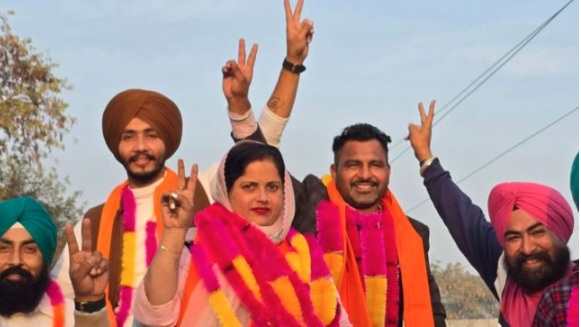
The Panjab Zila Parishad (District Council, ZP) and Panchayat Samiti (Block Council, PS) poll results were declared on 17 Dec. The ruling Aam Aadmi Party (AAP) won 218 of the 347 ZP zones and 1,529 of the 2,834 PS zones. The Indian National Congress (INC) won 62 ZP and 611 PS zones. The Shiromani Akali Dal (SAD) won 46 ZP and 449 PS zones. The Bharatiya Janata Party (BJP) won seven ZP and 73 PS zones. A few key AAP leaders whose candidates lost were: Panjab Legislative Assembly speaker Kultar Singh Sandhwan, AAP Member of Parliament Gurmeet Singh Meet Hayer, Members of Legislative Assembly: Narinder Kaur Bharaj, Sukhveer Singh Maiserkhana, Master Jagseer Singh, Baljinder Kaur, and Kuldeep Singh Dhaliwal. Though the INC won the entire Chamkaur Sahib block, it accused the AAP of 'misuse of machinery' an allegation that may hold some truth. In a system where the ruling party can sanction funds for villages, voters cast their votes to benefit their villages. Meanwhile in southern Panjab, after being immensely popular in rural Panjab for decades to being plagued by factionalism and infighting, SAD won its traditional stronghold. The party spokesperson claimed that the results showed the party was 'inching towards victory in the 2027 Assembly polls'. However, the party’s support to gangster-related faces such as Amritpal Bath and Gurpreet Sekhon is a matter of concern, to which a political analyst has said, 'The strategy could provide immediate benefits to border areas, but would limit party expansion in the future.' The poll results also renewed the buzz over a possible alliance between the SAD and the BJP. A senior BJP leader said, 'The results show that Captain Amarinder was right in suggesting that the BJP needs the SAD to form a stable government in 2027. Many in the BJP did not like his remark but the results say it all.' The most unlikely fallout was in the breakaway SAD. Breakaway SAD leader Manpreet Singh Ayali had backed candidates without their leader Giani Harpeet Singh’s face on the poster and claimed he does not belong to any party. Ayali’s candidates won and Giani Harpreet has offered his resignation which has not been accepted yet (earlier coverage).
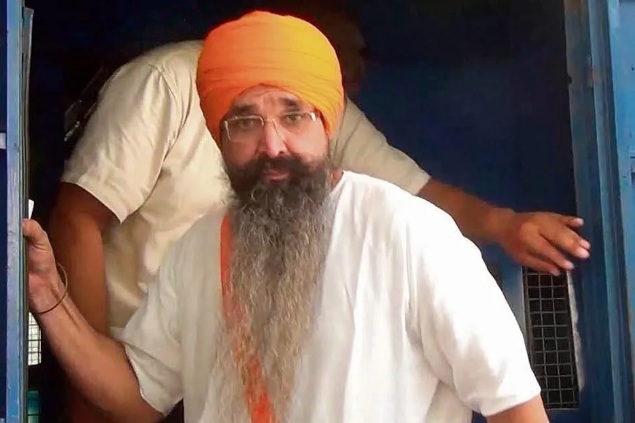
In response to Sri Akal Takht Sahib (Eternal Throne, AT) Jathedar (leader) Kuldeep Singh Gargajj's missive to Sikh Members of Parliament to prevail upon the Indian government to rename Veer Bal Diwas (Brave Children’s Day) as Sahibzade Shahadat Diwas (Sovereign’s Sons Martyrdom Day), Balwant Singh Rajoana has urged the Jathedar to issue an edict asking the Sikhs not to participate in the Veer Bal Diwas. Rajoana asserted that AT should not appear dependent on political figures for asserting Sikh religious positions. A former Panjab police constable, Rajoana was sentenced to death in 2007 for his involvement in the assassination of former Panjab Chief Minister Beant Singh in 1995 and is now awaiting clemency after serving 29 years in prison. Meanwhile, the ruling Aam Aadmi Party (AAP) government in Panjab has formally declared three regions as Holy Cities—the walled city of Amritsar, Sri Anandpur Sahib (Takht Sri Kesgarh Sahib) in Rupnagar district, and Talwandi Sabo (Takht Sri Damdama Sahib) in Bathinda district. With the declaration, heavy restrictions have been imposed across the Holy Cities to maintain their religious sanctity like banning sale of meat. The move can also be cited as a response to the events of 1981 when Arya Samaj (a Hindu sect) provoked the Sikhs. In early May 1981, the All India Sikh Students Federation resolved not to allow the sale of cigarettes and tobacco in the walled city, Amritsar. Provoked, the local Arya Samaj called for a counter procession on 29 May 1981 which brought 10K sword-brandishing Hindus into the streets. There is a contention in history that had the pro-smoking procession not taken place, not even 500 Sikhs would have turned up for the anti-smoking procession on 31 May. Instead, Sant Jarnail Singh Bhindranwale rose to the challenge and brought in his rural followers. Even former Prime Minister Indira Gandhi had agreed to the demand of the holy city. However, this declaration of holy cities by AAP is also being seen as not adhering to Sikh code of conduct because jhatka (swift blow) meat is allowed in Sikhi (earlier coverage).

Alberta, Canada’s Court of Appeal has unanimously found that the provincial law society’s Oath of Allegiance to the monarch infringes on religious freedom and is unconstitutional. The decision issued by three judges on 16 Dec was the latest in the challenge filed in 2022 by Prabjot Singh Wirring, a devout Amritdhari (initiated) Sikh. Wirring said he made an absolute oath and submitted himself to Akal Purakh (Time/death-less Being) and is prohibited from making a similar allegiance to another entity or sovereign. The Alberta government has 60 days to ask the Supreme Court of Canada to challenge the court's ruling. Meanwhile, Babblejit Bubbly Kaur, a 60-year-old Indian-origin Sikh woman was detained by US Immigration and Customs Enforcement (ICE) on 1 Dec while attending a routine biometrics appointment linked to her pending green card application. Kaur, a former co-owner of Natraj Cuisine of India and Nepal in Belmont Shore, was taken into custody at a US Citizenship and Immigration Services facility, shocking her family and members of the local community where she has lived for more than three decades. She has no criminal record. In an interview, journalist Tanay Gokhale who spent the past year with the Sikh community in California talks about how rising ICE activity is reshaping daily life for Sikh immigrants in California. 'Indians are the fifth-largest undocumented group in the US. The community is largely under-reported, and a lot of these people are Sikhs coming from Panjab to settle in California. They’re working blue-collar jobs like agricultural labor or in the trucking industry...Gurdwaras are a house of worship, but they’re also kind of like resource hubs—like rations, health care—for new immigrants, especially those who do not speak English and only speak Panjabi.’ He said that a drop in attendance in Gurdwaras signals a fear of immigration activity means that congregants are not accessing the services, and that can lead to serious outcomes for their health (earlier coverage).
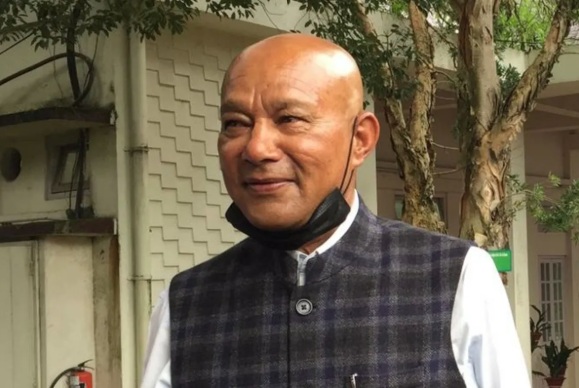
The Sikh Gurdwara Prabandak Committee (SGPC) has halted work on the Heritage Street project in Anandpur Sahib, initiated by the Panjab government’s Tourism Department. SGPC stopped contractors from digging foundations for the street’s gate, citing concerns over obstructing the view of Takht Sri Kesgarh Sahib (KS). Sri Akal Takht Sahib (Eternal Throne, AT) Jathedar (leader) Kuldeep Singh Gargajj stated that the project wasn’t discussed with SGPC and emphasized that changes around KS require consent from the Sikh Panth (collective). The Tourism Department claims the plan was approved by SGPC. SGPC president Harjinder Singh Dhami didn’t respond to inquiries. Meanwhile, in Shillong, Meghalaya Jathedar Gargajj participated in a nagar kirtan (religious procession) organized from Gurdwara Sri Guru Singh Sabha, Laitumkhrah, which culminated at Gurdwara Guru Nanak Darbar, Punjabi Lane. It was followed by a Sikh community meet attended by a large number of devotees from across Meghalaya, Assam and other parts of the Northeast. Jathedar Gargajj asserted that AT and Sikhs across the world stood firmly with the Sikhs living in Punjabi Lane. He said that protecting the rights and interests of the minorities in the country was the foremost duty of the governments and made a special appeal to the Sikh organizations worldwide to raise their voice if any injustice was ever committed against the Sikhs of Shillong. Addressing members of the community at Gurdwara Guru Nanak Darbar in the presence of Jathedar Gargajj, Meghalaya minister Sanbor Shullai said, 'I can assure you that the government stands with the Sikh community here.' Concurrently, the Assamese Sikh Council held a special convention on 14 Dec at the Barkola Central Gurudwara, located in the Assamese Sikh-dominated Barkola area of Nagaon. The event was to revive the Council’s activities after a long period of inactivity. While Sikhs had migrated to Assam as mechanics and carpenters during the British rule, the Sikhs of Barkola had migrated there in 1823 as soldiers of Maharaja Ranjit Singh’s army to fight alongside Ahom king Chandrakanta Simha in the Battle of Hadirachaki against invading Burmese forces (earlier coverage).
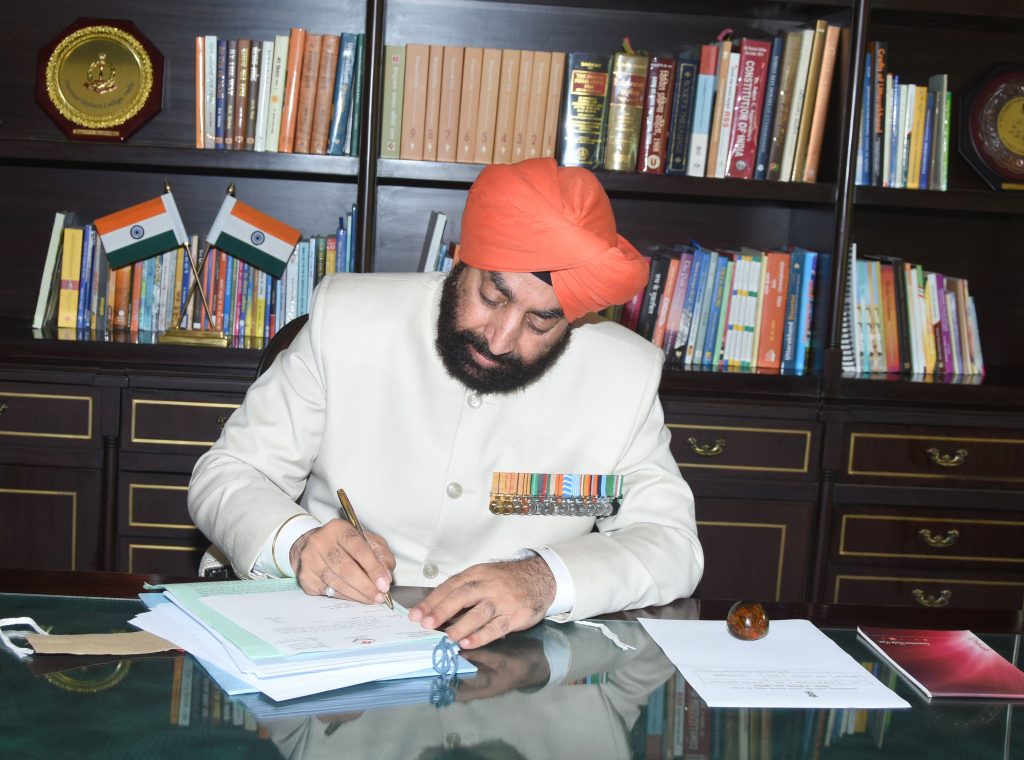
Uttarakhand Governor Lieutenant General (retired) Gurmit Singh has returned the amendment Bills related to the Uniform Civil Code (UCC) and the state’s Freedom of Religion and Prohibition of Unlawful Conversion Act (FRPUCA), citing technical flaws. The Pushkar Singh Dhami-led Bharatiya Janata Party (BJP) government had passed the UCC Bill in January 2024 and the FRPUCA Bill in August 2025. Both Bills were considered trials for the BJP to implement them gradually all over India. The official explanation for returning the Bills is that they had technical and spelling errors. If that were the case, the Governor could have sent them back informally for correction. Sending the Bills back implies the Legislative Assembly will have to pass the Bills again after corrections, which will be a setback for the ruling BJP. The opposition Indian National Congress (INC) has called it a tactic to keep the issues alive for the next state elections due in 2027. Meanwhile, Uttarakhand Governor was the chief guest at the 62nd Annual Day of Sainik School Kapurthala, his alma mater. He said, ‘The school had played a key role in his becoming a three-star General.’ Concurrently, on 9 Dec, senior INC leader in Uttrakhand, Harak Singh Rawat had casually mocked the Sikhs participating in a protest by lawyers. He said barah baj gaye (it’s 12 o’clock) to a Sikh protester, which is a barb to signify the Sikh is mindless. However, the origin of the phrase is in the 18th century when Sikhs used to attack enemies at midnight to free Hindu women taken captive and recover the loot. Rawat’s barb led to an uproar with Sikhs demanding an immediate apology over controversial remarks. The Sikhs staged a peaceful demonstration, engaging in shabad kirtan (hymn singing) outside Rawat's Defence Colony home in Dehradun. To stem further political fallout, along with Harak Singh Rawat, former Uttarakhand Chief Minister and senior Harish Rawat visited Gurdwara Shri Guru Singh Sabha in Dehradun and offered prayers. Both participated in langar sewa (community kitchen) service and performed joda ghar sewa (shoe cleaning) service (earlier coverage).
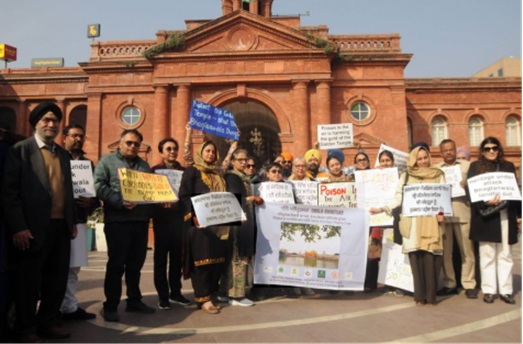
Panjab has received a major financial boost for strengthening urban infrastructure under the Atal Mission for Rejuvenation and Urban Transformation (AMRUT and AMRUT 2.0). Projects worth USD 670M were approved across the state, according to information obtained under an Right to Information (RTI) Act by activist Kamal Anand under the AMRUT mission, and Panjab has initiated 163 projects. These included 58 water supply projects, 62 sewerage and septage management projects costing USD 168M, and 43 parks and green spaces projects involving USD 1.7M. Against a committed central assistance scheme, the union government released USD 132M to Panjab. Under AMRUT 2.0, the Ministry of Housing and Urban Affairs has approved 214 projects worth USD 406.3M since 1 Oct 2021 with water supply as the key focus. In addition, 12 sewerage and septage management projects worth USD 60.9M have been sanctioned to strengthen sanitation services. Meanwhile, according to a report submitted by the state government to the National Green Tribunal (NGT), 12 Urban Local Bodies (ULBs) have reported gaps between the generation and processing of solid waste under legacy waste remediation. Panjab Chief Secretary Kumar Anugraha Prasad Sinha has requested three months to address the gap and to submit a detailed report to NGT. Additionally, a women-led citizens collective under the banner Chalo (Let's Go) Amritsar organized a public walk in the city. The collective highlighted the Bhagtanwala landfill, located about 1.5 kms from the Golden Temple, as a major environmental concern. Dr. Navneet Kaur Bhullar from Jalandhar said, ‘There have been reports proving that emissions from the site affect air quality, public health, and food safety across the city. It is also causing deterioration of the gold plating at the Golden Temple.’ Concurrently, according to data sourced from the Reserve Bank of India, Panjab industry has registered a growth in the past five years. Panjab has added 13,166 new registered factories in 2023–24 which is a marginal decline of sixty-two units from 13,228 in 2022–23. The data shows while Haryana lost 1,446 factories since 2018–19, Panjab added 341 units during the same period.

Amidst an ongoing high-profile case of alleged illegal sales of drugs, Panjab’s health department has reinstated 12 of the 22 de-addiction centers belonging to Dr. Amit Bansal. The centers were sealed following raids conducted by the Vigilance Bureau (VB) and the Enforcement Directorate (ED). The licences of the 12 de-addiction centers were suspended in January 2025 when Dr. Bansal was arrested. Dr Bansal’s network—once the largest private chain of de-addiction centers spread across 16 districts of Panjab and Chandigarh—was shut after allegations of fake patient admissions, inflated patient loads, and the procurement of buprenorphine plus naloxone (BNX) tablets far beyond requirement. Investigators alleged that the surplus tablets were sold illegally in the open market. However, the Punjab and Haryana High Court and health department found no discrepancies and ordered the officials to de-seal the de-addiction centers. Meanwhile, the Panjab government has cancelled the recruitment process for psychologists to be hired on a contract basis for de-addiction and rehabilitation societies despite the written examination having been conducted and document verification completed. The government now plans to recruit psychologists through outsourcing, terming it an easier process. Furthermore, Panjab's Health minister Balbir Singh launched the Leadership in Mental Health Programme as part of the ongoing anti-drug campaign, which is the first fellowship program dedicated to reducing substance use and promoting mental well-being in India. The fellowship will bring 35 mental health professionals from across India and abroad and is a joint collaboration between the Panjab Health Department, Dr Bhimrao Ambedkar Institute of Medical Sciences, Sahibzada Ajit Singh Nagar, and the Tata Institute of Social Sciences (TISS), Mumbai. Meanwhile, peace was restored in Central Jail in Ludhiana after a violent clash between inmates left several, including the prison superintendent, injured. The violence erupted when two inmates were being sent back to their barracks and one of them allegedly made a provocative remark. The situation spiralled out of control as prisoners started pelting stones and bricks at each other and later at the jail administration and other security personnel who tried to break up the fight. Five police officials were injured in the incident (earlier coverage).
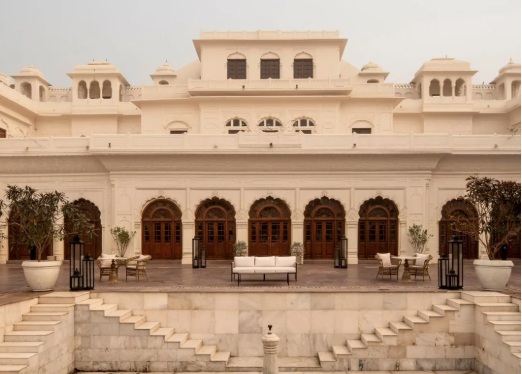
Once the largest private residence in Asia, Patiala’s Qila Mubarak’s fate spiralled downwards to the world’s 100 most endangered monuments in 2004. But earlier this year the Ran Baas palace within the complex of the erstwhile Qila (fort) opened to the public as a luxury hotel. The restoration work for the same was taken on by the Park hotels, outsourced by the Panjab government. ‘We took possession in 2021, right in the middle of the pandemic,’ recalls Pallavi Paul, chairperson of Park Hotels. The first step Pallavi took was to bring on architect Abha Narain Lambah—a leading heritage architect in the last two decades, also involved in the restoration work of the Qila. The Qila was first built as a kachi garhi (mud fort) in 1783 by the shrewd warrior ruler, Baba Ala, founder of the Phulkian dynasty. According to the resident historian at Ran Baas, Simar Singh of Mirpur, by accepting the title of Raja from Afghan invader Ahmed Shah, Baba Ala became the first Sikh monarch in history. Under his rule, Patiala went from being a provincial backwater to one of the great trading stops of the east. Today buildings from varying periods and architectural styles dot the Qila compound—from the late Mughal and Rajput influenced courtyards to the colonial and European-aired Jalau Khana and Darbar Hall. One of the glories of Ran Baas are the breathtaking frescoes entwined with the Jaipur, Shekhawati, Mughal, and Kangra schools of art that flourished under Sikh patronage. Historian Sam Dalrymple says, ‘The Masnad Mahal (inside the Qila) is Patiala’s answer to the Sistine chapel, and should in any reasonable world be a world heritage site unto itself’. The Mahal, known for its Sikh-Mughal frescoes, depicts Sikh Gurus and Hindu mythology. ‘The emphasis on Krishna serves a dynastic purpose. Some Sikh kings appropriated Krishna as their own progenitor, regarding him as the ideal noble and virtuous king, despite their allegiance to the Sikh Panth (collective)’, says Dalrymple. A portrait of Patiala’s Sikh Maharaja Karam Singh is thus flanked by the figures of Hindu Gods Krishna, Rama, Garuda, and Hanuman inside the Mahal.
Kanwal Singh in The Hindu: The story of Sikhs uprooted from Kashmir post Partition.

Panjab: Six districts ‘Ultrasensitive’ drug zones; Govt. promises 8% increase in DA; Over 10 cases of kidnapping & extortion of illegal emigrants. Sikh: UK's Johal gets bail; ‘Akal Takht’ expels SAD Leader & 'Granthi'; Truck driver attacked days after US poster; 'Takht Sri Hazur Sahib' marks Modi birthday—and more stories.

Panjab: Laborer names Cheema in dying declaration; Power crisis; Court restrains Majithia & Khaira; Sekhon joins AAP & Sidhana joins WPD. Sikh: DHS accused of bigotry over Mr. Singh poster; Pakistan stops pilgrims; Canada mishandles protest—and more stories.
