



Thank you! Your submission has been received!
Oops! Something went wrong while submitting the form.
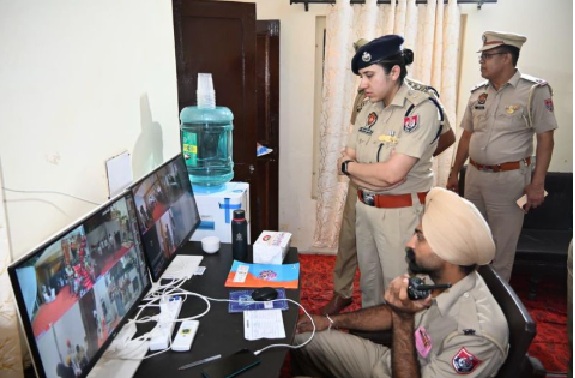
A Union Home Ministry (HM) order restricting the movement of accused gangster Anmol Bishnoi from Delhi’s Tihar Jail on public order and safety grounds is limiting the probe in two murder cases—singer Shubhdeep Singh Sidhu alias Sidhu Moosewala’s killing in Panjab in 2022 and Nationalist Congress Party leader Baba Siddiqui’s killing in Mumbai in 2024. Anmol, the 25-year-old younger brother of incarcerated gangster Lawrence Bishnoi, is wanted in both these cases. However, neither the Panjab Police Special Investigation Team nor the Mumbai Police crime branch has been able to secure his custody to take the probes forward. Bishnoi, who faces 18 cases, was deported from the US in November 2025, and has since remained in Tihar Jail, New Delhi. Concurrently, the Federal Bureau of Investigation (FBI) has added Panjab-linked gangster Major Singh to its wanted list over his alleged role in a transnational crime network operated by Jagdeep Singh alias Jaggu Bhagwanpuria organized crime group. Major is among those named in Operation Hard Ball, an FBI-led crackdown targeting crime networks of India-based gangs. A federal arrest warrant was issued for Major on 25 Jun by the US district court in Los Angeles, California, for racketeering conspiracy, and conspiracy to deal in firearms without a licence. Meanwhile, the Panjab police has secured the deportation of three wanted suspects linked to the Davinder Bambiha gang from Malaysia, as they are wanted in multiple cases involving murder and extortion. Additionally, in a first for Panjab, the Khanna police have successfully installed a facial recognition system (FRS) to strengthen surveillance. This system has been developed along the lines of the advanced setup recently deployed by the Delhi Police at the Jantar Mantar protest site during the students protest that led to the resignation of Union Education Minister, Dharmendra Pradhan. The use of the technology is being seen as a major step towards modernizing policing. Khanna Senior Superintendent of Police Darpan Ahluwalia said that after a photograph and related details of a wanted person were uploaded to the FRS, the system generated a unique 512-dimensional facial embedding. It then scanned faces captured through dedicated CCTV cameras and live feeds, and upon detecting a potential match, it issued an alert displaying the individual’s name, match percentage, location, and the date and time of detection (earlier coverage).