

Thank you! Your submission has been received!
Oops! Something went wrong while submitting the form.
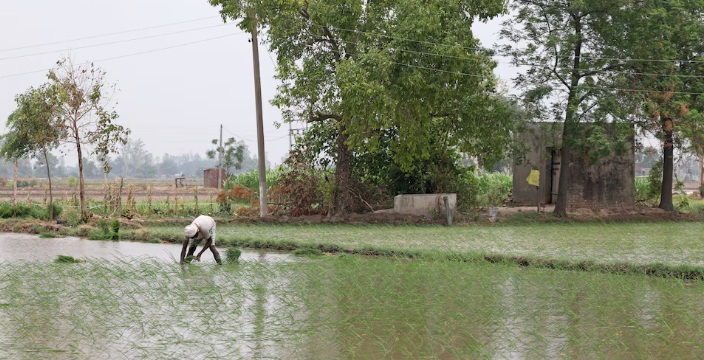
Indian Union Agriculture Minister Shivraj Singh Chouhan said that India has become the world's largest rice producer, beating China, with a total output of 150.18M MT. He was speaking at a function on 4 Jan where he released 184 new varieties of 25 crops. Even though India has nearly doubled the amount of rice it exported over the past decade, with shipments crossing 20M MT in 2025–26, many rice farmers in the country are in a less celebratory mood. Interviews with growers, government officials and farm scientists, as well as a review of groundwater data, reveal widespread concern that rice crops are unsustainably draining India's already-low aquifers, forcing farmers to borrow heavily to drill ever-deeper borewells. In the rice-basket states of Haryana and Panjab, groundwater was reachable at around 30 feet a decade ago, but now has gone much deeper. Balkar Singh, a 50-year-old farmer in Haryana said, ‘Every year, the borewell has to go deeper. It's getting too expensive.’ At the same time, government subsidies that incentivize rice cultivation discourage farmers from switching to less water-intensive crops creating a crisis in agriculture. Meanwhile, less than 3 months after the union government had clarified that no land pooling policy was being considered for 22 peripheral villages in Chandigarh, Chandigarh Union Territory Administrator Gulab Chand Kataria has announced his intent to pursue the policy. He said that those preferring developed land would be allotted the same under the land pooling policy, adding that if this does not materialize, farmers would be offered compensation so substantial that they would not be able to refuse. Concurrently, India has granted environmental clearance for a major new hydropower project on the Chenab river, a move that has intensified diplomatic friction with Pakistan after the suspension of Indus Water Treaty (IWT), 1960. India had put the IWT in abeyance a day after the Pahalgam terror attack on 22 April 2025. The 260 MW Dulhasti Stage II project, located in the Kishtwar district of Jammu and Kashmir, received the green light from federal authorities triggering a backlash from Islamabad. In December 2025, Pakistan had raised concerns over the alleged variations in the flow of the Chenab river (earlier coverage).