Thank you! Your submission has been received!
Oops! Something went wrong while submitting the form.
Panjab: FIR on Panjab journalists over CM chopper query; Dalit land rights leader arrested; Chenab project raises Pak heckles. Sikh: Akal Takht summons Panjab CM; Sikh singer mistaken for Muslim at Mamdani inauguration—and other stories.
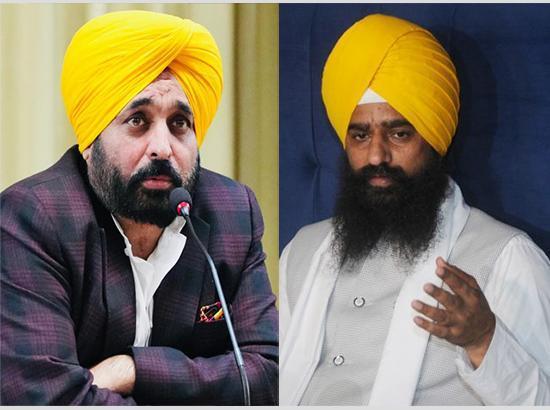
Sri Akal Takht Sahib (Eternal Throne, AT) Jathedar (leader) Giani Kuldeep Singh Gargajj has summoned Panjab Chief Minister Bhagwant Singh Mann to appear before the AT secretariat on 15 Jan. The Jathedar announced, 'You (Mann) deliberately displayed an anti-Sikh mentality by repeatedly making highly objectionable remarks against the Guru Ki Golak (donation boxes) bestowed by the Guru Sahiban (Honorable Sikh Sovereigns), thereby deeply wounding Sikh sentiments.' Charges against Mann include an alleged video in which a person looking like Mann is seen committing a sacrilege with pictures of Sikh Gurus and former Damdami Taksal (Sikh seminary) head Sant Jarnail Singh Bhindranwale. It is not verified if the video is original or AI-generated. The Jathedar added, 'Since you are a patit (apostate) and, as per Sikh tradition, cannot be brought to the podium of Sri Akal Takht Sahib, you are summoned to appear in person at the secretariat.' The Shiromani Gurdwara Parbandhak Committee (SGPC) and many Sikh scholars define someone with shorn hair as apostate, though in the Guru Granth Sahib (Sikh scripture and charter, GGS) a fallen one implies all struggling beings. An apostate is the one who breaks the promise after initiation. Mann has accepted the summons and promised to appear. On 29 Dec 2025, Mann had accused the SGPC of failing to find the 328 missing GGS saroops (tomes) and accused it of 'using the Akal Takht as a shield' to protect its 'masters’, implying Shiromani Akali Dal. On 1 Jan, the Panjab police arrested Satinder Singh Kohli, former internal auditor of SGPC in connection with the missing saroops. On 4 Jan, the police arrested Kanwaljit Singh, former assistant supervisor of the SGPC publishing house. Ironically, in 2020, Kanwaljit's statement had led human rights advocacy group Punjab Human Rights Organisation to expose the saroop scam. In the last few days, the Special Investigation Team probing the missing saroops has conducted raids at 15 locations across Panjab. The SGPC president Harjinder Singh Dhami has objected to ‘government interference in the affairs of the Sikh body’. He had earlier said that AT had investigated the matter of missing saroops and departmental action had been taken as per AT’s report and recommendations (earlier coverage).

Panjab Chief Minister Bhagwant Singh Mann was on a trip to Japan and South Korea between 1–10 Dec when journalists in Panjab noted that his helicopter was being used in his absence. Activist Manik Goyal initiated the chopper query leading other journalists, activists, and social media influencers to pick on the trend. On 12 Dec, the Panjab police filed a First Information Report (FIR) against Manik, Baljinder Singh Sandhu alias Mintu Gursaria, Maninderjit Singh Sidhu of Lok Awaz TV, and seven others. The FIR charged the journalists with misinformation and said, 'The content is predicted upon erroneous and interpretation of flight-tracking data, selective presentation of extraneous visuals and insinuatory remarks bereft of factual foundation, thereby constructing a false, misleading, and deliberately fabricated narrative.' Usually, FIRs are followed by arrests but the police did not arrest anyone. The FIR came to light on 1 Jan and led to an uproar among freelance journalists and activists. Manik remarked, ‘We have received a New Year gift from the Panjab government...It has been close to four years since the Aam Aadmi Party (AAP) government came to power but has not replied to our Right To Information questions related to the CM’s chopper. If we ask on social media, they register fake FIRs.' The journalist community remained defiant and dared the Panjab government to arrest them. The Chandigarh Press Club expressed solidarity with the journalists. The journalists protested on 4 Jan and pointed out that the CM often asked such questions on the chopper and government expenditure when he was in the opposition. They also said now when AAP is in power there is gross misuse of public funds. Shiromani Akali Dal chief Sukhbir Singh Badal joined the protest, but was criticized because during his tenure as Deputy Chief Minister (2012–17) the journalists did not have it easy also. AAP leaders in Panjab are silent because a similar FIR has been filed by the Delhi Directorate of Education against 'false information' being spread on the issue by AAP national convenor Arvind Kejriwal. Kejriwal had claimed that Delhi school teachers are being deployed to count stray dogs in the city.

Panjab police arrested Panjab Dalit land rights leader and the president of the Zameen Prapti Sangharsh Committee (ZPSC), Mukesh Malaud in New Delhi on 30 Dec. The Sangrur police arrested Mukesh in an interstate operation at Nizamuddin railway station in Delhi while he was returning after attending an Ambedkar Mission program in Maharashtra. The arrest is linked to several old cases, including one dating back to 2014 when a ZPSC-led agitation in Balad Kalan village, Sangrur district, demanded Dalits’ legal one-third share of village council land. This agitation had marked a turning point in Panjab’s Dalit land rights movements. The arrest has triggered sharp reactions from labor, farmer, and democratic organizations across the state. Several employee and labor union leaders demanded Mukesh’s immediate release, warning that organizations across Panjab will launch a strong and united agitation against the government. The arrest has drawn criticism because it took place on the same day the Panjab government convened a special Legislative Assembly session on issues concerning scrapping of Mahatma Gandhi National Rural Employment Guarantee Act (MGNREGA). Many MGNREGA workers form the core membership of ZPSC. In the special session on 30 Dec 2025, the Panjab cabinet passed a resolution opposing the new rural employment law Viksit Bharat Guarantee for Rozgar and Ajeevika Mission (Gramin) (VB G-RAM-G), alleging that it diluted safeguards under MGNREGA. The resolution has drawn criticism from the Union Rural Development Minister Shivraj Singh Chouhan who called the move unconstitutional. He said, ‘Social audits were conducted in only 5,915 of the 13,304 village councils. The report mentions 10,653 cases of financial embezzlement, but no action was taken.’ Meanwhile, the Indian National Congress announced a nationwide agitation against the VB G-RAM-G Act from 8 Jan. Indian National Congress Member of Parliament Jairam Ramesh says the new law violates Article 258 of the Constitution of India as it was brought in without the consultation of the state governments. Drawing a parallel with the farmers’ protest of 2021, Ramesh said, ‘The three laws protest was Delhi-centric, but MGNREGA Bachao Abhiyan (Save MGNREGA Campaign) will take place at the state, district, block and panchayat (village council) levels’ (earlier coverage).

The Indian gig and platform workers union called for a nationwide strike on 31 Dec 2025 demanding a minimum salary of USD 444 a month in place of the current commission-based payment system. They have also asked for regular leaves and basic facilities at workplaces. Nearly 300K workers across the country, including Panjab, responded to the day-long protest called by the Indian Federation of App-based Transport Workers (IFAT). The key demands were to restore the per km wage to USD 0.11 per km, axing the 10-minute delivery option and payment for cancelled orders too. The strike call was to log off from the delivery applications from 7 am to 12 midnight on the 31 Dec. Nirmal Gorana, the general secretary of the Gig & Platform Services Workers Union said that gig workers continued to face systemic exclusion from core labor entitlements such as minimum wage, healthy working conditions, and social security. Om Prakash Raghav, vice-president, Delhi chapter of IFAT said, ‘There was a tremendous success in Delhi. Only 10% out of the 150K strong gig workforce in Delhi worked today. As far as I am aware, they were Zomato delivery agents. By late evening, the firms were even announcing USD 1.66 per delivery for a 3 km distance but it had only a few takers.’ Responding to the strike, Zomato's Chief Executive Officer, Deepinder Goyal shared the financial structure of the gig model on X, saying that if a partner works for 10 hours a day for 26 days a month, the gross earnings translate to USD 294 (approximately). According to Goyal, Zomato and Blinkit spent over USD 10M on insurance premiums for partners in 2025, including accident insurance of USD 11K, medical coverage of USD 1,100, and loss of pay insurance. His remarks were met with criticism by the unions and media who said they were far removed from the actual reality of gig work. Meanwhile, the Chief Minister of Panjab Bhagwant Mann handed over appointment letters to 606 new recruits of the education department, which included 385 special educator teachers, 157 primary teachers, eight principals, and 56 employees recruited on compassionate grounds.

The New York Mayor Zohran Mamdani took oath on 1 Jan. His oath-taking ceremony ended with a performance by a Toronto-based Sikh singer Babbu Singh popularly known as Babbulicious. He sang the Panjabi song Gaddi Red Challenger. Mamdani and his wife Rama Duwaji were also seen grooving to the peppy song. However, the video started drawing hate comments as some netizens mistook the Panjabi singer to be Muslim. Mamdani’s opponents have hit his campaign and election with strong Islamophobia, but a Sikh singer being mistaken for Muslim is a misreading of identities that goes back to the 9/11 attacks in New York. Meanwhile, in Bijnor, Uttar Pradesh, the Sahibzade Shahadat Diwas (Sovereign’s Sons Martyrdom Day) turned violent on 23 Dec when some Muslims attacked a young man Ramandeep Singh who was on the way to the market near the Gurdwara. The assault followed an argument over comments made during a discussion inside the Gurdwara which held Aurangzeb and Wazir Khan responsible for the martyrdom of the Sahibzade. Ramandeep suffered damage to one eye and is currently undergoing treatment at All India Institute of Medical Sciences in Delhi. The Nurpur police has arrested two of the accused, Sahil and a juvenile, while the main accused, Munna, son of Zulfkar (no second names given), and another accomplice are still absconding. Earlier on 30 Nov, days after a property sale between Hindu sellers and Muslim buyers in Meerut, Uttar Pradesh, meat was found strewn at an under construction Gurdwara. Hindus were objecting to their community's exodus from the city and said the meat was thrown by Muslims which remains unconfirmed. These are some of the predicaments the Sikhs face: in New York it is mistaken identity, in Bijnor it is locals in conflict with recorded history, and in Meerut it is being pushed into corollary damage in a conflict between two other communities. Concurrently, on 27 Dec 2025, thousands of Ahmadiya Muslims congregated at the sect’s headquarters in Qadian, Gurdaspur district of Panjab,for the community’s 130th annual convention. However, unlike earlier, Ahmadiya Muslims from Pakistan were not allowed to cross the border due to the volatile relations between India and Pakistan (earlier coverage).
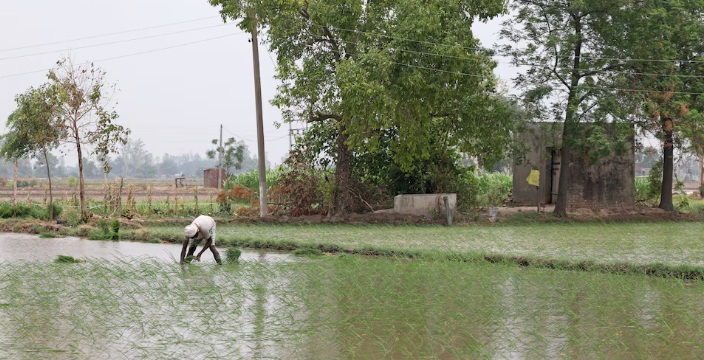
Indian Union Agriculture Minister Shivraj Singh Chouhan said that India has become the world's largest rice producer, beating China, with a total output of 150.18M MT. He was speaking at a function on 4 Jan where he released 184 new varieties of 25 crops. Even though India has nearly doubled the amount of rice it exported over the past decade, with shipments crossing 20M MT in 2025–26, many rice farmers in the country are in a less celebratory mood. Interviews with growers, government officials and farm scientists, as well as a review of groundwater data, reveal widespread concern that rice crops are unsustainably draining India's already-low aquifers, forcing farmers to borrow heavily to drill ever-deeper borewells. In the rice-basket states of Haryana and Panjab, groundwater was reachable at around 30 feet a decade ago, but now has gone much deeper. Balkar Singh, a 50-year-old farmer in Haryana said, ‘Every year, the borewell has to go deeper. It's getting too expensive.’ At the same time, government subsidies that incentivize rice cultivation discourage farmers from switching to less water-intensive crops creating a crisis in agriculture. Meanwhile, less than 3 months after the union government had clarified that no land pooling policy was being considered for 22 peripheral villages in Chandigarh, Chandigarh Union Territory Administrator Gulab Chand Kataria has announced his intent to pursue the policy. He said that those preferring developed land would be allotted the same under the land pooling policy, adding that if this does not materialize, farmers would be offered compensation so substantial that they would not be able to refuse. Concurrently, India has granted environmental clearance for a major new hydropower project on the Chenab river, a move that has intensified diplomatic friction with Pakistan after the suspension of Indus Water Treaty (IWT), 1960. India had put the IWT in abeyance a day after the Pahalgam terror attack on 22 April 2025. The 260 MW Dulhasti Stage II project, located in the Kishtwar district of Jammu and Kashmir, received the green light from federal authorities triggering a backlash from Islamabad. In December 2025, Pakistan had raised concerns over the alleged variations in the flow of the Chenab river (earlier coverage).

Panjab opposition has repeatedly warned of the deteriorating law and order situation in the state. The recent spate of murders in Panjab illustrates the opposition’s concern. On 3 Jan, a village council leader, Jarnail Singh, from Panjab's ruling Aam Aadmi Party (AAP) was shot dead at the Marigold Resort, in Amritsar. Jarnail had arrived at the venue to attend a wedding when unknown gunmen suddenly entered and fired two shots at Jarnail’s head from behind. Jarnail, from Valthoa village in Tarn Taran district, collapsed on the spot. On 3 Jan, Umarseer Singh, resident of Bhinder Khurd village, Moga district was shot dead in his car while on his way to work. The deceased was an Indian National Congress worker, a labor union leader, and an employee of a Nestle plant. Seven people, including Bhinder Khurd village council leader Inderpal Singh who owes allegiance to the AAP, have been booked for the murder. Umarseer’s younger brother Gurwinder Singh in his police complaint said AAP village council leader Inderpal had threatened Umarseer after their relative Veerpal Kaur didn’t withdraw her candidature in the recently held Block Council polls and ultimately won. On 3 Jan, Hempreet Kaur was shot dead by unidentified assailants in Kapurthala’s Seenpura locality. The deceased was living alone at her house. Her husband Parminder Singh and son are settled in Canada. The victim reportedly had an estranged relationship with her husband. On 5 Jan, a former Kabaddi player Gagandeep Singh was shot dead by assailants at the grain market in village Manuke, Moga district. The assailants later came to the village and announced, 'We have killed your boy, go and pick up his body'. Earlier, on 29 Dec 2025, Ashok Kumari, wife of former Additional Advocate General of Panjab, Krishna Kumar Goyal, was strangled to death during a robbery at her house in Phase 5, Sahibzada Ajit Singh Nagar. At the time, Goyal was in Muscat, Oman. The police are probing the role of the domestic help Neeraj who has been working with the family for nearly 12 years (earlier coverage).

The new year started with 17 promotions in Panjab Police. The state got one new Additional Director General of Police (ADGP), four Inspector Generals, and 12 Deputy Inspector Generals. Even though Panjab has only two sanctioned Director General of Police (DGP) cadre posts, it has the highest number of DGP-rank officers (17) in India as the government chooses to promote them against non-cadre posts. Most other states in India follow stricter cadre management traditions promoting officers only when a vacancy arises. However, in Panjab, officers are promoted almost immediately when a batch becomes eligible, regardless of whether there’s a vacancy. These officers are adjusted in non-cadre posts, which are created by state governments, mostly on a temporary basis. Despite having the highest number of DGPs in India , Panjab has an ad hoc DGP. Incumbent Gaurav Yadav, of the 1992 batch, has been an officiating DGP since 2023 because the Panjab Police is yet to send a panel of candidates to the Union Public Service Commission for the selection of a regular DGP. Yadav was chosen as the state DGP, superseding several of his seniors. A retired ADGP from Panjab, Gurinder Singh Dhillon says, 'In the past 30 years, there has been a complete politicization of the Panjab Police. Whether it is a throwback to the days of militancy or for any other reason, professional, scientific and practical policing has been replaced by political agendas.' Yet, a large number of police personnel remain deployed as security guards with political leaders, from local figures to senior functionaries, raising serious questions about public safety priorities, and resource allocation. The impact is visible on the ground: investigation, patrolling, and crime prevention are under strain, while the force struggles to cope with a rising graph of criminal activity. This has created a paradox where police stations operate understaffed, while convoys of armed guards accompany leaders with little or no assessed risk. According to senior police officials, the recruitment process has remained sluggish for nearly four years, leaving thousands of posts vacant. This underscores a critical dilemma: whether scarce police resources should continue to guard the powerful or be redirected to protect the public at large.

The mortal remains of 28-year-old Mandeep Kumar from Goraya in Panjab have reached his hometown. Mandeep was duped by travel agents into joining the Russian army and lost his life in the ongoing Russian-Ukraine war. However, the family has refused to cremate the body until the Panjab Police arrests the local travel agent(s) who had sent him abroad. The family came to know about Mandeep’s death two months back after DNA samples provided by them matched with unidentified remains lying unclaimed in a Russian hospital. It is believed that Mandeep would have died in March 2024. At least eight agents were booked by the Goraya police in July 2025, but Mandeep’s brother Jagdeep Kumar says that none have been arrested so far. Jagdeep mentioned that his family had paid the agents more than USD 38,815 to send his brother to Italy. Mandeep, who had a congenital defect in his left leg, had gone to Armenia in search of a job in 2023. After reaching Moscow, Mandeep was sent onwards to St Petersburg and deeper into Russia en route to Italy via Finland. He and a few others were abandoned at a petrol pump without food and drink. Meanwhile, the Panjab woman Sarabjit Kaur who sparked a controversy after marrying a Pakistani man Nasir Hussain converting to Islam and naming herself Noor Hussain during the Sikh pilgrimage to Nankana Sahib, was brought to the Wagah border and was expected to be deported to India 5 Jan. However, the deportation has been stalled for now by Pakistan’s Interior Ministry. Following Sarabjit’s marriage in Pakistan, former Member of Legislative Assembly Mahinder Pal Singh filed a petition in a Pakistan court seeking her arrest and deportation to India. The plea argued that Sarabjit had overstayed her visa and continued to remain in Pakistan illegally after the expiry of the permitted period. The petition claimed that her continued presence posed a threat to Pakistan’s internal security and alleged that she could be involved in suspicious activities. The court is yet to deliver a final ruling on these claims (earlier coverage).
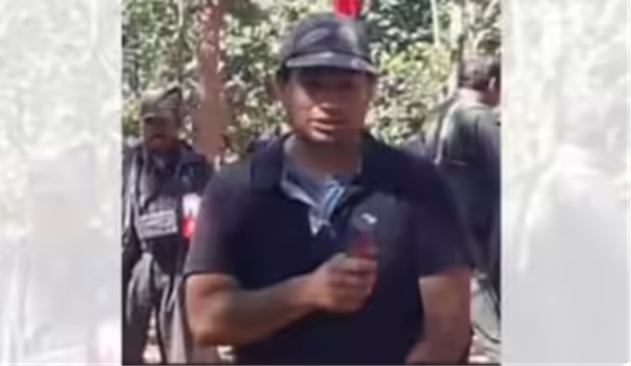
After the Indian union’s latest counter-insurgency Operation Black Forest on Maoist guerrilla fighters in central India, information has begun to surface on the mystery ‘Maoist doctor'—Dr. Rafiq alias Mandip, a qualified doctor originally from Panjab. He joined the movement and worked for years in Dandakaranya, a vast forested area spanning the states of Chhattisgarh, Andhra Pradesh, Telangana, Odisha, and Maharashtra. Much of what is known about him has remained outside official records, emerging only now through surrendered Maoists who described Dr. Rafiq as the only formally trained doctor to have joined the Communist Party of India (Maoist). According to surrendered Maoist Venkatraju alias Chandu, Dr. Rafiq treated both Maoist cadres and Adivasis, authored detailed medical manuals on bullet injuries, malaria, snake bites, and wartime trauma care, and trained local youth as paramedics. Anti armed-left insurgency intelligence sleuths also confirmed his identity and said that he moved out of Dandakaranya to Jharkhand in 2016 and remains at large. Chandu says, ‘Dr. Rafiq was revered by cadres, militia members, and Adivasis alike for his medical services for many years in Dandakaranya. He trained multiple locals and cadres in first aid, stitching sutures when a bullet hits, and how to remove the bullet.’ In 2013, the police described him as capable of performing surgeries and heading the Dandakaranya medical team. Later in 2018, police had information about Rinki, wife of Dr. Rafiq, who was said to have treated Prashant Bose, a senior Maoist leader. Chandu says, ‘The doctor is revered as a god by locals. People used to come from far away just to see him’. Dr. Rafiq’s detailed medical manuals present a standardized treatment for war injuries, bullet wounds, snake bites, malaria, gastroenteritis, and trauma care under forest conditions that circulated across Maoist divisions. Chandu recalls an incident when a Maoist suffered a gunshot wound with the bullet lodged just centimeters from the heart. Rafiq, working with minimal resources, was able to remove it. Training a generation of forest medics, Dr. Rafiq quietly built medical capacity. He also documented jadibuthi—traditional herbal medicine derived from forest plants. This knowledge, passed on by Vaddes (priests) among the Adivasis, was incorporated into Maoist medical manuals.
Rahul Bedi in The Wire: How bureaucratic renumbering stripped the Grand Trunk Road of its past.
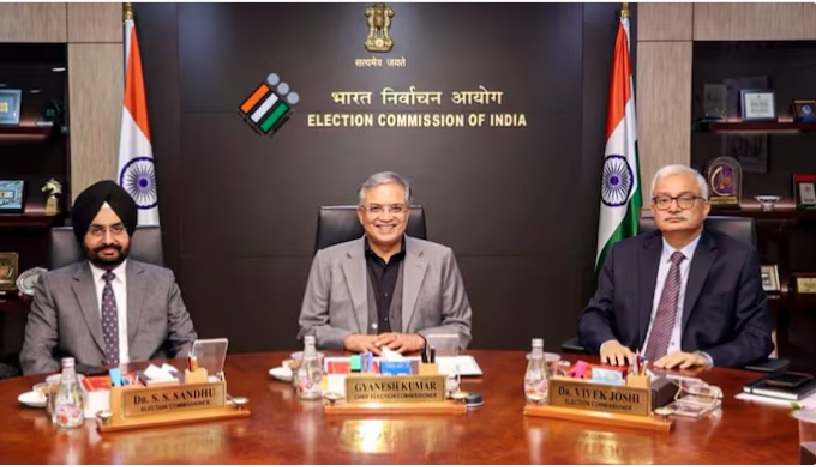
Panjab: Dissent in Indian Election Commission; ED probes GMADA; AAP admits serious accounting impropriety; Student unrest erupts in two private universities. Sikh: US Ambassador visits ‘Darbar Sahib’; SCI remarks on ‘Vande Mataram’ favor Sikhs; Carney’s deprioritizes safety for Canadians—and more stories.

Panjab: Six districts ‘Ultrasensitive’ drug zones; Govt. promises 8% increase in DA; Over 10 cases of kidnapping & extortion of illegal emigrants. Sikh: UK's Johal gets bail; ‘Akal Takht’ expels SAD Leader & 'Granthi'; Truck driver attacked days after US poster; 'Takht Sri Hazur Sahib' marks Modi birthday—and more stories.
