


Thank you! Your submission has been received!
Oops! Something went wrong while submitting the form.
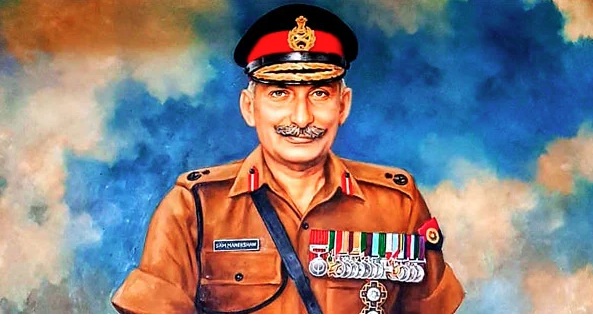
Before the 1947 Partition of India, Amritsar’s demography included Sikh, Hindu, Muslims, and Parsis finding equal footing in its social and economic growth. However, after bloodied lines divided Panjab, violence pushed most Parsi families out of Lahore and Amritsar, with most of the community relocating to Delhi or Gujarat. A Sikh writer and scholar Mohan Singh says, ‘They were non-partisan at the time of Partition. There might be no official records as to how many (Parsi) families lived in Amritsar—the number likely not exceeding double digits—they contributed immensely to the city’s progress.’ Known for their entrepreneurial spirit and significant contributions to civic life, they engaged with the local community by building schools, libraries, and trade centres. The Parsis integrated into the local culture while maintaining their religious identity. A known member of the Parsi community who has remained part of Amritsar’s history is India’s first Field Marshal, Sam Hormusji Framji Jamshedji Manekshaw. Field Marshal Manekshaw is the hero of the 1971 India–Pakistan war which resulted in the creation of Bangladesh on India’s eastern front. He had also created an underground unit Mukti Bahini and given the charge to train the unit to Major General Shabeg Singh, also from Amritsar district. The city had hosted a memorable reception for Field Marshal Manekshaw in 1973 when he visited the historic Ram Bagh. During that visit, he had also visited Sur Babu & Co, the chemist shop once owned by his father Dr Hormusji Manekshaw in Katra Ahluwalia, inside the walled city. The shop still displays pictures of the family members of the Field Marshal and the chair in which his father sat remains unoccupied with a picture of Field Marshal Manekshaw placed on it. Among the only existing remnants of the Parsi community in the city is the famous Bhandari Guest House—a quaint, beautiful heritage homestay located in the Amritsar Cantonment fondly known as the Red Bougainvillea House. Established by Tehmi Bogga Bhandari—known as the Grand Old Lady of Amritsar—the building was used as a palatial residence that once hosted the likes of Hollywood stars, political heirs, diplomats, and the social elite.