Thank you! Your submission has been received!
Oops! Something went wrong while submitting the form.
Panjab: University students win; Farmers raise concerns on Bills; Roadways employees protest; Captain bats for BJP-SAD alliance; Groundwater contains Uranium; Pollution Board’s Non-Compliance with NGT’s orders. Sikh: Guru Teghbahadar’s martyrdom anniversaries reveal fault lines; Canada trade talks with India—and more stories.
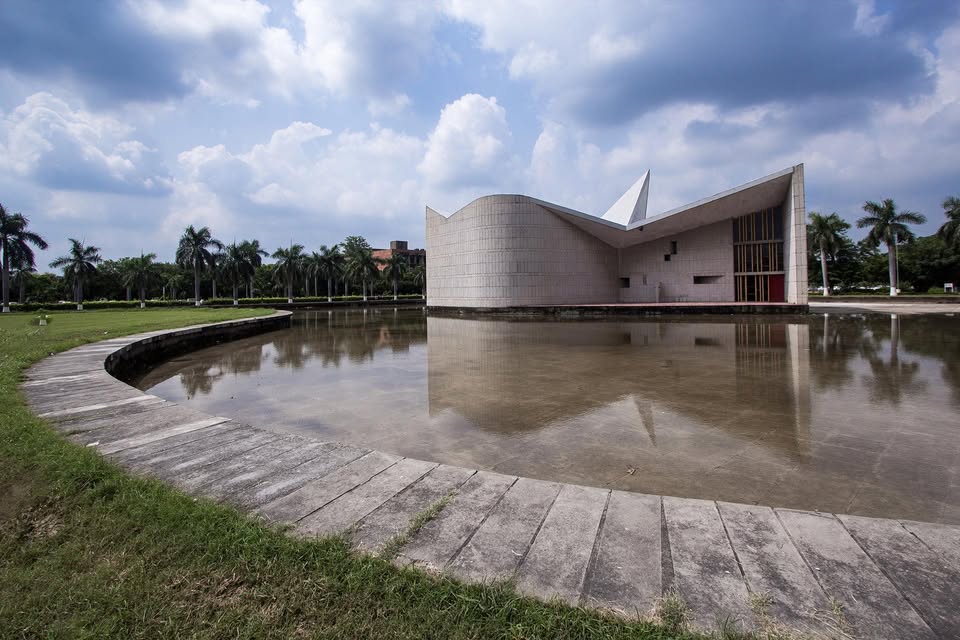
On 27 Nov, the Vice President (VP) of India and Chancellor of Panjab University (PU) Chandrapuram Ponnusamy Radhakrishnan approved the schedule of the PU Senate election. According to the proposed schedule, the election will be conducted from 7 Sep–4 Oct 2026. The last Senate's term ended in January 2024. The delayed poll schedule raises questions on the delay in elections but is a major victory for PU students. The approval came on Day 26 of the protest by PU students under the banner Panjab University Bachao Morcha (Save PU Front). PU Vice Chancellor Renu Vig visited the protest site, formally handed over the communication received from the VP Secretariat and asked the students to end their strike as their primary demand had been met. PU students hailed it as a 'victory of their struggle'. As celebrations broke out, PU students called off the protest on 28 Nov after a victory march. Though the protest is over, students said some demands were pending: revoke the First Information Reports in which 14 students were charged in 2024 over the demand for Senate elections; rollback Standard Operating Procedures introduced to regulate student activities and elections; and scrap the committee formed to review demands raised by Haryana students regarding representation and possible college re-affiliation. The student meetings with the authorities on these demands have been satisfactory. Panjab's political parties and social groups commended the students. Meanwhile, on the Indian government’s recent proposal to introduce the Constitution 131 Amendment Bill, 2025, to include the Union territory of Chandigarh in Article 240 of the Constitution, an informal note explaining the reasons for bringing such a Bill and its benefits was circulated to senior Panjab BJP leaders. The feedback was that the party would not be able to explain the decision and convince the people of Panjab, given their 'sentimental attachment' with Chandigarh and the fact that there is already a 'sense of suspicion and distrust' among a large section of the Sikh community after the attempt to push through three controversial Farm Laws in 2020–21 (earlier coverage).
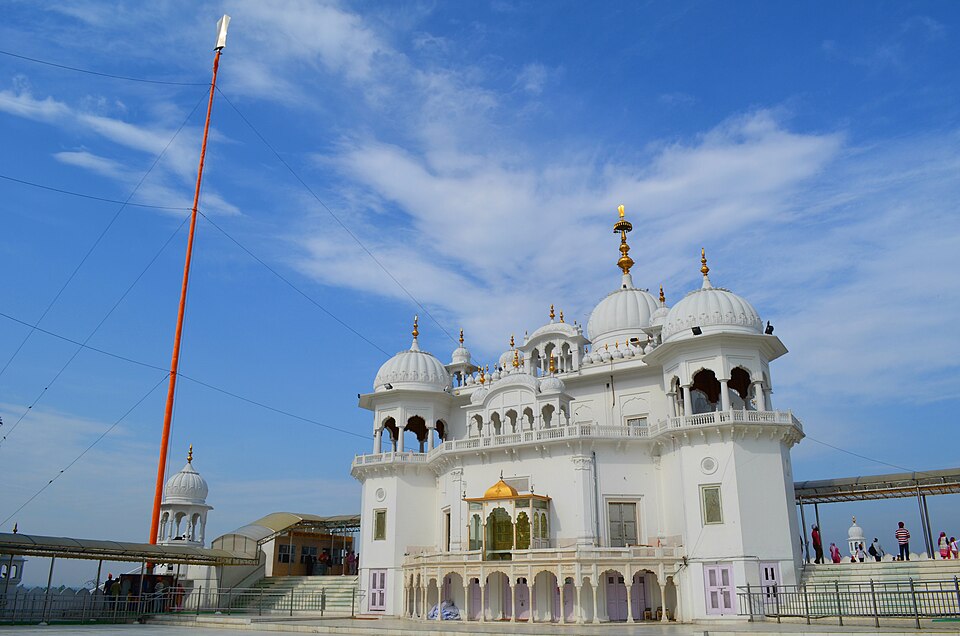
Separate functions were organized by the Panjab government, the Shiromani Gurdwara Parbandhak Committee (SGPC), and Delhi Sikh Gurdwara Management Committee (DSGMC), to mark the 350th martyrdom anniversary of the ninth Sikh Sovereign Guru Teghbahadar. There seemed to be little coordination between the SGPC and DSGMC. Sri Akal Takht Sahib (Eternal Throne, AT) acting Jathedar (leader) Giani Kuldeep Singh Gargajj and SGPC president Harjinder Singh Dhami did not attend the function in Sri Anandpur Sahib organized by the Panjab government or in Delhi, where Guru Teghbahadar was executed. DSGMC president Harmeet Singh Kalka said they invited the AT Jathedar and SGPC chief. He said, ‘Our representatives personally extended the invitation to the Jathedar, and then I also pursued it.’ SGPC president Harjinder Singh Dhami said DSGMC representatives were telling half-truths to cover their tracks. While Indian President Droupadi Murmu attended the concluding ceremony at Red Fort, Delhi, Indian Prime Minister Narendra Modi did not come to Sri Anandpur Sahib, Panjab. Meanwhile, on 25 Nov, Panjab Bharatiya Janata Party (BJP) leader and former Indian Administrative Service officer Jagmohan Singh Raju accused the Panjab government of playing with the sentiments of the people on the issue of 'holy city' status for Amritsar by 'diluting' the historic protections granted to the city under the 1956 Rules which already ban liquor in the walled city. At Sri Anandpur Sahib, residents of the city did not even benefit from the preparations for the Panjab government event. There are multiple reports that the entire material and labor for the tent city to host the symbolic Legislative Assembly was outsourced to companies in Delhi and other regions. The function included a debate in a mock Assembly by school children which seemed ironic because Panjab has not conducted student body elections in the state since 1985. Concurrently, while claiming to follow Guru Teghbahadar’s legacy, the Panjab government has rejected Khadoor Sahib Member of Parliament Amritpal Singh’s parole plea to attend the winter session of Parliament. The government claimed, 'his single speech can set the rivers of Panjab afire'. Amritpal has been detained under the National Security Act in Assam’s Dibrugarh jail since April 2023 (earlier coverage).
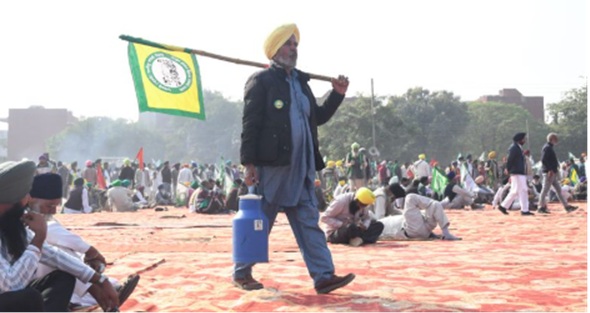
On 26 Nov, India’s Constitution Day, farmers marked five years of the historic Farmers’ Protest 1.0 (2020–21). Led by Samyukt Kisan Morcha (SKM), around 20K farmers from all over Panjab gathered at Sector 43 in Chandigarh to commemorate the historic movement and raised concerns on the proposed Seeds Bill and four Labor Codes. Calling these a move towards greater centralization, they also sought the government to withdraw its National Education Policy, 2020 and the Electricity (Amendment) Bill. Bharatiya Kisan Union (Ekta-Ugrahan) president Joginder Singh Ugrahan said, ‘the Electricity (Amendment) Bill was a sure way of giving control of power distribution to the corporate sector. Smart chip meters as part of the privatization drive are strong indicators of the Bill being implemented. Similarly, the Seeds Bill would allow seeds, even controversial hybrid varieties of multinational companies, to control the agriculture sector’. Farmers associated with SKM said if the union government did not pay heed to their demands, they would repeat the 2020–21 agitation. Meanwhile, the Kisan Mazdoor Morcha (KMM) announced a month-long agitation across Panjab against the Electricity (Amendment) Bill 2025. The protest began on 1 Dec when farmers submitted memorandums at district administrative offices highlighting concerns over rising power costs, smart meters, and agricultural policy changes. On 5 Dec farmers will stop trains symbolically for two hours. If their demands are not met, farmers will return prepaid electricity meters to power department offices on 10 Dec, and carry out a two-day sit-in outside all District Commissioners offices on 17–18 Dec, culminating in a statewide rail roko (stop trains) on 19 Dec. Additionally, the Punjab Tax Bar Association, the District Taxation Bar Associations (Sales Tax) and several trade organizations have warned the Panjab government of a state-wide agitation if pending Value Added Tax and Goods & Service Tax refunds are not cleared within 10 days. At a joint press conference, representatives from multiple trade and industrial bodies said that several refund applications have been pending for months despite repeated submissions to authorities (earlier coverage).

Passengers across Panjab were left stranded on 28 Nov after contractual employees of Punjab Roadways and the PEPSU Road Transport Corporation (PRTC) went on strike after police picked up several union leaders on 27–28 Nov. The unions had earlier announced a protest against the opening of tenders under the controversial Kilometer Scheme (KS). KS is a model under which the state transport undertakings PRTC, Punjab Roadways contract out bus operations to private operators: a private person supplies the bus, hires the driver, and handles maintenance. The state issues the route permit, assigns the route, provides (in many cases) the conductor and fuel, and pays the private operator a fixed amount per kilometer travelled. KS was first introduced in Panjab in 1998. Currently, 217 buses are already running under the PRTC KS on a six-year contract. Nearly 2.3K buses are under the state government, and 1.6K employees are on regular rolls. 7.5K employees are on contract and outsourced collectively, said union members. ‘The number of regular employees has been declining over the years, as new hires are mostly contract staff,’ said Yudh Singh, state general secretary of Punjab Roadways and PRTC Contract Staff Union. The PRTC and Punjab Roadways contractual employees say the opening of tenders would threaten their jobs and pave the way for privatisation. The situation at the Sangrur bus stand turned tense as employees were standing on top of a bus with petrol cans. A Station House Officer’s uniform accidentally caught fire and sustained burn injuries and is undergoing treatment at the Sangrur civil hospital. The standoff intensified after the clashes between employees and police; Panjab government terminated the employment of 152 employees and issued notices to several others. The protesters demand the release of arrested and detained employees, and reinstatement of those suspended and dismissed. Meanwhile, Chief Minister Bhagwant Singh Mann said that the Panjab government will construct 44,920 km of roads in the state. The government, also, cleared a project to repair and upgrade more than 18K km of link and main roads by March 2026 (earlier coverage).
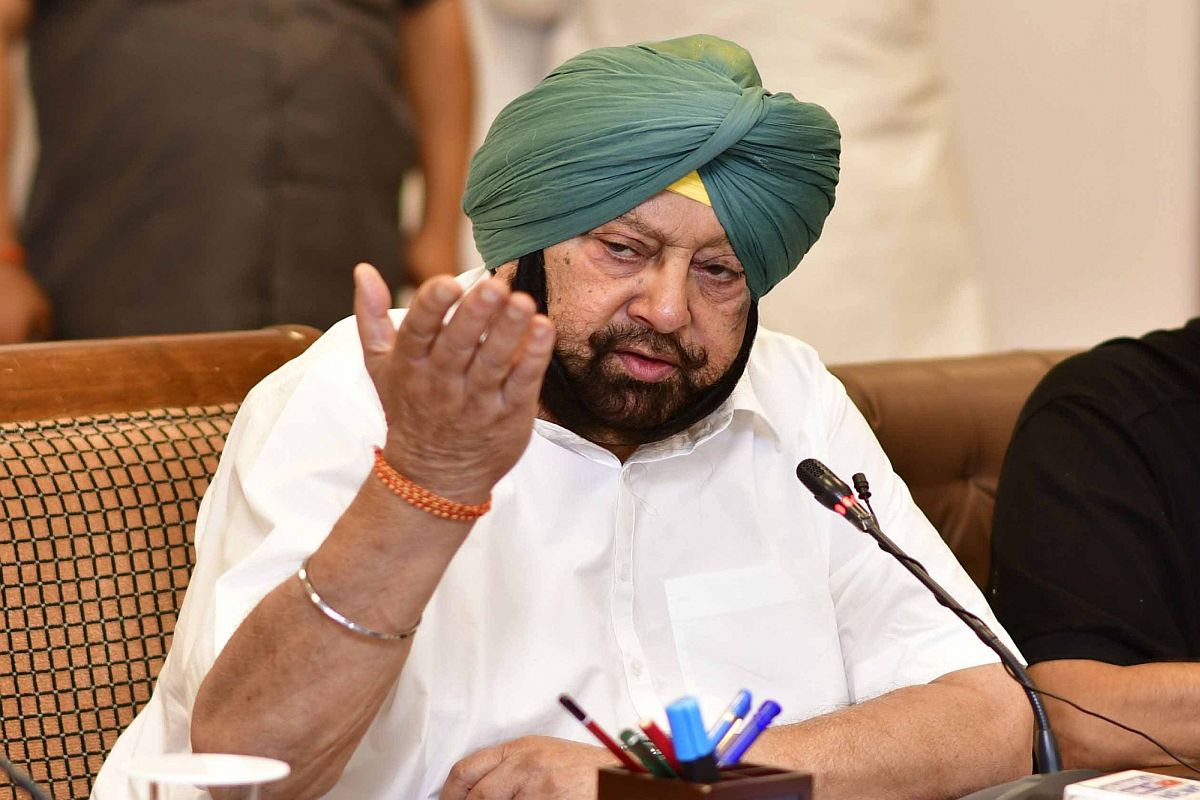
Former Indian National Congress' (INC) twice Panjab Chief Minister and current Bharatiya Janata Party (BJP) leader Captain Amarinder Singh has strongly advocated a pre-poll alliance between the BJP and the Shiromani Akali Dal (SAD) for the 2027 Panjab Assembly elections. He asserted there is 'no other way' for the BJP to form a government in the state. Amarinder, who joined the BJP in 2022, said the saffron party still lacked a strong organizational base in rural Panjab and 'does not understand the state well enough to build a strong organizational base independently'. His remarks have reignited speculation about a possible reunion of the BJP-led old National Democratic Alliance allies, who parted ways in 2020–21 over the draconian Farm Laws. Earlier, another senior former INC leader now in BJP, Sunil Jhakar had also advocated such a tie-up between BJP and SAD. Their push, however, faces stiff resistance within the BJP, with leaders dismissing them as purely personal opinion. Former Member of Parliament Vijay Sampla underscored the BJP’s string of solo victories since 2021—from local body polls to Lok Sabha (Lower House of Parliament) contests—asserting workers seek no tie-up. Former Panjab minister Surjit Singh Jyani said, 'This is Captain Amarinder’s personal opinion. We are going solo in Panjab. The high command has directed us to prepare for all 117 seats.' Panjab finance minister from the Aam Aadmi Party (AAP) slammed the Captain, accusing him and the Badal family of a 'two-decade-long conspiracy to plunder the state's resources'. He added, 'Panjab will no longer tolerate the politics of loot dominated by these two families. By rotating power between 2002 and 2022, the two families systematically enriched themselves and protected each other from legal action.' In another key development, the National Human Rights Commission (NHRC) has issued a notice to the Secretary of the Home Department, Government of Panjab, seeking an Action Taken Report (ATR) on serious allegations of state-sanctioned extra-judicial killings. NHRC has taken cognizance of a complaint alleging that the Director General of Police (DGP), Panjab, Gaurav Yadav, issued directives to police officials to conduct 'encounters' to get promotions (earlier coverage).

The Indian union government notified the Digital Personal Data Protection (DPDP) Rules, 2025 on 14 Nov, first drafted in 2023. On paper, the DPDP Act is India’s first law to preserve the privacy of individuals and lays the onus on platforms to secure informed consent from users. This is bound to impact the way individuals interact with platforms, and will also make platforms liable to preserve—or delete on request—private information of all citizens. Media watchdogs have warned the new rules undermine press freedom, cripple the Right to Information Act (RTI) and expose journalists to various compliance burdens. The move was widely opposed by critics including the Editors Guild of India and the Internet Freedom Foundation (IFF). In a statement, IFF said: ‘The DPDP Act itself instituted onerous duties on individuals and carved out broad exceptions that weaken the fundamental right to privacy. The move is a direct attack to the freedom of journalism as a journalist can be punished for publishing a news report of public interest, which under this law can be seen as violating ‘right to privacy’. The Act has grave consequences for Panjab where the government often blocks social media accounts. Panjab is heading into elections in a little over a year where many journalists will be exposing the misdeeds of the incumbent government. Earlier in 2025, 21 media organizations submitted a memorandum against the DPDP Act saying that it would end up ‘criminalizing routine reporting’ and threaten source confidentiality. The government has also operationalized Section 44(3) of the DPDP Act, which has a direct bearing on Section 8(1)(j) of the Right to Information (RTI) Act. RTI activists Aruna Roy and Anjali Bhardwaj say, under the new rules the power of the RTI Act is being neutralized. Justice Ajit Prakash Shah, in a letter to the Attorney General of India, points out how the new Act, by amending Section 8(1)(j) of the RTI Act, replaces the narrowly tailored exemption in its original version with an ‘overbroad provision for withholding information, and removing the ‘public interest’ override’ (earlier coverage).
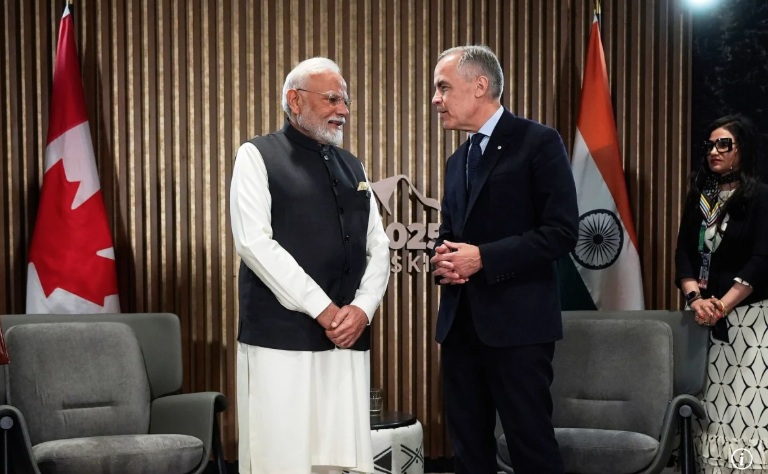
In the strongest signal yet of a thaw in the relations between India and Canada, following a two-year diplomatic row triggered by the 2023 killing of a Sikh separatist Hardeep Singh Nijjar in British Columbia and subsequent expulsions of diplomats and disruptions to consular services, the two countries have agreed to restart talks on a long-delayed Free Trade Agreement. The rapprochement follows a 22 Nov meeting between Indian Prime Minister Narendra Modi and his Canadian counterpart Mark Carney on the sidelines of a Group of 20 summit in South Africa. That was the first meeting between the two leaders since Carney took office in March after he replaced Justin Trudeau. The goal is for bilateral trade to reach USD 50B by 2030, said the Indian government. The two countries exchanged about CAD 31B (USD 22B) in goods and services last year, according to Canadian official data. Carney also accepted Modi’s invitation to visit India early 2026. However, the underlying India–Canada tensions over Sikh separatism remain unresolved. Sikh activists, particularly those involved directly in the Khalistan referendum effort, have continued to receive 'duty to warn' letters from the Royal Canadian Mounted Police cautioning them that there are imminent threats to their lives. Sikhs for Justice also held a Khalistan Referendum in Ottawa on 30 Nov. Meanwhile, Canada is amending its citizenship-by-descent Bill C-3, an Act to amend the Citizenship Act 2025. The move is likely to affect thousands of Indian-origin families. A statement by the Canadian government said: 'This is a milestone in making the Citizenship Act more inclusive, while maintaining the value of Canadian citizenship...Once the new law comes into force, Canadian citizenship will be provided to people born before the Bill comes into force, who would have been citizens if not for the first-generation limit or other outdated rules of past legislation.' The first-generation limit to Canadian citizenship by descent was introduced in 2009. That law meant that a child born or adopted outside Canada is not a Canadian citizen by descent if their Canadian parent was also born or adopted outside Canada (earlier coverage).
.jpg)
62.5% of groundwater samples from Panjab have uranium levels above the safety threshold limit—the highest contamination intensity ever recorded in India. The latest Annual Ground Water Quality Report 2025 by the Central Ground Water Board mentions, ‘A total of 3,754 groundwater samples were tested across India, the highest uranium contamination was observed in Panjab, where over half of the samples (53.04% pre-monsoon and 62.5% post-monsoon) exceeded the limit’. Meanwhile, in a step to augment specialist availability, the Panjab cabinet has consented to empanel 300 doctors specially in 12 key domains—medicine, psychiatry, ENT, and dermatology among others. Panjab has faced a persistent shortage of medical specialists, as the government has not appointed regular specialists since 2022, worsening an already strained healthcare system. Official data shows that of 2,098 sanctioned posts for medical specialists, only 1K are currently filled. The crisis is deepened due to many specialists reportedly quitting due to heavy workloads, low pay, limited incentives, and minimal career progression. Patiala, for instance, has only one psychiatrist in its health department. Ludhiana, currently battling rising dengue cases, has only three general medicine specialists, despite surging patient footfall in government hospitals. Conditions are much worse in border districts, where multiple Sub District Hospitals lack gynaecologists and anaesthetists, both essential for safe maternal and emergency care. Although the government has opened more Aam Aadmi Clinics and recruited general medical officers, it has made limited progress in bolstering secondary and tertiary care services. Additionally, veterinary doctors in Panjab have decided to stop reporting to the Animal Husbandry Department after a decision taken at the state-level meeting of the Joint Action Committee (JAC) of Vets for Pay-Parity, in which representatives from all districts participated. JAC Convener Dr Gurcharan Singh stated that the veterinary doctors of Panjab had been agitating as the government had disturbed the pay-parity that existed with medical doctors since 1977, reducing the starting salary of Veterinary Officers from USD 624 to USD 530.
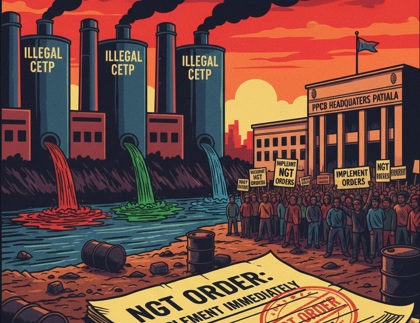
The Kale Pani Da Morcha (Black Waters Front, KPDM) has announced a protest march from Gurdwara Dukhnivaran Sahib to the Punjab Pollution Control Board (PPCB) head office, Patiala on 3 Dec. This is to mark one year of the PPCB not complying with the National Green Tribunal’s orders to close the three major Common Effluent Treatment Plants (CETP) of dyeing units which have been releasing waste water into the Buddha Nullah, Ludhiana. In December 2024, the NGT had clarified its earlier August 2024 orders that PPCB must close the CETPs. On 3 Dec 2024—when KPDM and 23 organizations had gathered in Ludhiana to stop the discharge of waste water into the Buddha Nullah—the Ludhiana Deputy Commissioner Jitendra Jorwal had promised to implement the orders within a week but PPCM has still not complied. Meanwhile, more than 120 dairy owners at the Tajpur Road dairy complex, Ludhiana are facing severe inconvenience as the lanes of Blocks B and C have been completely flooded for several days. The flooding has been caused by a choked Effluent Treatment Plant (ETP), which has not been functioning properly since 20 Nov. According to dairy owners, the wastewater that should be diverted to the biogas plant is instead flowing directly into the ETP plant because the biogas unit has not been set up. With no system in place to manage the load, the wastewater has overflowed into streets, leaving the entire area waterlogged. Without the biogas plant—which should have filtered the slurry before it reached the ETP, the entire load is falling on the treatment unit. Satwinder Singh, president of the Tajpur Road Dairy Association, said the issue has been repeatedly raised with municipal corporation and sewerage department officials but no long-term solution has been provided. Ludhiana is also facing a challenge in public transport. Of the 120 buses procured under the Jawaharlal Nehru National Urban Renewal Mission, only 15 are running on two routes. The rest have either been declared scrap, reclaimed but unused or stuck in legal disputes. Repeated attempts to auction defunct buses have failed while reclaimed vehicles are deteriorating in open yards (earlier coverage).
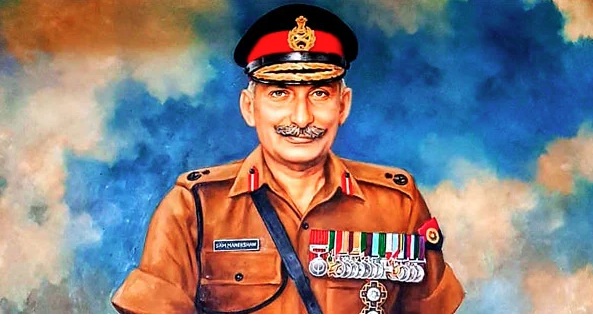
Before the 1947 Partition of India, Amritsar’s demography included Sikh, Hindu, Muslims, and Parsis finding equal footing in its social and economic growth. However, after bloodied lines divided Panjab, violence pushed most Parsi families out of Lahore and Amritsar, with most of the community relocating to Delhi or Gujarat. A Sikh writer and scholar Mohan Singh says, ‘They were non-partisan at the time of Partition. There might be no official records as to how many (Parsi) families lived in Amritsar—the number likely not exceeding double digits—they contributed immensely to the city’s progress.’ Known for their entrepreneurial spirit and significant contributions to civic life, they engaged with the local community by building schools, libraries, and trade centres. The Parsis integrated into the local culture while maintaining their religious identity. A known member of the Parsi community who has remained part of Amritsar’s history is India’s first Field Marshal, Sam Hormusji Framji Jamshedji Manekshaw. Field Marshal Manekshaw is the hero of the 1971 India–Pakistan war which resulted in the creation of Bangladesh on India’s eastern front. He had also created an underground unit Mukti Bahini and given the charge to train the unit to Major General Shabeg Singh, also from Amritsar district. The city had hosted a memorable reception for Field Marshal Manekshaw in 1973 when he visited the historic Ram Bagh. During that visit, he had also visited Sur Babu & Co, the chemist shop once owned by his father Dr Hormusji Manekshaw in Katra Ahluwalia, inside the walled city. The shop still displays pictures of the family members of the Field Marshal and the chair in which his father sat remains unoccupied with a picture of Field Marshal Manekshaw placed on it. Among the only existing remnants of the Parsi community in the city is the famous Bhandari Guest House—a quaint, beautiful heritage homestay located in the Amritsar Cantonment fondly known as the Red Bougainvillea House. Established by Tehmi Bogga Bhandari—known as the Grand Old Lady of Amritsar—the building was used as a palatial residence that once hosted the likes of Hollywood stars, political heirs, diplomats, and the social elite.
J.D. Emmanuel (a pseudonym) in The Wire: Rewriting a Martyr—The Hindutva push to recast Guru TeghBahadar’s legacy in today's India.

Panjab: State closed over anti-drug activist’s murder; Shah meets Jhota’s family; Delhi battleground as protesters & police clash; ECI announces SSR; US ends 540-Day extension for immigrants; J&K promises Panjabi as official language. Sikh: Orgs say FBI Hate Crime report flawed; Jhota in Sikh Museum—and more stories.

Panjab: Protests against CEC intensify; Delhi fortified; Rain disrupts paddy procurement; CBI files FIR against Ghuman; Sinha apologizes to PHHC over pending DA; Anti-Drug activist & another ASI shot dead. Sikh: Gurdwara in the eye of protest storm; J&K Sikhs protest for inclusion of Panjabi language—and more stories.
