Thank you! Your submission has been received!
Oops! Something went wrong while submitting the form.
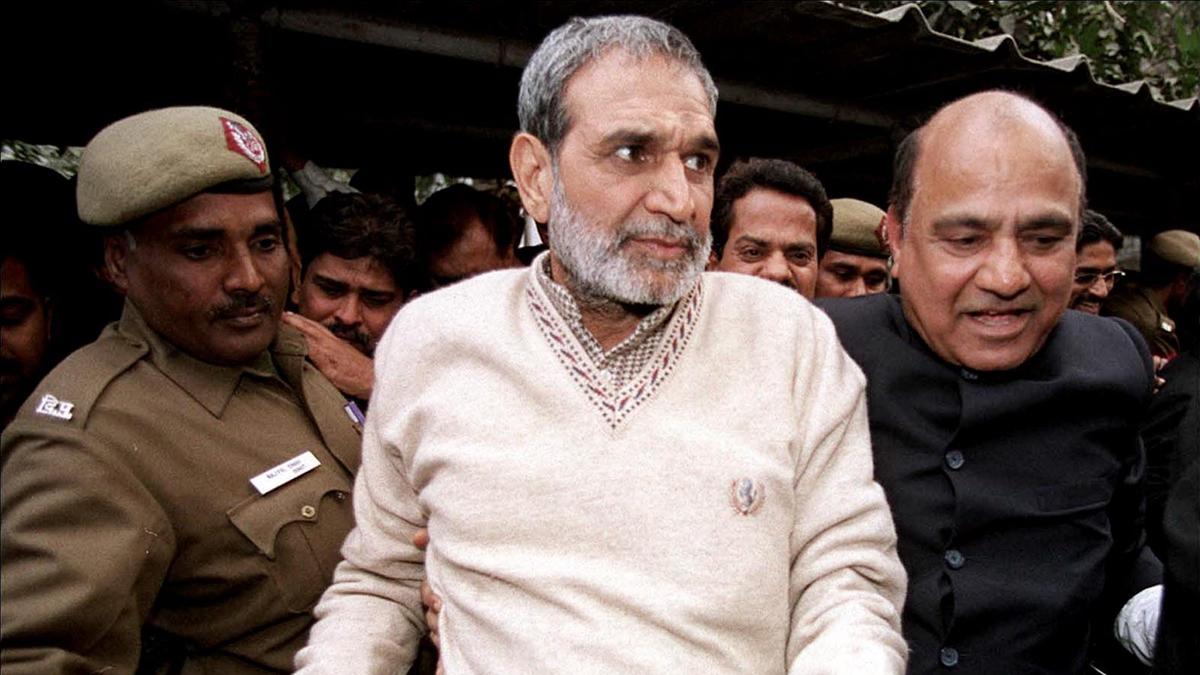
Former Indian National Congress Member of Parliament, 80-year-old Sajjan Kumar, died in Tihar jail, New Delhi on 20 Aug. He was convicted for the murders of seven Sikhs during the 1984 Sikh genocide and was serving three life sentences. He was first sentenced to life imprisonment on 17 Dec 2018 for the murder of five Sikhs and burning a Gurdwara in Raj Nagar, Delhi. The other two sentences—for the murders of Jaswant Singh and his son Tarundeep Singh in Saraswati Vihar, Delhi, and arson and looting of homes—were passed on 25 Feb 2025. Kumar was also serving another 10 years for beating one of his victims, Jaswant Singh’s wife (name withheld). Delivering the first verdict, the Delhi High Court bench of Justices S Muralidhar and Vinod Goel called for strengthening of India's legal system to ensure that perpetrators of mass crimes are made answerable. On mass killings and strengthening of the legal system, Justice Muralidhar said, 'Neither 'crimes against humanity' nor 'genocide' is part of the domestic law on crime and this loophole needs to be addressed urgently...There was 'mass killing' of Sikhs in Delhi and the rest of the country, 'engineered by political actors with the assistance of the law enforcement agencies'. Criminals responsible for the mass crimes have enjoyed political patronage and managed to evade prosecution and punishment.' He added, 'India has been no stranger to such mass killings since the time of partition in 1947. The mass killings in Punjab, Delhi and elsewhere during Partition (1947) remain a collective painful memory as are the killings of innocent Sikhs in November 1984. There has been a familiar pattern of mass killings in Mumbai, Maharashtra in 1993, in Gujarat in 2002, in Kandhamal, Odisha in 2008, in Muzaffarnagar, and Uttar Pradesh in 2013 to name a few. Common to these mass crimes were the targeting of minorities and the attacks spearheaded by the dominant political actors being facilitated by the law enforcement agencies.' However, eight years after the judgment, India still does not have laws on crimes against humanity and genocide. Shiromani Akali Dal, Delhi Unit president Paramjit Singh Sarna said, 'The government of India must fulfill the orders of the Delhi High Court and enact a Genocide Act. Such an Act will be able to bring justice to those who died in 1984 and compensate them for their losses' (earlier coverage).