Thank you! Your submission has been received!
Oops! Something went wrong while submitting the form.
Panjab: 34 encounters in 3 months; Police assaults farmers; Agri push For pulses and oilseeds. Sikh: SCOTUS accepts Gupta’s plea; Canada wants Nijjar case evidence withheld; Giani Raghbir accuses Badal family of patronizing corrupt elements in SGPC—and other stories.
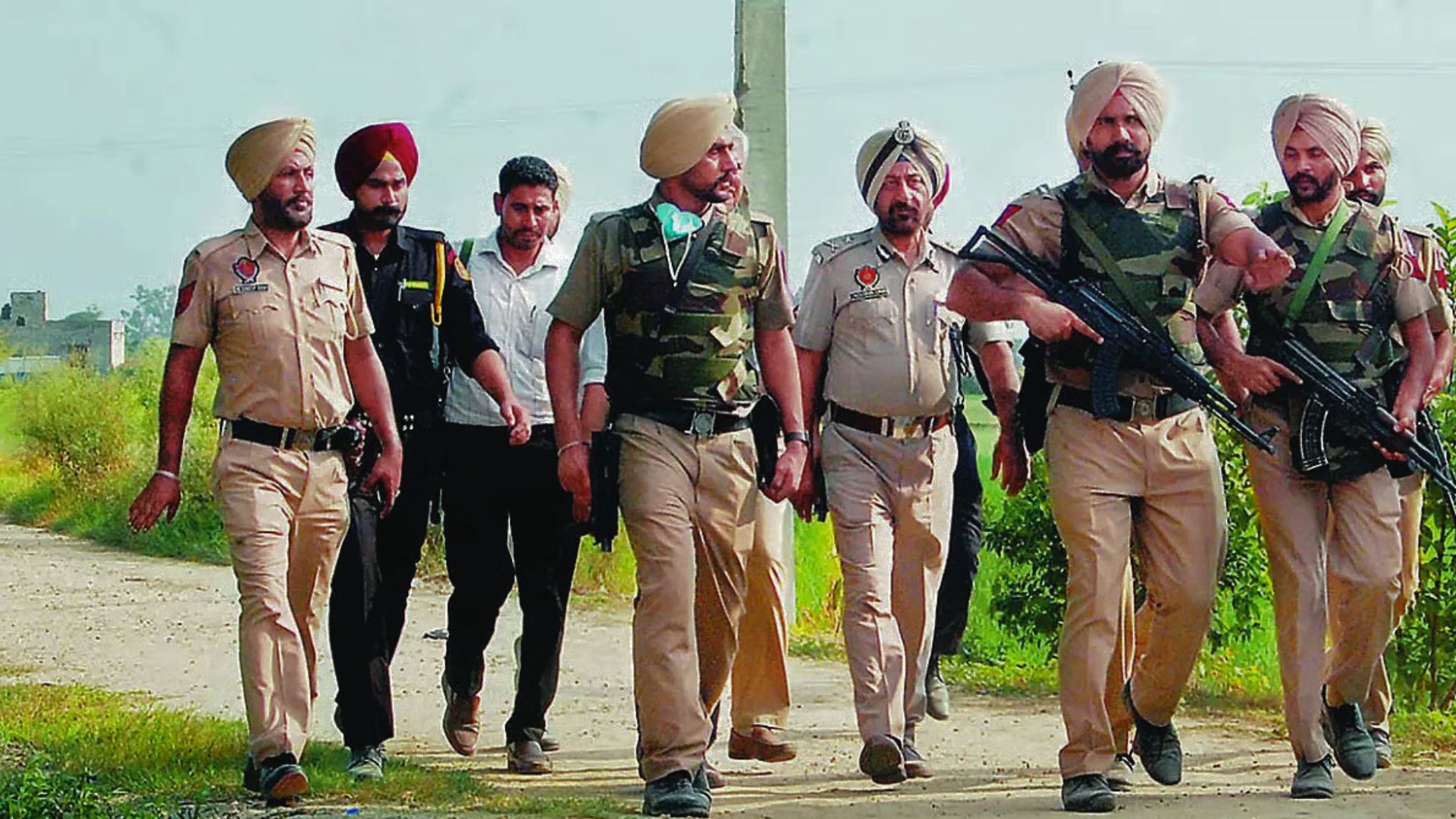
In Nov 2025, Panjab Director General of Police (DGP) Gaurav Yadav said that since April 2022, a month after the Aam Aadmi Party (AAP) formed the government in Panjab, the state police had recorded '324 encounters with gangsters' resulting in the death of 24 and arrest of 515 people. The National Human Rights Commission had issued a notice to the Panjab Home Secretary seeking an Action Taken Report on 'state-sanctioned extra-judicial killings'. The notice remains unanswered. Since the DGP’s announcement, police records show the Panjab police reported 34 encounters resulting in five deaths and injuries to 45 people. More than a third of the encounters took place when the accused were in custody; in several cases, police said the 'handcuffed' accused grabbed a hidden weapon and opened fire when taken for 'recovery.' In at least eight of these incidents, police personnel were shot at 'indiscriminately' but the policemen were saved 'because of bulletproof jackets.' Police say they shot at the accused in the feet or legs only after issuing warnings, and after the accused had 'opened fire.' The encounters were—one each in Bathinda, Faridkot, Muktsar, Moga, Hoshiarpur, and Fazilka; two each in Patiala, Batala, Khanna, Ferozepur, Mohali, Tarn Taran, and Jalandhar; five in Ludhiana; and nine in Amritsar district. A recent editorial opined, 'Encounters, including and especially those involving individuals in the state’s custody, will only deepen disillusion and cynicism....Punjab’s history stands as a cautionary tale of how quickly such cycles can spiral into prolonged turmoil.' Meanwhile, on 18 Feb, forty-years-old an AAP village council leader Harbarinder Singh from Thathian Mahantan village, Tarn Taran, was shot dead and his relative Jermandeep Singh injured, when two assailants opened fire during a wedding ceremony at Sheron village, also in Tarn Taran district. On 22 Feb, the police apprehended two key suspects near a canal in the same district’s Naushehra Pannuan village. In a separate incident, two policemen were found dead with bullet injuries near the International Border in Adhian village, Gurdaspur—an area notorious for drug trafficking. They were identified as Assistant Sub-Inspector Gurnam Singh and Ashok Kumar from the Home Guard. The circumstances of the deaths are yet to be ascertained (earlier coverage).

The Supreme Court of the United States (SCOTUS) has struck down US President Donald Trump's sweeping tariffs imposed under the International Emergency Economic Powers Act meant for use in national emergencies. On 20 Feb, in a 6–3 verdict, the SCOTUS upheld the cardinal principle of separation of powers, which constitutes a foundational pillar of the US Constitution. By reaffirming the US Congress’ jurisdiction to impose tariffs and the ideal of separation of power, the SCOTUS placed the Constitution above the power or authority of the President. The ruling means that 55% of India’s exports to the US will not face the 18% reciprocal tariffs. However, on 21 Feb, under Section 122 of the US Trade Act of 1974, Trump signed an executive order that enabled him to bypass the US Congress and impose first a 10% tax on imports from around the world, and then increased it to 15%. The US also has other tariffs in place, such as those under Section 232 of the US Trade Expansion Act of 1962. Under the Section 232 tariffs, the US has imposed a 50% tariff on India on imports of steel and aluminium. Meanwhile, after the announcement of the India-US interim trade deal, market prices for several commodities, including cotton and maize—which impact Panjab—and soyabean have fallen 3–9% below their respective Minimum Support Prices (MSP). Prices of wheat, whose harvest will start in Panjab at the end of March, is currently USD 2 below the MSP. The SCOTUS ruling and new Trump tariffs have led to confusion in trade talks where tariff figures have not been steady for months. Indian trade negotiators, headed to Washington for a 3-day talk starting 23 Feb to finalize the legal text of the US-India trade agreement, have aborted their trip as New Delhi pushed for rescheduling these discussions. Additionally, the US-India trade deal hinges on a key US requirement that India stop buying Russian oil. On 18 Feb, Russia's Foreign Ministry dismissed suggestions that India may scale back its purchase of Russian oil, saying, ‘Moscow sees no indication of a shift in New Delhi’s position,’ and describing the trade as mutually beneficial and stabilizing for global energy markets (earlier coverage).

US District Judge, for the Southern District of New York, Victor Marrero accepted Indian citizen Nikhil Gupta's guilty plea to the murder-for-hire, conspiracy to commit murder-for-hire, and conspiracy to commit money laundering, in connection with the failed assassination of US citizen Gurpatwant Singh Pannun. Meanwhile, spokesperson for Pakistan’s Ministry of Foreign Affairs Tahir Abdrabi said, 'Islamabad has shared irrefutable and concrete evidence of Indian sponsorship of terrorism and terrorist groups operating in Pakistan from across our borders.' In Indian (East) Panjab, marking the anniversary of the 1921 Saka Nankana Sahib, Dal Khalsa and allied Sikh organizations held a Panthic (Sikh collective) meet at Moga and warned the Indian Union Home Ministry against attempts to destabilize Panjab. The leadership accused the security apparatus of orchestrating a dual-pronged strategy: 'transnational repression' against activists abroad and 'unconstitutional' encounters within India. Dal Khalsa demanded to know who directed the attempted hit on Pannu and the execution of Sikh leader Hardeep Singh Nijjar in British Columbia, Canada. Concurrently, Canada’s Justice Department is trying to withhold evidence during the upcoming murder trial of four Indian men accused of gunning down Nijjar in June 2023. The case against the suspected assassins is being closely watched because of allegations that the government of India ordered the assassination as part of a campaign to silence its political opponents abroad. The Canada Evidence Act allows courts to consider such applications but the National Spokesperson for the Sikh Federation Canada, Moninder Singh issued a strong rebuke of the government’s approach. His statement said: 'The implications of such a decision are profound and have led the Government (of Canada) to actually facilitate violence in Canada by shrouding Indian operations in secrecy and creating an environment in which foreign actors can operate with impunity.' When asked about the case, the High Commissioner of India to Canada Dinesh Patnaik said, ‘India will take action depending on the outcome’. The envoy’s comments come ahead of an anticipated trip to India by Canadian Prime Minister Mark Carney as his government seeks to re-establish ties and diversify its trading relationships in the face of US President Donald Trump’s economic threats (earlier coverage).

Former Sri Akal Takht Sahib (Eternal Throne, AT) Jathedar (leader) and current Darbar Sahib (Golden Temple) head granthi (reciter) Giani Raghbir Singh has accused the Badal family of 'patronizing corrupt elements in the Sikh body' and urged a Sarbat Khalsa (Khalsa plenary meet) be called to 'free SGPC'. Gaini Raghbir listed corruption in illegal sale of Gurdwara lands, sale of rations from community kitchens, frauds in building constructions, rentals of shops, subletting agricultural lands, offerings for prayers being increased, reinstating sacked employees with promotions, sale of Guru Granth Sahib (Sikh charter and scripture) tomes, and other spaces. Giani Raghbir claimed, during the Tarn Taran by-poll in Nov 2025 he was pressured to issue a statement that the edicts from AT in Dec 2024 were made under pressure from Bharatiya Janata Party (BJP) and its mother organization Rashtriya Swayamsevak Sangh (RSS), but he refused to tell such a 'big lie.' Giani Raghbir was AT Jathedar when Shiromani Akali Dal president Sukhbir Singh Badal was declared tankhaiya (guilty of religious misconduct). BJP has expressed gratitude to Giani Raghbir for ‘not yielding to pressure’ and refusing to say BJP and RSS had asked him to pass the edicts—a charge Badal had levelled against him. On 20 Feb, the SGPC executive gave Giani Raghbir a 72-hour ultimatum to provide written evidence supporting his corruption allegations against SGPC and the Badals. SGPC president Harjinder Singh Dhami stated that Giani Raghbir has defamed the institution and will face action if he fails to submit evidence within the stipulated time. Giani Raghbir responded that he had documents and evidence related to every point he has made to the media. He said, ‘My fight is not against any particular person but aims at maintaining the sanctity and transparency of religious institutions.’ Former AT Jathedar and SAD breakaway faction chief Giani Harpreet Singh backed Giani Raghbir on the issue of alleged corruption in the SGPC and said the Sikh body should have ordered a probe into it. He accused Badal of weakening Sikh institutions and misusing religious bodies for political gains and said Sikh institutions have steadily weakened since coming under Badal’s control (earlier coverage).
%20activists%20upon%20bail%20-%20Lachhman%20Sewewala.jpg)
In a second action within 12 days, the Panjab Police fired tear gas shells to stop members of farmers’ union Bharatiya Kisan Union (Ekta Ugrahan) from marching towards the Bathinda Deputy Commissioner’s office on 18 Feb. The farmers were demanding the release of their jailed leaders Shagandeep Singh Jeond and Baldev Singh Chauke. The earlier police action on 6 Feb had triggered the protests in and around Jeond village. Farmers initially staged a sit-in protest on the Bathinda–Chandigarh highway, which led to traffic disruption. Later the protesters shifted to an internal village road in Jeond village. As farmers attempted to move towards Bathinda, the police blocked their march and resorted to firing tear gas shells. Bathinda Senior Superintendent Police Jyoti Yadav said, 'The mob had gathered on the roofs of some residences and pelted the police team with stones. We used mild force and lobbed teargas shells to disperse them.' However, ground reports ascertain that it was not a ‘mild force’. Police pulled out a marginal farmer Charanjit Singh from his home and fractured his leg with batons. Another activist Preet Singh sustained injuries on his right hand. By late evening, the Punjab and Haryana High Court granted bail to the two farmer-activists. Earlier, on 16 Feb, tensions flared at several locations on roads leading to Killi Chahal village of Moga district, where the Aam Aadmi Party (AAP) was organizing a state-level rally against drugs. A convoy of farmers led by farmer union Kisan Mazdoor Morcha (KMM) leaders Satnam Singh Pannu and Balwant Singh Brahmke was halted on the Moga–Jalandhar road by the police. On 18 Feb, residents of Singhabala village also of Moga district, took out a Jago (wake-up) march expressing their resentment against the union and Panjab government’s policies, including the upcoming Electricity Amendment Bill and Seeds Bill. Concurrently, in Samana, Patiala district Gurjeet Singh Khalsa has been protesting atop a 400 ft tower since 12 Oct 2024 demanding a stringent anti-sacrilege law. Activists and farmers who planned to reach Samana in modified tractor-trailers carrying groceries, cooking gas, and other essentials in solidarity with Khalsa on 24 Feb were being blocked by the police (earlier coverage).

Granting interim relief in a pending Public Interest Litigation (PIL), the Punjab and Haryana High Court (PHHC) stayed the Panjab government’s move to transfer any property owned by the Punjab State Power Corporation Limited (PSPCL). The PIL filed by Rajbir Singh describes these properties as long-term public assets and argues that liquidating them to address what it terms a ‘self-created fiscal crisis’ is improper. Punjab State Electricity Board Engineers Association (PSEBEA) have been resisting the transfer of PSPCL land to Punjab Urban Development Authority (PUDA) for a long time. PSEBEA general secretary Ajaypal Singh Atwal said, ‘Instead, the Panjab government should release its pending power subsidy to PSPCL and direct government departments to clear about USD 28.6M in outstanding electricity bills’. The PIL was filed against the transfer of 50 acres in Badungar village, Patiala district. The government was transferring the land to the PUDA under its 80:20 policy, after which it was to be auctioned in the open market. The PIL also alleges a deepening financial crisis at PSPCL due to large-scale defaults by government departments. The petition states that electricity dues owed by various government departments had mounted to USD 285M as of 31 Aug 2025 and the unpaid power subsidy had crossed USD 11.9B. It argues that although the government is a consumer like any other, it has failed to discharge its moral, ethical, and statutory obligation to clear electricity bills, pushing PSPCL into financial distress. As a result, PSPCL has been forced to take substantial loans to meet routine expenditure such as salaries, pensions, and power purchases. Additionally, eviction of people in Jalandhar’s Latifpura triggered protests with women climbing atop a water tank and staying there for 26 hours. The police collected the belongings of the occupants and shifted them to Jalandhar Improvement Trust’s vacant Low Income Group flats in Bibi Bhani Complex whose condition the evictees found deplorable. In 2022 when their built-up houses had been demolished, the government had offered the evictees the same flats worth USD 3,500 each. At the time also they had not accepted it, choosing to live in tents instead (earlier coverage).

The San Joaquin, California, US, County Sheriff’s Office announced on 23 Feb that the 57-year-old kidnapped victim Avtar Singh had been located dead. Avtar had been kidnapped on 18 Feb from a Damdami Taksal (Sikh seminary) Gurdwara Guru Nanak Parkash in Tracy. He had been serving as a chef at the Gurdwara for quite a few years. The perpetrators of the crime have not yet been identified. Meanwhile, a Sikh semi-truck driver jumped a red light in Hendricks County, Indiana, triggering a three-vehicle pile-up that killed a 64-year-old man. Twenty five-year old Sukhdeep Singh has been arrested by the US Immigration and Customs Enforcement. This is the fourth crash involving Indians, including three Sikh drivers, in six months in which nine people have lost their lives. Additionally, the US Secretary of Transportation, Sean Duffy announced that all truckers and pass drivers will have to take their Commercial Driver's License tests in English as the US President Donald Trump administration expands its aggressive campaign to improve safety in the industry and get ‘unqualified’ drivers off the road. Meanwhile in Canada, nearly 2.9M temporary resident permits, including of many Panjabis, expired throughout 2025 and 2026 across various streams, including work permits and post‑graduation work authorizations. Temporary residents in Canada are calling on the government to extend work permits and grant them a fair chance to remain in the country. They argue that they have contributed to Canada’s economy and communities and are asking the government why they are being forced to leave after years of work and study. Immigration, Refugees and Citizenship Canada has acknowledged processing backlogs and is under pressure to balance public concerns with policy goals, but no major national extension plan has been announced so far. Simultaneously in Australia, 22-year-old Sikh nurse Harmanpreet Singh was left with a broken nose after an alleged racially motivated attack outside a gym in Corio, Geelong on 17 Feb. Harmanpreet said he was confronted by three men while leaving his gym and beaten up. He said the harassment began while he was still training, and that the trio was waiting for him outside the gym. In a video of the confrontation, one man can be seen hurling racial slurs at Harmanpreet, calling him an 'Indian dog' (earlier coverage).

At a workshop in Punjab Agriculture University in Ludhiana, the Director of Agriculture Panjab Gurjit Singh Brar has emphasized the need to promote oilseeds and pulses cultivation in the state. He said, ‘Promote oilseeds and pulses among farmers in order to reduce reliance on foreign nations for oil supply and pulses.’ He added that smaller nations like Indonesia and Malaysia respective to India are supplying oil worth USD 49M and USD 4,800M, adding that pulses worth USD 2,430M were being imported, with the highest share from Myanmar. He called upon the researchers to develop suitable oilseeds and pulses varieties, advising that it was ‘high time we be self-reliant in this sector’. He also pushed for cotton cultivation, precision agriculture, automation technologies and Artificial Intelligence-powered traps for insect and pest management. Meanwhile, agriculture experts have advised farmers to remain alert and take timely measures to protect their wheat and mustard crops from possible disease attacks as changing weather conditions tend to create an environment for fungal and viral diseases in standing crops. Farmers have also been encouraged to avoid excessive irrigation during cloudy weather, as high moisture levels accelerate disease development. Additionally, the Agriculture Department has expressed concern over the rising heat in Tarn Taran district. The officials observed that temperature in the district has reached 28–30℃, which is not suitable for the growth of wheat crop and could lead to weak wheat production. Farmers said that the crop grew in the last week of February, but this time, the size of the grain was smaller. Meanwhile, farmers' union Jamhoori Kisan Sabha Panjab has appealed to the government to help potato farmers suffering from recession this season. While the cost of potato production has increased, the farmers are not getting the proper rate of the crop. Due to this, the union said the burden of debt will increase on the farmers. Private companies had given seeds to the farmers at expensive prices and made them grow potatoes but are now reneging on their promise. They have asked Chief Minister Bhagwant Singh Mann and Agriculture Minister Gurmeet Singh Khudian to take strict legal action against the companies for betraying the trust of farmers (earlier coverage).

In a landmark judgement, the Supreme Court of India (SCI) ruled in favor of 93-year-old farmer Harbinder Singh Sekhon and other residents of Sangrur city quashing key permissions granted to Shree Cement North Private Limited for establishing a standalone cement grinding unit on 47.82 acres of land. Sekhon led the petitioners including Vasant Valley Public School, Sangrur. The petitioners highlighted the site’s location is in a designated rural agricultural zone and considering its proximity to farmlands, residential habitations, and the school, the unit poses severe risks of particulate dust pollution to public health, particularly children. The court emphasized that cement grinding units involve extensive handling of powdered material, leading to fugitive dust and health hazards that cannot be mitigated by assuming future compliance. It ruled that regulatory frameworks cannot prioritize facilitation over non-derogable obligations to safeguard life, particularly for sensitive receptors like schools and habitations. SCI also quashed the Indian union’s Central Pollution Control Board’s January 2025 reclassification of standalone cement grinding units from the highly polluting Red category to the less stringent Orange category, along with related Union Ministry of Environment, Forest and Climate Change notifications that relaxed siting and regulatory safeguards. Meanwhile, in Rampur, Uttar Pradesh’s (UP), the forest division has unearthed an inter-state gang involved in illegal felling and transportation of khair (cutch) tree wood, seizing over 500 quintals of the valuable timber from Panjab and arresting three persons. The seizure is valued around USD 55K and marks a first instance of such a large quantity of illegally felled khair wood being recovered from another state. Named Operation Khair, it involved the use of technology and electronic surveillance to track the movement of vehicles carrying the contraband wood across state borders. Found in UP’s Terai forests, Khair wood is used to produce kattha (black cutch)—a key ingredient in pan (folded betel leaf) and gutka (chewable tobacco). Owing to its high commercial value, it is frequently targeted by wood mafias for illegal felling and smuggling. The UP forest division team reached Rajpura, Patiala district, where a large quantity of khair wood was found stored and being processed (earlier coverage).

A new image of Panjab is emerging and giving birth to a new genre in cinema—Panjabi Noir. Challenging the traditional images of Panjab—phulkari (traditional hand embroidery), parande (hair ornament), and swaying mustard fields—seen in Hindi cinema, the new image of Panjab dives deeper into its darkness. Kohrra 1 (2023) did not refrain from being overt in its approach about exposing the underbelly of Panjab. Kohrra 2 (2026), set in the fictional Panjabi town of Dalerpura, is the latest among burgeoning stories that began with Maachis (1996), Punjab 1984 (2014), and Udta Punjab (2016). Recent shows like Paatal Lok (2020), Tabbar (2021), Masoom (2022), CAT (2022), Chamak (2023), and Kohrra series, all highlight a rising need to be true to the problems that plague Panjab’s present and expose our past. Independent cinema emerging from the state too managed to twist the dagger with films like Kabir Singh Chowdhry’s Mehsampur (2018), Anmol Sidhu’s Jaggi (2021), and Gurvinder Singh’s Anhe Ghore Da Daan (2011), Chauthi Koot (2015), and Adh Chanani Raat (2022). Noir is a strange, shapeless genre. It is tied more to atmosphere than narrative. Panjab is being re-written in the visual cultural imagination. Even, Lohri, the harvest festival of joy, that Dilwale Dulhania Le Jayenge and Veer-Zaara used to stage not just a carnival of color, in the hands of Kohrra’s creator-director Sudip Sharma becomes a site of family rupture—incest and infertility coming to the surface. Emotional disturbance and physical violence that children face within their homes is the central theme of the show as it explores parental guilt, and ignorance. Ideally, one’s home should be their safe space but almost every young character in this show is struggling to survive in a house where questionable decisions made by the parents are inflicting serious scars upon the children. The French critic Nino Frank who coined the term ‘noir’ in 1946 referred to something beyond plot and action in the films around and after World War II, a psychological scaffolding that unmasks something sinister in contemporary society. These stories, decidedly political, borrow their bleakness from a place in poisonous churn. Historical residue is, thus, essential to Panjabi noir (earlier coverage).
Rahul Bedi in The Wire, Between Pind and Polo: Englishmen trapped in Punjabi-bodies.

Panjab: SCI notice to ECI; INC appoints Pargat Singh as state chief; ECI flags WPD; Maiserkhana Targets AAP; PHHC orders CBI to probe CM aides; Panjab goes to SCI; LGBTIQ+ influencer shot dead. Sikh: Jaggi Johal released; VanDyke release raises questions about ‘Bandi Singh’—and more stories.
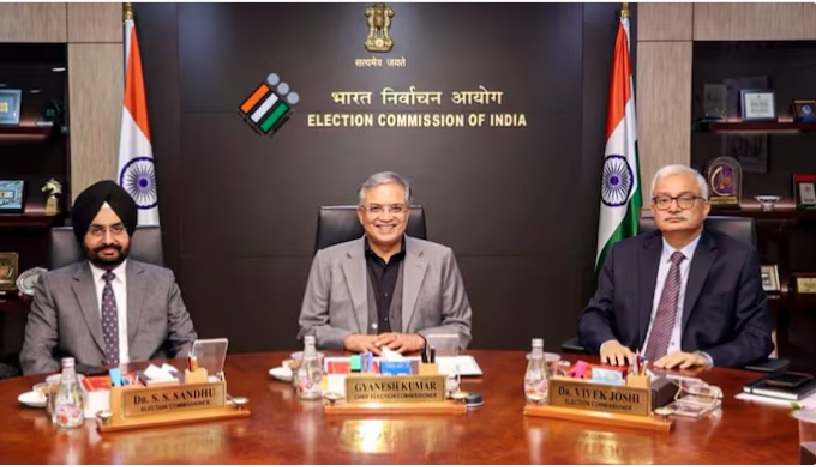
Panjab: Dissent in Indian Election Commission; ED probes GMADA; AAP admits serious accounting impropriety; Student unrest erupts in two private universities. Sikh: US Ambassador visits ‘Darbar Sahib’; SCI remarks on ‘Vande Mataram’ favor Sikhs; Carney’s deprioritizes safety for Canadians—and more stories.
