Thank you! Your submission has been received!
Oops! Something went wrong while submitting the form.
Panjab: Iran allows India crude supply; CM seeks uninterrupted fuel & fertilizer supply; Pathanmajra arrested, CBI probe in Bhullar case refused; BSF constable dies in Custody. Sikh: Canada to pass law banning display of Khalistan symbols; Allahabad Court to pursue 1984 genocide cases; New Anti-Sacrilege law—and other stories.

Iran’s Foreign Minister Abbas Araghchi declared on 26 Mar that no talks were being held with the US. In an official announcement he said, 'Tehran has established its sovereignty over the Strait of Hormuz' adding that India and four other 'friendly nations' were allowed to move their ships through the Strait. He also thanked India and Sri Lanka for their 'significant help' after an Iranian vessel, IRIS Dena, was sunk in a US attack in the Indian Ocean. While the crude oil crisis grows in India and will continue as the war rages, this news brings some relief. Meanwhile, on 27 Mar, India sought a waiver from the US to buy Liquified Natural Gas (LNG) from Russia. The understanding to explore an LNG agreement was reached during a 19 Mar meeting in New Delhi between Russian Deputy Energy Minister Pavel Sorokin and India’s Petroleum and Natural Gas Minister Hardeep Singh Puri. Seeking waivers from the US points towards how India is increasingly beholden to US’ permissions. Additionally, Argentina has come to India's aid as it grapples with Liquified Petroleum Gas (LPG) shortage. During Q1 2026, Argentina exported 50K MT of LPG to India—more than double the 22K MT shipped during the entirety of 2025. Alongside, amid a nationwide LPG crisis, the union government has accelerated Piped Natural Gas (PNG) network expansion across urban India to ensure uninterrupted delivery of essential services. Over 290K PNG connections, including domestic and commercial users, have been provided across the country in March. The union government has also issued a special allocation order for Superior Kerosene Oil under the Public Distribution System. Since commercial gas is scarce and safety norms prevent large-scale storage of LPG at factories, many industries in Panjab have temporarily paused operations rather than running incomplete production cycles. Parallelly, a 20% cut in PNG supply has crippled the iron industry in Mandi Gobindgarh, Fatehgarh Sahib district. Concurrently, triggered by the fuel crisis, India's is pushing towards higher ethanol blending in petrol. The union government has initiated discussions on introducing E25 petrol. This comes even as E20 fuel-comprising 20% ethanol and 80% petrol-is set to become mandatory across India from April (earlier coverage).
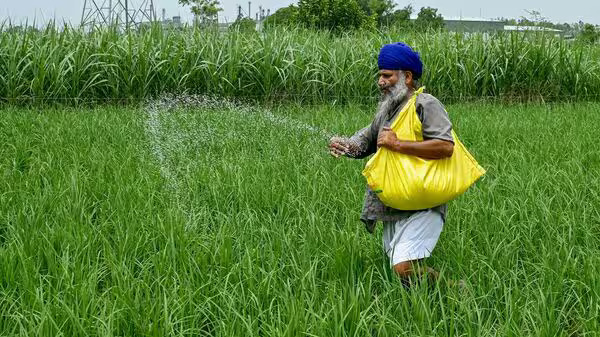
Panjab Chief Minister Bhagwant Mann urged the union government to ensure an uninterrupted supply of petrol, diesel, and Diammonium Phosphate fertilizer as Panjab gears up for an estimated 14 MMT wheat harvest. While reiterating that there is no cause for panic, Mann underscored that timely action by the union government is essential to keep harvesting operations and grain movement running smoothly. Meanwhile, India's fertilizer supplies are under pressure after disruptions to shipping routes due to the Israel & US war on Iran, raising concerns about lower farm produce and higher food prices. India is the world's second-largest fertilizer user and depends heavily on imports of both raw materials and finished products from the Persian Gulf, passing through the Strait of Hormuz. Nitrogen fertilizers like urea are crucial for farmers because many major food crops, including paddy and wheat, cannot absorb adequate nitrogen directly from the air. With India using nearly 40MT of urea annually, its consumption accounts for 45% of fertilizer consumption in the country. Farmers in Panjab typically start buying urea in May for the sowing season beginning June, and therefore are not yet feeling the stress, but will soon. Additionally, a report by Crisil Ratings states that the country’s fertilizer subsidy bill could climb by USD 2.12–2.66B due to the Strait of Hormuz blockade. It can potentially impact annual domestic production of both complex fertilizers and urea by 10–15%. The Persian Gulf supplies about 60–65% of India’s Liquified Natural Gas needs and 75–80% of ammonia imports. The union government also cut excise duty on fuel and withdrew the tax rebate and duty exemption benefits on exports of petrol, high-speed diesel and aviation turbine fuel, amending the Central Excise Rules, 2017, with immediate effect. The excise duty on petrol and diesel for domestic consumption has been reduced by USD 0.11 (INR 10) per liter. Concurrently, in Panjab, households with double bottle (two-cylinder) connections will now have to wait for 35 days instead of 25 days to book a refill with Indian Oil Corporation. The wait for Pradhan Mantri Ujjwala Yojana (fuel scheme) beneficiaries has gone up to 45 days from 20 days (earlier coverage).

Panjab police arrested fugitive Aam Aadmi Party (AAP) Member of Legislative Assembly (MLA) Harmeet Singh Pathanmajra on charges of rape from Gwalior, Madhya Pradesh on 25 Mar. Pathanmajra, an MLA from Sanaur, Patiala district, had been absconding for the past eight months. On 31 Aug 2025, while floods raged in Panjab, Pathanmajra had spoken against Panjab Principal Secretary for Water Resources Krishan Kumar over getting the Tangri rivulet desilted and cleaned, and said the Delhi-based AAP leadership was 'illegitimately ruling over Panjab. On 1 Sep 2025, a First Information report was filed against Pathanmajra over rape, cheating, and criminal intimidation on a complaint by a Zirakpur-based woman who alleged that the MLA misrepresented himself as a divorcee, entered into a relationship with her, and later married someone else in 2021. The police had initially arrested Pathanmajra from Karnal, Haryana but he escaped custody. While on the run, Pathanmajra claimed he feared he would be killed in a fake encounter and was rumored to have fled to Australia. Pathanmajra is the sixth AAP MLA to be arrested, the others MLAs are: Vigilance Bureau (VB) arrested former Health Minister and Mansa representative Vijay Singla in May 2022; VB arrested Bathinda Rural representative Amit Rattan Kotfatta in February 2023; VB arrested Jalandhar Central representative Raman Arora in May 2025; police arrested Khadoor Sahib representative Manjinder Singh Lalpura in September 2025; and police arrested then Transport Minister and Patti representative Laljit Singh Bhullar from Mandi Gobindgarh, Fatehgarh Sahib district in March over abetment of a government official's suicide. In the Bhullar case, five Panjab opposition Members of Parliament have asked for a Central Bureau of Investigation (CBI) probe into the suicide of a Punjab Warehousing Corporation manager Gagandeep Singh Randhawa. However, Panjab Chief Minister Bhagwant Mann has refused the CBI probe saying, ‘Panjab police are capable of carrying out the investigation. The probe will be conducted in a proper manner.’ The demand for a CBI probe by the opposition is ironic because in November 2020, the Indian National Congress state government had withdrawn its general consent to the CBI after a prolonged legal and political battle over the probe into the 2015 sacrilege cases (earlier coverage).

Canada’s House of Commons has passed a new law that would criminalize public display of flags and symbols of designated Khalistan organizations if used to promote hatred. The Combatting Hate Act (Bill C-9) cleared its third reading on 25 Mar with a vote 186 to 137. It now moves to the Senate for further review before it can become law. The Bill introduces a new offence under the Criminal Code for willful promotion of hatred against any identifiable group through the public display of symbols linked to terrorist entities listed in Canada. This includes flags associated with Babbar Khalsa International (BKI) and the International Sikh Youth Federation (ISYF), both designated as terrorist organizations in Canada and India. Meanwhile, in Quebec, Canada, a Sikh teacher Amrit Kaur has challenged Bill 21 which required her to remove her turban and kirpan (traditional sword) to work as a teacher. The case is now before the Supreme Court of Canada and centers on whether it infringes fundamental freedoms and other constitutional protections. The outcome could have wide implications for religious expression, minority rights, and the limits of government authority in a multicultural democracy. Alongside, on 26 Mar, a Canadian national, 60-year-old Guramrit Singh Sidhu from Brampton, Ontario pleaded guilty in a Los Angeles, US federal court to leading a drug trafficking group and moving USD 17M worth of cocaine and methamphetamine from the US into Canada. The indictment—released in January 2024 in the US District Court for the Central District of California—said Sidhu 'occupied a position of organizer, supervisor, and manager, and in this role, obtained substantial income and resources'. Concurrently, in New Zealand, a former Auckland businessman Baltej Singh serving a 22-year prison sentence after admitting to importing more than 700 kg of methamphetamine has lost the plea to keep his name secret. Baltej is the nephew of former Prime Minister of India Indira Gandhi’s assassin Satwant Singh—one of the bodyguards responsible for her killing in 1984. While a New Zealand High Court had initially granted Baltej permanent name suppression, the Court of Appeal said there was a clear public interest in identifying a person responsible for offence (earlier coverage).

The Allahabad High Court has rejected petitions filed by nine persons seeking to quash criminal proceedings related to the 1984 Sikh Genocide in Kanpur, Uttar Pradesh. Of the 1,251 First Information Reports filed after the violence which claimed at least 127 lives, the Special Investigation Team set up by the Uttar Pradesh government identified 40 cases as serious. Chargesheets had been filed in 11 cases, while closure reports were submitted in the remaining 29. The team reopened 20 of those 29 cases for further investigation, uncovering fresh evidence in 11 and initiating action against the accused. In the other 9 cases, no new evidence emerged and closure reports were filed again. In 2023, the team concluded its probe identifying the involvement of 96 persons. Of them, 22 had died. It filed chargesheets against the remaining 74 accused. Meanwhile, the Supreme Court of India has ruled that only Hindus, Buddhists, and Sikhs can claim Scheduled Caste status. Conversion to any other religion will lead to complete loss of Scheduled Caste status regardless of birth. The Bench invoked Clause 3 of Constitution (Scheduled Castes) Order, 1950. Concurrently, on 22 Mar, Panjab Assembly Speaker Kultar Singh Sandhwan met protestors at the ongoing Samana tower protest and announced that the state government would introduce a stronger law by amending the Jagat Jyot Sri Guru Granth Sahib Satkar Act, 2008 (Anti-Sacrilege Act). Since 2015, there have been 597 incidents of sacrilege but only 44 ended in conviction. Addressing a gathering, Sandhwan said the Assembly would convene a special session on 13 Apr, coinciding with Vaisakhi (harvest festival), to pass the amendments. Raising concern over the state's plan, Punjab State Human Rights Commission chief Justice Ranjit Singh asks, 'Can the word of the Guru truly be protected or defined by law?...Can a body of spiritual wisdom be reduced to the language of legal adjudication?...Can a judge determine what constitutes the 'desecration' of a text whose essence lies in the indestructibility of its word? The shabad, (the word) celebrated throughout the Guru Granth Sahib (Sikh scripture and charter), is understood in Sikh philosophy as eternal and omnipresent. No physical act upon a printed volume can destroy the spiritual force of that word' (earlier coverage).

Battling a severe storage crunch ahead of the wheat procurement season, the Panjab government has requested the union government to deploy 860 special trains in April, May, and June to transport freshly procured wheat directly from grain markets to consuming states. Panjab anticipates procurement of around 12.5 MMT of wheat during 2026–27. Panjab has planned 409 trains for April, 440 for May, and 11 for June. Officials acknowledged that while the situation remains challenging, the plan could provide partial relief. A senior official said that Panjab consistently procures more grain than it consumes, making timely transportation to deficit states critical. However, the union railway ministry has not yet given its nod to the plan. Meanwhile, a Ludhiana court has awarded five years in prison to 13 and four years to four accused in the Ludhiana 2012 Above Poverty Line wheat scam. The court has acquitted six. In 2012, over 1,100 wheat bags meant for India’s Public Welfare Scheme were sold to private flour mill owners for sale in the open market, but they were stolen and confiscated from four trucks. Additionally, hundreds of restaurants in the state have been found suppressing sales records by deleting cash bills and evading the payment of Goods and Services Tax (GST) of over USD 10.56M. The Income Tax authorities had originally unearthed the scam nationally and issued notices to Panjab to launch a full-fledged investigation. While the eateries recorded all orders on cash, credit card, or UPI in a day, at the end of the month they would use a backend login to wipe out 30–50% of the bills paid in cash. Furthermore, despite earlier directions, the Punjab State Human Rights Commission (PSHRC), expressed serious concern over the slow progress in addressing key issues at Dr. Vidya Sagar Institute of Mental Health, Amritsar and at Amritsar Central Jail. During a visit by PSHRC to the facilities the team highlighted the need to maintain a buffer zone around the jail boundary wall and to strengthen de-addiction facilities. The PSHRC team flagged rising incidents of suicides and self-harm among inmates alongwith shortage of staff, inadequate police personnel for court production and medical escort, and deficiencies in medical jail infrastructure (earlier coverage).

A Border Security Force (BSF) constable Jaswinder Singh who was picked up from his Amritsar home by the Narcotics Control Bureau (NCB) on 3 Mar, has died in custody. The police said his health deteriorated during questioning on 20 Mar. Maqboolpura, Amritsar police station Station House Officer Jagjit Singh said that the NCB informed them that the constable had been brought in for questioning in connection with a case under investigation. But the circumstances of his death are yet to be officially established. Jaswinder’s family has refused to accept the body and has been protesting, alleging that he was tortured and harassed during the 17-day custody. An NCB spokesperson said Jaswinder was taken into custody after an investigation into a September 2024 case revealed he was in touch with Pakistan-based smugglers and was actively involved in smuggling contraband in the border districts of Panjab and Jammu and Kashmir. His post-mortem report is awaited. The Punjab State Human Rights Commission (PSHRC), has taken a suo-motu cognizance of the matter. The Commission has sought detailed reports from NCB, the District Magistrate, and the Commissioner of Police, Amritsar. Meanwhile, the rising influx of Glock-style pistols from Pakistan’s Khyber Pass region has become a fresh challenge for Panjab police with gangsters moving away from desi katas (country-made pistols) sourced from Madhya Pradesh. Of the 2K-plus illegal pistols seized in the past three years, over 800 have been traced to Pakistan. 500 pistols have been seized since January 2025. Concurrently, a customs official arrested a Ludhiana resident in connection with seizure of 1.08 kg of cocaine worth USD 3.18M concealed inside a parcel at the International Courier Terminal in Mumbai. The parcel, which arrived from Côte d'Ivoire in West Africa, was declared to contain acrylic wool yarn for personal use. The NCB Mumbai zonal office arrested Jaspreet Singh on charges of Narcotic Drugs and Psychotropic Substance Act. Additionally, social media platform X Corp moved the Punjab and Haryana High Court seeking a formal restraint on the Panjab police from taking ‘coercive action’ over the removal of content that supposedly ‘glorifies crime’. X argues the content is legitimate journalism. Panjab police has also blocked 643 social media handles for glorifying weapons and crime (earlier coverage).

United Nurses Association (UNA) of Panjab began an indefinite statewide strike on 26 Mar impacting services in government medical colleges and hospitals in Patiala, Amritsar, and Sahibzada Ajit Singh (SAS) Nagar. At Government Medical College, Amritsar, nurses boycotted all routine medical services, attending to only emergency cases. UNA president Ramanjit Singh Gill said nurses at medical colleges in the three cities had joined the strike, demanding restoration of the earlier grade pay which amounts to USD 1,025 per month. A 2021 order had slashed the paygrade to half. UNA chairperson Arti Bali said Panjab is the only state where nurses were paid less. The nurses defied the Panjab government’s imposition of the Essential Services (Maintenance) Act (ESMA) on 25 Mar to strike. ESMA prohibits nursing staff and other essential medical personnel from going on strike or abstaining from duties and warns of strict penal action against violators. Resident doctors, nursing interns, and senior nursing staff were deployed in hospitals to manage the workload, keeping Outpatient Departments, and Operation Theatre’s functional. Additionally, Accredited Social Health Activists (ASHA) workers have been protesting across Panjab demanding Employees’ Provident Fund and a minimum monthly salary of USD 253 amongst other issues. On 14 Mar ASHA workers had gathered at Gurdwara Sri Amb Sahib in SAS Nagar and marched towards Chandigarh to press for their demands regarding Employees’ Provident Fund and a minimum monthly salary of USD 253 amongst other issues. But police used water canons on them to stop their march. Additionally, the Panjab government has released USD 13.51M into the bank accounts of women to support their health during pregnancy and after childbirth. Amritsar District Planning Committee Chairman Gurpratap Singh Sandhu said that more than 289K women across Panjab have benefited from the scheme so far. Women receive USD 53 for their first child and if the second child is a girl, the state provides a one-time financial assistance of USD 64 to encourage the birth of girl-child. Concurrently, the Punjab and Haryana High Court (PHHC) commuted a rape convict’s death penalty involving a minor girl to an unusual 50 years in prison. While passing the judgment, PHHC strongly criticized the failure of society in educating men about other genders and ‘making them perverts’ (earlier coverage).
.jpg)
The 2026 annual bird census reveals that the 2025 Panjab floods took a visible toll on migratory bird population, with Harike, Keshopur, and Ranjit Sagar wetlands recording a significant decline in bird numbers. The total number of birds across six key wetlands in Panjab fell to 71,129 in 2026 from 77,772 in 2025. The worst-affected sites were Harike Wildlife Sanctuary, where bird numbers dropped to 52,707 from 57,251 and Keshopur Wetlands where numbers dropped to 10,450 from 13,675 in the same years. Despite the decline in total numbers, the census recorded an increase in species diversity from 278 species in 2025 to 304 in 2026. Chief Wildlife Warden Basanta Rajkumar said, ‘The decline in numbers reflects ecological stress due to floods, but the increase in species indicates resilience of wetland ecosystems’. The bird census was carried out by the Forest Department of Panjab in collaboration with Bombay Natural History Society, Wildlife Institute of India, and WWF-India. Meanwhile, a new study shows emerging wildlife crime hotspots in the state which are not randomly distributed but highly concentrated. Using spatial analysis, researchers found that 1% of the state’s area—roughly 509 sq km including parts of Amritsar, Jalandhar, and Ludhiana districts, along with the Shivalik foothills—accounts for extreme-intensity crime hotspots, while nearly 30% falls in low to moderate intensity zones. The study documents 32 incidents of wildlife crime in Panjab between 2019–2024, affecting thousands of animals, many endangered. It identified wild boar as the most frequently targeted species, often linked to bushmeat trade and illegal transport networks. Furthermore, as per the 2025 World Air Quality Report by IQAir, a Swiss air quality technology company, India is the sixth most-polluted country when it comes to levels of fine particulate matter. Loni in Ghaziabad, Uttar Pradesh was the most polluted city in the world in 2025, recording an annual average PM2.5 concentration of 112.5 µg/m³, which is 22 times more than the World Health Organization permissible guidelines. New Delhi ranked as the most polluted national capital, with an average PM2.5 concentration of 82.2 µg/m³. In Panjab, Mandi Gobindgarh remained the most polluted city, followed by Ludhiana (earlier coverage).

India's Parliament has passed a controversial Bill that seeks to change how transgender people are legally recognized and infringes upon their right to self-identify. The Bill was passed amid protests by opposition parties and the LGBTQIA+ community. The union government says the changes will make welfare benefits more accessible and strengthen an existing law against exploitation and trafficking, but critics warn it could exclude many transgender, non-binary, and gender-fluid people. India is estimated to have around 2M transgender people, though activists say the true number is higher and legal recognition remains uneven. In 2014, Supreme Court of India (SCI) recognized transgender people as a 'third gender' and affirmed their right to self-identify. Despite legal protections, many transgender people in India continue to face discrimination and limited access to education, healthcare and formal employment, often relying on traditional or informal forms of work. In 2019, the Transgender Persons (Protection of Rights) Act was enacted, aimed at addressing vulnerabilities faced by the community and had an inclusive definition of transgender persons. The new Bill—proposed as an amendment to the 2019 law—centers on how a transgender person is defined. It limits legal recognition to historically accepted socio-cultural groups such as hijra and kinner (intersex groups). This amendment removes legal recognition for those who self-identify as trans men, trans women, or gender non-binary people, and mandates medical certification for identity recognition. In fact, the SCI Advisory Committee had asked the union government to keep the transgenders' right to self-determination. Trans rights activist Akkai Padmashali said, ‘These politicians are making laws for us when they don’t even have basic concepts of gender, sex, and sexuality. This new Bill criminalizes us and disrespects our right to exist.' A recent editorial said, 'This controversial Bill raises more questions than it answers...It moves from a rights-based approach to a regulatory approach.' Panjab’s first transgender Lok Adalat (People's Court) jurist Mohini Mahant said, 'It seems that the government is forcing communities to go into hiding again...Why should the state decide our gender? ' Activists from Panjab plan to join activists from other states and file a Public Interest Litigation in the SCI, challenging the amendment.
GN Devy in Indian Express: The many links between India and Iran.

Panjab: Six districts ‘Ultrasensitive’ drug zones; Govt. promises 8% increase in DA; Over 10 cases of kidnapping & extortion of illegal emigrants. Sikh: UK's Johal gets bail; ‘Akal Takht’ expels SAD Leader & 'Granthi'; Truck driver attacked days after US poster; 'Takht Sri Hazur Sahib' marks Modi birthday—and more stories.

Panjab: Laborer names Cheema in dying declaration; Power crisis; Court restrains Majithia & Khaira; Sekhon joins AAP & Sidhana joins WPD. Sikh: DHS accused of bigotry over Mr. Singh poster; Pakistan stops pilgrims; Canada mishandles protest—and more stories.
