Thank you! Your submission has been received!
Oops! Something went wrong while submitting the form.
Panjab: Twin Blasts, CM Mann Blames BJP; ED Raids: Arora Arrested, Panjab AAP Chief Named; NCRB Data; Drug-Abuse; USCIRF Hearing. Sikh: Akal Takht Rejects Anti-Sacrilege Law, Calls for Altering Clauses—and more stories.
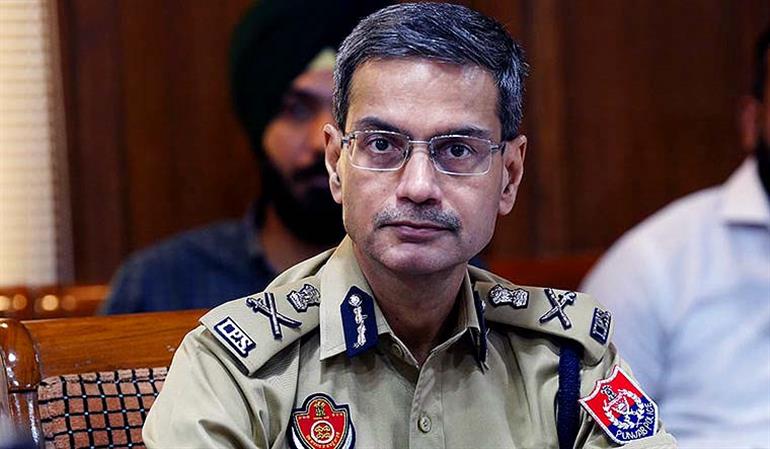
Two separate blasts in Panjab within hours of each other triggered panic and set off a political slugfest on 6 May. In Jalandhar, the blast took place in a scooter parked outside the Border Security Force Panjab Frontier headquarters at 8 pm whereas in Amritsar, it took place near the Khasa cantonment at 10:50 pm. No casualties were reported. Jalandhar Police Commissioner Dhanpreet Kaur said it was too early to draw conclusions but the scooter rider has been identified as 22-year-old delivery agent Gurpreet Singh. Reacting to the blasts, Panjab Chief Minister Bhagwant Mann blamed the Bharatiya Janata Party (BJP). He said, 'This is BJP’s way of working in any state where they want to contest elections. They first create riots, carry out small blasts, and divide people on the basis of religion and caste. This is BJP’s election preparation...I want to tell BJP that Panjab has seen many dark days and now Panjabis will not tolerate this.' Aam Aadmi Party Member of Parliament Sanjay Singh also said that BJP wants to disturb peace and divide the people of Panjab 'by carrying out bomb blasts', claiming that it is part of the saffron party’s Mission Panjab electoral strategy ahead of the 2027 Assembly elections. BJP's national general secretary Tarun Chugh objected to the controversial remarks made by CM Mann and asked, 'Where is the evidence? Panjab is struggling with drugs, bomb blasts, gangster networks, and economic crisis, but the Mann government is making false allegations against the BJP. Panjab needs responsible governance, not political drama.’ Chugh has served a defamation notice to CM Mann. The Panjab Indian National Congress condemned the recent blasts warning that such occurrences pose a serious threat to the state’s hard-earned peace. Meanwhile, Director General of Police, Panjab, Gaurav Yadav confirmed that Improvised Explosive Devices were used in both the blasts. He warned of attempts to create a false narrative that Panjab is disturbed, alleging that a handful of elements were acting at the behest of Pakistan's Inter-Services Intelligence. The Khalistan Liberation Army has taken responsibility for the Jalandhar blast. A blast had also taken place on the railway track near Rajpura on 28 Apr taking the blast count to three in eight days (earlier coverage).
The Enforcement Directorate (ED) arrested Panjab Industries Minister Sanjeev Arora on 9 May from his Sector 2, Chandigarh residence after fresh raids against him and persons allegedly linked to him. ED also searched two locations in Delhi and Gurugram, Haryana. A Gurugram special court sent the Aam Aadmi Party Member of Legislative Assembly to seven days of ED custody. The action follows a fresh case registered under the criminal provisions of the Prevention of Money Laundering Act (PMLA). The ED alleged the probe relates to fake Goods and Service Tax (GST) purchases of mobile phones worth more than USD 10M and subsequent exports allegedly used to round-trip illegitimate funds from Dubai to India. According to the agency, fake GST purchase bills were obtained from non-existent firms in Delhi to claim fraudulent Input Tax Credit. ED had earlier raided Arora on 17 Apr under the Foreign Exchange Management Act and attached his company Hampton Sky Realty worth USD 16M. Arora’s cabinet portfolios have been distributed among other Panjab ministers. Aman Arora was allotted Industry and Investment Promotion, Harjot Bains Local Government, and Tarunpreet Sond Power. Additionally, on 7 May, ED had searched builders and real estate developers in Panjab and Chandigarh as part of a PMLA investigation. ED searched Nitin Gohal and Pritpal Singh Dhindsa who are associates of Officer on Special Duty to Panjab Chief Minister Bhagwant Mann, Rajbir Ghuman, for helping builders who defaulted in fee payments to Greater Mohali Area Development Authority and arranging political protection for them. When ED raided Gohal's home, two bags containing cash were thrown from the 9th floor creating a flutter in the area. After the searches, ED has named Panjab AAP chief Aman Arora in its statement. Arora has said he will quit politics if any wrongdoing is proved against him. Subsequently, on 11 May night, the Central Bureau of Investigation raided a five-star hotel in Chandigarh when Inspector OP Rana, reader to Panjab Vigilance Bureau chief director Sharad Satya Chauhan was striking a deal through middleman Raghav Goel with a complainant and recovered USD 13K paid as bribe (earlier coverage).
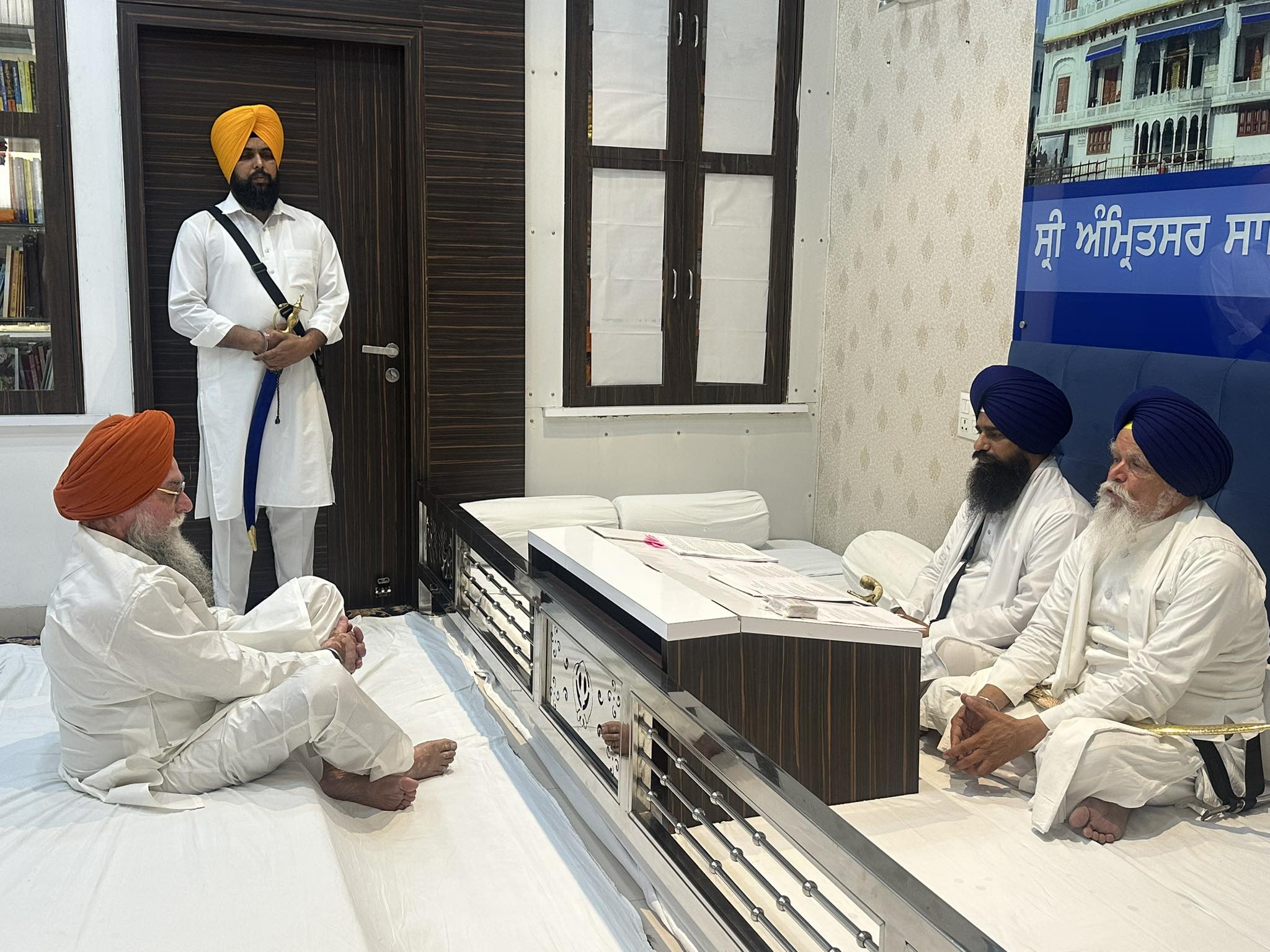
After Panjab Assembly Speaker Kultar Singh Sandhwan appeared at Sri Akal Takht Sahib (Eternal Throne, AT) on 9 May, acting Jathedar (leader) AT Giani Kuldeep Singh Gargajj rejected the Jaagat Jot Sri Guru Granth Sahib Satkar (Amendment) Act (JJGGSS), 2026 over certain controversial clauses. Giani Gargajj has issued a 15-day ultimatum to the Aam Aadmi Party (AAP) government to remove objectionable clauses which 'hurt Sikh sentiments and interfere in Panthic (Sikh collective) affairs'. Giani Gargajj said according to a 1959 pact between former Shiromani Akali Dal (SAD) chief Master Tara Singh and former Indian Prime Minister Jawaharlal Nehru, the government cannot make a law dealing with Sikh affairs. Then he pointed out that besides prosecuting the accused, the JJGGSS law also charges the ‘custodian’ of the Guru Granth Sahib (Sikh scripture and charter) and could amount to Sikhs seeking police protection to perform prayers. He added, ‘Akal Takht would provide the Panjab government with a panel of Sikh legal experts and former judges to help build consensus on the legislation. Until the Akal Takht and the Shiromani Gurdwara Parbandhak Committee (SGPC) give their approval in this matter, Sikhs will not accept the law.' He warned that if the government failed to amend the law within 15 days, a meeting of the five Singh Sahiban (loved ones) would be convened and 'strict action' would follow. SGPC president Harjinder Singh Dhami said they will not affix Unique Identification numbers on the published GGS saroops (tomes), nor make their details public. Panjab Chief Minister Bhagwant Mann said, ‘If the 1959 pact was in force, how did the SAD government make the JJGGSS law in 2008?’ He has summarily rejected any proposal to make changes in the JJGGSS law. CM Mann went on a three-day shukrana yatra (thanksgiving tour) leading to major traffic restrictions and detentions of those who wanted to express their issues to him. On 7 May, in Amritsar, jailed Khadoor Sahib Member of Parliament Amritpal Singh’s mother Balwinder Kaur approached CM Mann and said, ‘You are also someone’s son, feel a mother’s pain.’ She was immediately removed from the cavalcade but she later asked, ‘Now that the National Security Act has been withdrawn, why can’t Amritpal be brought to a Panjab jail?’ (earlier coverage)
After maintaining the top position for three consecutive years in drug overdose deaths, Panjab slipped to the second spot in 2024, according to the latest National Crime Records Bureau (NCRB) report on Accidental Deaths & Suicides in India. A total of 978 deaths were reported nationwide with Tamil Nadu topping the list at 313, followed by Panjab (106) and Madhya Pradesh (90). NCRB data shows fatalities increased from 89 in 2023 to 106 in 2024. Across India, drug overdose deaths stood at 681 in 2022 and 654 in 2023 before surging sharply to 978 in 2024. The NCRB Crime Report 2024 showed Panjab with the second-highest Narcotic Drugs and Psychotropic Substances Act, 1985, crime rate at 29 cases per hundred thousand population and the fourth-highest number of cases at 8,973. Additionally, Panjab recorded 33 deaths due to the consumption of spurious liquor in 2024 and had 48 incidents of prison escapes. Panjab and Haryana recorded the second-highest number of unnatural deaths of inmates in prisons in 2024—with 15 deaths each, as per NCRB Prison Statistics 2024. Together, the two states accounted for nearly 18% of the 166 unnatural deaths reported in prisons across India. The state also registered 1,079 murder cases in 2024. The NCRB report recorded 90 farmer suicides in the state. Among them, 73 were landowners, 11 cultivated leased land, while six were agricultural laborers. Furthermore, the report documented 182 suicides by unemployed persons and 301 suicides by housewives. Panjab recorded 2,430 cases under the Protection of Children from Sexual Offences Act and 558 rape cases in 2024. Panjab also witnessed a 74% increase in cybercrime cases between 2023 and 2024, but convictions remained at 21%. The data reveals that 888 cybercrime cases were registered in the state in 2024 but chargesheets were filed in only 48% of these cases with a very high pendency of 93% in courts. In cybercrimes against women, the maximum cases were related to cyber pornography and cyber stalking or bullying. In a first, the NCRB also recorded statistics pertaining to the Prevention of Cruelty to Animals Act, 1960, with 9,039 cases registered across India in 2024 (earlier coverage).

A 20-year-old gold medallist boxer Navdeep Singh, died of a drug overdose in Mansa on 9 May. Navdeep won gold medals in Panjab State Games in 2024 and the Panjab State Senior Kickboxing Championship in 2025. The deceased’s father, Jaspal Singh, a daily wager, expressed grief and asked why the police had not taken action to curb drugs? Meanwhile, the busy Lakkar Bridge, Ludhiana has become an open drug-abuse area where young men get high and lie around as passersby avoid them. Lying amid scattered tubes and plastic remnants used for sniffing substance meant for fixing cycle punctures—one of the cheapest forms of intoxication—the scene raises uncomfortable questions about the real impact of much-publicized Panjab government campaigns like Yudh Nasheyan Virudh (War on drugs) and the vision of a Nasha Mukt Panjab (Drug free Panjab). Scenes like these point at the growing reality that public apathy and complacency to drug use and abuse in open spaces is increasing. Additionally, the Supreme Court of India (SCI) slammed the Panjab government for failing to check the drug menace and cautioned that the ‘situation is going out of hand’. Chief Justice of India (CJI) Surya Kant said that while the police nab small-level peddlers for publicity, it fails to catch the ‘bigger sharks’. He said, ‘Today, I don’t want to comment on your police functioning. They need to be sensitized. Whom they are picking up and whom they are letting off—it’s known to everyone. So please do something.’ The CJI also suggested formation of a national agency to monitor pan-India drugs-related cases. The bench had taken up a suo-motu case for creation of exclusive courts across the country for faster disposal of trials under special statutes like the Unlawful Activities (Prevention) Act, 1967 and the Narcotic Drugs and Psychotropic Substances Act, 1985. Furthermore, a recent study examining the ‘black economy’ in Panjab says that narcotics trade is the most visible and economically far-reaching of all the forces driving the underground economy in the state. The report reveals that Panjab’s 553-km international border with Pakistan and its vast network of canals and rivers, has made it a critical transit corridor for the cross-border trafficking of heroin and other opioids (earlier coverage).
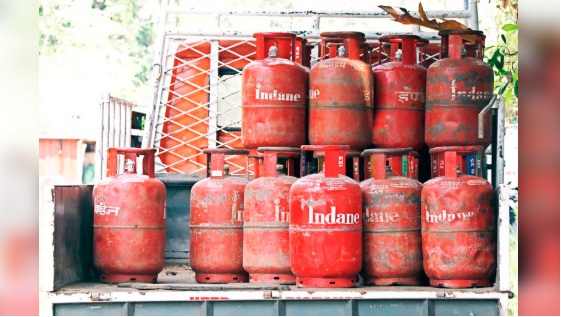
As the deadlock between Iran and the US over the Strait of Hormuz continues, oil pipelines across the globe are running dry, depleting at an unprecedented rate, severely disrupting crude flows from the Persian Gulf, and rapidly eroding the buffer that protects markets from supply shocks. With the loss of more than a billion barrels of supply over roughly two months of near-closure of the Strait of Hormuz leaving the system increasingly exposed, the sharp fall in inventories has triggered rising concern across governments and energy markets. The most immediate stress is emerging in fuel-import-dependent Asian countries. Traders identify Indonesia, Vietnam, Pakistan, and Philippines as the most at risk, with potential shortages possible within a month. Larger economies such as China currently remain better supplied. Japan and India are now at 10-year seasonal lows, with stocks down 50% and 10%, respectively. In a television address, the Prime Minister of India, Narendra Modi has appealed to the people to follow austerity measures such as working from home, using public transport and carpooling in order to save fuel. He also appealed to people to buy less gold and limit foreign travel. Reacting to the appeal, opposition parties in India criticized Modi of ‘negligence’ after he called upon Indians to embrace COVID-era restraints while continuing with his own travel plans. Samajwadi Party chief Akhilesh Yadav questioned why Modi thought of all these measures after the conclusion of the assembly elections in four states when his Bharatiya Janata Party leaders were taking charter flights to campaign across the country. In Panjab, a severe Liquefied Petroleum Gas (LPG) supply crisis has hit gas consumers with a massive backlog of 118,825 refill bookings leaving thousands of households waiting between 10–30 days for cylinder deliveries across six LPG Sales Areas. The prolonged delays have triggered resentment among consumers and protests at local gas agencies while distributors say they are facing mounting pressure from angry customers. Meanwhile, the Sikh community in Tehran remains in the country despite the war with members highlighting the Gurdwara's role in serving people during the conflict (earlier coverage).

Panjab's electricity demand is projected to increase by 6% and reach a record level of over 18K MW with the paddy season scheduled from 1 Jun. Every paddy season, over 1.4M tubewells pump out gallons of water to irrigate fields—with the majority of these borewells located in the districts whose water table is already overexploited. Every tube well pumps out 3M liters of water per week with an average eight hours of power supply. This means that around 1.4M tube wells pump out 4,385B litres of water per week. A recent report submitted by an expert committee to the National Green Tribunal suggests that if paddy transplantation is delayed by a week—as provided for by the Punjab Preservation of Subsoil Water Act, 2009—the state can meet the demand for water of its 30M population for more than 3.5 years. However, the Panjab government waived the Act in 2025 and also in 2026. Despite advice by experts, Panjab continues to allow paddy sowing beginning June as opposed to the end of June when the monsoon is about to commence. Furthermore, the state government has decided to expand its maize promotion policy in 2024 to around 20K hectares. Experts argue that the numbers remain too small for any real impact in Panjab where paddy dominates the agricultural landscape. In 2025, the government had launched a pilot project to encourage farmers to shift from paddy to maize on 12K hectares which has been increased to 20K hectares for the current season. The agriculture department has also set an overall target of bringing 125K hectares under cotton—also an alternative to paddy—roughly 6K hectares more than the 2025–26 season. Meanwhile, as the wheat procurement season nears its end, an analysis suggests that while total arrivals in grain markets have declined compared to 2025, government agencies have stepped in to compensate for a sharp drop in private trade participation. In May 2025, Panjab had recorded total wheat arrivals of around 13 MMT. Whereas, by 6 May 2026, arrivals stood at around 12.2 MMT, showing a decline of nearly 6%. Data suggests that government procurement has actually surpassed last year’s level despite lower arrivals, while private trade participation has collapsed by nearly 86–87% (earlier coverage).

A resident of Chak Tarewala village, Moga district, Amarjit Singh was allegedly cheated of nearly USD 50K by a travel agent and his associates on the promise of sending him to the US. The victim was reportedly pushed through an illegal ‘donkey route’ spanning multiple countries and was kept in camp-like detention conditions. Eventually, he was intercepted by US authorities at the border and placed under custody, spending one year in a US detention facility before being deported back to India on 18 Dec 2026. The main accused have been identified as travel agent Naginder Khullar, along with Kaku Singh and Mangal Singh. The police have launched search operations to arrest the accused. Meanwhile, a 30-year-old man, Aakash, claiming to be an Indian citizen, is stranded at Kuala Lumpur International Airport in Malaysia for two weeks after he was denied entry in Delhi for not being able to present a valid Indian passport. Aakash, who claims to be from Jalandhar, Panjab was turned away after Indian immigration authorities refused to accept the identity certificate—issued by New Zealand (NZ) to asylum-seekers—as a valid travel document to enter India. An NZ Certificate of Identity is a travel document issued to non-citizens who cannot obtain a passport from their home country. This document allows holders to return to NZ and it serves refugees, stateless persons, or residents unable to get a national passport. Concurrently, in a USCIRF hearing on religious persecution in India, the panel stated that religious freedom in the country remains on a downward trajectory. Religious minority communities—Christians, Muslims, and Dalits (marginalized caste)—continue to be the target of violent attacks with several states introducing anti-conversion laws and imposing harsh penalties for religious conversions. Human rights lawyer and law professor based in Washington DC, US Arjun Singh Sethi raised the issue of India's transnational repression in Canada and US. The panel added that the Indian government continues to wield anti-terrorism and citizenship laws to arbitrarily detain religious minorities and those advocating on their behalf. Additionally, New York (NY) authorities under Mayor Zohran Mamdani have relinquished hundreds of artifacts valued at USD 14M to India, which were allegedly ‘trafficked’ into the US and subsequently seized by NY authorities (earlier coverage).

After Bharatiya Janata Party (BJP) won in West Bengal, considered an All India Trinamool Congress bastion, all eyes are on Panjab elections in early 2027. Panjab’s traditional parties Shiromani Akali Dal (SAD) and Indian Nation Congress (INC) remain in disarray. SAD has not been able to recover after 2015 when incidents of sacrilege of the Guru Granth Sahib (Sikh scripture and charter) and other religions eroded people’s trust. INC has several tall leaders but remains a divided house. The incumbent Aam Aadmi Party (AAP) got a massive mandate in 2022 winning 92/117 seats but has massively underperformed, indulged in corruption amongst allegations of it being run from Delhi. The BJP was in alliance with SAD and in power in the state in 1997–2002 and 2007–17, but as a junior partner. After SAD pulled out from its alliance with BJP in 2020 over the draconian farm laws which were later repealed, BJP has decided to fight all seats on its own in 2027. However, BJP’s issues are: one, it has no rural base in Panjab. Two, most ordinary Sikhs—who constitute 56% of the population—consider the party anti-Sikh. Three, farmers and laborers harbor animosity towards the party for their over-year-long protest against farm laws in 2020–21 in which 735 people died. Four, people in the critical border state also remember how the BJP curbed the Farmers Protest 2.0 (2024–25) violently at the Panjab and Haryana inter-state borders at Shambhu and Khanauri. Five, Panjab has never been communal so BJP’s ploy of othering the Muslims in rest of India does not work in the state. BJP has got some prominent Sikh faces into the party but it is yet to be seen if the ploy works. However, BJP has been using state machinery to its advantage. For example, in its West Bengal win, the Election Commission of India implemented a Special Intensive Revision of the voter list which disenfranchised 9.1M out of 62.7M voters out of which 2.7M were eligible, 3.4M appeals were pending, but could not vote. It also added 700K unknown voters with no details provided. Also, the BJP-led union government transferred 483 senior government officials after elections were declared and the Model Code of Conduct was declared (earlier coverage).

In a striking historical irony, Kensington Palace, London, once home to Queen Victoria, is currently hosting a tribute to Panjab’s royal family her Empire had deposed 177 years ago. The exhibition Last Princesses of Punjab opened on 26 Mar. It unearths the poignant saga of the descendants of Maharaja Ranjit Singh. Through a mélange of sepia-toned photographs, rare royal artefacts, and priceless heirlooms, it traces the lives of the children of Maharaja Duleep Singh, Ranjit’s youngest son and the last ruler of Panjab, who was exiled to England in 1849 after the British annexed his empire. British Sikh art collector-researcher Peter Bance calls the exhibition a 'labor of love'. As the author of the book The Last Royals of Lahore, Bance focuses on the 'correct preservation, restoration, and documentation' of Anglo-Panjab history. The London display explores the story of Sophia Duleep Singh and the women who shaped her journey, examining themes of courage, identity, and resistance. While Queen Victoria served as godmother to Sophia and provided financial guidance after Duleep Singh abandoned the family, the sisters forged radically independent paths. Princess Sophia became a pioneering suffragette voice at Hampton Court Palace. Her ‘No Vote, No Tax’ banners and a handwritten letter to Winston Churchill describing police brutality are central to the exhibition. The exhibition also covers Princess Bamba who sought to reconnect with her Panjabi heritage through her writings and Princess Catherine who quietly supported Jewish refugees fleeing Nazi Germany by offering them shelter in England. Scholar and historian Harinder Singh says, 'It's always a challenge to determine what the loyalists of the British and the Panjab Royals can digest and what the Sikh narrative demands...Initially, there was care to nuance e.g., the spelling of Panjab versus Punjab, conversions to Christianity, and so on. But it died down very soon...Largely, the focus remained on Princesses, and that was wonderful to see for 'Her Story' must be told much more. Their education, activism, sexuality, privilege, challenges, and more were carefully crafted along their journeys from independent Panjab to the UK, Egypt, Russia, France, India, and Pakistan. There is a constant battle between objects and narrative, which drives the exhibition. I saw that struggle in copy and material, from old to contemporary. Nonetheless, it is a welcome exhibition' (earlier coverage).
Jitesh Pillaai in Filmfare: 127 scars on a masterpiece, why the Censors fear Diljit Dosanjh's Punjab '95.

Panjab: Six districts ‘Ultrasensitive’ drug zones; Govt. promises 8% increase in DA; Over 10 cases of kidnapping & extortion of illegal emigrants. Sikh: UK's Johal gets bail; ‘Akal Takht’ expels SAD Leader & 'Granthi'; Truck driver attacked days after US poster; 'Takht Sri Hazur Sahib' marks Modi birthday—and more stories.

Panjab: Laborer names Cheema in dying declaration; Power crisis; Court restrains Majithia & Khaira; Sekhon joins AAP & Sidhana joins WPD. Sikh: DHS accused of bigotry over Mr. Singh poster; Pakistan stops pilgrims; Canada mishandles protest—and more stories.
