Thank you! Your submission has been received!
Oops! Something went wrong while submitting the form.
Panjab: Affects of Iran effectively closing Strait of Hormuz; Assembly pays tribute to Iranian schoolgirls & Khamenei; USD 28B budget. Sikh: Police detains PU students; Sikhs harassed over articles of faith; Ram Rahim acquitted in journalist’s murder—and more stories.

After Israel and the US bombed Iran on 28 Feb, Iran effectively closed the Strait of Hormuz—one of the world’s most strategically important chokepoints, through which 20% of the world’s and nearly 40% of India's total oil and gas shipments pass. Iran has said it will allow only Chinese vessels to pass through the Strait as an expression of gratitude for Beijing's stand towards Tehran since the war began. On 10 Mar, Iran said it will allow vessels from any Gulf country that closes US bases in their territories and expels US diplomats. About 23K Indian sailors on 36 ships with USD 1B worth shipments are stuck in the Persian Gulf. Panjab was readying 90K MT Basmati rice for export to Iran which is now stalled. Following disruptions in Liquefied Natural Gas supply from Qatar—which supplies nearly 60% of India’s LNG—Gas Authority of India Limited has reduced gas supplies to National Fertilisers Limited plants located at Nangal, Ropar district and Bathinda. The resulting shortages would push up the prices of household staples such as wheat, rice, potatoes, and make animal feed more costly. The Indian union government has stopped commercial LNG supply to Panjab and other states, disrupting the hotel and welding industry. India is the world’s third-largest oil importer and is once again considering increasing Russian oil imports which India had been cutting back in response to US pressure, particularly after the US trade deal in February that rolled back punitive tariffs. On 6 Mar, US Treasury Secretary Scott Bessent posted on X that the US 'Treasury Department is issuing a temporary 30-day waiver to allow Indian refiners to purchase Russian oil.' In an interview Bessent said, ‘The Indians had been very good actors.’ The terms ‘waiver’, ‘allow’, and ‘actors’ led to a furore in India. India's Leader of Opposition Rahul Gandhi said the language shows how India’s foreign policy decisions are increasingly shaped by external pressures rather than national interest. Rahul said, 'What we are witnessing today is not policy. It is the result of the exploitation of a compromised individual,' referring to Indian Prime Minister Narendra Modi (earlier coverage).
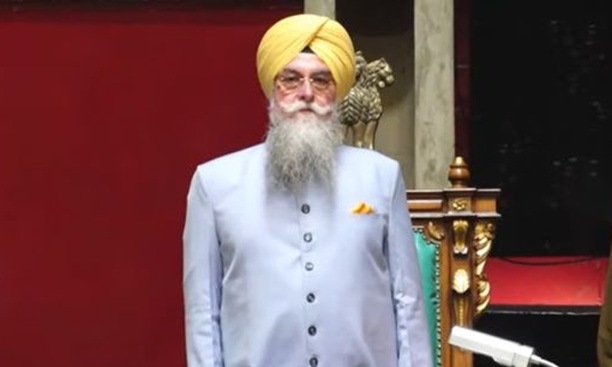
On 5 Mar, India condoled the death of Iran’s Supreme Leader Ayatollah Ali Khamenei who was assassinated in the opening salvo of the Israel-US war on Iran on 28 Feb. The condolence was not offered by the President, Prime Minister, or External Affairs Minister but by a Foreign Secretary. Vikram Misri signed the book of condolence opened at the Embassy of Iran, New Delhi. In various Indian cities—Srinagar, New Delhi, Lucknow, Malerkotla, and others—mourners took to the streets. Protests erupted across Panjab against Israel and the US over Tehran’s bombing. At the beginning of the Budget Session of the Panjab Legislative Assembly (PLA) on 6 Mar, a doctor and PLA member from the ruling Aam Aadmi Party Sukhwinder Kumar Sukhi said, 'An inhuman incident happened in Iran in which around 165 girls who were studying in the school were killed. Many doctors and patients, who were in a hospital were killed. Iran’s supreme leader Ali Khamenei was also killed.' He requested the PLA for silence in memory of those who lost their lives in the strikes, which then observed for a few minutes. The Shiromani Akali Dal (Delhi Unit) and the Indian National Congress also paid separate tributes at the Iran embassy. Meanwhile, on 4 Mar, the US sank an Iranian ship just outside Indian waters. Islamic Republic of Iran Ship (IRIS) Dena had taken part in the International Fleet Review 2026 in India between 18–25 Feb before beginning its return voyage. When the ship arrived, the Indian Eastern Naval Command had welcomed the Iranian vessel during its port call at Visakhapatnam, Andhra Pradesh. Upon it being torpedoed by United States Ship Charlotte, the Sri Lankan navy saved 32 sailors, recovered 87 bodies, while many remain missing from the approximately 180 crew members on board. India says the attack was not in its waters and it had offered shelter to the ship, similar to another Iranian ship IRIS Lavan which is docked at Kochi, Kerala currently. Concurrently, Iran has announced that foreign nationals, including Panjabis, studying in the country's educational institutes will be allowed to exit through its land borders (earlier coverage).
.jpg)
Panjab Finance Minister Harpal Cheema claimed the Aam Aadmi Party (AAP)-led government has brought down the Debt-to-Gross State Domestic Product (GSDP) ratio by 4% in the last 4 years. He said, 'By servicing that debt, we have returned 35% of the principal amount and 50% of interest. Of the borrowings we took, 85% was spent on servicing the old debt.' Panjab's effective outstanding debt for 2026–27 stands at USD 48B, up from the revised estimate of USD 43B in 2025–26; the effective outstanding Debt-to-GSDP ratio for 2026–27 is estimated at 45.1%. During the Budget Session in the state Legislative Assembly, on 8 Mar, Cheema presented the budget with a total outlay of USD 28B. He further announced the fulfilment of a key electoral promise providing USD 10.8 per month to all women and USD 16 per month to Scheduled Caste women. He stated that the amount will be transferred to the bank accounts of all women under a new scheme titled Mukh Mantri Mawan Dhian Satikar Yojana (Chief Minister's scheme for adult women). To which state Leader of the Opposition Partap Singh Bajwa remarked, 'After four years of silence, they suddenly remembered their promise to women. This is not governance. This is election season politics.' Shiromani Akali Dal president Sukhbir Singh Badal asked, 'Why only USD 1.1B were earmarked for the scheme when the outlay for women should have been more than USD 5.5B? The AAP government has defrauded women on International Women’s Day.' According to the Economic Survey of Punjab 2025–26 tabled in the Legislative Assembly, the state's growth rate has remained below the national average since 2013–14. From 2013–23, services accounted for an average annual share of 46% of the state's Gross State Value Added (GVSA), agriculture and allied activities continue to hold 22.8% of GSVA. The industrial sector is expected to account for 29% of GSVA. A major worry for the Panjab government is the rising burden on the state exchequer on account of salaries, interest payments, and pensions, and retirement benefits. These committed liabilities are estimated to consume approximately 72% of its revenue receipts (earlier coverage).

Panjab’s garbage crisis has spiralled into an environmental hazard. As stricter Municipal Solid Waste (MSW) Rules take effect from 1 Apr, civic bodies across the state find themselves in a bind with mountains of uncleared legacy waste, which the municipality cannot handle. Panjab’s 166 Urban Local Bodies (ULBs) have a total of 84.09 MMT of legacy waste, of which nearly 41.11 MMT remains to be cleared and complete remediation is not expected before April 2027. Legacy waste means old municipal waste accumulated over the years at dump sites and includes municipal solid waste, industrial waste, hazardous material, and construction debris. It poses serious environmental and public health risks, as it generates toxic leachate that contaminates groundwater. At the same time, cities generate thousands of tons of fresh municipal waste every day, much of which is poorly processed. The upcoming MSW Rules require stricter segregation of waste streams, mapping, and remediation of dumpsites and a time-bound push toward scientific processing. Despite the 2016 MSW Rules being in force for a decade, Panjab’s urban landscape remains ill-prepared to tackle the load that the new rules will bring. Meanwhile, residents of several villages in Fatehgarh Sahib are receiving contaminated drinking water supply. The situation has created constant fear of water-borne diseases amongst the people in the area. Additionally, Hazara Singh Wala village, Ferozepur district on the India-Pakistan border is gripped by a serious water-borne disease outbreak with the number of patients rising to 110. A 12-year-old Sehaj Kaur died on 24 Feb suspectedly from Hepatitis E, triggering widespread fear among the villagers. The outbreak has predominantly affected children and youngsters. The health department collected 24 water samples from households and a school premises. All samples tested were non-potable, reinforcing villagers’ claims about unsafe drinking water. 36 cases tested positive for leptospirosis, a bacterial infection spread through water or soil contaminated with animal urine. Authorities have begun cleaning village ponds and medical camps have been set up by the Health Department. According to the village council head Gurnam Singh, a new pipeline would be required for a lasting solution. He said, ‘Several tanks were without lids. The maintenance contract for the Reverse Osmosis systems expired last year’ (earlier coverage).

The Panjab police detained Panjab University (PU) students when they objected to a program on Sikh history on their campus where the speakers included Bharatiya Janata Party (BJP) and its ideological mentor Rashtriya Swayamsevak Sangh (RSS) leaders. Protesters from student outfits said no organization or political ideology should be promoted on the PU campus. Among the speakers were BJP parliamentary board member and former chairperson of the National Commission for Minorities Iqbal Singh Lalpura and RSS North Zone chief Banveer Singh. Sri Akal Takht Sahib (Eternal Throne) Jathedar (leader) Giani Kuldip Singh Gargajj condemned the administration’s high-handedness. Meanwhile, the Indian union government has appointed former ambassador to US, Taranjit Singh Sandhu as the new Lieutenant Governor of Delhi replacing Vinai Kumar Saxena. Sandhu joined BJP in 2024 and is the grandson of the Sikh stalwart leader Teja Singh Samundri who was among the founders of the Sikh apex body Shiromani Gurdwara Parbandhak Committee (SGPC). Additionally, a number of incidents have taken place where Sikhs were denied their articles of faith. On 2 Mar, an Amritdhari (initiated) Sikh woman was asked to remove her turban in Ratlam district when she came to appear for the Madhya Pradesh Public Service Commission exam. On 8 Feb, an Amritdhari Sikh student was allegedly prevented from appearing in an examination for wearing a kirpan (traditional sword) in Kaanth town, Moradabad district, Uttar Pradesh. The SGPC has once again urged the union government to issue a direction to all states to ensure respect to Sikh turbans and religious symbols at examination centers. In the US, a former Health Department inspector Navin Kohli from Allegheny, Pennsylvania has filed a federal lawsuit against his supervisors for repeated harassment over his religiously mandated uncut beard, ultimately forcing him to shave it by threatening him with unpaid leave. In another incident, a Bay Area Rapid Transit (BART) Police Department officer in San Francisco created an AI deepfake video of a Sikh coworker. The video depicted a Sikh BART officer interacting with the department’s chief who unfurls the officer’s turban to reveal a pistol. While both individuals are real people, the video was fabricated leading to questions about the culture among BART police officers (earlier coverage).

After his recent visit to India, Canadian Prime Minister (PM) Mark Carney seems non-committal on Indian interference in Canada. In Sydney, Carney said he directly discussed the issues with Indian PM Narendra Modi during their recent visit and 'there is progress on these issues.' He further said, 'We will not tolerate foreign interference or transnational repression, by anyone—and I stress by anyone.' Carney said weighing in on the larger interference issue could stymie the ongoing Sikh separatist Hardeep Singh Nijjar assassination case in which four alleged hitmen—all Indian nationals who arrived in Canada in recent years—are accused of carrying out the killing. He said, 'There is a process underway. This is a criminal procedure and my job is to make sure that I do not say anything that prejudices the prospect of justice being served.' Meanwhile, as part of broader efforts to strengthen academic cooperation and research collaboration between Canada and India, Canada has announced a CAD 135M scholarship initiative aimed at expanding higher education opportunities for Indian students. The program will sponsor up to 200 fully funded scholarships administered through the University of Toronto for Indian students who are admitted to participating Canadian institutions. The scholarships will support students across multiple levels of study, including undergraduate, graduate, doctoral, and postdoctoral programs. In many cases, the funding may also cover living expenses and research-related costs in addition to tuition. Concurrently, at the Raisina Dialogue, India’s flagship conference on geopolitics and geoeconomics held between 5–7 Mar in New Delhi, US Deputy Secretary of State Christopher Landau said while the US wants to work with India to unlock its 'limitless potential,' India should understand that 'we are not going to make the same mistakes with India that we made with China 20 years ago.' Landau said, 'The purpose of US foreign policy is to advance our country’s national interests. We are not a charity organization.' On the US-India trade deal, he said, '(the deal) is almost at the finishing line now. It is in our interest.' Landau’s statements provide credence to the objections Indian farmers have posed to the deal in recent months (earlier coverage).

The Computer Teachers’ Union, Panjab and the Computer Teachers’ Struggle Committee, Ludhiana, alleged that non-teaching duties were being imposed on them during school final exams under the Panjab government’s newly launched health insurance scheme Mukh Mantri Sehat Bima Yojana (Chief Minister's Health Scheme). On 2 Mar, the unions met Ludhiana Deputy Commissioner Himanshu Jain and other officials to submit a memorandum and demanded immediate rollback of the order. Despite the pushback, on 6 Mar, the Education Department issued a directive to all officials and school heads to ensure immediate registration of all teaching and non-teaching staff under the insurance scheme. Additionally, teachers’ organizations across the state have been protesting to demand the Panjab government’s support against the Supreme Court of India’s (SCI) Teachers Eligibility Test (TET) ruling. In Sep 2025, SCI made it mandatory for in-service teachers of Classes 1 to 8 in non-minority schools to clear the TET within two years. Teacher unions have announced an anti-TET march to the Panjab Legislative Assembly on 12 Mar to protest the government’s move to make the TET mandatory for in-service teachers recruited before the rule came into force. Representatives alleged that under the pretext of a court ruling, in-service teachers are being threatened with denial of promotions and even loss of jobs if they fail to qualify the test. Concurrently, the Special Cadre Teachers Front, Punjab staged a protest on 2 Mar to press for their long-pending demands. They marched towards the Chief Minister’s House but were stopped at Chandigarh’s entry point where the Chandigarh Police used water cannons and carried out a baton charge to disperse them injuring four teachers. Meanwhile, the Panjab government has ordered the district education officers in the state to ensure that the weight of the school bags should not be more than 10% of the child’s body weight, adding that the bag’s weight for Classes 1 & 2 students must not be more than 2.2 kgs. The order said, ‘Children should be told to not bring anything from home except books and notebooks…Primary schools can consider keeping books and stationery in the schools itself’ (earlier coverage).
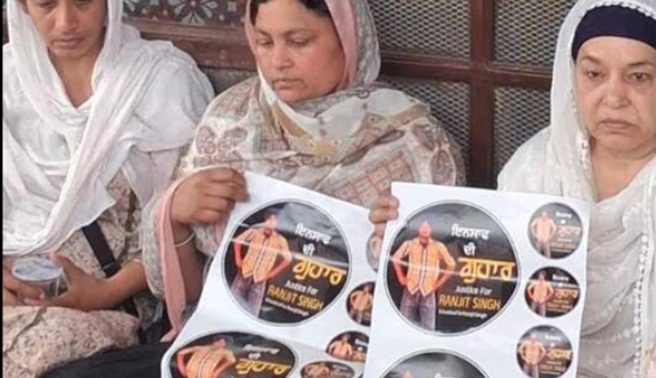
On 3 Mar, the autopsy of 19-year-old Ranjit Singh who was shot dead by the police in an alleged encounter on 25 Feb near Purana Shala town, Gurdaspur district was conducted at the Gurdaspur Civil Hospital in the presence of Chief Judicial Magistrate Surekha Dadwal. The autopsy report has been submitted to the local court which also directed telecom companies to preserve the GPS locations and call records of all Panjab police personnel involved in the alleged shootout. While police say Ranjit was killed in retaliatory firing after he shot at cops, his family insists he was framed in the case and shot dead. His mother Sukhjinder Kaur filed a petition in court seeking a judicial enquiry into his death, a videographed post-mortem by an independent medical board, preservation of evidence, and an independent investigation and refusing to cremate him until justice is brought. Additionally, taking sou motto notice of the case, the Punjab and Haryana High Court issued a notice to the Panjab police on 5 Mar and directed the Director General of Police (DGP) to file an affidavit explaining the circumstances of the incident. DGP Gaurav Yadav appeared before the bench through video conference and responded to the court’s queries. The court pointed to similarities between this case and other recent incidents where the accused were allegedly taken for recovery of weapons, attempted to escape, and were subsequently shot in police firing. On 18 Jan another accused in kabaddi (combative South Asian sport) promoter Rana Balachauriya’s murder, Karan Pathak alias Karan Defaulter was shot dead by the Panjab police. While in custody earlier, Pathak complained of chest pain. Three officers loaded him into a van bound for hospital, but dense fog caused a crash into a divider. Taking advantage of the situation, Pathak allegedly ran away for seven hours, acquired a pistol, and while being handcuffed fired at the police ensuing a gunfight that left him dead. Human rights activist Navkiran Singh warns that unchecked encounters have proved very dangerous in Panjab's history. He says, ‘We had fake encounters in the 1980–90s; thousands vanished during counter-insurgency operations.’ Ranjit was cremated on 9 Mar (earlier coverage).

A YouTube influencer Nancy Grewal was fatally stabbed in LaSalle, Ontario, Canada on 5 Mar. According to the LaSalle police, she was rushed to a hospital but later succumbed to her injuries. Investigators have described the incident as a homicide. The 45-year-old was known for her sharp statements and controversial videos on social media condemning former Canadian Prime Minister Justin Trudeau, ‘Khalistani terrorists’, and criticizing religious and political figures from Panjab including recently the Chief of the Radha Soami Sect Gurinder Singh Dhillon. Nancy’s mother Chhinder Pal Kaur who lives in Jalandhar has alleged that three persons could be involved in her murder but did not name them. She alleged that Nancy regularly received threats and her house was burnt recently. She had informed the police and also had CCTV cameras installed. Chhinder Pal alleged that the main conspirator is an old man involved with a Gurdwara in Windsor, Ontario. Conflicting and sensational claims have surfaced on social media with anonymous profiles linked to pro-Khalistan rhetoric and rival Panjab-based gangster networks pointing fingers at each other. One set of posts featuring Sikh religious symbols and hashtags explicitly claimed the killing was carried out on behalf of Prava (brothers) of Sikh Panth (collective), naming individuals Akash Harike and Sukha Sandhu responsible. Another post by Satinderjeet Singh alias Goldy Brar claimed the crime was executed by their side, specifically naming Goldy Brar, Sachin Bishnoi (Dhattaranwali), and the Lawrence Bishnoi group. Panjab police has rejected these claims. In Ludhiana and Jalandhar, police have quoted family members who have condemned the posts as propaganda that dishonor the victim's memory. Meanwhile, a most-wanted gangster Amritpal Singh alias Amrit Dalam has been detained at the Moldova border based on an Interpol Red Notice. Dalam is wanted in multiple serious criminal cases in Panjab and had been absconding abroad for a long period. Additionally, the Punjab and Haryana High Court has acquitted Dera (sect) Sacha Sauda chief Gurmeet Ram Rahim Singh in the murder case of journalist Ramchandra Chhatrapati for lack of evidence. Chhatrapati was shot at point-blank range at his residence on 24 Oct 2002, months after his newspaper published an anonymous letter which stated that women who joined the dera as sadhvis (women disciples) were sexually harassed and raped by the Dera chief (earlier coverage).

Mainstream media often portrays Nihang (traditional Sikh warrior) Sikhs as fierce, rigid, or intimidating figures. But walking among them in Anandpur Sahib during Hola Mohalla (Sikh mock-battles festival), spending a night with many of them, the writer of this travelog was touched by their simplicity, love and 'devotion to the Sikh cause of oneness'. He says, 'There was a sense of loving openness in which devotion mattered more than appearance, love mattered more than religion, and any outsider would feel completely at home. No one asked who you were, where you were from, or why you were here. Here, you had just one identity—someone who had come to seek the blessings of the 10th Sikh Sovereign Guru Gobind Singh.' Just like the many colors of gulaal (brightly colored powder) blend into one another while playing Holi (Indian festival of colors), the many sects, identities, and outward differences within the society seemed to blur into a shared Khalsa spirit during Hola Mohalla. During the festival, Anandpur Sahib—city of bliss—was decked with colors. Saffron, yellow, and blue flags fluttered from rooftops and Gurdwaras, while colorful clouds of gulaal drifted through the air. At the center of it all stood the Takht Sri Kesgarh Sahib, one of the five thrones of Sikhi, where the Khalsa Panth (pure order, or the one belonging to the Sovereign) was inaugurated in 1699. Started in 1701 by Guru Gobind Singh, Hola Mohalla was envisioned as a wartime celebration. The celebrations unfolded through displays of the Sikh martial art Gatka, mock battle drills, sword-fighting, horse riding, tent-pegging, and other equestrian games. Free community kitchens were organized every few meters. Countless stalls in a special market offered everything from handcrafted swords and religious texts to toys, kitchenware, and lemonade to beat the heat. Muslim perfume traders were selling ittar (perfume) beside the Sikh shrine. Gurdwara Shahidi Bagh Sahib (martyrs’ garden) is where Sikhs who attained martyrdom during the multiple battles of Anandpur Sahib were cremated. This Gurdwara marked the formal start of the mock battles. Nihang Sikhs clad in blue martial attire led the procession on horses. Contrary to popular belief, many Nihang Sikhs today are well-educated, speak English as fluently as Panjabi, and lead modern lifestyles while keeping their heritage alive (earlier coverage).
Jyoti Malhotra, The Tribune: A peculiar silence in the heart of Delhi.

Panjab: State closed over anti-drug activist’s murder; Shah meets Jhota’s family; Delhi battleground as protesters & police clash; ECI announces SSR; US ends 540-Day extension for immigrants; J&K promises Panjabi as official language. Sikh: Orgs say FBI Hate Crime report flawed; Jhota in Sikh Museum—and more stories.

Panjab: Protests against CEC intensify; Delhi fortified; Rain disrupts paddy procurement; CBI files FIR against Ghuman; Sinha apologizes to PHHC over pending DA; Anti-Drug activist & another ASI shot dead. Sikh: Gurdwara in the eye of protest storm; J&K Sikhs protest for inclusion of Panjabi language—and more stories.
