Thank you! Your submission has been received!
Oops! Something went wrong while submitting the form.
Panjab: Saffron & independents win Panjab University polls; Employees vs. Govt. standoff intensifies; River Sirsa under PPCB scanner. Sikh: SAD targets WPD, explores alliance with BJP. After INC, BJP Leaders condole Kumar; ‘Akal Takht’ directions on singing full ‘Vande Matram’ sought—and more stories.

The Panjab University Campus Students Council (PUCSC) elections were held on 31 Aug. Around 16,500 voters were eligible to vote for the new PUCSC. Women voters were the majority of the electorate with 9K votes, men voters were 7,467, and there was one transgender voter. The four-way presidential contest was between Gurman Singh Sidhu of the Indian National Congress’ student wing National Students' Union of India (NSUI); Aadil Brar of the Aam Aadmi Party’s Association of Students for Alternative Politics (ASAP); Ankit Bidhan of the Bharatiya Janata Party (BJP)-backed Akhil Bharatiya Vidyarthi Parishad (ABVP); and Darshpreet Singh of Sath. Shiromani Akali Dal's (SAD) student wing, Students of India’s (SOI) candidate Pranav's nomination was canceled due to an attendance shortage. On 30 Aug, SOI declared unconditional support to ABVP. SOI’s move further fuelled the rumors about an SAD and BJP alliance in Panjab for the 2027 elections. Ankit from ABVP won the presidential election, while Armaan Singh Bhinder—from an independent union Panjab University Democratic Front, not affiliated to any political party won as Vice President. Dhyan Singh and Vishal Bamal, both independent candidates, won as General Secretary and Joint Secretary. In 2025, under Section 72 of the Punjab Reorganisation Act, 1966 the union government had notified the restructuring of PU's two principal governing bodies—Senate and Syndicate. The notification said appointments would no longer be through elections but through nominations. Larger questions on who has a right to Chandigarh, who funds PU, and should PU remain a state university or be taken over by the union government had arisen. The students protested for weeks. Finally, the union government withdrew its notification. Though even in 2025, the PUCSC president Gauravveer Sohal was from ABVP, the vice president Ashmeet Singh from the Sikh identity-driven Sath, along with Left-oriented unions like Punjab Students Union (Lalkar), led the protest. The new union does not offer such possibilities to resist the union government takeover or saffronization of the university but we need to wait and watch. Concurrently, yielding to students’ 19-day-long agitation, Punjabi University, Patiala has announced a complete rollback of the fee hike for the 2026–27 academic session. Students alleged that tuition fees in some courses had increased by as much as 657%, while hostel fees had gone up by around 30% to 42% (earlier coverage).
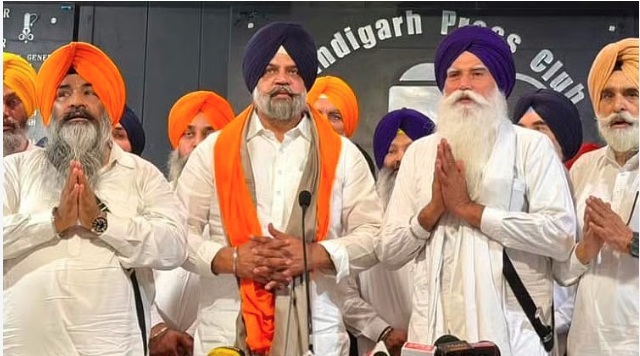
The political contest for the Panthic (Sikh Collective) vote among Akali factions came into sharp focus at the Rakhar Punya (Rakhri festival) conferences in Baba Bakala, Amritsar on 28 Aug. Akali Dal Waris Punjab De (WPD) targeted the Shiromani Akali Dal (SAD) by releasing a document on the drug problem, describing it as one of Panjab’s biggest challenges. WPD said successive governments had failed to check the spread of drugs and announced that it would bring out a white paper examining the three-decade-old drug crisis. On the WPD stage, Sikh scholar Baljit Singh Khalsa narrated an incident from 1997, when Sikh leaders discussed that it was important to defeat then SAD leader Parkash Singh Badal even if they had to vote for kala chor (black thief). SAD spokesperson Dr. Daljit Singh Cheema said, 'They neither opposed Chief Minister Bhagwant Singh Mann nor opened their mouths against the Indian National Congress. They only said we should use all our strength so that the SAD cannot win.' SAD chief Sukhbir Singh Badal has been vocal about the WPD, calling it 'Virus Punjab De' (Panjab's virus) and ‘imposters’. At the SAD rally, Badal appealed to Panjabis to reject 'anti-Panjab and anti-Panth stooges of agencies'. Ironically, though Bharatiya Janata Party (BJP) keeps denying it, talks between BJP and SAD are progressing towards forming an alliance for Panjab elections 2027. Even in the 31 Aug Panjab University Campus Students Council (PUCSC) elections, the SAD student’s wing, Students of India’s (SOI), lent support to the BJP student’s wing, Akhil Bharatiya Vidyarthi Parishad (ABVP). The alliance talks are stuck over who will contest how many seats, which ones, and who'll be projected for the posts of Chief Minister and Deputy Chief Minister. After its immense success across India, BJP is now assertive and does not want to play a junior role as in the previous alliance (1996–2020). One round of talks on seat-sharing has already been held on 27 Aug. Parallelly, BJP is also wooing leaders of the SAD breakaway Shiromani Akali Dal (Punar Surjit, revival) led by Giani Harpreet Singh to join a potential broader alliance between the SAD and BJP. BJP leader CR Patil, known for his micro-management skills, and BJP’s Rajya Sabha (Upper House of Parliament) MP from Panjab, Vikramjit Singh Sahney met senior Punar Surjit leaders (earlier coverage).

Nearly 750K government employees and pensioners observed a maha hartal (state-wide strike) on 27 Aug to pressure the Aam Aadmi Party (AAP) government to clear their long-pending Dearness Allowance (DA) dues. Employees across government departments, including Deputy Commissioner office, Tehsil (Revenue) Offices, Sub-Divisional Magistrate offices, service centers, water and sanitation, irrigation department, Municipal Corporation, Punjab State Power Corporation Limited, Punjab Pollution Control Boards, and Punjab Roadways, among others, proceeded on mass casual leave and staged protests outside government offices statewide. The call was given by Sanjha Mulazim Manch (United Employees Platform, SMM) comprising 150 employee bodies. Protestors also appealed to the public not to visit government offices on 27 Aug. Their other demands included implementation of the Old Pension Scheme (OPS) and regularization of contractual workers. In Patiala, the protestors broke barricades to march towards the residence of Health Minister Dr. Balbir Singh. In Jalandhar, the protest escalated into a confrontation with police after Chief Minister Bhagwant Mann called off the talks scheduled with a 16-member representative committee of the unions at 1 pm. Employees inside the Deputy Commissioner office complex began raising anti-government slogans, marched out onto the streets, and were met with anti-riot police barricading their path. CM Mann said talks will take place only after the employees end their protest. In Amritsar, the Punjab State Medical and Dental Teachers’ Association extended their support to the protesters. The Panjab government responded on 28 Aug by initiating action against nearly 2,500 employees. Department heads were directed to issue show-cause notices and initiate disciplinary proceedings. SMM announced a series of protests from September through October, including a mass leave on 8 Sep, if the government does not withdraw the show-cause notices issued to employees. The government has also transferred one of the protests' prominent leaders, Sukhchain Singh Khera, from the Administration Branch in the Punjab Civil Secretariat to the Planning Branch located outside the Secretariat. On 30 Sep, the protesters will hold an ‘Employees’ Assembly’ and invite Members of Legislative Assembly of all 117 constituencies, as well as the 13 Members of Parliament of the state, to Chandigarh to clarify their stand on the employees’ issues (earlier coverage).

Former Haryana assembly Speaker Kuldeep Sharma has urged Indian National Congress (INC) president Mallikarjun Kharge to remove Rohtak Member of Parliament (MP) Deepender Hooda from the Congress Working Committee (CWC) over his remarks praising former party leader Sajjan Kumar. Former INC MP, 80-year-old Sajjan Kumar, died in Tihar jail, New Delhi on 20 Aug. He was convicted for the murders of seven Sikhs during the 1984 Sikh genocide and was serving three life sentences. Hooda and other INC leaders had called him an 'example' for all of north India. Sharma said Hooda’s comments had 're-opened the wounds' of the Sikh community and could damage the INC's prospects in Panjab, where the party faces elections in 2027. Punjab Pradesh Congress Committee president, Amarinder Singh Raja Warring, distanced himself from Hooda’s remarks, stating that the latter’s remarks could be his personal view. Furthermore, former Panjab Chief Minister Charanjit Singh Channi’s condemnation of Kumar has sparked unease within sections of INC. Khadoor Sahib Member of Parliament (MP), Amritpal Singh's father, Tarsem Singh from Akali Dal Waris Punjab De (WPD), praised Channi for speaking up for the Sikh community—a video clip that Channi later shared on his social media handles. Earlier, Tarsem had backed Channi after he raised the issue of alleged injustice to Amritpal in the Lok Sabha (Lower House of Parliament) in July 2024. When questioned, Channi defended his stance, stating that there was nothing unusual in highlighting Sikh issues. 'I myself, being a Sikh, feel that pain regarding the unaddressed issues of the Sikh community.' Meanwhile, three Bharatiya Janata Party (BJP) MPs, Ramvir Bidhuri, Yogender Chandolia, and Kamaljeet Sehrawat, visited Kumar's family home to pay their respects. Advocate Harvinder Singh Phoolka, who recently joined BJP, said, 'I strongly condemn the visit of the three MPs to mass murderer Sajjan Kumar’s residence to offer condolences on his death. Sympathy should be reserved for victims and their families, many of whom live [with] the horror of those days even till now. I call for the boycott of these three MPs.' Phoolka said the visit is condemnable considering the BJP has always supported the Sikh genocide survivors' quest for justice by ensuring Kumar stayed in jail. BJP president Nitin Nabin has summoned the three MPs. He said, 'They shouldn't have gone' (earlier coverage).

A huge quantity of trash and pollutants accumulated at the Ropar Headworks on the river Satluj was released downstream, triggering criticism from local residents, political leaders, and raising concerns over pollution from Himachal Pradesh (HP) entering Panjab’s water system. Aam Aadmi Party Member of Legislative Assembly, Dinesh Chadha has registered a First Information Report in Rupnagar police station on 16 Aug alleging that pollution entering the river Sirsa from the Baddi-Nalagarh industrial area in HP was eventually reaching the river Satluj. The developments have raised questions about monitoring industrial pollution and its subsequent movement into the state’s river and canal network. On 25 Aug, Chadha, along with officials from the Punjab Pollution Control Board (PPCB) and the investigating officer, visited several areas in HP and Himachal-Haryana borders from where waste and pollutants are allegedly flowing into the river Sirsa. The team found municipal garbage and toxic leachate overflowing into the river Sirsa in Solan; pharmaceutical and chemical units in the Baddi-Barotiwala-Nalagarh cluster discharging untreated waste; scrap dealers dumping multilayered plastic, discarded medicines, and pharmaceutical packaging into the riverbed along river Balad near Panjab’s borders; and large heaps of industrial waste being pushed into Marranwali Khad (rivulet) in Haryana. PPCB has sought urgent action from HP and Haryana over large-scale dumping of industrial effluent, pharmaceutical waste, and municipal solid waste into tributaries feeding Satluj. A 2024 study also reported pharmaceutical compounds in stretches of the river downstream of the Baddi industrial belt, including high antibiotic concentrations and chemical waste from Red-category factories. The river carries a heavy pollution burden by the time it reaches Ghanauli, Rupnagar district. The water quality data presented by PPCB at the North Zone Council meeting in Shimla, HP in June 2026 revealed that in March 2026, the total coliform in the river at Ghanauli touched 60,000 (most probable numbers) MPN/100 ml, while faecal coliform reached 17,000 MPN/100 ml and it violated the prescribed Biochemical Oxygen Demand (BOD) standards. As per the Central Pollution Control Board (CPCB) criteria, water meant for outdoor bathing should have a BOD of not more than 3 mg/L, dissolved oxygen of at least 5 mg/L and total coliform of not more than 500 MPN/100 ml. PPCB officials stated that river Sirsa has consequently figured among highly polluted river stretches in earlier CPCB assessments as well (earlier coverage).
In February 2026, on the 150th anniversary of India's national song ‘Vande Mataram’ in Sankritized Bengali written by Bankim Chandra Chatterjee, the Indian Ministry of Home Affairs issued new guidelines fixing the rendition time at 3 minutes and 10 seconds, and endorsed the full six-stanza version for formal state functions. In August 2026, after the amendment to Section 3 of the Prevention of Insults to National Honour Act, 1971 was passed as Prevention of Insults to National Honour (Amendment) Bill, 2026 by both houses of Parliament. Indian President Droupadi Murmu signed the Bill into law. According to the new law, Vande Mataram has the same legal protection as the national anthem Jana Gana Mana and any attempt to prevent its singing will invite punishment. The song was officially adopted by the Indian National Congress (INC) in 1905 to serve as a pan-Indian, nationalist salutation to Mother India during the Indian independence movement. The first two verses of the song make abstract reference to the 'mother' and 'motherland', without any religious connotation. However, later verses mention the Hindu goddess Durga, among others. The references to Hindu deities became a point of contention in 1937, after which the INC, on the suggestion of Mohandas Karamchand Gandhi and Rabindranath Tagore, adopted the first two stanzas of the song. With the new law, once again the six stanzas have become mandatory though very few Indians either know the two or six stanzas, and can sing it in tune. The Congress Working Committee (CWC) has decided that only the first two stanzas of Vande Mataram will be sung at party programs, amid BJP attacks over the song’s rendition at its Independence Day program and later at an event in Goa. On 26 Aug, several Sikh organizations, including the Shiromani Akali Dal (Amritsar), Jagtar Singh Hawara Committee, and United Sikh Students Federation submitted a memorandum to the Jathedar (leader) of Sri Akal Takht Sahib (Eternal Throne), seeking clear and uniform Panthic (Sikh Community) guidelines on singing the full Vande Mataram. Meanwhile, as rape convict Dera Sacha Sauda (sect) chief Gurmeet Ram Rahim Singh walked out of Haryana's high-security jail for the 17th time after being granted a 21-day furlough, president of the Haryana Sikh Gurdwara Management Committee, Jagdish Singh Jhinda, asked why the Sikh prisoners are not being released? (earlier coverage).
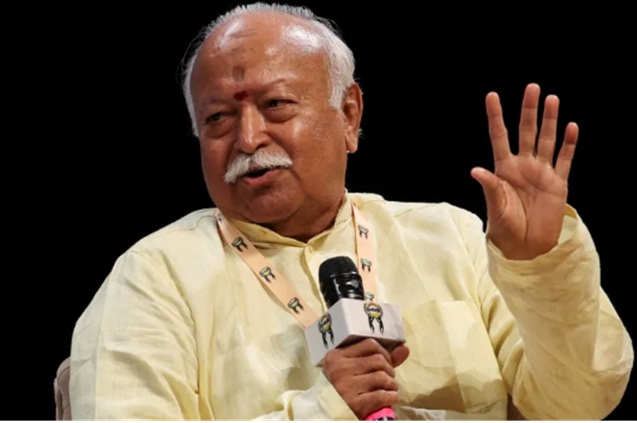
Activists rallied outside the Madison Square Garden in New York (NY) on 29 Aug as Rashtriya Swayamsewak Sangh (RSS) Chief Mohan Bhagwat addressed a large gathering as part of the RSS's centenary-year global outreach in the US—a tour that also takes him to Canada and the UK. RSS is a far right-wing Hindutva organization and the parent body of India’s ruling Bharatiya Janata Party. Formed in 1925, the RSS has more than 5M members worldwide and over 250 affiliated chapters in the US. RSS promotes the vision of India as Hindu Rashtra—a Hindu ethnostate. The ‘Universal Oneness’ event, organized by American Hindus for Engagement and Dialogue, brought 5K attendees from over 200 Hindu and Indian partner organizations. Bhagwat’s visit was opposed by many activists, politicians, and human rights groups in the US. On 19 Aug, USCIRF, a Washington-based US advisory body, sought sanctions against the RSS. On 20 Aug 2026, a letter by three Washington-based American Sikh groups, addressed to US Secretary of State, Marco Rubio, had urged that Mohan Bhagwat be denied entry ahead of his scheduled visit. The US-based Sikh advocacy groups wrote, ‘The RSS and its affiliated organizations have a long and well-documented record of promoting ideology and activities that have contributed to violence, discrimination, and persecution of religious minorities in India, including Sikhs, Muslims, and Christians.’ The letter was signed by representatives of the American Sikh Caucus Committee, Sikh Coordination Committee East Coast and American Gurdwara Parbandhak Committee. On 26 Aug, speaking at a City Hall press conference organized by Hindus for Human Rights, Japneet Singh of Sikh Coalition said, ‘The Sikh message is clear: our own freedom is incomplete while our neighbors remain oppressed. That is why this movement is not Hindu versus Sikh or India versus America. Hindus, Sikhs, Muslims, Christians, Dalits, and people across traditions are standing together against an ideology that places one religious identity above all others.’ On 25 Aug, NY City Mayor, Zohran Mamdani, a Muslim and Indian-American, described the RSS’s vision as ‘exclusionary’. He said, ‘I don't support the rally, but I don't know if the city has any jurisdiction on cancelling a private event’ (earlier coverage).

The US State Department has paused immigrant visa applications worldwide, as it trains consular officers to assess more closely whether applicants could become dependent on US government benefits. The focus is on the 'public charge' standard, under which an applicant can be denied an immigrant visa if officials determine that they are likely to become primarily dependent on government support. Applicants with scheduled interviews received emails saying their appointments were being rescheduled. The US is also proposing a USD 103,265 H-1B visa fee and plans to revoke certain visitor visas held by people who later sought asylum. The proposed increase in H-1B visa fee has drawn opposition from businesses and India's technology industry. Visitor visa holders who later seek asylum could face cancelation of their B1/B2 visas. A report that the US administration is set to revoke up to 200K business and tourist visas has caused anxiety among Indians, particularly Panjabis who have strong family and business links in the US. Siding with the American-Punjabi community, Executive Director of the North American Punjabi Association (NAPA), Satnam Singh Chahal has urged the US administration to conduct a fair, individualized review before revoking visas. Chahal said, 'The Trump administration, in coordination with the Department of Homeland Security, is preparing to revoke B1/B2 visas issued between 2016-26 to individuals who subsequently sought asylum or are currently seeking asylum in the US. If implemented at the reported scale, it would represent the largest single mass visa revocation in US history.' Meanwhile, Immigration New Zealand (NZ) has released the final operational details of changes to the Skilled Migrant Category Resident Visa and related work-to-residence visas, with the new rules taking effect from 24 Aug. The changes are beneficial to Panjabi skilled workers in NZ, many of whom are employed in trades, technician roles, construction, dairy, and other sectors. Under the revised rules, most Skilled Migrant Category applicants will need to meet only one wage threshold—the rate that applied when they began gaining skilled work experience in NZ—rather than having to meet a higher threshold at the time they apply for residence. Meanwhile, on 26 Aug, the United States Commission on International Religious Freedom (USCIRF) released its report indicting India saying religious freedoms remain on a downward trajectory citing restrictions on activities of NGOs, censorship, and transnational repression (earlier coverage).
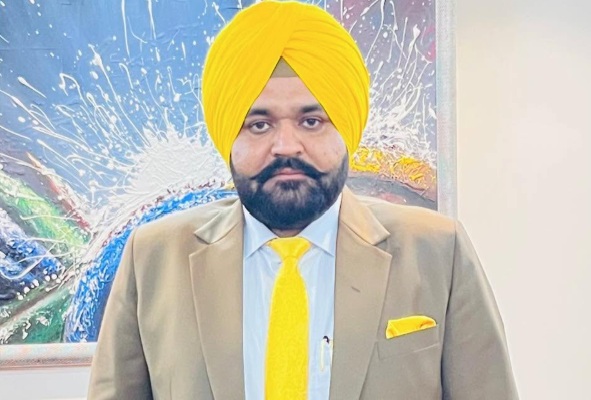
The Punjab and Haryana High Court (PHHC) directed the counsel representing the Enforcement Directorate (ED) on 27 Aug to place before it communications allegedly sent to the Panjab Director-General of Police (DGP), Gaurav Yadav, regarding a letter alleging large scale scam by senior officers of the state of Panjab. Based on a letter the ED had sent to Panjab DGP on 11 Aug, lawyer Nikhil Saraf filed the petition alleging that senior officials are involved in ‘cash for transfers; cash for getting favorable policies; cash for tenders, and other illegal activities. The ED had alleged that Nitin Gohal, a private individual, acted as an intermediary between persons seeking government favors and Officer on Special Duty (OSD) to the Chief Minister Rajbir Ghuman. The petitioner alleged that the persons involved had access to the CM office and were operating a bribery network that influenced the transfers and postings of administrative, and police officials, facilitated tenders, permissions and licences for builders, land developers and other entrepreneurs, leaked confidential government documents, and even facilitated arms licences. The Aam Aadmi Party-led Panjab government, however, termed the letter a ploy by the Bharatiya Janata Party to use ED against the ruling dispensation. The petitioner, therefore, sought an independent investigation into the allegations and requested that the matter be transferred to the Central Bureau of Investigation. He further alleged that despite several complaints and representations, the Panjab DGP and the Vigilance Bureau had failed to follow Supreme Court of India directions regarding the registration of First Information Reports in cases involving cognisable offences. Days later, Ghuman sent a notice to several media platforms and technology intermediaries covering reports about the ED’s purported letter that alleged his involvement in the scam. Among the media outlets named in the notice are Hindustan Times, The Print, ABP Sanjha, and PTC News, apart from platforms Google, Meta, and X. The notice terms the news reports as ‘false, baseless, reckless, motivated, and malicious’ and says that ‘no fair or meaningful attempt’ was made to verify the allegations from Ghuman or with any competent official source. Meanwhile, Gurpreet Singh Gopi, an AAP leader, was shot dead after armed assailants chased the motorcycle on which he was travelling and opened fire in Mamdot, Ferozpur district on 29 Aug (earlier coverage).
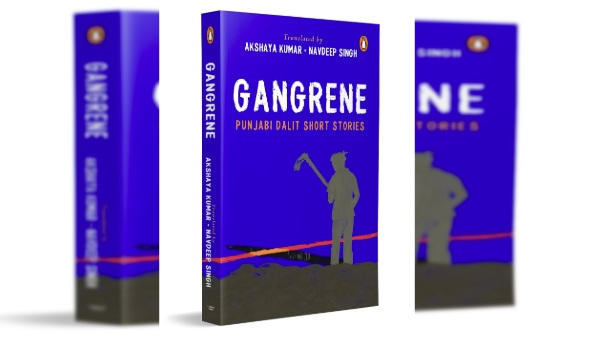
Bringing together 12 stories by various writers and translated from multiple Panjabi dialects and registers and spanning nearly five decades, ‘Gangrene’ is an anthology of short stories that compels one to look more closely at Panjab. Much of Panjab’s dominant cultural imagination centers on agrarian abundance, celebration, valor, and the historical trauma of 1947 Partition. However, this narrative ignores the caste order that sustains the dominant cultural imagination. Home to the highest proportion of Dalits of any Indian state, Panjab has always contained histories that remain at the margins of this imagination. Translated from Panjabi by Akshaya Kumar and Navdeep Singh, Gangrene shifts our gaze towards these histories of margins. Read together, the stories reveal the social foundations of Panjab’s dominant cultural imagination, showing how control over land shapes labor, mobility, faith, leadership, intimacy, and the making of the self. The collection opens with Attarjit’s ‘Bathloo Chamiar’ (slur). Although his name is Sunder, the village knows him as Bathloo Chamiar, reducing him to his marginalized caste identity rather than his personhood. A marginalized caste manual laborer, he agrees to fill a roadside sinkhole for a meagre sum. Even when another laborer points out that the panchayat (village council) has tricked him into accepting far less than the work’s worth, Bathloo says, ‘Our duty is to serve. Whatever the panchayat pays is enough.’ The violence lies not only in the unequal exchange of labor for wages, but also in the way caste transforms exploitation into service and submission into virtue. Attarjit’s second story, Gangrene, is about Jagtar, a Dalit (marginalized caste) man, and Param, an upper caste Sikh woman, who fall in love. They believe that education, love, and the egalitarian ideals of Sikhi might be enough to transcend caste but realise they are not. What makes the story devastating is not simply the failure of love but the gradual dismantling of belief itself. The very institutions and ideals Jagtar turns to for dignity become the sites through which caste is reaffirmed. By the end of the anthology, the meaning of gangrene has shifted. It is no longer merely the decay of body tissue but also a metaphor for the slow corrosion of the social world. The disease spreads quietly, numbing moral perception until exploitation appears as duty, humiliation as tradition, exclusion as common sense and violence as an ordinary fact of life.
R. Ramakumar in Frontline: India’s ethanol drive is creating a new food security crisis.

Panjab: Protests against CEC intensify; Delhi fortified; Rain disrupts paddy procurement; CBI files FIR against Ghuman; Sinha apologizes to PHHC over pending DA; Anti-Drug activist & another ASI shot dead. Sikh: Gurdwara in the eye of protest storm; J&K Sikhs protest for inclusion of Panjabi language—and more stories.

Panjab: SCI notice to ECI; INC appoints Pargat Singh as state chief; ECI flags WPD; Maiserkhana Targets AAP; PHHC orders CBI to probe CM aides; Panjab goes to SCI; LGBTIQ+ influencer shot dead. Sikh: Jaggi Johal released; VanDyke release raises questions about ‘Bandi Singh’—and more stories.
