Thank you! Your submission has been received!
Oops! Something went wrong while submitting the form.
Panjab: Special Assembly session; Crackdown on toxic oil supply chain; Over 54% water polluting sources remain unidentified. Sikh: Sahibzade Shahidi Sabha; Guru Gobind Singh Parkash Purab; US truck drivers challenge mass license cancellation—and more stories.
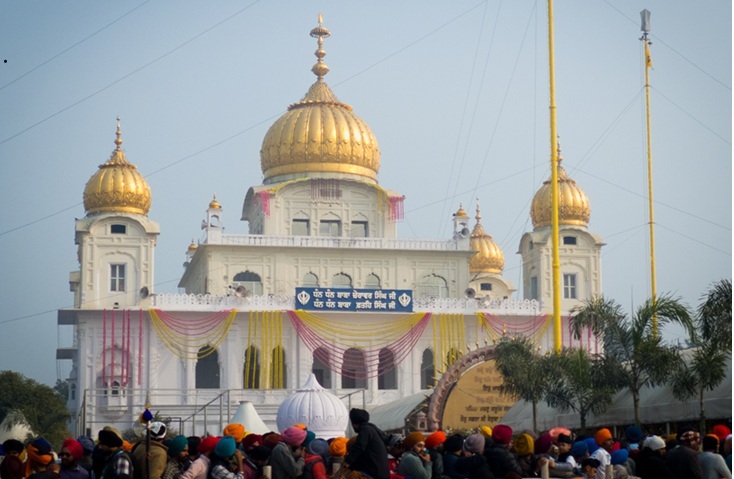
A three-day Shahidi Sabha (Martyr's Gathering) to commemorate the supreme sacrifice of the tenth Sikh Sovereign Guru Gobind Singh’s two younger Sahibzadas (sons)—Baba Zorawar Singh and Baba Fateh Singh—and their grandmother Mata Gujri was observed 25–27 Dec at Fatehgarh Sahib. Chief Ministers of Panjab and Haryana Bhagwant Singh Mann and Nayab Singh Saini visited the historic Gurdwaras and paid obeisance to the martyrs. Over 5M people paid obeisance on the three days. However, despite the Shiromani Gurdwara Parbandhak Committee (SGPC), Sri Akal Takht Sahib (Eternal Throne), Sikh organizations and scholars opposing the name Veer Bal Diwas (Brave Children’s Day), the Bharatiya Janata Party’s (BJP) went ahead and organized programs in 768 districts to honor the Sahibzadas’ sacrifices and is promoting the Guru’s teachings in various languages throughout India. While the BJP seeks to appropriate the Sikh martyrdom, the Union Home minister Amit Shah who attended the program at Panchkula, Haryana even boasted that Prime Minister Narendra Modi-led Union government has left no stone unturned in showcasing the traditions of the Sikh Gurus before the country and the world. BJP’s Panjab spokesperson Pritpal Singh Baliawal cited a 14 Nov 2019 tweet by Shiromani Akali Dal Bathinda Member of Parliament Harsimrat Kaur Badal to argue that it was she who had advocated ‘commemorating the Sahibzade’ martyrdom under the title 'Bal Diwas.' On 27 Dec, the Sikhs marked the Guru Gobind Singh Parkash Purab (birth anniversary). Considering the Purab coincided with the Sahibzade Shahidi Diwas, the SGPC decided not to have a fireworks display at Darbar Sahib (Golden Temple). An Akhand Paath (uninterrupted reading of complete Guru Granth Sahib in about 48 hours) was performed and the Darbar Sahib was illuminated. Meanwhile, even after amendments were made to the Nanakshahi (Sikh) Calendar in 2010, the Parkash Purab of Guru Gobind is being observed twice in 2025 leading to confusion and debate within the Sikhs. Concurrently, the AT acting Jathedar (leader) Kuldeep Singh Gargajj has imposed a complete ban on Artificial Intelligence-based videos depicting Sikh Gurus (earlier coverage).
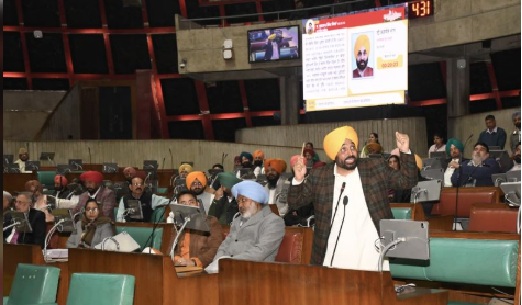
Panjab Cabinet led by Chief Minister Bhagwant Singh Mann convened a special session of the Vidhan Sabha (Legislative Assembly) on 30 Dec to discuss scrapping of the two-decades-old Mahatma Gandhi National Rural Employment Guarantee Act (MGNREGA) and replacing it with the Viksit Bharat Guarantee for Rozgar and Ajeevika Mission (Progressive India Guarantee for Jobs and Livelihood, VB G RAM G). The state government is also slated to bring three Bills during the special session of the Assembly—Punjab Abadi Deh (Record of Rights) Amendment Bill, Indian Stamp (Punjab Second Amendment) Bill, and Punjab Land Revenue (Amendment) Bill, 2025. Instead of the special session, senior Indian National Congress and Member of Legislative Assembly from Jalandhar Cantonment, Pargat Singh has instead sought a full-fledged winter session of the Panjab Assembly. He said, 'Panjab is facing multiple challenges—economic, administrative, and law and order. A single-day session cannot do justice to the gravity of these challenges.' Highlighting the deteriorating law and order situation, he said the state is 'sliding rapidly towards anarchy'. Panjab Bharatiya Janata Party (BJP) chief Sunil Jakhar said that through the special session, the Aam Aadmi Party (AAP) government was preparing for another propaganda exercise. He said, 'The Mann government has failed on every front and has no achievements to count. It would be better if the government used a special session to discuss the deteriorating law-and-order situation in the state.' Meanwhile, agricultural labor unions organized village-level protest demonstrations rejecting the union government’s call to convene Gram Sabhas (village meetings) to pass resolutions in support of scrapping MGNREGA. The protests come even as the Samyukt Kisan Morcha Panjab announced an ‘Awareness Week’ from 28 Dec–4 Jan, followed by district-level and state-level agitations against what it termed a series of anti-worker and anti-farmer measures. The joint front of rural and agricultural labor organizations, under the banner of Sanjha Mazdoor Morcha, said it would not allow MGNREGA to be replaced by VB-G-RAM-G by altering the funding pattern between the Indian union and states (earlier coverage).

A medical investigation spanning the states of Panjab and West Bengal uncovered the source of a toxic ‘fortified’ oil that has left several residents of Panjab in critical condition. Months after several patients with severe Vitamin D toxicity were admitted in Post Graduate Institute of Medical Education & Research (PGIMER), Chandigarh, health officials in Rajpura and Patiala traced the fraudulent supply chain back to Kolkata in West Bengal. In a ‘mixing’ operation concentrated in Fatehgarh Sahib and Rajpura, distributors opened original packages and infused the oil with excessive, toxic concentrations of Vitamin D. Patiala district health officer Dr. Gurpreet Kaur said, ‘This adulterated mixture was then refilled in loose bottles and sold under a local brand name. To gain public trust, the bottles falsely bore the FSSAI (Indian regulatory body) approval mark.’ The crackdown followed results from the state food lab in Kharar, which officially declared the seized samples as substandard and hazardous. In earlier raids, officials had already confiscated over 350 boxes and hundreds of bottles of the suspect oil. Meanwhile, a report by Reserve Bank of India states that women in Panjab and Haryana outlive men by 6.3 years with average life expectancy of women in the state at 73.1 while men are 68.8 years. However, life expectancy for both is better than the national average at 72.5 and 68.5, respectively. Meanwhile, Panjab Chief Minister Bhagwant Singh Mann ordered the immediate release of USD 7.66M to upgrade facilities at four premier medical colleges in the state. As per the allocation, USD 2.96M has been sanctioned for Government Medical College, Amritsar; USD 3.18M for Government Medical College, Patiala; USD 1.05M for Dr Bhim Rao Ambedkar Institute of Medical Sciences, Sahibzada Ajit Singh Nagar (SAS Nagar); and half a million USD for the PGIMER Satellite Center, Ferozepur. Additionally, insurance cover under the Panjab government's Universal Health Scheme, is set to be enhanced from USD 5,572 to USD 11,143 per family per year from January 2026, said Health Minister Balbir Singh. Furthermore, medical and medical post graduate seats have been increased across government medical colleges in Amritsar, Patiala, SAS Nagar, Faridkot, and Chandigarh.
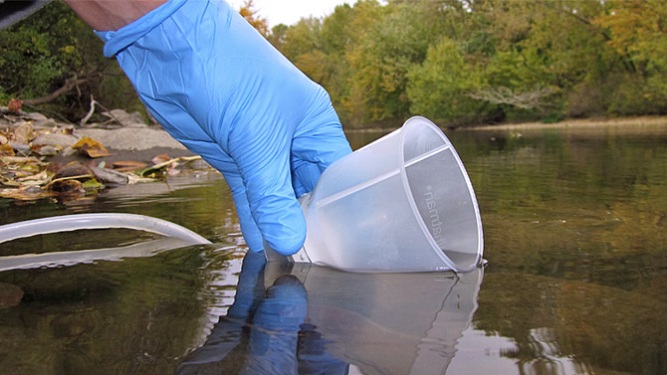
According to data submitted by Punjab Pollution Control Board (PPCB) to the National Green Tribunal (NGT), local authorities are yet to address nearly 54% identified sources that are polluting rivers and other water bodies in Panjab. A status report filed by PPCB revealed that out of 1,511 polluting point sources identified across Panjab, action was completed against 692. However, 819 sources, or 54.2%, continued to discharge pollutants into rivers and other water bodies. The break-up of polluting sources placed before the NGT shows that the Department of Rural Development and Panchayats account for the highest number of pending cases. Out of 800 polluting sources identified under the department, only 290 were closed, leaving 510 sources still discharging wastewater. The report by PPCB also includes a tentative action plan for the renovation of 510 village ponds to which NGT has sought strict compliance with timelines. Meanwhile, Panjab Indian National Congress party president Amarinder Singh Raja Warring demanded a statewide environmental audit, citing excessive sand mining in riverbeds, along riverbanks and near road and railway bridges. He said the devastating floods witnessed in Panjab in 2025 should act as a warning of a serious environmental threat if immediate corrective steps are not taken. Furthermore, the Panjab and Haryana High Court has put on hold the implementation of contentious provisions of the Punjab Unified Building Rules (PUBR), 2025. A Division Bench passed the interim order on a petition filed by two residents Harbinder Singh Sekhon and Jasinder Singh Sekhon who had said that the newly notified PUBR were inconsistent with existing laws, including the Punjab Fire Prevention and Fire Safety Act, 2004, and the National Building Code of India, 2016. The petitioners’ lawyers argued that new rules were framed keeping in mind the constitution of a Real Estate Advisory Committee that ‘mainly will comprise private developers, colonizers, and promoters, who have vested business interests and have, thus, ignored the public interest.’ The rules permitted construction up to stilt plus four floors even on residential plots situated along 40-feet-wide roads and in certain cases allowed ground coverage up to 100% for commercial buildings in core areas and extended an option to owners of plots abutting roads of 60 feet or more to opt for construction (earlier coverage).
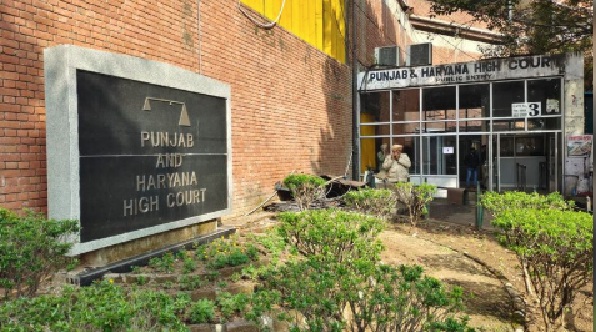
On 24 Dec, while hearing two Public Interest Litigations (PIL) challenging tree felling in Sahibzada Ajit Singh Nagar, the Punjab and Haryana High Court directed that no trees shall be felled anywhere in Panjab, until the next date of hearing. The PILs were filed by Parneet Kaur and Shubh Sekhon, both residents of Mohali, raising concerns over large-scale tree cutting and diversion of protected forest land for development projects. The authorities had initiated steps to swap the protected forest land with an alternative site in Ludhiana to facilitate large-scale residential, commercial, and institutional development. Lawyers argued that the proposed land swap was impermissible under Punjab Land Preservation Act (PLPA), which contains no provision allowing relocation or exchange of protected forest land. The land had also been declared vulnerable to soil erosion and ecological instability, rendering the proposed development violative of the Punjab Unified Building Rules, 2021. The bench took note of official data from the Union Ministry of Environment, Forest, and Climate Change showing that Panjab’s forest cover stands at only 3.67% of its geographical area, which is worse than even the desert state Rajasthan at 4.87% and must be raised. Meanwhile, several khair (Catechu) trees were allegedly felled near the Nangal Wildlife Sanctuary last week triggering concerns among environmentalists and local residents over continuing degradation of forestland in the Shivalik foothills. However, the Wildlife Department said the site did not fall under its jurisdiction. Local residents alleged the felling was carried out by politically well-connected individuals, leading to inaction and have demanded stricter action to deter further destruction of forest resources. Additionally, a team of the Wildlife Department apprehended three people involved in wildlife trade in Nakodar. Sambar (a large deer) antlers, genitals and parts of a wild cat were recovered from them. Genitals of the protected species are illegally sold as they are believed to bring good luck. Meanwhile, as the air quality in the national capital remains hazardous impacting health, data collected from Punjab Pollution Control Board show Panjab’s air quality in all major towns in the moderate category—Patiala at 116, Ludhiana 131, Amritsar 126, Khanna 95, Bathinda 78, and Jalandhar 162 (earlier coverage).
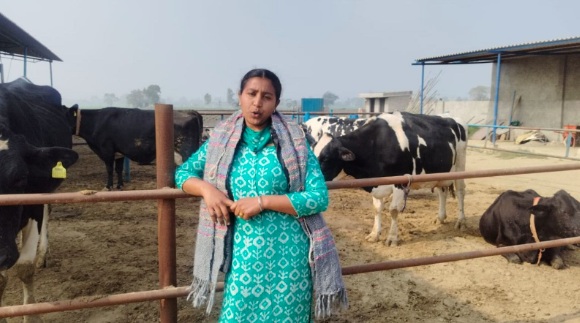
The iconic mustard fields of Panjab—showcased in a number of movies—are now slowly fading away. Low returns on the crop and issues related to Minimum Support Price (MSP) are pushing farmers away from cultivating the crop. Currently, Panjab's mustard production meets only 3% of its oil requirements, necessitating the import of 97% of its oil from abroad. While mustard oil prices are rising, the area dedicated to oilseed cultivation is shrinking. Between 1970–75, the area under oilseed crops—including soybean, toria, mustard, and sunflower—was approximately 500K hectares in Panjab. In 2024, the area under mustard cultivation was only 41K hectares. However, in Moga district, the area under mustard and oilseeds grew from around 957 hectares between 2022 to 2,048 hectares in 2025. Meanwhile, many farmers across Panjab are adopting integrated farming in lieu of the traditional paddy-wheat cultivation. By combining crops, livestock, poultry, piggery, fisheries, and plantations, farmers are reducing costs while ensuring year-round income. Gursimrat Singh from Ladha Munda village in Gurdaspur owns nearly 20 acres where he grows wheat, paddy, sugarcane, and potatoes. He has also developed a two-acre fish pond integrated with around 40 ducks and 50 poultry birds. Responding to this trend, Punjab Agriculture University vice-chancellor Dr. Satbir Singh Gosal says that these integrated farming techniques require no heavy farm machinery and can be done by anyone with simple training; therefore, they are gaining popularity. Similarly, Amandeep Kaur, a Business Administration graduate from Jodhpur village in Panjab’s Barnala district, is milking success through her dairy farm, which houses 35 cattle and produces around 200 liters of milk each day. A young entrepreneur at 27, Amandeep is the sole breadwinner for her family and has become an example for dairy farmers in the region. She began her business three years ago with just two cattle, which has grown to 35 cows and buffaloes at her farm. Appreciating her efforts, T Benith, Deputy Commissioner, Barnala, said, ‘She broke the gender stereotype and is also an example for the male dairy farmer, who can learn skills of managing animals from her’ (earlier coverage).
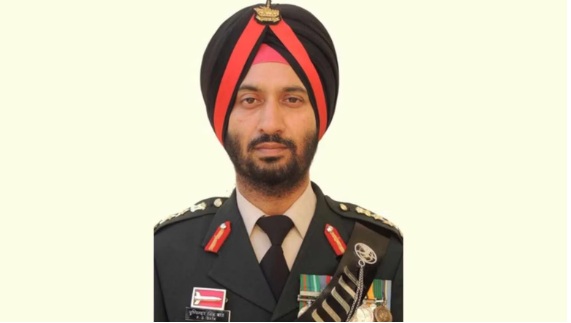
On the night of 13–14 Mar 2025, Panjab police officers assaulted a senior Army officer Colonel Pushpinder Singh Bath, and his son, Angad Singh, over a car parking issue in Patiala. Though the Patiala police had filed a First Information Report (FIR) against four police officers in July 2025, Colonel Bath's family approached the Punjab and Haryana High Court (PHHC). The PHHC transferred the case to the Central Bureau of Investigation (CBI). Five months later, the CBI has now filed a fresh case in its court at Sahibzada Ajit Singh Nagar (SAS Nagar). According to the chargesheet, Inspector Ronnie Singh is the main accused in the case. Colonel Bath has accused police personnel of assaulting him and his son over a parking dispute. In his complaint, he alleged that the assailants—four inspector-rank officers of the Panjab Police and their armed subordinates—attacked him and his son without provocation, snatched his identity card and mobile phone, and threatened him with a ‘fake encounter’, all in public view and under CCTV camera coverage. The prosecution has pressed grievous hurt and wrongful restraint charges but threat to murder does not figure in the charges. Colonel Bath's wife, Jasvinder Kaur Bath has raised allegations against the police officers over the kidnap and encounter of Jaspreet Singh who was a Khanna child kidnapping case accused and was killed in a police encounter in Nabha area on 13 Mar. Jaspreet’s family had to withdraw its case under pressure. Meanwhile, the Supreme Court of India has refused to entertain suspended Panjab Deputy Inspector General of Police (DIG) Harcharan Singh Bhullar’s petition seeking a stay on the CBI probe into two FIRs lodged against him in a disproportionate assets case. While dismissing the petition, Chief Justice of India Surya Kant said, 'It's better we don't open our mouths. Don't invite harsh observations from us.' Concurrently, ten Indian young men who had gone abroad to earn a livelihood and later joined the Russian army in its war against Ukraine have been confirmed dead. Among them, three are from Panjab, and the other seven are from Uttar Pradesh and Jammu (earlier coverage).

On 23 Dec, the Asian Law Caucus, Sikh Coalition, and Weil, Gotshal & Manges LLP filed a class-action lawsuit against the State of California challenging the unlawful cancellation of 20K Commercial Driver’s Licenses (CDLs) issued to drivers in the US. The lawsuit seeks to halt the California Department of Motor Vehicles’ (DMV) cancellation of commercial licenses that would result in mass work stoppages beginning 5 Jan 2026. Filed in the Superior Court of California, County of Alameda, this lawsuit is brought on behalf of the Jakara Movement and five commercial drivers who have been deprived of their rights and livelihoods. The lawsuit follows 60-day cancellation notices sent by the DMV in November and December to drivers whose CDLs were flagged due to alleged mismatched expiration dates between state driver’s licenses and federal work authorization records. Legal director of the Sikh Coalition, Munmeeth Kaur said, 'The clerical errors threatening CDL drivers' livelihoods are of the CA-DMV’s own making. If the court does not issue a stay, we will see a devastating wave of unemployment that harms individual families, as well as the destabilization of supply chains on which we all rely. These drivers have spent years anchoring their lives to these careers, only to now face potential economic ruin through no fault of their own.' Senior staff attorney at Asian Law Caucus, Katherine Zhao said, 'Our state has a clear moral obligation and legal duty to protect workers who have done everything right. At a moment when families should be spending time with loved ones, these workers are instead confronting financial devastation and the loss of livelihoods they have spent years building.' The California DMV said it doesn’t comment on pending litigation. Meanwhile, the Trump administration is also tightening enforcement of commercial driver training standards, which could see almost half of US trucking schools decertified but is unlikely to disrupt the trucking industry. Concurrently, in Pakistan, the Panjab government has given a helmet exemption for Sikh bikers. Chief Minister Maryam Nawaz made the announcement while addressing the Sikh community (earlier coverage).
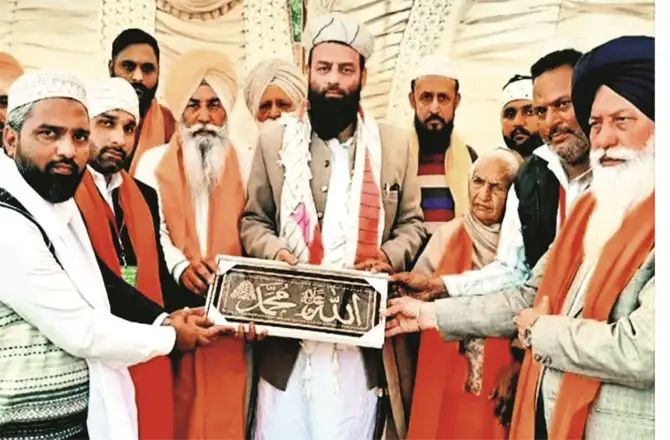
At a function to mark appointments of alternative medicine doctors in Patna, Bihar Chief Minister Nitish Kumar pulled a young Muslim doctor’s hijab (face cover) on 15 Dec. Kumar is the leader of Janata Dal (United) which is in alliance with the Bharatiya Janata Party (BJP) in the union and state governments. As Muslims groups protested across India, in Mandi Ahmedgarh, Panjab, the Istri Bhalai Manch (Women Welfare Group) raised slogans against the BJP and the Rashtriya Swayamsevak Sangh (BJP’s parent body). Panjab Minority Commission member Nadeem Anwar Khan handed over a memorandum addressed to President Droupadi Murmu through the district administration. Meanwhile, in village Jakhwali, Fatehgarh Sahib, 75-years-old Rajinder Kaur has donated land for construction of a mosque. Sikh and Hindu families have pitched in with money. Bibi Rajinder said, 'Our Muslim friends here didn't have a mosque and had to go for namaz (prayers) to the next village, so I thought of giving them 5 marlas of land (around 1360 sq.ft.) so that they also have a place to pray. Bibi Rajinder's grandson Satnam Singh said, 'They (Muslims) also participate in our programs like langar (community kitchens) and they do sewa (service). We believe we should respect every religion.' His brother, Monu Singh, who is a village council member, said that since government land cannot be given for construction of any religious place, they discussed it within the family and decided to donate their own land. Also, in Umarpura, Malerkotla, the Madinah Mosque was inaugurated on 7 Dec on land earlier donated by Sikhs. Panjab’s Shahi Imam, Maulana Muhammad Usman Ludhianvi led the prayers. Additionally, in Kashmir, the local Muslim community came together to perform the last rites of Kartar Singh, a Sikh resident who passed away on 27 Dec at Gadoora area in Ganderbal district. Soon after the news of his death spread in the area, local Muslims made special arrangements in performing his last rites. Touched by the gesture, the deceased Sikh’s relatives said, 'We have been working in Kashmir for the past many decades. I am overwhelmed by the approach of locals' (earlier coverage).
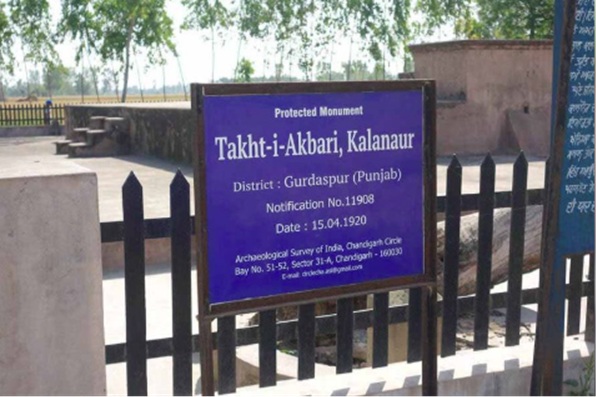
Shah Zaman, a king of Afghanistan in the late 18th century Durrani empire, is buried in Sirhind, near Chandigarh. On being crowned as the king in 1793, Zaman realized that his treasuries were empty and ordered an invasion of Panjab. Historian Sam Dalrymple says, ‘Punjab was increasingly falling under the sway of the East India Company and Governor General Wellesley persuaded the Qajar Shah of Iran to attack Durrani’s rear.’ Zaman was forced to retreat in 1799 leaving a power vacuum which would be filled by a young Ranjit Singh by seizing power in Lahore. Over the next two years, later Maharaja Ranjit Singh would gradually prise away the Durrani Empire's most lucrative provinces. As Zaman's empire crumbled, his subjects staged a coup by locking the king in prison and blinding him with a hot needle. The blinded Zaman made a daring escape to Panjab with the Afghan state diamond—the kohinoor—in tow. Zaman, along with Shah Shuja and his wife Wafah Begum, subsequently moved to British-administered Ludhiana. Dalrymple adds, ‘Zaman lived the rest of his life there on British pension and petitioned the Maharaja of Patiala to be allowed a burial in Sirhind. The Maharaja granted the request, and the Rohillas built a tomb there for the ex-king of Afghanistan’. Also, in 1556, shortly after the demise of his father the Mughal emperor Humayun, Akbar was crowned in Kalanaur, a small hamlet near the town of Gurdaspur. The coronation platform, known as Takht-i-Akbar (Akbar’s Throne) is a well-known historic site although not many people visit it. It is believed that Bairam Khan, Akbar’s adviser, had arranged the ceremony hastily to secure his claim to the throne as Akbar was just 13 years old when the coronation took place. The site has been declared a monument of national importance and the coronation platform is a protected monument managed by the Archaeological Survey of India (ASI). While the royal garden mentioned in history books is no longer there, the simple yet historically crucial structure remains a quiet reminder of where the reign of one of South Asia’s most famous rulers began his rule.
The Tribune looks back at 2025: A year that tested power, exposed fault lines.
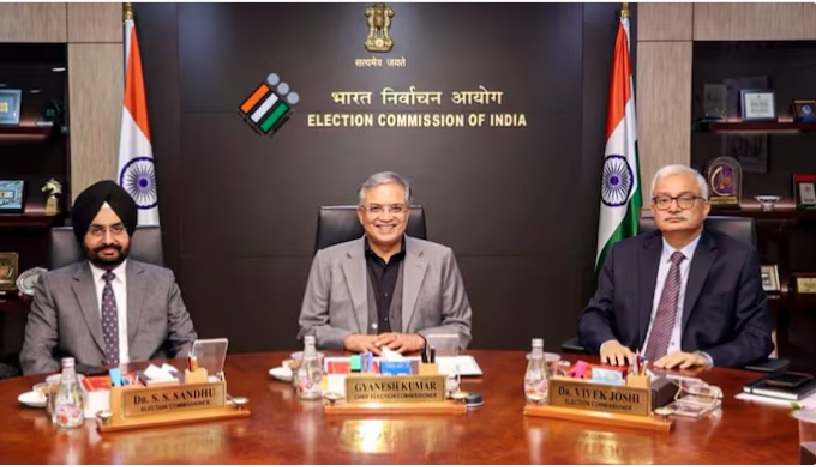
Panjab: Dissent in Indian Election Commission; ED probes GMADA; AAP admits serious accounting impropriety; Student unrest erupts in two private universities. Sikh: US Ambassador visits ‘Darbar Sahib’; SCI remarks on ‘Vande Mataram’ favor Sikhs; Carney’s deprioritizes safety for Canadians—and more stories.

Panjab: Six districts ‘Ultrasensitive’ drug zones; Govt. promises 8% increase in DA; Over 10 cases of kidnapping & extortion of illegal emigrants. Sikh: UK's Johal gets bail; ‘Akal Takht’ expels SAD Leader & 'Granthi'; Truck driver attacked days after US poster; 'Takht Sri Hazur Sahib' marks Modi birthday—and more stories.
