


Thank you! Your submission has been received!
Oops! Something went wrong while submitting the form.
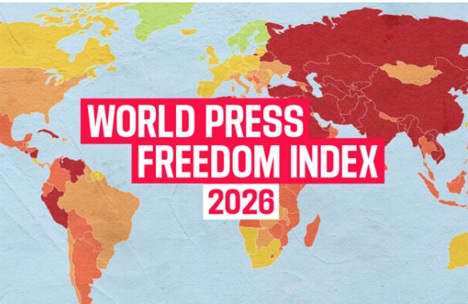
India had placed the Indus Waters Treaty (IWT) in 'abeyance' after the Pahalgam terror attack in April 2025, which killed 26 people. New Delhi and Islamabad continue to hold divergent interpretations of the agreement. For India, the treaty remains in abeyance; for Pakistan, it is still 'fully operational and effective'. On World Water Day on 22 Mar, which coincides with the eve of Pakistan Day, Pakistan’s President Asif Ali Zardari said, 'India’s decision to place the treaty in abeyance, disrupt hydrological data-sharing, impede agreed mechanisms, undermines both the letter and spirit of a long-standing international agreement that has governed equitable sharing of the Indus river system for over six decades.' Between India and Pakistan, the eastern rivers—Satluj, Beas, and Ravi—have an average annual flow of 33 MAF, and the western rivers—the Indus, Jhelum, and Chenab—have an average flow of 135 MAF. To utilize its share of water mandated under IWT and increase storage capacity, India has completed sediment flushing at the Baglihar, Salal, and Dulhasti hydroprojects on the Chenab and accelerated the construction of hydro infrastructure. Work on projects such as Pakal Dul (1K MW), Kiru (624 MW), Kwar (540 MW), and Ratle (850 MW)—all on the Chenab River—has been accelerated. Other hydroelectric projects, such as Sawalkote (1,856 MW), Bursar (800 MW), Kirthai I (390 MW), and Kirthai II (930 MW), are also making progress. Jammu and Kashmir may see a 46% increase in installed hydropower capacity by the end of 2026. The impact of climate change on the Indus basin is also intensifying. Between 2001 and 2021, the basin experienced a net loss of 25% in perennial snow and ice cover. As a result, a widening gap between water demand and supply and strained bilateral ties risk exacerbating tensions between the two South Asian nuclear powers. Meanwhile, Reporters Without Borders ranked India 157th out of 180 countries in the 2026 World Press Freedom Index. In 2025, India ranked 151. The citation said: ‘India’s media has fallen into an 'unofficial state of emergency' since Narendra Modi came to power in 2014 and engineered a spectacular rapprochement between his party, the Bharatiya Janata Party, and the big families dominating the media’ (earlier coverage).