Thank you! Your submission has been received!
Oops! Something went wrong while submitting the form.
Panjab: Govt. employees on strike again; State moves SCI for DA Dues; Justice Mishra takes oath as Chief Justice; SAD targets Dr. Gurpeet. Sikh: Youth alleges torture & assault; Long delay in SGPC elections; Relief for Nepal flood victims—and more stories.

Work in all government offices in Panjab halted on 8 Sep, as ministerial staff went on a pen-down strike in offices in Chandigarh and Sahibzada Ajit Singh (SAS) Nagar, and on a mass casual leave in other districts. This is the second agitation by government employees against the Aam Aadmi Party (AAP) government after the statewide mass casual leave on 27 Aug, demanding the release of Dearness Allowance (DA), although other government institutions such as power and transport remained functional. At the Chandigarh secretariat, employees wearing rosh (protest) badges gathered in large numbers to protest. The employees are demanding the immediate rollback of the letter issued by the Panjab government that called their mass casual leave on 27 Aug to protest as ‘unauthorized leave’. On 3 Aug, the Punjab and Haryana High Court (PHHC) had ordered the state government to clear the pending DA arrears for its employees and pensioners within 15 days—a time period that has lapsed. The AAP government has now challenged the PHHC order in the Supreme Court of India, contending that the direction to pay arrears totaling around USD 1.50B in such a short period was ‘constitutionally impossible’. The plea stated: ‘Compliance is not merely difficult; it is constitutionally impossible in the time allowed.’ The plea also challenges the PHHC's direction restraining the state from incurring unproductive expenditure. The matter was scheduled for hearing in the PHHC on 7 Sep, after Justice Ashwani Kumar Mishra took the oath as the Chief Justice. The petitioner side said such expenditures on large-scale advertisements were still being made. However, on 3 Sep the Panjab government had urged the protesting 420K state employees to abandon the ‘confrontation approach’ and ‘return to the negotiating table’. It offered them a salary plus DA on par with union government staff. It announced that the DA for around 85K government employees recruited after 17 Jul 2020 will be raised from the existing 42% to 60%. But the employees united under Sanjha Mulazam Manch (United Employees Platform) are planning statewide agitations through the coming months if the DA is not paid (earlier coverage).

Justice Ashwani Kumar Mishra took the oath as the Chief Justice of Punjab and Haryana High Court (PHHC) on 7 Sep, a day after the Panjab cabinet passed a resolution in an emergency meeting held on 6 Sep evening (a Sunday) demanding his ‘appointment and administration of oath… be put on hold’. Haryana Chief Minister Nayab Singh Saini attended the ceremony, but Panjab Chief Minister Bhagwant Mann did not. Justice Mishra had been the acting Chief Justice of PHHC since 1 Jun, following the elevation of Justice Sheel Nagu, then Chief Justice, to the Supreme Court. But the news of his official appointment drew strong objections from the Panjab government, which claimed it was done without their ‘consultation’. Panjab Finance Minister Harpal Singh Cheema said the matter was particularly serious because the Memorandum of Procedure (MoP) governing such appointments requires the concerned state government’s view to be considered. He said, ‘Both the communication from the Governor of Panjab to Chief Minister Bhagwant Singh Mann dated 12 Aug 2026, and the communication from Union Law Minister Arjun Ram Meghwal referred to the relevant procedure’. The issue has been termed as one ‘concerning the rights of Panjab and the constitutional federal structure’. Legal experts, however, say that the MoP governing the appointment of high court Chief Justices requires the union government to obtain the views of the state government, but does not make its consent or concurrence a condition for the appointment. Furthermore, experts allege that proposals for the appointments of several Chief Justices of High Courts, including Justice Mishra’s, were sent to relevant states, all of which responded except Panjab. The union government sought Panjab’s views on 10 Aug. Panjab’s objections can also be seen in light of the recent controversy surrounding the pending Dearness Allowance (DA) of its employees, as a bench comprising Justice Mishra ordered the state to clear the dues in a fortnight. Incidentally, just two hours after taking the oath, Justice Mishra addressed the court while hearing the matter on DA allowance by asserting that the court ‘would not be browbeaten by any tactics and would be guided by the rule of law, and its oath to the Constitution’. The tussle is an irony because ideally Panjab and Haryana should have their own High Courts, a matter pending for the last sixty years (earlier coverage).

Shiromani Akali Dal (SAD) chief Sukhbir Singh Badal met Panjab Governor Gulab Chand Kataria and sought a Central Bureau of Investigation into the alleged financial transactions to facilitate the release of social media influencer Gurinder Singh alias Guri Chahal accused in at least five rape cases. The case pertains to Panjab Chief Minister Bhagwant Mann’s wife, Dr. Gurpreet Kaur Mann, allegedly seeking USD 524K to suppress the cases and release Chahal. The National Human Rights Commission (NHRC) had directed the Chief Secretary and Director General of Police, Panjab, to hold an inquiry and submit an action-taken report by 6 Sep. The report has not been submitted. SAD leader Bikram Singh Majithja on 2 Sep said, 'I was shocked to learn that Guri, who was arrested in a rape case and also facing other offenses, was released in July and had fled to the US.' Others supposedly involved in the case include Panjabi film person Simranjit Singh Hundal who denies involvement and Dr. Gurpreet’s brother-in-law Amardeep Singh Grewal. The issue was first raised by the Punjab Human Rights Organisation (PHRO) chief, retired Justice Ranjit Singh. When he raised the issue, the Panjab government threatened to send him a notice which never arrived. PHRO legal wing head Advocate Sarabjeet Singh Verka said, 'The police had found a lot of incriminating evidence on Chahal's phone which included videos of various women, arms, and ammunition. If the case is probed, a lot of unsavory truths will be revealed.' Meanwhile, Panjabi social media influencer Manjit Kaur has died at the Postgraduate Institute of Medical Education and Research (PGIMER) in Chandigarh, almost two months after she was allegedly assaulted and set on fire. 28-year-old Manjit was allegedly kidnapped by her two acquaintances—Shubhi and Pinda—after they called her near a liquor shop in Sector 34, Chandigarh on 3 Jul. Shubhi and Pinda took 28-year-old Manjit to Morinda in Panjab, where they assaulted her, tied her to a tree, and set her on fire. Manjit's friend reached the spot and used a blanket to put out the fire before rushing her to a hospital in Morinda and then to PGIMER. Manjit regained consciousness on 5 Aug, but police did not record her statement. Manjit's mother Kanta Devi is left alone to look after Manjit's seven-year-old son and conduct the final prayers (earlier coverage).

The Enforcement Directorate (ED) has accused the Panjab Police of stalling action and not registering First Information Report (FIR) again in an alleged ‘cash-for-transfer and land fraud case’, despite ‘detailed evidence having been shared’ in a 200-page reply submitted to the Punjab and Haryana High Court (PHHC). ED was responding to a petition filed by advocate Nikhil Saraf on 27 Aug. In a third letter, written to Director General of Police (DGP) Gaurav Yadav on 31 Aug, the ED has sought that the FIR be registered against the said persons under Prevention of Money Laundering Act, 2002. Responding to the charges, the Aam Aadmi Party (AAP) state president, Aman Arora, who was named by the ED in this case along with Officer on Special Duty to the Panjab Chief Minister, Rajbir Singh Ghuman, said the ED has failed to provide substantial evidence against him and other AAP leaders. He added that the FIR can only be registered when proper evidence is shared with the police. The ED declined the request by Panjab Police for additional information. Arora said the ED had targeted his friend Gaurav Dhir, in an apparent attempt to frame him. He said, ‘They (ED) have made allegations that as Housing Minister, I got the Change of Land Use (CLU) and layout plans changed for Dhir’s Altus project. However, six CLUs were given to Altus between 2011–2022—all during the tenures of either the Akali Dal-BJP (Shiromani Akali Dal and Bharatiya Janata Party) or the Congress (Indian National Congress) governments. Even the project’s layout plans were changed twice when the Akali-BJP and later the Congress were in power, and thrice during the AAP government’s tenure. These changes are legally allowed.’ He added that the case was based on two FIRs, which the court had already quashed. Arora maintained that the case was nothing more than a political vilification campaign launched by the BJP-led union government to create chaos and intimidate political leadership. Additionally, Saraf in an application to the PPHC claimed that he is being hounded by the Panjab government for filing the petition and that he fears his farmhouse in Majri area of Sahibzada Ajit Singh Nagar will be demolished as a notice has been put up on the property. However, in an urgent hearing late evening on 4 Sep at PHHC, the Panjab government undertook not to go ahead with the demolition (earlier coverage).
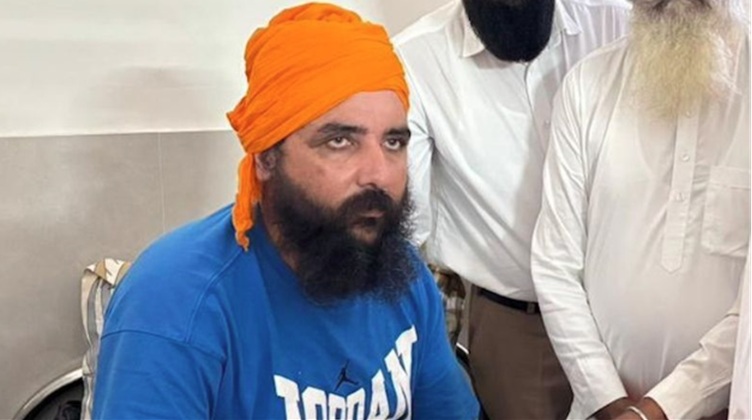
A political row has erupted following allegations of assault and torture of a Sikh youth and anti-drug activist, Mohanjit Singh, after he waved a black flag at Chief Minister (CM) Bhagwant Mann during a public program held in Sheron village, Sangrur district on 2 Sep. Mohanjit climbed onto the rooftop of a house near the venue and waved a black flag at the CM while raising slogans over the government’s failure to tackle the continuing drug menace. Police removed Mohanjit from the rooftop and took him into custody at Sunam police station where he was allegedly tortured for over an hour. He was subsequently arrested and produced before a court in Sangrur. During his court appearance, Mohanjit alleged that he was tortured in custody and subjected to electric shock, and that a Deputy Superintendent of Police-rank officer was involved in the torture. Mohanjit also alleged that police struck his waist with a wire brush and poured salt on the wounds, hit him on the head with shoes, disrespected his beard and hair, and removed and tore his kachhera (article of Sikh faith, long shorts). He claimed the police gave him a substance that resulted in a positive dope test too. Sri Akal Takht Sahib (Eternal Throne) Jathedar (leader), Kuldip Singh Gargajj, demanded strict action against the police officers accused of torturing Mohanjit and allegedly desecrating his kakaars (articles of Sikh faith). Panjab Indian National Congress president Amarinder Singh Raja Warring and Leader of Opposition Partap Singh Bajwa approached the National Human Rights Commission (NHRC), seeking an independent and time-bound inquiry into the allegations. Bajwa said that if the allegations were found to be true, the incident would constitute a serious violation of fundamental rights, including the right to life, dignity, personal liberty, and freedom of peaceful expression. Taking notice, the NHRC on 5 Sep directed the Panjab Chief Secretary to conduct an inquiry into the matter and submit a report within two weeks. The Panjab Government has ordered the transfer of Deputy Superintendent of Police Harvinder Singh and three other police personnel from Sunam. Meanwhile, a report submitted by Panjab government’s Prisons Department to the Punjab and Haryana High Court has revealed that an alarming 45% of inmates in the state’s total 25 jails are drug addicts. The report states that of the total 35,449 inmates lodged in these prisons, 15,678 are registered with Out-Patient Opioid Assisted Treatment Clinic (earlier coverage).
The Election Commission’s (EC) Special Intensive Revision (SIR) has been mired in fresh controversy as draft electoral rolls are prepared. SIR—a large-scale revision exercise supposed to clean the electoral rolls by removing duplicate entries and those who have migrated or died has turned into a nightmare for many, as long-serving diplomats, journalists, and members of civil society are being asked to produce document after document to prove their citizenship. An estimated 133.7M names have been deleted across India from draft electoral rolls prepared over the 2025–26. In poll-bound Panjab, an estimated 200K names have been deleted from the draft roll, flagging concerns over the voting capacity of the electorate. Chandigarh Member of Parliament Manish Tewari said the number of electors in the city has fallen by more than 50% and wrote to the Chief Electoral Officer (CEO) Chandigarh to demand full transparency in the exercise. Across India, draft voter lists released for the third phase reveal that 61.5M names have been removed from the voter rolls across 17 states and union territories, including Panjab. While these figures are likely to change once the final voter lists are published, the five states with the most total deletions (highest deletion rate in Delhi at 32.78%) have been ones where assembly elections were held in the last three years. The scale of deletions has again raised questions about the legitimacy of the electoral rolls that existed before the SIR exercise. If such large-scale ‘ineligible’ voters existed, how were they eligible to vote in recent elections to pick governments who are now in power? In Panjab, the absence of Member of Parliament Raghav Chadha’s name triggered a political storm, with Chadha alleging the deletion as a ‘political vendetta’ by the ruling Aam Aadmi Party (AAP). AAP countered that the SIR is conducted by the EC and the state government has ‘no role’. His name appears in the ASDD (absent, shifted, deceased, and duplicate) list. But deletion affects more than voting prospects as is evident in West Bengal, where the High Court is petitioned daily by individuals who plead that the deletion of their names is affecting career and travel prospects. The court is now finding it tough to trace the physical files corresponding to every case. Meanwhile, the population census will be carried out in five states, including Panjab from 1 Dec 2026–4 Jan 2027 (earlier coverage)

The apex management body of Sikhs, Shiromani Gurdwara Parbandhak Committee (SGPC), has not held elections since 2011. Under the Sikh Gurdwaras Act (SGA), 1925, and the Sikh Gurdwaras Board Election Rules, 1959, the Indian union government appoints a Chief Commissioner, Gurdwara Elections, who heads the Gurdwara Election Commission. The last general election to the SGPC was held in 2011. However, a court dispute over the voting rights of Sikhs who trim or shave their beard and cut their hair—long hair is an article of faith in Sikh religion—kept the newly elected House in limbo. After a 2016 amendment to the SGA disqualified such Sikhs from being SGPC electors, the members elected in 2011 formally began their tenure which ended in 2021. Since Section 51 of SGA allows an existing House to continue 'until constitution of a new Board', the House elected in 2011 has continued to function well past 2022. In August 2025, Indian National Congress Member of Parliament Sukhjinder Singh Randhawa raised the issue in Parliament. Union Minister of State for Home Affairs Nityanand Rai replied, 'The government had already appointed a Chief Commissioner. However, several cases filed in the Punjab and Haryana High Court (PHHC) have halted further progress.' 5.1M voters were registered in Panjab in the new electoral rolls. The total Sikh population worldwide is around 30M. One pending case is by Baldev Singh Mianpur of Shiromani Akali Dal (SAD) seeking that Sikh voters in Haryana be given voting rights and the SGPC seats in Haryana not be abolished. However, Haryana now has its own Haryana Sikh Gurdwara Management Committee, and its members are ineligible to vote in SGPC elections. Critics say the case is a delaying tactic because the current SGPC board is largely influenced by SAD. An independent Sikh activist Lakhvir Singh has approached the PHHC demanding fresh SGPC elections or at least by-polls for 34 seats that lie vacant because members died or resigned. Meanwhile, in flood-ravaged Nepal, the local Sikh community has emerged as a crucial force in relief and rehabilitation efforts—extending assistance to victims while serving as a vital link for foreign-based Sikh organizations unfamiliar with the Nepali language and the country's difficult-to-navigate affected areas. SGPC has started langar (community kitchen) and relief operations for the flood victims (earlier coverage).
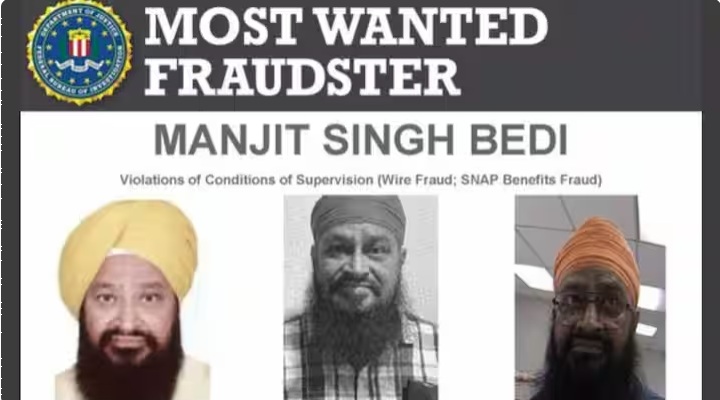
Panjab police have arrested American citizen Manjit Singh Bedi who was on the US' Federal Bureau of Investigation Most Wanted Fraudsters list, with a reward of USD 150K for running a scam linked to the US government’s food benefits program. Panjab Director General of Police Gaurav Yadav said, 'Bedi was wanted in connection with a Supplemental Nutrition Assistance Program benefits fraud case in the US, and allegedly fled to India via Canada in April 2026 to evade the law.' Bedi defrauded the US government of at least USD 600K between March 2024–June 2025. Bedi is from Jalandhar and operated a small grocery shop called Asian Grocery Store in Tacoma, Washington. Meanwhile, Toronto, Canada police have released an image of a suspect—32-year-old Lakshitha Arakmullage—who they say is responsible for two hate-related assaults involving a weapon in Toronto’s downtown in August. The first incident occurred at Union Station on 29 Aug when Arakmullage approached a person and made anti-Sikh utterances and racial slurs. The victim, police said, was not injured. About an hour later, Arakmullage approached two people near Queens Quay West and Lower Spadina Avenue. One victim was stabbed in the leg, suffering injuries. Meanwhile, a stock market trader Jaspreet Singh from Sahibzada Ajit Singh Nagar and a friend accused a hotel in Salzburg, Austria, of denying them entry because they were wearing turbans. Calling it ‘religious discrimination and racism’, the men alleged that they were also denied a refund for their bookings. The hotel maintained that turbans were not allowed on their premises. Furthermore, 34 youths from Panjab and Rajasthan are stranded in Dili, Timor-Leste, for nearly five to six months after allegedly being sent there by agents who promised them employment and a better future in Australia. Families of eight of the stranded youths contacted Rajya Sabha (Upper House of Indian Parliament) Member of Parliament Sant Balbir Singh Seechewal through a video call seeking help for their safe return. Seechewal, currently in England, contacted the Indian Ministry of External Affairs and initiated efforts to facilitate their repatriation. The families said that agents had collected between USD 47–100K from each family after promising to arrange jobs in Australia. The families claimed they arranged the money by mortgaging houses, land and jewelry, and taking loans (earlier coverage).

As Rashtriya Swayamsevak Sangh (RSS) chief Mohan Bhagwat took the stage at New York City’s Madison Square Garden on 29 Aug to deliver his speech, nearly 90 American politicians were preparing to reject political contributions from entities linked to the Hindutva organization he leads. RSS is a right-wing Hindutva organization and the parent body of India’s ruling Bharatiya Janata Party (BJP). The pledge, announced on 2 Sep by organizations Hindus for Human Rights Action and SACRED Acts, commits elected officials and candidates across eight American states to reject contributions connected to the RSS and its affiliates. The signatories include members of Congress, state legislators, mayors, local elected officials, and candidates from both Democratic and Republican circles. Among the most prominent signatories are members of the US House of Representatives Pramila Jayapal of Washington, Ro Khanna of California, and Robin Kelly of Illinois. Meanwhile, in Canada, Bhagwat's visit was backed by a group calling itself CHORD (Canadian Hindus for Outreach, Relations and Dialogue) and falsely claiming support from 500 organizations. At the event in Toronto, Bhagwat’s dais reflected a wider outreach, including Alberta premier and federal cabinet minister Jason Kenney and Kashmir Singh Dhaliwal of the Khalsa Diwan Society. Canada's New Democratic Party and civil-society groups had asked that Bhagwat be denied entry to Canada. The venue was disclosed shortly before the program amid security concerns. Concurrently, in the UK, 20 civil society groups have written to London mayor Sadiq Khan, urging the Greater London Authority to boycott events organized by RSS during the visit of its chief Bhagwat. In London, Bhagwat is being hosted by Integral, a UK-based organization along with Hindu Swayamsevak Sangh UK, a Hindu social and cultural organization established in 1966. The groups have urged Khan to refuse to offer a venue for the RSS-organized event. The letter was signed by Hindus for Human Rights, UK-Indian Muslim Council, India Labour Solidarity, and South Asia Solidarity Group, among other organizations. On 5 Sep, Bhagwat visited the Khalsa Jatha British Isles Gurdwara, London and interacted with Sikh community members. He was received by BJP Member of Parliament Vikramjit Singh Sahney, philanthropist and entrepreneur Peter Virdee, and other community leaders. Bhagwat also visited London’s Shree Swaminarayan Temple, Willesden during Janmashtami (Lord Krishna’s birth) celebrations. On 6 Sep, hundreds of protesters gathered at Parliament Square to oppose Bhagwat’s address (earlier coverage).

A Court of Arbitration (CoA) in The Hague has ruled that India cannot unilaterally suspend the Indus Waters Treaty, rejecting every argument New Delhi has used to justify holding the six-decade-old water-sharing agreement 'in abeyance' since April 2025. In a unanimous decision issued on 31 Aug, the five-member CoA found that the treaty 'remains fully in force' and that India 'must observe its obligations' under it, including those governing the design and operation of hydropower projects on rivers that flow into Pakistan. The CoA examined every ground India has cited publicly: sovereignty, Pakistan’s alleged unwillingness to renegotiate, cross-border terrorism, and changes such as demographic growth, clean-energy needs, and climate change. CoA rejected all of them, finding that no rule of international law allows a state to unilaterally suspend a treaty because it is a sovereign nation within its rights to walk away from a pact. India has rejected the decision issued by what it calls an 'illegally constituted' CoA related to Interim Measures and Status of the Indus Waters Treaty, and said its decision to hold the 1960 pact with Pakistan in abeyance remains in force. Legal experts say the ruling strengthens Pakistan’s position, even if it offers no obvious way to force India’s hand. Meanwhile, India has constructed a rock check dam on river Indus in Upshi, Leh. The structure was built by placing natural boulders across the river, without using cement. The dam has a storage capacity of 40M liters. The Ladakh Union Territory administration has sent a proposal to the Union Ministry of Water Resources, for 36 check dams across Ladakh. Of these, seven are proposed as Himalayan Rock Check Dams in Leh, while Kargil would get 29 cement check dams or weirs. Concurrently, Panjab has shown signs of reversing its long-running groundwater crisis, with the number of over-exploited groundwater blocks falling from 115 to 110 over the past two years, according to the latest report ‘Dynamic Groundwater Resource Assessment’. The report says the improvement is linked to increased use of canal water for irrigation, with canal water now reaching tail-end areas in the state. Panjab recharges 19 BCM annually but extracted 26 BCM in 2025–26, 52% above sustainable levels. Agriculture plays a major role in this massive groundwater erosion (earlier coverage).
Paramjeet Singh and Rajarshee Narayan Chowdhury in The Wire: The Long Aftermath of 1984 and the Elusive Promise of Justice.

Panjab: State closed over anti-drug activist’s murder; Shah meets Jhota’s family; Delhi battleground as protesters & police clash; ECI announces SSR; US ends 540-Day extension for immigrants; J&K promises Panjabi as official language. Sikh: Orgs say FBI Hate Crime report flawed; Jhota in Sikh Museum—and more stories.

Panjab: Protests against CEC intensify; Delhi fortified; Rain disrupts paddy procurement; CBI files FIR against Ghuman; Sinha apologizes to PHHC over pending DA; Anti-Drug activist & another ASI shot dead. Sikh: Gurdwara in the eye of protest storm; J&K Sikhs protest for inclusion of Panjabi language—and more stories.
