Thank you! Your submission has been received!
Oops! Something went wrong while submitting the form.
Panjab: Migrant labor exodus; Phoolka joins BJP; Bomb blast in Chandigarh; AAP removes Chadha; Employees refuse state insurance scheme. Sikh: Stricter anti-sacrilege law; SGPC asks for draft; Notices over Sikh Reference Library materials—and other stories.
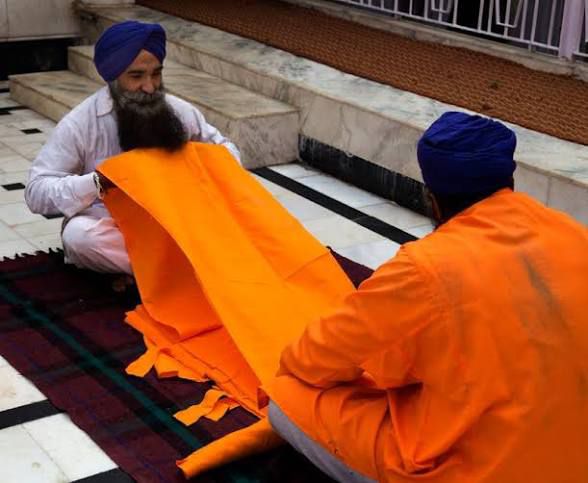
A growing shortage of cooking gas in Panjab has forced many migrant workers to leave the state and return to their native places in Uttar Pradesh and Bihar, raising serious concerns for the upcoming harvest season. Most of the 3.5M migrant workers do not have regular Liquefied Petroleum Gas (LPG) connections and rely on small cylinders available in the open market. However, the shortage of cylinders has made it hard for workers on farms, construction sites, small factories, eateries, and as domestic helpers to cook food. To address the concern, Panjab Food and Civil Supplies Minister Lal Chand Kataruchak said that the government will provide 5 kg Free Trade LPG (FTL) cylinders. The union government has also allowed FTL cylinders to be sold with identification papers but without address proof, making it simpler for migrant workers, students, and daily-wage earners to access cooking gas. Meanwhile, the Indian Ministry of Ports, Shipping and Waterways has said that 16 Indian vessels are currently in the Persian Gulf, west of the Strait of Hormuz; four in the Gulf of Oman; one in the Gulf of Aden; and two in the Red Sea. The Director General of Shipping said India has facilitated the safe repatriation of over 1,479 Indian seafarers across the Persian Gulf region. Concurrently, the ongoing conflict involving the Israel-US and Iran has disrupted a cherished Sikh tradition—the presentation of siropas (robes of honor). The Shiromani Gurdwara Parbandhak Committee (SGPC), which manages the Darbar Sahib (Golden Temple) and 280 gurdwaras under the Sikh Gurdwara Act, 1925 requires 700–800K meters of siropas annually. The interruptions in the import of petroleum-based chemicals, essential for producing the fabric and threads used in these ceremonial robes, have caused an acute shortage. Parallely, due to the war, the Guru Nanak Darbar Gurudwara, the Hindu Temple in Dubai, and Shri Krishna Temple in Bur Dubai, UAE announced temporary closures until further notice, following directives from Dubai authorities citing safety and security reasons. Concurrently, Panjab rice exporters have asked the Indian government to revive a barter mechanism—exchanging basmati rice for Iranian crude oil—to manage payments amidst fresh trade disruptions, as was practiced in 2013–14 when fresh US sanctions hit Iran (earlier coverage).

Since the first act of sacrilege in Burj Jawahar Ke village, Faridkot district, on 1 Jun 2015, Panjab has recorded 597 incidents of sacrilege over the last 11 years. Of the 791 accused, police have arrested 544. Convictions have taken place in 44 cases, and 99 people have been acquitted. 83 charges were canceled during investigation, and 37 charges were quashed by courts. 131 cases are under trial, and 101 are still under investigation. Of the 597 cases, 480 involve sacrilege against Sikh religious scriptures and shrines, 92 against Hindu religious places, 14 against Muslim shrines and scriptures, and 11 against Christian places of worship. Most accused are laborers and unemployed youth, though investigations also point to involvement of 44 granthis (reciters), pandits (priests), and pastors. 15–30% of the accused have been found to be mentally unstable. In its Legislative Assembly session on 13 Apr, the Panjab government plans to amend the Jagat Jot Guru Granth Sahib Satkar Act (JJGGSS), 2008, a law that originally focused on regulating the publication and handling of the Guru Granth Sahib (Sikh scripture and charter) rather than punishment for sacrilege. The AAP government intends to transform this largely regulatory framework into a stricter law dealing specifically with desecration by introducing harsher punishments, even if it is likely to exclude scriptures of other faiths. Chief Minister Bhagwant Mann said the new Bill will be a 'state law' and may not require Presidential approval. However, legal experts say once a law prescribes severe criminal penalties—10 years or more—it falls within the domain of criminal law, which is under the Concurrent List of the Constitution and is subject to the President of India’s approval. On 6 Apr, the apex body of Sikhs, Shiromani Gurdwara Parbandhak Committee (SGPC) called for a meeting of panthic (Sikh collective) bodies. Led by Sri Akal Takht Sahib (Eternal Throne) officiating Jathedar (leader) Giani Kuldip Singh Gargajj, the gathering unanimously passed a resolution demanding the state government send the draft law on sacrilege to the SGPC for suggestions. Giani Gargajj also demanded that the state pass a separate law against sacrileges and not amend the JJGGSS, which exclusively deals with the printing and publishing of the Guru Granth Sahib (earlier coverage).

Human rights lawyer and author, senior advocate Harvinder Singh Phoolka—the face of the legal battle for justice for the victims of the 1984 Sikh genocide—joined the Bharatiya Janata Party (BJP) on 1 Apr. Phoolka was earlier elected to the Panjab Legislative Assembly in 2017 as an Aam Aadmi Party (AAP) member and served as the Leader of Opposition (LoP). However, since LoP is a cabinet rank and considered an office of profit, the Delhi Bar Council objected to him fighting the 1984 Sikh genocide cases. Phoolka quit his post to fight the Sajjan Kumar and other cases. He formally quit AAP in July 2018. Though the BJP has brought in Phoolka to strengthen its presence in Panjab, the political impact of this move may not be linear, as strong apprehensions about the BJP persist within the larger Sikh community. In his press conference, Phoolka praised the BJP to the skies, which raised questions among Sikhs about him. For the Sikh community, decades-old legacy issues concerning both the Sikhs and Panjab remain unresolved. Some of those issues are: release of Sikh prisoners, opening of the Kartarpur Sahib corridor closed since Operation Sindoor (vermillion mark) a semi-war with Pakistan in May 2025, the Shiromani Gurdwara Parbandhak Committee elections, release of movie Punjab ‘95 based on an earlier human rights activist Jaswant Singh Khalra’s enforced disappearance and extrajudicial killing, opening the Wagah border for trade with Pakistan, effective steps to curtail religious conversions in Panjab, and Minimum Support Price for all crops in India. To earn credibility with Sikh voters who dominate in 70–75 constituencies in Panjab, Phoolka will have to solve some of these issues. Parallely, on 1 Apr, a low-intensity explosion took place outside the BJP office in Chandigarh. The banned outfit Babbar Khalsa International (BKI) claimed responsibility for the attack. On 4 Apr, Panjab’s Director General of Police (DGP) Gaurav Yadav said that Panjab’s intelligence wing, in a joint operation with Chandigarh police, had successfully solved the grenade attack case with the arrest of five accused involved in the incident. Preliminary investigations have revealed that the module was backed by Pakistan’s Inter-Services Intelligence and operated under the directions of foreign-based handlers located in Portugal and Germany (earlier coverage).

The Aam Aadmi Party (AAP) has removed Raghav Chadha as its deputy leader in Rajya Sabha (Upper House of Parliament, RS), a post he has occupied since he was nominated from Panjab in 2023. He has been replaced by another Member of Parliament from Panjab, Ashok Mittal. AAP sent a formal communication to the RS secretariat and also said that Chadha should not be allotted time to speak in Parliament. Chadha was considered AAP chief Arvind Kejriwal’s blue-eyed boy and had proved to be the chief troubleshooter for AAP in the 2022 elections. In July 2022, Chadha was appointed chairman of a committee to advise Panjab Chief Minister Bhagwant Mann on 'matters of public importance'. However, his perception in Panjab remained that he was a Delhiite who was not interested in Panjab matters. Though Chadha denies it and has raised Panjab issues in Parliament, he did not express solidarity when Kejriwal was arrested in March 2024, released in September 2024, or when the Rouse Avenue Court in Delhi finally discharged him and others in March 2025. Mann said Chadha was ‘compromised’, meaning he was leaning towards the Bharatiya Janata Party. For the past few months, Chadha has been raising public-interest issues in Parliament, including gig workers’ welfare, excessive bank charges for common citizens, phone data expiry rules, stricter food safety regulations, checks on airport food rates, and so on. Basically, issues of the common people, which AAP claims to represent. Meanwhile, another senior leader from the rebel Shiromani Akali Dal (Punar Surjeet, revival) Barjinder Singh Brar has resigned, questioning the integrity of the leadership of the breakaway faction, including party president Giani Harpreet Singh. Also, on 6 Apr, a security breach occurred at the Delhi Legislative Assembly when a speeding vehicle rammed through Gate No. 2 to forcibly enter the premises. Delhi Police have successfully apprehended three individuals in connection with the breach. The vehicle was registered in Pilibhit, Uttar Pradesh. Bizarrely, when chased, the vehicle stopped in front of the Delhi Assembly Speaker's office, and the driver, identified as Sarabjit, got down and placed a flower pot on the steps of the office (earlier coverage).

The Punjab and Haryana High Court (PHHC) has issued notices to the Indian Union government, the Ministry of Defence and the Central Bureau of Investigation (CBI) in a 2019 petition seeking recovery of books and religious articles allegedly taken from the Sikh Reference Library (SRL) at the Darbar Sahib (Golden Temple) complex during Indian Army's 'Operation Blue Star' in 1984. The petition being heard by a Division Bench comprising Chief Justice Sheel Nagu and Justice Ramesh Kumari concerns manuscripts, books, and other religious items removed from the SRL. The petitioner Satinder Singh has sought directions for the preparation of a comprehensive inventory of all manuscripts, artifacts, and literature removed on 7 June 1984, as well as a separate list of items returned to the Shiromani Gurdwara Parbandhak Committee (SGPC). In its reply, placed on record, the SGPC acknowledged that a number of religious articles and books were taken away during ‘Operation Blue Star’. It said some items were later returned while others remain in the possession of the Army, the CBI, and the union government. Former SGPC secretary Kulwant Singh Mannan had received and signed a list of 85 items which belonged to the Akhand Kirtani Jatha (religious sect). Kulwant says 10K items in two registers have not been returned, which include 512 saroops (tomes) of Guru Granth Sahib (Sikh scripture and charter). He also says, all SGPC records from 1925 onward in the Teja Singh Samundri Hall have been destroyed. Satinder puts the number of missing SRL items at 12,613 books and several newspapers. These books were not only in Panjabi but also in Hindi, Assamese, Bengali, Sindhi, Persian, Arabic, Tibetan, English, and French, and they covered diverse subjects, rare paintings, and newspapers. Concurrently, one of the assassins of former Panjab Chief Minister Beant Singh, Balwant Singh Rajoana has written to Sri Akal Takht Sahib (Eternal Throne) to direct the SGPC to withdraw the mercy plea filed on his behalf with the union government. Rajoana has been on the death row since his conviction in 1995. He said, 'Living on death row is worse than the execution itself. I do not want to beg for mercy' (earlier coverage).

Unseasonal rainfall and scattered hailstorms across Panjab have sparked concern among farmers as the wheat crop enters its final stage of maturity. On 4 Apr, moderate rain was reported in Bathinda, Moga, Muktsar, and Amritsar districts, while hailstorms lashed villages Karyal, Bajeke, Bakarwala, and Rehrwan in Moga district. Rain, hail, and gusty winds caused fresh damage to the wheat crop that had already been weakened by earlier spells on 31 Mar. The India Meteorological Department said Panjab is likely to experience more rain between 7–9 Apr. Panjab Chief Minister Bhagwant Mann has called for a special assessment of damages due to rains. Meanwhile, Mann presented a comprehensive four-year report card of the Rural Development and Panchayats Department. He noted that the rural development report card is part of a wider governance framework in which the government presents sector-wise performance across education, healthcare, irrigation, agriculture, and other areas. He said that USD 111M was spent on village council buildings, libraries, anganwadi (childcare) centers, streets, drains, and other development works, while USD 143M was spent on drinking water, water supply, sanitation, solid waste management, and essential services. Additionally, Panjab Cabinet Minister Sanjeev Arora announced extension of 50% rebate on pending Non-Construction Fee under the One Time Settlement Scheme for Improvement Trusts till 30 Apr. Highlighting urban infrastructure initiatives, Arora said that 2,120 km of roads are being developed at a cost of USD 140M, with completion targeted by 31 May 2026. He added that special emphasis is being laid on ensuring pothole-free roads before the monsoon. Additionally, more than 55K regular clerical employees with nearly 46 Panjab government departments have refused to opt for the Mukh Mantri Sehat Bima Yojana (MMSBY, health insurance scheme). Under the banner of the Punjab State Ministerial Services Union, the employees stated that ‘the health packages for various diseases have been fixed, and the amounts are too low’. The union also expressed apprehension that ‘opting for MMSBY can lead to discontinuation of the existing monthly medical allowances for them’ (earlier coverage).

On 2 Apr, the Punjab and Haryana High Court (PHHC) issued a notice on a petition filed by independent journalist Rattandeep Singh Dhaliwal, who challenged the removal of his Facebook pages and the imposition of copyright strikes for using photographs of Panjab Chief Minister Bhagwant Mann. Dhaliwal's petition sought to set aside punitive actions taken against his Facebook pages and to reverse the intellectual property rights claims imposed on his accounts. Dhaliwal alleged that the copyright claims and punitive actions were a direct result of his disclosures regarding Aam Aadmi Party's (AAP) alleged irregularities through interviews and field reports. The petition argues that routine journalistic references to a sitting Chief Minister, including the use of publicly available images, should not be treated as proprietary intellectual property. Dhaliwal says he approached Meta Platforms' internal appellate mechanisms, but the platform failed to provide reasoned responses and continued imposing restrictive actions, including further strikes and content suppression. The PHHC notice comes as a huge relief to independent media and Right to Information activists in Panjab who have been on the ruling AAP's target for the last few years. The next hearing in the case is on 27 Jul 2026. Meanwhile, commenting on how new Indian digital laws strengthen the safe harbor provision for digital platforms under Section 79, Information Technology Act (IT Act), founder of MediaNama Nikhil Pahwa and founder director of Internet Freedom Foundation Apar Gupta say, 'An infrastructure for mass censorship is already in place in India, and the new rules expand it.' Since February 2021, the IT Rules have been amended 7 times. Changes to Section 79 now mandate that social media posts must be blocked within 3 hours, leaving no scope to challenge them. The reasons for which speech and posts can be taken down keep expanding. Digital platforms don't react because they can lose market access in India. The Sahyog (cooperation) portal, which is used for takedowns, is a hotline from government bodies to platforms. When posts are censored, users receive no notice, even upon request or through Right to Information. The government—both the union and the states—is seeking personal data from social media users under Sections 70B, 69, and 75 of the IT Act, leading to self-censorship (earlier coverage).

Panjab has started its first-ever Drug and Socio Economic Census across the state. 28K employees have been deployed to conduct a survey of 6.5M families across 13,236 village councils. The exercise will map land ownership, income levels, social indicators across caste groups, and data on drug use within households, including the type of substances consumed. The census will be completed within three months. The exercise will cost USD 27M, for which the state government has diverted 28,515 high-end 5G smartphones, procured under the union government's Mission Saksham Anganwadi (child care scheme) and Poshan 2.0 (food scheme). Meanwhile, Panjab Chief Electoral Officer Anindita Mitra said on 4 Apr that the state is awaiting the notification from the Election Commission of India to begin the Special Intensive Revision (SIR) of voter lists. The state has already mapped 74.27% of Panjab’s electors against the last intensive revision records. To ensure transparency, political parties have already appointed over 8K Booth Level Agents across Panjab. Until now, SIR has been conducted in 12 states, raising significant concerns regarding potential mass disenfranchisement, particularly for marginalized groups, migrants, women, and fears that the process is being politicized for electoral gain. Alongside, the National Census—2027 will start in Panjab from 15 May. The census is a USD 1.24B exercise in which more than 3M Indian officials will spend a year surveying 1.4B Indians about their household composition, living conditions, and access to basic amenities. The last Indian census was conducted in 2011. This census was due in 2021 but was delayed by the COVID-19 pandemic, leaving India’s demographic, housing, and welfare data outdated. Comprehensive caste data has not been collected since 1931, and India completely halted the caste census in 1951 to prevent 'social divisions,' as the government at the time said. This time, under pressure from the Opposition, the caste enumeration will take place in the second phase of the census. There are worries about how the census will be used due to the ruling Bharatiya Janata Party’s pledge to implement a National Register of Citizens, which would contain the names of Indian citizens and is meant to identify and deport undocumented immigrants.

The Panjab government is set to acquire 11,103 acres across Sahibzada Ajit Singh Nagar (Greater Mohali) and New Chandigarh to build seven new townships, seven new sectors, and three new pockets of Aerotropolis near the Chandigarh International Airport. The land acquisition process is at an advanced stage and signals a significant policy pivot from the earlier Land Pooling Policy, 2025, which was withdrawn by the state in August 2025 following protests. The government then notified a revised Land Pooling Policy in November 2025, making it entirely optional for farmers. Officials claim the new policy is heavily loaded in farmers’ favor. For every acre surrendered under the scheme, farmers are entitled to either 1.6K sq. yd. of residential land, or a combination of 1K sq. yd. of residential land and 200 sq. yd. of commercial land. Meanwhile, the Panjab government claims a conviction rate of up to 88% in 2025 under the Narcotics Drugs and Psychotropic Substances Act, 1985. Panjab had 6,488 convictions in 7,373 cases. In 2026, 1,634 convictions have already been secured in the 1,831 cases decided so far. The high conviction rate was the result of multiple systemic interventions, including structured training programs and institutional collaboration with Rajeev Gandhi National University of Law, Patiala, where all investigating officers undergo a mandatory six-day certification training. However, the story of Manjit Kaur and Joginder Pal Singh reflects a different reality. Residents of Sultanpur Lodhi, the couple has lost four of their sons to drugs, with the fifth son on his death bed. The couple claimed that drugs are freely available, adding ‘there is a huge gap between what the state claims about controlling drugs and the reality on-ground’. Meanwhile, the Himachal Pradesh govt withdrew its decision to increase entry tax on five-seater and six-to-12-seater vehicles entering the state from outside following strong protests in neighboring Panjab. The fee for five-seater vehicles was to be raised from USD 0.75 to USD 1.88, while that for six-to 12-seater vehicles was to go up from USD 1.18 to USD 1.40, effective 31 Mar, but has now been stopped. Panjab too has not imposed any fee, though there was an earlier demand to impose one (earlier coverage).

In the lanes of Hoshiarpur lives 77-year-old Dwarka Bharti, a rebellious cobbler in whose shop his two worlds collide: one half is dominated by leather and hand tools; the other half is stacked with Dalit (marginal caste) literature, Buddhist texts, the writings of Dr. Bhimrao Ambedkar, and books he has authored. Bharti says, ‘In this country, people tend to see my work through the lens of caste. Had I been elsewhere, I would be recognized as an artisan, not just a cobbler.’ When customers notice the books lining his shop, they ask if he reads, but Bharti rarely mentions that he is a writer as well. Scholars pursuing PhDs at Panjab University regularly cite Bharti’s writings on Dalit literature. Bharti’s work has been incorporated into the Indira Gandhi National Open University’s syllabus. His poem Aaj Ka Eklavya is part of the Master of Arts Hindi Dalit Literature curriculum. His name ranks alongside prominent Dalit writers of Panjab, including Prem Gorkhi, Lal Singh Dil, Lahori Ram Balley, and Balveer Madhopuri. For years, he has spoken passionately about Dalit literature on Panjabi news channels. Yet he prefers to stay away from the limelight. For Bharti, writing is an act of rebellion, one that confronts caste hierarchies, questions nationalism, and imagines a more equal world. Making shoes is just as political. It is a way of breaking the traditional link between work and caste. His motto is to change a culture that has long made life difficult for artisans like him. He worries about the diminishing identity of Dalit literature, as many Dalit writers remain unknown to most of the country, and their works are rarely read or taught. The pioneers of Dalit literature—Madara Chennaiah, the 11th-century cobbler-saint, and Dohara Kakkayya, the 12th-century Vachana (prose-poetry) poet and social reformer from Madhya Pradesh’s tanner community—are slowly fading from collective memory. Furthermore, Bharti is not his birth name. But a name he chose for himself. Bharti means a resident of India. He says, ‘The name Bharti creates ambiguity. You can’t tell what caste I come from. I am just an Indian’ (earlier coverage).
Jasveer Singh, in Baaz: Seen, Not Heard—The limits of Sikh representation.
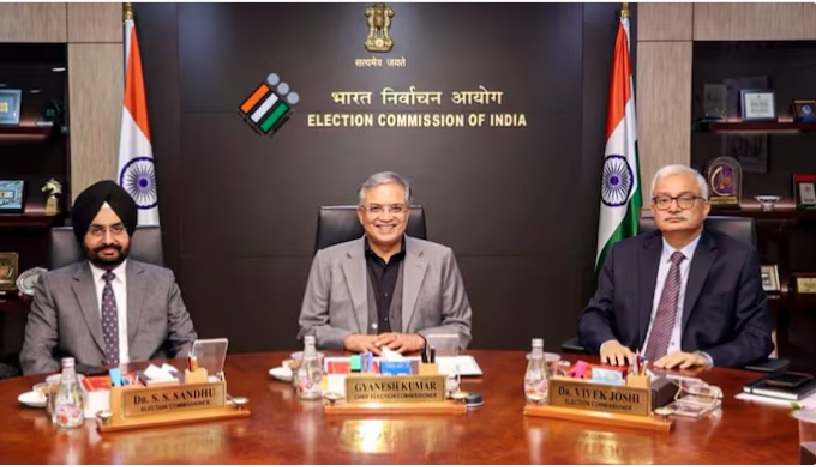
Panjab: Dissent in Indian Election Commission; ED probes GMADA; AAP admits serious accounting impropriety; Student unrest erupts in two private universities. Sikh: US Ambassador visits ‘Darbar Sahib’; SCI remarks on ‘Vande Mataram’ favor Sikhs; Carney’s deprioritizes safety for Canadians—and more stories.

Panjab: Six districts ‘Ultrasensitive’ drug zones; Govt. promises 8% increase in DA; Over 10 cases of kidnapping & extortion of illegal emigrants. Sikh: UK's Johal gets bail; ‘Akal Takht’ expels SAD Leader & 'Granthi'; Truck driver attacked days after US poster; 'Takht Sri Hazur Sahib' marks Modi birthday—and more stories.
